FDA List of Authorized Generics: Where to Find and How to Use It
When you're looking for a cheaper version of a brand-name drug, you might think all generics are the same. But there’s a special kind of generic that’s actually made by the original brand company - and it’s called an authorized generic. These aren’t listed in the FDA’s Orange Book like regular generics. They’re the exact same pill, capsule, or liquid as the brand-name version, just without the brand name on the label. Sometimes they’re even packaged differently - a different color, shape, or marking - but the active ingredient, dose, and effect are identical.
What Exactly Is an Authorized Generic?
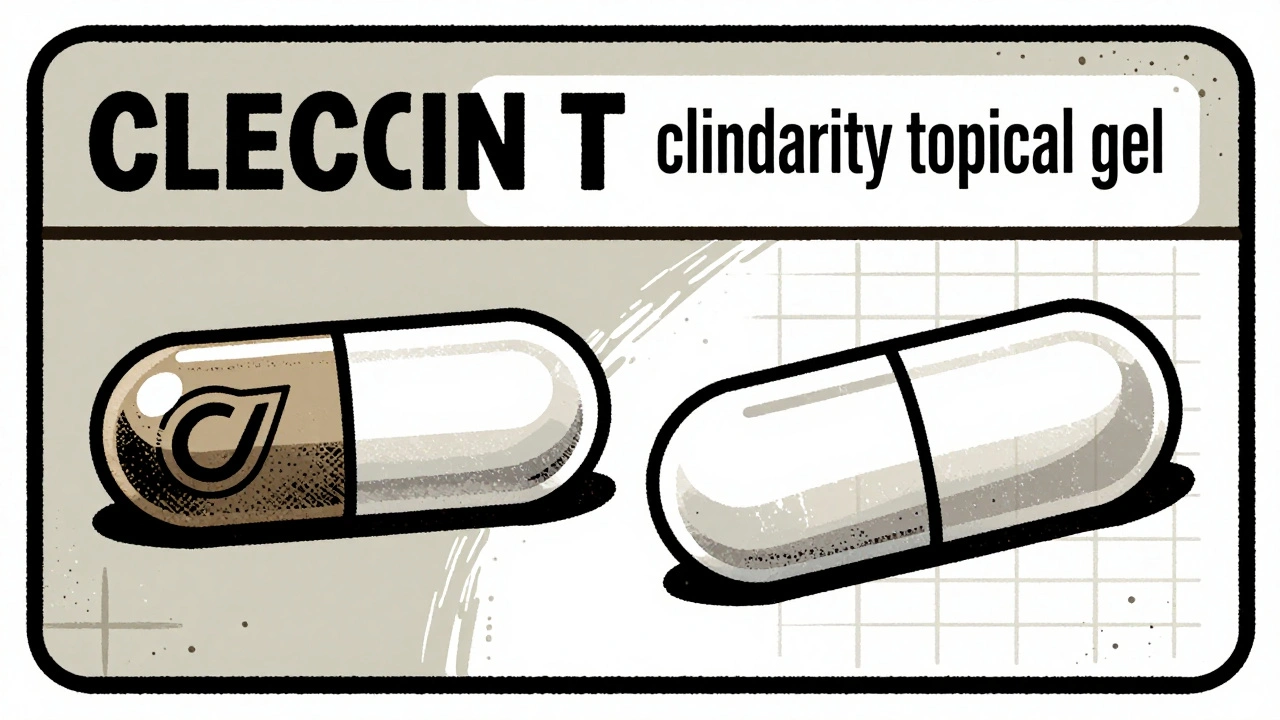
An authorized generic is a brand-name drug that’s sold under a different label, usually by the same manufacturer or a licensed partner. It’s not approved through the usual generic pathway (ANDA). Instead, it’s marketed under the original drug’s New Drug Application (NDA). That means it’s legally the same product as the brand, just sold at a lower price. For example, if you take CLEOCIN T 1% gel, the authorized generic version is chemically identical - same active ingredient, same manufacturing process - but it might be sold as "clindamycin topical gel" without the CLEOCIN name.
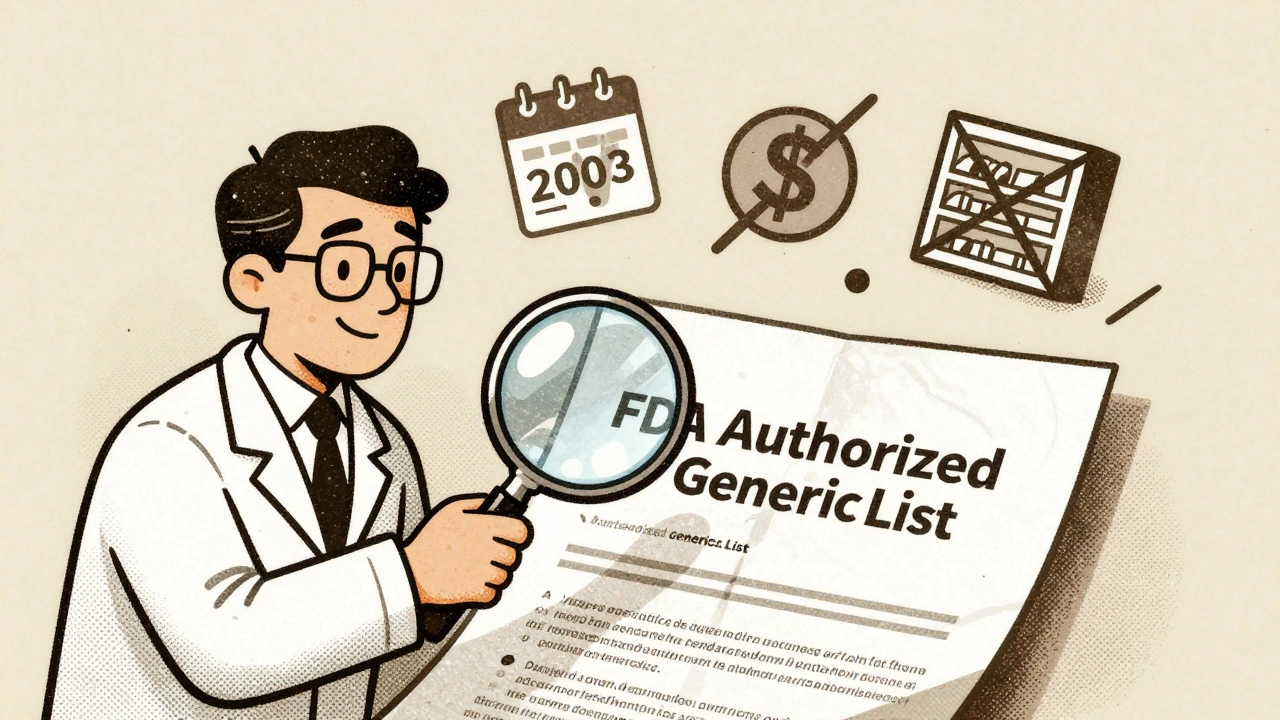
The FDA created this category to increase transparency. Before 2003, it was hard to tell which generics were truly made by the brand company. The Medicare Prescription Drug, Improvement, and Modernization Act of 2003 (MMA) forced the FDA to start tracking and publicly listing these drugs. Section 505(t) of the Federal Food, Drug, and Cosmetic Act requires the FDA to maintain a complete, updated list of all authorized generics, including the brand name, dosage, manufacturer, and when it entered the market.
Where to Find the Official FDA List
The only official source for this list is the FDA’s website. Go to fda.gov/drugs/abbreviated-new-drug-application-anda/fda-list-authorized-generic-drugs. You’ll find a clear explanation of what authorized generics are, followed by a downloadable PDF file. As of October 10, 2025, the list is about 1.09 MB and contains over 850 entries.
The PDF is organized in columns: proprietary name (brand name), dosage form, strength, NDA applicant (manufacturer), and the date the authorized generic entered the market. For example:
- ACTIQ lozenges (1200 mcg) - Cephalon, LLC - entered September 26, 2006
- ARTHROTEC tablets (50 mg/200 mcg) - Pfizer Inc. - entered November 1, 2012
- CLEOCIN T gel (1%) - Pfizer - entered June 11, 2003
That’s it. No pricing. No availability. No pharmacy stock levels. Just the facts the manufacturer reported to the FDA in their annual report.
Why This List Is Different From the Orange Book
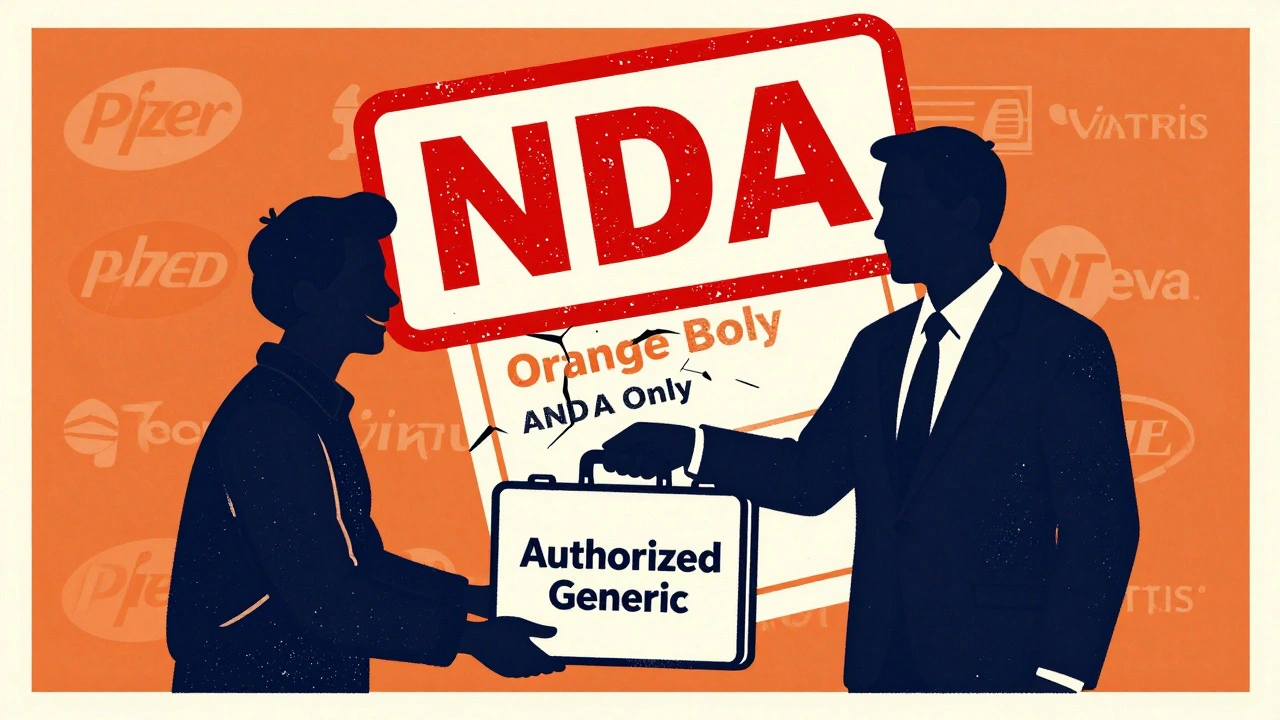
Don’t confuse this with the FDA’s Orange Book. The Orange Book lists traditional generics approved through ANDAs and gives them therapeutic equivalence codes (like AB1, BN). But authorized generics don’t appear there at all. Why? Because they’re not ANDA-approved - they’re sold under the brand’s NDA. So if you’re searching the Orange Book for a generic version of a drug and don’t see one, that doesn’t mean there isn’t a cheaper alternative. You might be missing an authorized generic entirely.
For instance, a brand-name drug might have no ANDA-approved generics because the patent is still active or no one filed an application. But the brand company could still release an authorized generic to compete with potential future generics. That’s exactly what happened with many high-cost drugs between 2010 and 2019 - over 850 authorized generics were launched during that period, according to a 2023 Health Affairs study.
What the List Doesn’t Tell You
Here’s the big catch: the FDA list doesn’t tell you if the drug is still being sold. The date listed isn’t the exact launch date - it’s the date range covered in the manufacturer’s annual report. And manufacturers aren’t required to update the FDA if they stop selling the product. That means you could see a drug on the list that’s been discontinued for two years.
Independent pharmacists and pharmacy chains have reported this problem repeatedly. In a 2023 survey by the National Community Pharmacists Association, 68% of respondents said the list was hard to use for actual purchasing because it didn’t reflect real-time availability. One pharmacist in Texas found five authorized generics on the list that his wholesaler didn’t carry. Another in Ohio ordered a drug based on the FDA list - only to be told it was no longer being produced.
It’s also not a pricing tool. The list doesn’t show cost. An authorized generic might be $5 cheaper than the brand - or it might be $20, because the manufacturer is still trying to protect profits. As Harvard’s Dr. Aaron Kesselheim pointed out in JAMA Internal Medicine, some authorized generics offer minimal savings, especially when they’re introduced right before a traditional generic hits the market.
Who Uses This List and Why
Most people don’t need to use this list. But for certain professionals, it’s essential:
- Pharmaceutical analysts use it to track which brand companies are launching authorized generics to block competitors. Pfizer, Teva, and Viatris (formerly Mylan) are the top three players, with 47, 32, and 28 entries respectively on the 2025 list.
- Pharmacists use it to identify potential low-cost alternatives for patients - but only after verifying availability with their distributors.
- Health insurers and PBMs use it to assess whether a drug’s pricing is being artificially held high by authorized generic strategies.
- Patients and caregivers can use it to ask their pharmacist: "Is there an authorized generic for this?" - but they should follow up with: "Is it in stock?" and "How much does it cost?"
The Federal Trade Commission (FTC) has long warned that authorized generics can be used as a competitive tactic. If a brand company knows a generic is coming, it can launch its own version immediately - undercutting the first generic’s 180-day exclusivity window. This strategy, documented in the FTC’s 2009 report, can delay price drops for months or even years.
How to Use the List Effectively
If you’re trying to find a cheaper version of a brand-name drug, here’s how to use the FDA list the right way:
- Find the brand name and dosage on the FDA’s authorized generics list.
- Write down the manufacturer name and the date it entered the market.
- Call your pharmacy or wholesaler and ask: "Do you carry the authorized generic for [brand name]? What’s the NDC code?"
- Check the National Drug Code (NDC) Directory at fda.gov/drugs/drug-approvals-and-databases/national-drug-code-directory to confirm the product exists and is active.
- Compare the price. If it’s significantly lower than the brand, ask if it’s in stock.
For the most accurate picture, combine the FDA list with commercial data sources like IQVIA or your pharmacy’s internal inventory system. Many pharmacies now use weekly NDC deactivation reports from distributors to track what’s actually available - something the FDA doesn’t provide.
What’s Coming Next
The FDA knows the current PDF list is outdated. In its 2025 Strategic Plan, CDER announced plans to replace the PDF with a searchable, online database by mid-2026. This new system will allow users to filter by manufacturer, dosage, or date, and may eventually include real-time market status.
There are also calls to link this list to the FDA’s Drug Shortage Portal and to tie it to the price transparency rules under the 2022 Inflation Reduction Act. For now, though, the PDF remains the only official source - and it’s far from perfect.
As the FTC’s Commissioner Alvaro Bedoya noted in 2024, 10-15% of authorized generics may not even appear on the list because manufacturers skip reporting. That’s why experts recommend cross-checking with the FDA’s Electronic Drug Registration and Listing System for the most complete picture.
Bottom Line
The FDA’s authorized generics list is a powerful tool - but only if you understand its limits. It’s not a shopping guide. It’s not a pricing tool. It’s a transparency record. If you’re a patient, use it to ask smart questions. If you’re a pharmacist or analyst, use it to uncover hidden market dynamics. But never assume a drug on the list is still being sold - always verify with your supplier.
For most people, the easiest way to find savings is still to ask your pharmacist: "Is there a generic version?" But if you want to dig deeper - and you’re willing to do the legwork - the FDA’s list gives you a rare peek behind the curtain of drug pricing.
Is an authorized generic the same as a regular generic?
Yes and no. An authorized generic is chemically identical to the brand-name drug - same active ingredient, same manufacturer, same formulation. But it’s not approved through the same process as a regular generic. Regular generics are made by different companies under an ANDA, while authorized generics are made by the brand company and sold under the original NDA. That’s why they’re not listed in the FDA’s Orange Book.
Why isn’t the FDA list updated in real time?
The FDA only gets information from manufacturers’ annual reports, which are submitted once a year. The list doesn’t track when a product is discontinued, when prices change, or whether it’s in stock. The date shown is the period covered by the report, not the exact launch date. There’s no requirement for manufacturers to update the FDA if they stop selling the product.
Can I buy authorized generics at my local pharmacy?
Sometimes. Authorized generics are distributed through the same channels as brand-name and regular generic drugs. But they’re not always stocked. Many pharmacies don’t carry them because they’re not promoted by sales reps, and pharmacists often don’t know they exist. You’ll need to ask specifically for the authorized generic version of your drug and check with your wholesaler.
Do authorized generics save money?
Sometimes, but not always. Authorized generics are often cheaper than the brand-name version - but not always cheaper than traditional generics. Some are priced just below the brand to undercut new competitors, while others are priced similarly to maintain profit margins. A 2020 JAMA study found many authorized generics offered only marginal savings, especially when introduced during the 180-day exclusivity period.
How often is the FDA list updated?
The FDA is required by law to update the list quarterly. The most recent version was published on October 10, 2025. However, because it relies on annual reports from manufacturers, the data can be months or even a year behind actual market activity.
Are there better tools than the FDA list?
For practical use - yes. Commercial databases like IQVIA, Wolters Kluwer, and Red Book track real-time availability, pricing, and market share. For most patients and pharmacists, these tools are more useful. But the FDA list remains the only official, publicly available source that identifies which companies are producing authorized generics - making it critical for competitive analysis and regulatory oversight.

9 Comments
Mellissa Landrum
December 5 2025lol so the FDA just gives us a PDF full of lies? 🤡 brand companies report when they feel like it, and we’re supposed to trust this? i’ve seen drugs on here that were discontinued YEARS ago. this isn’t transparency-it’s a joke. they’re laughing all the way to the bank while we pay $200 for a pill that’s been dead for 3 years.
Mark Curry
December 6 2025it’s strange how something meant to help us find cheaper meds ends up being so confusing. the list is like a map to a city that’s been torn down. maybe the real issue isn’t the list itself, but how little we’re told about what’s actually happening on the ground. i just wish it felt more alive, you know?
Manish Shankar
December 7 2025Respected colleagues, I must express my profound appreciation for the meticulous documentation presented herein. The regulatory framework established under Section 505(t) represents a significant advancement in pharmaceutical transparency. However, the temporal lag inherent in annual reporting necessitates a supplementary mechanism to ensure clinical utility. I respectfully suggest institutional collaboration with pharmacy networks for real-time data integration.
luke newton
December 8 2025you people are so naive. this list? it’s not for you. it’s for the big pharma insiders to see who’s playing fair and who’s not. they let the FDA publish this so they can look like they’re helping while quietly killing competition. and you? you’re out here asking your pharmacist like a good little sheep. wake up. they’ve been doing this since the 90s.
an mo
December 10 2025the 850-entry list is a classic case of regulatory capture. top 3 manufacturers-Pfizer, Teva, Viatris-control 107 of the 850 entries. that’s 12.6% of the market being artificially stabilized through NDA-based market entry. when you layer in the FTC’s 2009 findings on 180-day exclusivity erosion, you’re looking at a systemic anti-competitive mechanism disguised as consumer relief. this isn’t a transparency tool-it’s a strategic delay vector.
aditya dixit
December 10 2025i’ve used this list before, and honestly, it’s like finding a needle in a haystack made of outdated paper. but the real win? knowing it exists. i always cross-check with my wholesaler’s NDC feed. if the FDA says it’s out there, i ask: "is it still breathing?" sometimes the answer’s no-but at least i’m asking the right question.
Mark Ziegenbein
December 11 2025imagine spending years studying pharmacology only to be handed a 1.09 MB PDF that hasn’t been updated since the last administration and being told this is the gold standard of transparency. the irony is thick enough to spread on toast. the FDA has the tech to build a live database but chooses to cling to a relic because bureaucracy loves paperwork more than people. meanwhile, i’m sitting here with my 2025 prescription wondering if the "authorized generic" on the list is even real or just a ghost in the machine. this isn’t healthcare-it’s performance art for regulators who forgot what patients look like.
Juliet Morgan
December 11 2025i asked my pharmacist about the authorized generic for my blood pressure med and she just stared at me like i spoke latin. then she went to the back and came back with the box-same pill, half the price. i cried. not because it was cheap, but because no one told me this was even a thing.
Deborah Jacobs
December 12 2025the FDA list is like a dusty photo album of your ex’s old apartment-you can see where the couch was, the weird lamp, the window with the broken latch… but the place got torn down last year. still, it’s the only record you’ve got. so yeah, it’s flawed. but it’s *our* flawed record. i print it out, scribble on it with a highlighter, and bring it to the pharmacy like a treasure map. sometimes, it leads somewhere real.