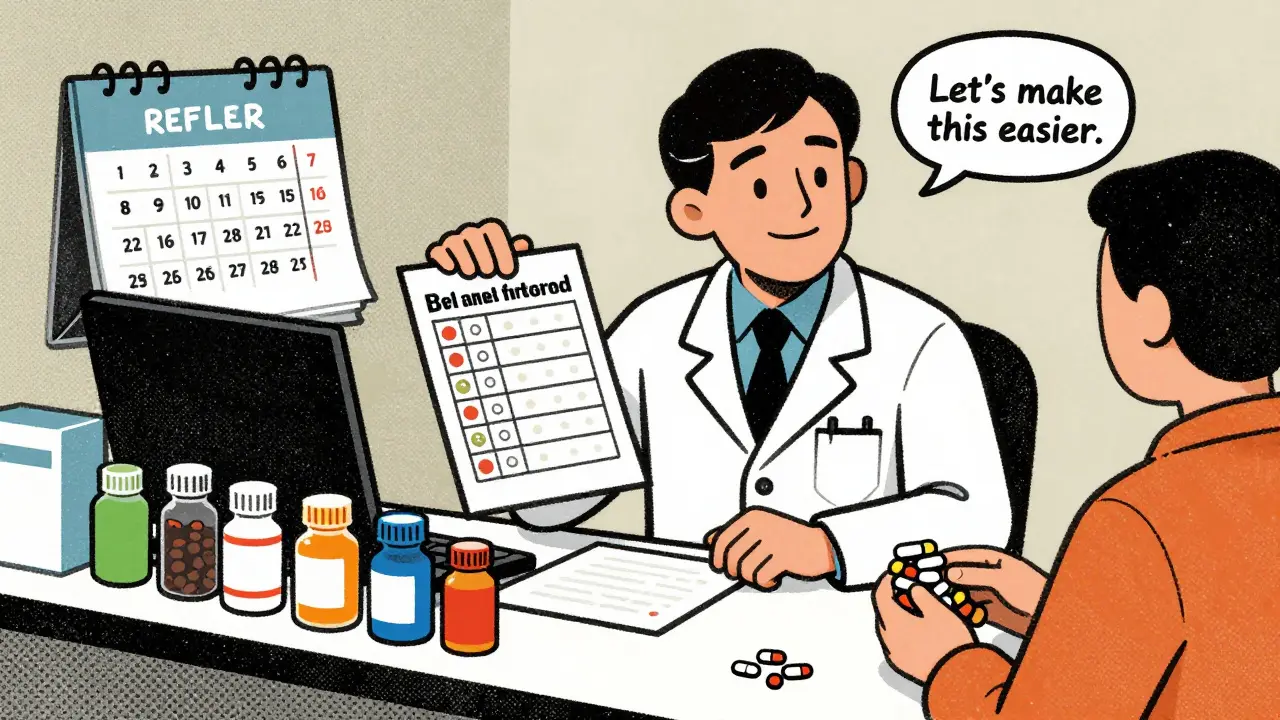
How Pharmacists Help Patients Take Their Medications as Prescribed
Every year, half of all people with chronic illnesses don’t take their medications the way their doctors meant them to. It’s not laziness. It’s not ignorance. It’s often because the pills are too expensive, the schedule is confusing, or they just forget. And when patients skip doses, hospital visits go up, complications get worse, and lives are shortened. But there’s a quiet hero in this story - the pharmacist.
Why Medication Adherence Matters More Than You Think
Let’s say you’re on blood pressure medicine. You take it for a week, feel fine, and decide to stop because you don’t ‘feel sick.’ That’s common. But high blood pressure doesn’t come with symptoms until it’s already damaging your heart or kidneys. The same goes for diabetes, cholesterol drugs, or even antidepressants. Non-adherence isn’t just a personal issue - it’s a public health crisis. In the U.S., it costs the system over $300 billion a year. That’s billions in avoidable ER trips, hospital stays, and lost productivity.
Here’s the hard truth: doctors write prescriptions. But pharmacists are the ones who see the gaps.
The Pharmacist’s Unique Access
Think about it. You see your doctor once every few months. But your pharmacist? You walk into the pharmacy every 30 days, sometimes more. That’s four to six times more contact than with your physician. Pharmacists don’t just hand out pills. They notice when refills stop. They see when a patient picks up a new prescription but not the old one. They catch when someone’s taking two drugs that shouldn’t mix.
In 2023, the Veterans Affairs system found that patients who got regular pharmacist check-ins were 21% more likely to stick to their meds than those who didn’t. For cardiac patients on clopidogrel or statins, that gap was even wider - over 30% better adherence. Why? Because pharmacists don’t wait for problems. They ask.
What Pharmacists Actually Do to Help
It’s not just reminding you to take your pills. Real pharmacist-led adherence programs are structured, evidence-backed, and personalized. Here’s what they look like in practice:
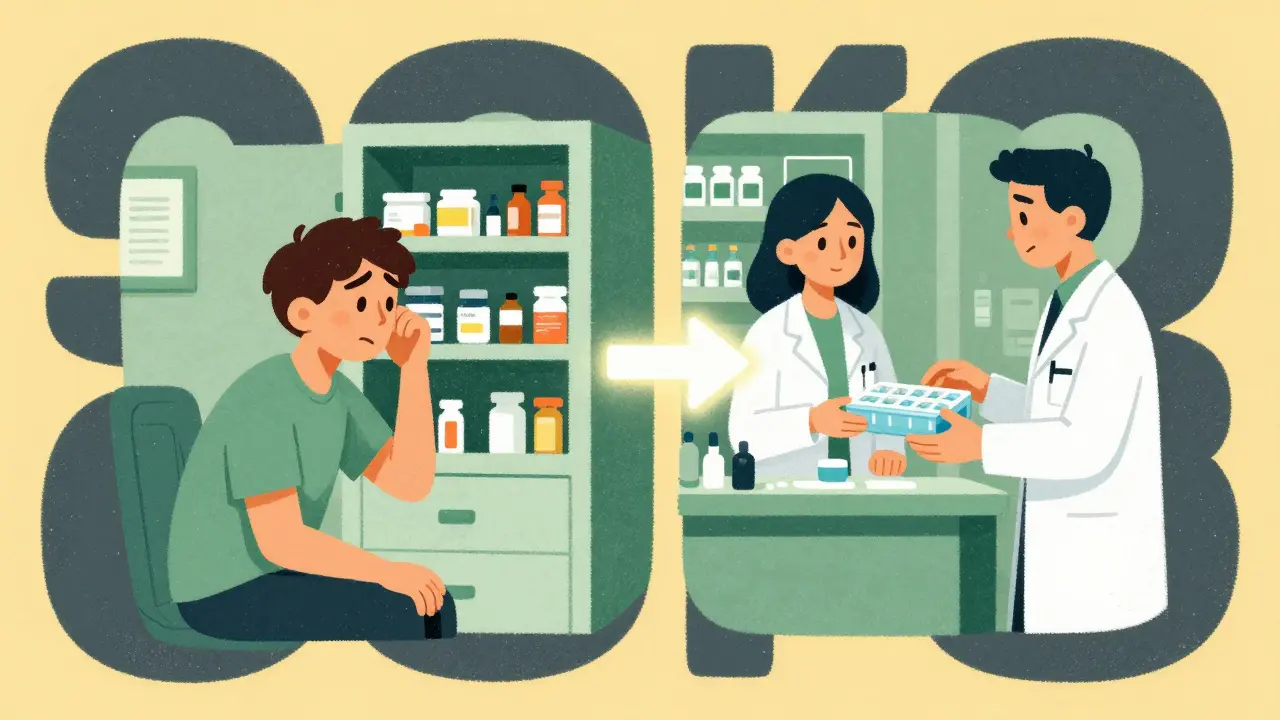
- Medication reviews - Sitting down with you to go over every pill, supplement, and OTC drug you take. They check for duplicates, interactions, or unnecessary meds.
- Cost help - Over 68% of adherence programs include help finding cheaper options, patient assistance programs, or generic switches. One CVS pharmacist in Alabama found a patient wasn’t refilling blood pressure meds because of a $50 copay. She got them onto a free program. Their BP stayed controlled for 8 months.
- Simple scheduling - If you’re on five different meds at three different times, it’s overwhelming. Pharmacists can sync refills, use pill organizers, or switch to once-daily combinations.
- Phone calls and reminders - 23 studies show refill reminder calls improve adherence. But it’s not robotic. The best ones start with, “I noticed you haven’t picked up your statin. Is everything okay?”
- Screening for depression - Mental health affects adherence. Pharmacists use simple tools like PHQ-2 to ask if you’ve felt down or hopeless. If yes, they connect you to care.
These aren’t guesses. They’re backed by data. A 2024 study of over 1.2 million patients found pharmacist-led programs improved adherence by 4% for diabetes, 6% for hypertension, and 6% for cholesterol. That might sound small, but it meant 30-45% more patients had their blood pressure under control.
Where It Works Best - And Where It Doesn’t
Pharmacists shine in complex cases. If you’re on five or more medications, your odds of sticking with them jump by 37% with pharmacist support. Same goes for people just out of the hospital - those with transition-of-care programs are 40% more likely to follow up with their doctor within two weeks.
But it’s not magic. Studies show it doesn’t help much for people with severe dementia or memory loss. And in some cases, patients feel like they’re being monitored, not helped. One person on Trustpilot said their pharmacist kept calling about refills but never asked why they couldn’t afford the meds - just made them feel guilty.
That’s the problem with one-size-fits-all. The best programs listen. They don’t just push pills. They ask: What’s stopping you?
Why Pharmacists Outperform Other Solutions
You’ve seen apps. You’ve gotten texts. You’ve had nurses call. But here’s the data: pharmacist-led programs beat digital tools and nurse programs in real-world outcomes. A 2023 study found pharmacist interventions were 18.7% more effective at improving adherence than apps or nurse-led efforts.
Why? Because pharmacists know drugs. Not just how they work, but how they feel. They know that a statin might cause muscle pain, or that an antidepressant can make you dizzy at first. They’ve seen it before. They can say, “That side effect you’re having? It usually fades in two weeks. Here’s what to do if it doesn’t.”
They also have the authority to act. In many states, pharmacists can adjust doses, switch brands, or even prescribe certain meds under collaborative agreements. That’s not something a chatbot or a phone tree can do.
The Hidden Cost of Doing Nothing
Every $1 spent on pharmacist adherence services saves $7.43 in healthcare costs, according to Harvard economist Dr. David Cutler. That’s not theory - it’s real numbers. One 2024 study found:
- $109 saved per person with diabetes
- $122 saved per person with high blood pressure
- $75 saved per person with high cholesterol
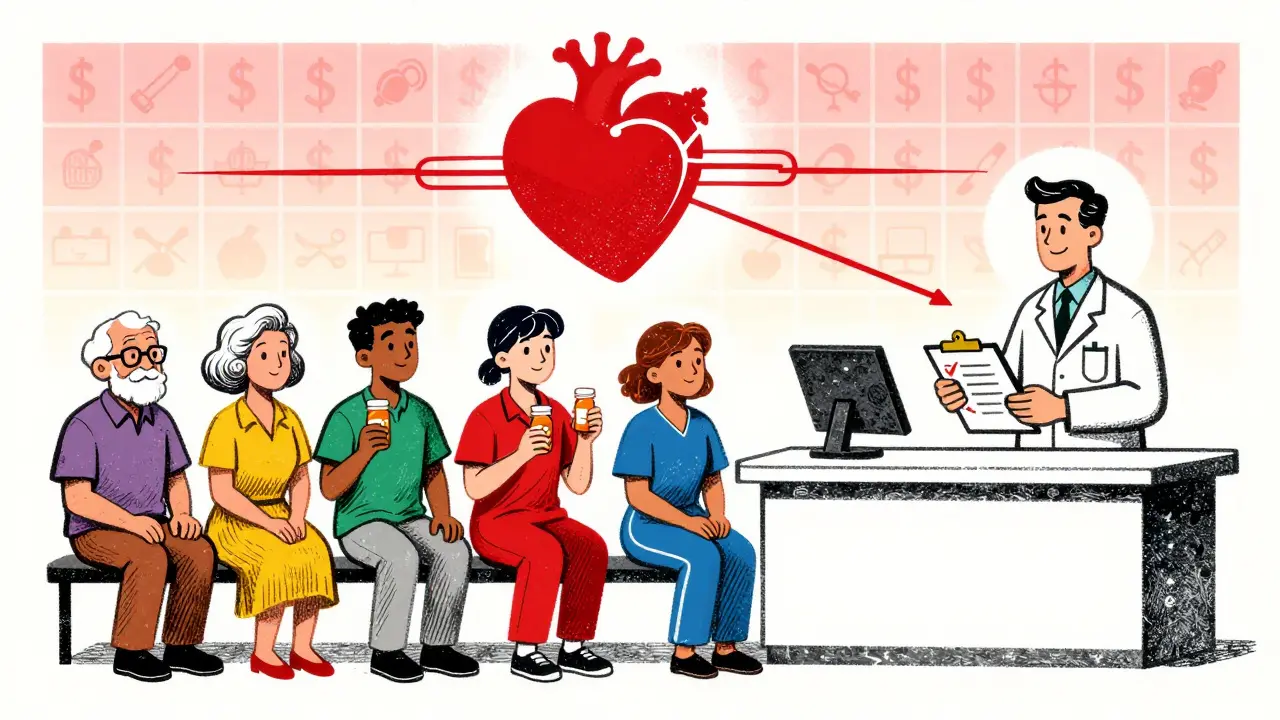
That’s $63 million in savings just from three conditions in two years. And that’s without even counting the lives saved. The CDC estimates that if these programs were widely adopted, they could prevent 23,000 premature deaths from heart disease each year by 2030.
Barriers Still Standing in the Way
Despite the proof, many pharmacies still don’t offer these services. Why?
- Reimbursement - Only 28 U.S. states have laws that pay pharmacists for these services. Medicare started covering them in 2023, but private insurers lag.
- Time - A 20-minute counseling session takes time away from filling prescriptions. Pharmacists are stretched thin.
- Documentation - Filling out forms for every patient eats up 2-3 hours a week. Many programs quit because of paperwork.
But some are fixing this. Some pharmacies now use pharmacy technicians to handle reminder calls. Others use pre-built EHR templates that cut charting time by 35%. A few Medicare Advantage plans are now paying pharmacists based on outcomes - if your BP drops, they get paid. That’s the future.
What You Can Do Right Now
If you’re struggling to take your meds:
- Ask your pharmacist for a medication therapy management session. It’s free under Medicare Part D.
- Bring all your pills - even the ones in your cabinet - to your next visit.
- Ask: “Is there a cheaper version of this?” or “Can I take this once a day instead of twice?”
- Don’t be afraid to say, “I can’t afford this.” They’ve heard it before. And they have solutions.
If you’re a caregiver for an older adult: Go with them. Sit in. Ask questions. Pharmacists are more willing to talk openly when family is there.
The Bigger Picture
Medication adherence isn’t about compliance. It’s about partnership. The doctor prescribes. The patient takes. The pharmacist understands. They’re the bridge between the plan and the person.
And the data doesn’t lie. When pharmacists step in, people live longer, feel better, and spend less on healthcare. It’s not flashy. It doesn’t make headlines. But in Birmingham, in Chicago, in rural Texas - it’s changing lives, one pill at a time.
Can pharmacists really help me take my meds better?
Yes - and the evidence is strong. Studies show that pharmacist-led programs improve adherence by 4% to 6% for common conditions like diabetes, high blood pressure, and high cholesterol. That might sound small, but it means 30-45% more patients get their condition under control. Pharmacists don’t just remind you - they help solve the real reasons you’re skipping doses, like cost, side effects, or confusion.
Are pharmacist adherence services covered by insurance?
Under Medicare Part D, yes - medication therapy management (MTM) services are free for eligible patients. Many private insurers still don’t cover them, but that’s changing. As of 2024, 17 Medicare Advantage plans are piloting outcome-based payments, where pharmacists get paid if your health improves. Some states also have laws requiring reimbursement. Ask your pharmacist if they offer MTM and if your plan covers it.
What if I can’t afford my medication?
Pharmacists are trained to help with this. Over 68% of adherence programs include cost assistance. They can check if there’s a generic version, switch to a lower-cost brand, or connect you to patient assistance programs from drug manufacturers. Some even have coupons or discount cards on hand. Don’t be embarrassed to say you can’t afford it - they’ve helped thousands do the same.
Do I need to go to a special pharmacy for this help?
No. Most community pharmacies offer some level of adherence support. Chain pharmacies like CVS, Walgreens, and Rite Aid have formal programs. Even independent pharmacies often do medication reviews if you ask. The key is to request it. Say: “I’d like a medication review.” You don’t need a referral. It’s part of your pharmacy care.
How long does it take to see results from pharmacist help?
Many patients see improvement within 30 days - especially if the issue is cost or confusion. For example, if a pharmacist helps you switch to a cheaper pill or syncs your refills, you’ll likely refill sooner. For chronic conditions like blood pressure or cholesterol, measurable health improvements (like lower readings) usually show up in 3-6 months. But the biggest win? You’ll feel less stressed about your meds.
Pharmacists aren’t just pill counters. They’re problem-solvers, advocates, and sometimes, the only healthcare professional who sees you regularly. If you’re struggling with your meds, don’t wait for your doctor to notice. Walk in. Ask. Take the first step - your health will thank you.

14 Comments
John Sonnenberg
February 10 2026Pharmacists are the unsung heroes of modern medicine. I had a cousin who stopped his statin because he thought it was making him dizzy. The pharmacist called him three times, found out he was scared of side effects, and switched him to a different brand. He’s been stable for two years now. No doctor ever asked him how he felt. The pharmacist actually listened.
And let’s be real-this isn’t about ‘compliance.’ It’s about dignity. People don’t skip meds because they’re lazy. They skip them because they’re scared, broke, or confused. Pharmacists don’t judge. They solve.
I’ve seen it firsthand. My mom’s on eight meds. The CVS pharmacist printed out a color-coded chart, called her every two weeks, and found a $3 generic for her blood pressure pill. She’s not just alive-she’s gardening again.
This isn’t fluff. It’s healthcare that works. And yet, insurance companies still treat it like a bonus feature. It should be mandatory. Every single prescription should come with a pharmacist check-in. Period.
PAUL MCQUEEN
February 11 2026Interesting stats, but let’s not romanticize pharmacists. They’re still employees of corporations that profit off drug sales. The ‘cost help’ they offer? Often just swapping one brand for another with the same markup. And don’t get me started on ‘medication therapy management’-it’s just another billing code disguised as care.
Meanwhile, drug companies lobby to keep prices high. Pharmacists are just the friendly face of the machine. The real solution? Single-payer. Price caps. Not more phone calls.
Tori Thenazi
February 12 2026Okay, but have you considered that this whole ‘pharmacist intervention’ thing might be a slow-motion surveillance program? I mean, think about it: they track your refills, call you, ask about depression, check your OTC meds… What’s next? A QR code on your pill bottle that sends your data to Big Pharma?
I’m not saying it’s evil-I’m saying it’s creepy. Who authorized this? Why is a pharmacist suddenly my mental health monitor? I didn’t sign up for this. And now they’re telling me to ‘bring all my pills’? What if I have a bottle of Xanax from 2018? Am I gonna get reported?
Also, why is this only covered under Medicare? What about the rest of us? Is this just another way to funnel money into pharmacy chains? I’m not against help… I’m against hidden agendas.
And don’t even get me started on ‘outcome-based payments.’ That’s just insurance companies outsourcing blame. If your BP doesn’t drop, they don’t pay the pharmacist. So now the pharmacist is incentivized to cherry-pick patients who are easy to fix. Brilliant.
I’m not paranoid. I’m informed.
Also, I’ve seen pharmacists refuse to help people who ‘don’t look like they can afford it.’ So yeah. Not all heroes. Some are just… efficient.
Elan Ricarte
February 14 2026Let’s cut through the corporate fluff. This isn’t ‘patient-centered care.’ This is cost containment dressed up in scrubs. The $7.43 return on investment? That’s not altruism-that’s accounting. Healthcare systems don’t care if you live. They care if you stop costing them money.
And don’t act like pharmacists are saints. Most of them are overworked, underpaid, and juggling 200 prescriptions an hour. The ‘personalized’ check-ins? They’re scripted. The ‘I noticed you haven’t picked up your statin’ line? It’s pulled from a 2019 CRM template. The empathy? It’s trained into them like customer service.
Yes, some do good work. But the system? It’s designed to keep you alive just long enough to keep paying premiums. That’s why they push adherence-not because they care about you, but because your ER visit costs $12k and your refill costs $3.50.
And let’s not forget: pharmacists profit when you keep buying pills. They don’t profit when you get cured. So why would they want you to stop taking meds? They’d rather keep you on them forever. That’s capitalism, folks.
Don’t mistake efficiency for compassion. This isn’t a revolution. It’s a spreadsheet with a smile.
Monica Warnick
February 15 2026I’ve been on antidepressants for eight years. I didn’t realize how much I was struggling until my pharmacist sat down with me and asked, ‘Do you feel like this is helping?’ Not ‘Are you taking it?’ But ‘Do you feel like it’s helping?’
That one question changed everything. I had been taking it because I thought I was supposed to. Not because I believed in it. She helped me switch to a different one. Took three tries. But now I’m sleeping. I’m not crying every morning. I’m… okay.
I didn’t know pharmacists could do that. I thought they just handed out pills. Turns out, they’re the only ones who actually see the whole picture.
Thank you for writing this. I needed to hear it.
Ashlyn Ellison
February 17 2026My grandma died because she couldn’t afford her heart meds. The pharmacist knew. He told her to call the manufacturer. She was too proud. He offered to call for her. She said no.
She died three months later.
That’s the real story. Not the stats. Not the savings. Just a woman who thought she was a burden.
Pharmacists can’t fix poverty. But they can try.
Jonah Mann
February 19 2026Y’all are underestimating how much pharmacists actually do. I work at a small pharmacy in Ohio. Last week, I had a guy come in for his insulin. He hadn’t refilled in 45 days. I called him. He said he lost his job. I found him a free program. Then I saw he was also taking a generic OTC painkiller that was making his kidneys worse. I called his PCP. They changed his med. Two weeks later, he came back with a thank-you card and a homemade pie.
That’s my job. Not just filling scripts. It’s being the first person who notices when someone’s falling through the cracks.
And yeah, I’m tired. And yeah, I get paid minimum wage for this. But I do it because someone’s gotta.
Also, typo: ‘refill’ not ‘re-fill.’ Sorry.
THANGAVEL PARASAKTHI
February 19 2026In India, pharmacists are often the first and last point of contact for healthcare. Many villages have no doctors. Just a pharmacy with a guy who’s been dispensing meds for 30 years.
They don’t have EHRs or insurance plans. They remember your name. They remember your kid’s asthma. They know if you skipped your BP pill because your wife got sick.
This isn’t just ‘adherence.’ It’s trust. And trust doesn’t come from a script. It comes from showing up, day after day, even when you’re not paid.
Maybe we don’t need more tech. Maybe we just need more people who care enough to ask, ‘Are you okay?’
Pharmacists do that. Everywhere.
Chelsea Deflyss
February 19 2026Why do we even need pharmacists to remind us to take our pills? If you can’t manage your own health, maybe you shouldn’t be allowed to have prescriptions. This is enabling. Someone should’ve told my ex to stop taking his anxiety meds before he drove into a tree.
Also, why are we funding this? Why not just make people pay for their own mistakes? I work two jobs. I don’t get a reminder to take my vitamins. Why should they?
Tricia O'Sullivan
February 20 2026While the data presented is compelling, one must acknowledge the structural constraints under which community pharmacists operate. The professionalization of adherence services remains uneven across jurisdictions, and the absence of universal reimbursement mechanisms undermines the sustainability of such initiatives.
Furthermore, the psychological burden placed upon pharmacists-expected to act as clinician, counselor, and administrative agent-risks burnout and diminishes the quality of care over time.
It is not sufficient to applaud the individual acts of compassion; we must institutionalize them.
Respectfully submitted.
Scott Conner
February 20 2026Wait-so pharmacists can prescribe now? In some states? That’s wild. I thought only doctors could do that. So if my pharmacist thinks my blood pressure med is too strong, they can just change it? No doctor approval? That’s kinda terrifying. What if they mess up? I mean, I trust my pharmacist, but… is this safe?
Also, can they write prescriptions for Adderall? Asking for a friend.
Chelsea Cook
February 21 2026Oh honey, you think this is about health? Nah. This is about pharmacies making bank off your confusion. They don’t care if you live. They care if you keep coming back. Every refill is a dollar. Every ‘medication review’? That’s $85 billed to Medicare. You think they’re helping you? They’re helping their quarterly earnings.
And don’t get me started on ‘free’ MTM. It’s not free. It’s just paid by your premiums. You’re paying for it twice.
Also, who the hell has time to bring all their pills to the pharmacy? I’ve got three kids and a dog that eats my socks. I don’t have a ‘medication drawer.’ I have a shoebox under the sink.
Stop romanticizing the system. It’s not a hero. It’s a business.
Jacob den Hollander
February 21 2026I’m a veteran. I’ve been on six different meds since I got back. The VA pharmacist didn’t just help me refill. She sat with me for an hour. Asked about my nightmares. Asked if the antidepressant made me feel numb. Then she called my therapist. Then she called my VA doctor. Then she got me into a support group.
I didn’t ask for any of that. She just… saw me.
Most people think pharmacists hand out pills. They don’t realize some of them hand out hope.
And yeah, I cried. I didn’t think I could anymore.
Thank you for writing this. I needed to say it out loud.
Andrew Jackson
February 23 2026Let’s be clear: this isn’t healthcare. This is socialism dressed in a white coat. The government is now paying pharmacists to babysit adults who can’t be trusted to take their own medicine. What’s next? Will they send someone to remind you to brush your teeth? To eat your vegetables?
This is the erosion of personal responsibility. We’ve gone from ‘take your meds’ to ‘we’ll call you if you forget.’
And who’s paying for this? Taxpayers. That’s right. My hard-earned money is funding a system that treats grown men and women like children.
It’s not compassionate. It’s infantilizing.
And don’t tell me about ‘cost savings.’ The real cost is the loss of dignity. We used to be a nation that expected people to be responsible. Now? We have pharmacies calling people to remind them not to die.
It’s pathetic.