Nosebleeds Linked to Medications: Common Causes and How to Prevent Them
Medication-Linked Nosebleed Risk Calculator
Medication Risk Assessment
Enter your medication details to calculate your nosebleed risk level and get prevention tips.
Your Risk Assessment
Ever had a nosebleed out of nowhere and wondered if it was something you took? You’re not alone. About 60% of people will experience a nosebleed at least once in their life, but for many, it’s not just dry air or a bump on the nose-it’s the medicine they’re taking. Medications like aspirin, ibuprofen, or blood thinners can quietly turn your nasal passages into a fragile zone where even a light sniff can trigger bleeding. The good news? Most of these nosebleeds are preventable-and you don’t have to stop your meds to make it happen.
Why Your Medications Are Causing Nosebleeds
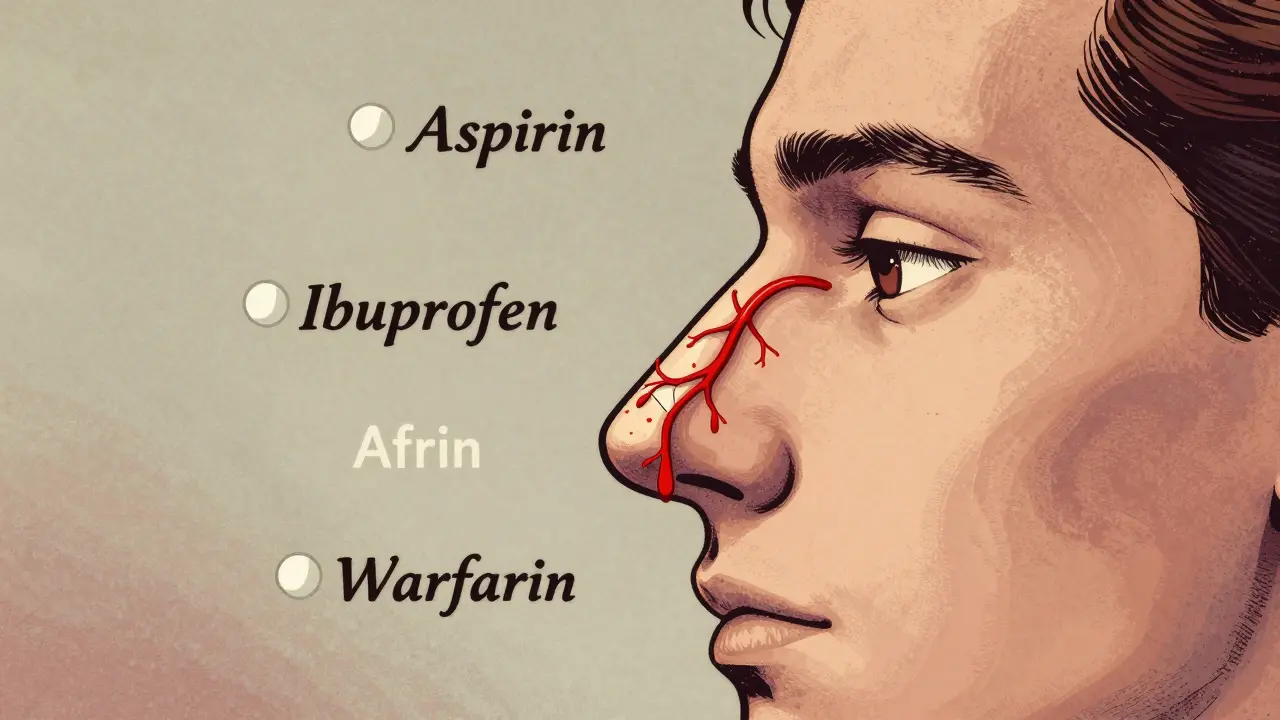
Nosebleeds aren’t random. They happen because of a network of tiny blood vessels near the front of your nose called Kiesselbach’s plexus. It’s rich in capillaries, which makes it easy to bleed if something weakens the tissue or thins your blood. Medications interfere in two main ways: by stopping your blood from clotting properly, or by drying out your nasal lining. NSAIDs like ibuprofen (Advil, Motrin), naproxen (Aleve), and aspirin block enzymes that help platelets stick together. Even a low-dose aspirin (81mg) taken daily for heart health can reduce your blood’s ability to seal a tiny tear. You might not notice anything until you wake up with blood on your pillow. Anticoagulants like warfarin (Coumadin) or clopidogrel (Plavix) work differently-they slow down the actual clotting process by interfering with vitamin K or platelet function. People on these drugs are at higher risk, and even a small nosebleed can last longer than usual. In some cases, it can signal that your INR (a blood test that measures clotting time) is too high. Decongestants like oxymetazoline (Afrin) might seem helpful for a stuffy nose, but using them for more than three days in a row causes rebound swelling and dries out your nasal lining. That’s when the blood vessels become brittle and burst easily. Antihistamines, especially older ones, do the same thing by reducing mucus production, leaving your nose parched and prone to cracking.Who’s Most at Risk?
It’s not just about what you’re taking-it’s who you are. Certain groups face higher risks:- Adults over 45: Blood vessels naturally become more fragile with age, and many in this group are on multiple medications.
- Children: They pick their noses, have thinner nasal membranes, and are often given NSAIDs for fever or pain.
- Pregnant people: Hormones cause nasal blood vessels to expand, making them more sensitive to drying or thinning agents.
- People with high blood pressure or atherosclerosis: Higher pressure in the vessels means more force behind a bleed.
- Those on multiple blood-thinning drugs: Combining aspirin with warfarin or clopidogrel multiplies the risk.
What to Do When a Nosebleed Starts
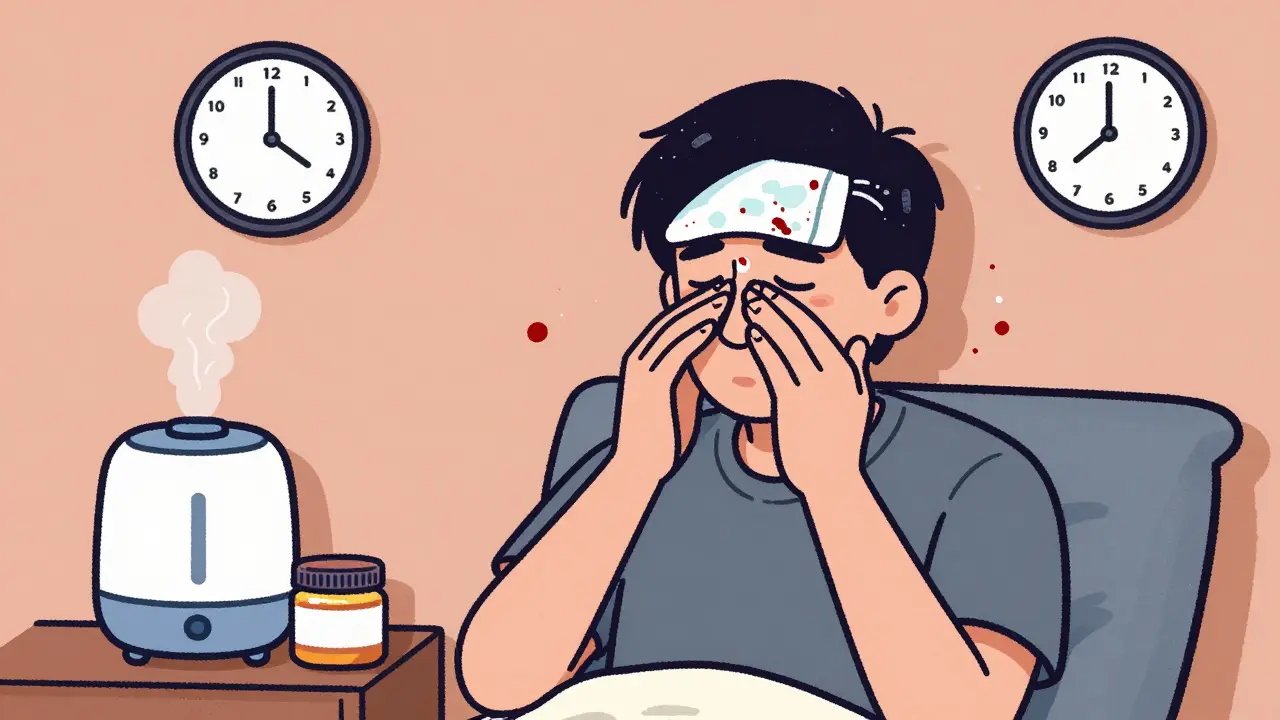
If you feel blood trickling down your throat, don’t panic. Most nosebleeds stop on their own with the right steps.- Pinch your nose. Use your thumb and index finger to squeeze the soft part of your nose shut. Don’t just tap it-apply firm, steady pressure for 10 to 15 minutes. Set a timer. Most people think they’ve waited long enough after 5 minutes, but it takes longer than you think.
- Lean forward. Tilting your head back might feel natural, but it causes blood to run down your throat. You could swallow blood, which may make you nauseous or vomit. Sit upright and lean slightly forward.
- Use a cold compress. Hold an ice pack or cold washcloth on the bridge of your nose. Cold helps constrict blood vessels and slow the bleed.
- Don’t blow or pick. Even after the bleeding stops, avoid touching your nose for at least 12 hours. That’s when the clot is still forming.
How to Prevent Nosebleeds Without Stopping Your Meds
You don’t have to quit your heart medication or pain relievers to stop nosebleeds. Here’s how to protect your nose while staying on your treatment plan.- Switch to acetaminophen. For pain or fever, choose Tylenol instead of ibuprofen or aspirin. Acetaminophen doesn’t affect platelet function. It’s the go-to for people with a history of nosebleeds.
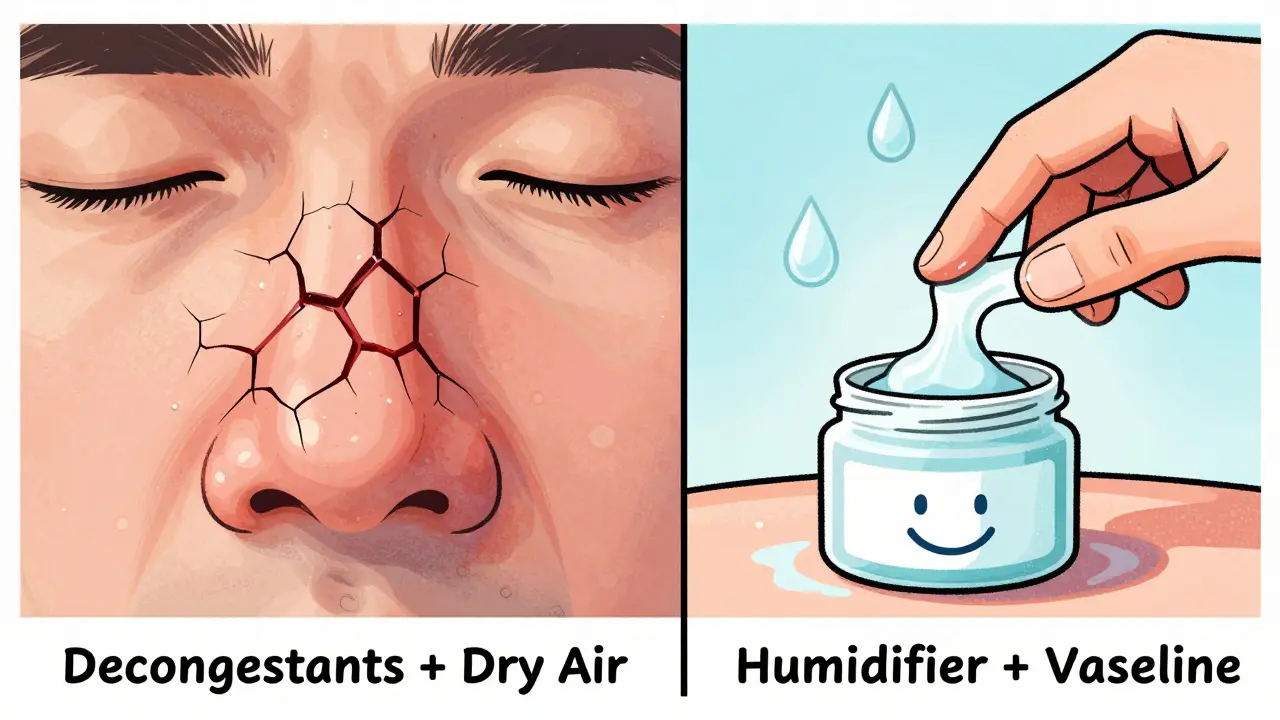
- Moisturize daily. Apply a thin layer of petroleum jelly (Vaseline) inside your nostrils twice a day-morning and before bed. You can also use saline nasal gel or spray. This keeps the lining soft and less likely to crack.
- Use a humidifier. Dry indoor air, especially in winter, is a major trigger. A cool-mist humidifier in your bedroom raises humidity to a safe level (40-50%) and prevents your nose from drying out overnight.
- Limit decongestant sprays. Never use nasal sprays like Afrin for more than 3 days. If you need long-term relief for allergies, ask your doctor about steroid nasal sprays like fluticasone-they don’t dry out your nose.
- Stay away from nose picking. Even if your nose feels itchy or crusty, resist the urge. Use saline spray to loosen debris instead.
When to Talk to Your Doctor
If you’re having more than three or four nosebleeds in a week, it’s time to review your meds. Don’t stop anything on your own. Some drugs, like warfarin or Plavix, are essential to prevent strokes or heart attacks. Stopping them can be dangerous. Your doctor might:- Check your INR if you’re on warfarin
- Switch you to a different blood thinner with less bleeding risk
- Recommend a nasal exam to rule out structural issues
- Refer you to an ENT specialist if bleeding is frequent
Red Flags That Need Immediate Care
Not all nosebleeds are harmless. Call 999 or go to A&E if you have:- Bleeding that lasts more than 20-30 minutes despite pressure
- Feeling faint, dizzy, or short of breath
- Blood running down your throat and into your stomach (you might vomit it)
- Bruising easily, bleeding gums, or blood in urine or stool
- A recent head injury or trauma to your face
Bottom Line: Manage, Don’t Fear
Nosebleeds from medications are common, but they’re not inevitable. Most people can stop them with simple changes: moisturizing your nose, switching pain relievers, and avoiding overuse of decongestants. The key is working with your healthcare team-not guessing on your own. You’re not broken. Your nose isn’t failing. You’re just managing the side effects of drugs that are keeping you alive or comfortable. With the right habits, you can keep your nose healthy and your meds working.Can aspirin cause nosebleeds even at low doses?
Yes. Even low-dose aspirin (81mg), often taken daily to prevent heart attacks or strokes, can interfere with platelet function and increase nosebleed risk. It’s one of the most common medication-related causes, especially in older adults. If you’re prone to nosebleeds, talk to your doctor about whether acetaminophen might be a safer alternative for pain relief.
Is it safe to use nasal sprays like Afrin if I get frequent nosebleeds?
No. Nasal decongestant sprays like Afrin (oxymetazoline) can make nosebleeds worse over time. They cause temporary relief by shrinking blood vessels, but after 3-5 days, your nose rebounds with worse congestion and drier tissue. This cycle damages the nasal lining and increases bleeding risk. Use saline sprays or steroid nasal sprays instead, and only use decongestants for 3 days max.
Should I stop my blood thinner if I keep getting nosebleeds?
Never stop a blood thinner like warfarin, Plavix, or apixaban without talking to your doctor. Stopping it can put you at risk for stroke, heart attack, or blood clots-risks far greater than a nosebleed. Instead, work with your provider to check your INR, adjust your dose, or consider switching to a different anticoagulant with a lower bleeding risk. Combine this with nasal moisturizing and humidification for the best results.
Can children get nosebleeds from common medications like ibuprofen?
Yes. Children are more likely to get nosebleeds from NSAIDs like ibuprofen because their nasal membranes are thinner and they’re more prone to nose picking. If your child has frequent nosebleeds, ask your pediatrician if acetaminophen (Tylenol) can replace ibuprofen for fever or pain. Also, use saline spray and a humidifier to keep their nasal passages moist.
How do I know if my nosebleeds are from medication or something more serious?
If your nosebleeds are frequent (more than 3-4 times a week), last longer than 20 minutes, or happen with other bleeding (bruising, bleeding gums, blood in stool), it could be a sign of a bleeding disorder, high blood pressure, or a drug interaction. See your doctor for a full review of your medications and possibly a blood test. Medication-induced nosebleeds are common, but they should never be ignored if they’re getting worse.

9 Comments
Shanna Sung
January 4 2026The government and Big Pharma are hiding this. Nosebleeds are a sign your body is rejecting the toxins in your meds. They’ve been replacing natural clotting agents with synthetic crap since the 90s. You think aspirin is harmless? It’s a slow poison disguised as prevention. I’ve had 12 nosebleeds in two weeks since I started my ‘heart pill’-and no one wants to talk about it.
Allen Ye
January 5 2026There’s a profound irony here: we treat symptoms as if they’re the enemy, rather than messengers. A nosebleed isn’t a malfunction-it’s a biological protest against chemical interference. The body doesn’t bleed for no reason. It’s signaling that the delicate equilibrium of hemostasis has been disrupted by pharmaceutical overreach. We’ve outsourced our physiology to pills and then panic when the system rebels. Maybe the real question isn’t how to stop the bleed-but why we keep poisoning the well in the first place.
John Ross
January 7 2026Let’s cut through the fluff: NSAIDs inhibit COX-1, which downregulates thromboxane A2 synthesis → impaired platelet aggregation → mucosal microvascular fragility. That’s the mechanism. And yes, low-dose aspirin is a major contributor. But here’s what nobody says-your nasal vasculature is uniquely vulnerable because of the Kiesselbach plexus’s high surface-to-volume ratio and lack of supporting connective tissue. Moisturizing helps, sure, but the real fix is pharmacologic de-escalation. Consider switching to acetaminophen or COX-2 selective inhibitors if you’re at risk. Also, check your INR if you’re on anticoagulants-no excuses.
Clint Moser
January 7 2026u/6565 is right but you guys dont get it. The FDA knows this. They know aspirin causes nosebleeds. They know afrin ruins your nose. But they let it slide because pharma pays them. I saw a doc on youtube who said 78% of nosebleeds in people on meds are preventable but they dont want you to know. Also i think the humidifier thing is a scam. Its just to sell more gadgets. My nose bleeds more when i use it. Maybe its the ions???
Ashley Viñas
January 8 2026Oh honey, you’re not ‘managing side effects’-you’re enabling a lifestyle of pharmaceutical dependency. You’re treating symptoms like they’re badges of honor. ‘Oh I take warfarin so I can’t stop my nosebleeds’? No. You can stop them. You just don’t want to. You’d rather blame the medicine than your own habits. Dry air? Pick your nose? Use decongestants like candy? That’s not medical-it’s negligence dressed up as ‘self-care.’ Get a humidifier. Stop picking. Use Vaseline. Simple. Not hard. But you’d rather have a 1200-word essay than do the work.
Mandy Kowitz
January 10 2026So… I just use Vaseline and now I’m a hero? Cool. I’ll add that to my list of things I didn’t know I needed to do to survive modern medicine. Next you’ll tell me to breathe through my mouth and wear a hat indoors.
Justin Lowans
January 11 2026This is one of the most thoughtful, practical, and compassionate pieces on medication side effects I’ve read in years. Thank you for framing nosebleeds not as a personal failure but as a systemic signal. The emphasis on collaboration with pharmacists and doctors, rather than self-diagnosis, is exactly what our healthcare system needs more of. Small, consistent actions-saline spray, humidifiers, acetaminophen-can restore balance without sacrificing treatment. You’ve turned fear into agency. That’s rare.
Michael Rudge
January 13 2026Wow. Someone actually wrote a sensible article about nosebleeds. Shocking. I’m guessing you’re one of those people who thinks ‘natural remedies’ are for peasants and that real medicine is just a checklist of pills. Let me guess-you also believe in brushing your teeth twice a day and wearing sunscreen. How quaint. Meanwhile, I’ve been bleeding out of my nose since 2017 and I just keep taking warfarin like a good little zombie. At least I’m not pretending I’m in control by slathering jelly in my nostrils.
Doreen Pachificus
January 14 2026Has anyone else noticed that every single one of these ‘preventable’ tips involves spending money? Humidifier, saline spray, Vaseline, doctor visits… Meanwhile, the meds cost hundreds. I get the advice, but what if you’re just trying to survive on minimum wage? No one talks about that.