Pill Organizers and Weekly Medication Boxes: Safe Use Tips
Using a pill organizer can make taking your meds easier-but if you use it wrong, it could put your health at risk. Millions of people rely on these little boxes to keep track of their daily pills, especially when juggling multiple prescriptions. But not all medications play nice with them. Some lose potency. Some get contaminated. And some can even cause serious harm if stored outside their original packaging.
What Exactly Is a Pill Organizer?
A pill organizer, also called a medication box or monitored dosage system, is a container with compartments labeled by day and time-like morning, noon, evening, and bedtime. The most common type is the weekly organizer with seven compartments, one for each day. More advanced versions have multiple time slots per day or even electronic alarms that beep when it’s time to take your pills. Brands like Hero Health offer smart models with locked compartments and Bluetooth reminders. Basic plastic ones cost as little as $2, while smart dispensers can run close to $300.Why People Use Them (And Why They Work)
If you’ve ever forgotten whether you took your blood pressure pill, you know why these tools exist. A 2017 review in JAMA Internal Medicine found that using a pill organizer correctly can boost medication adherence by up to 26.4%. For older adults managing five or more medications, that’s life-changing. In the U.S., about 43% of people over 65 use them regularly. Women use them more than men-18.7% more often, according to AARP’s 2022 survey. They help reduce confusion, prevent double-dosing, and give peace of mind to caregivers.The Hidden Danger: Not All Medications Belong in a Pill Box
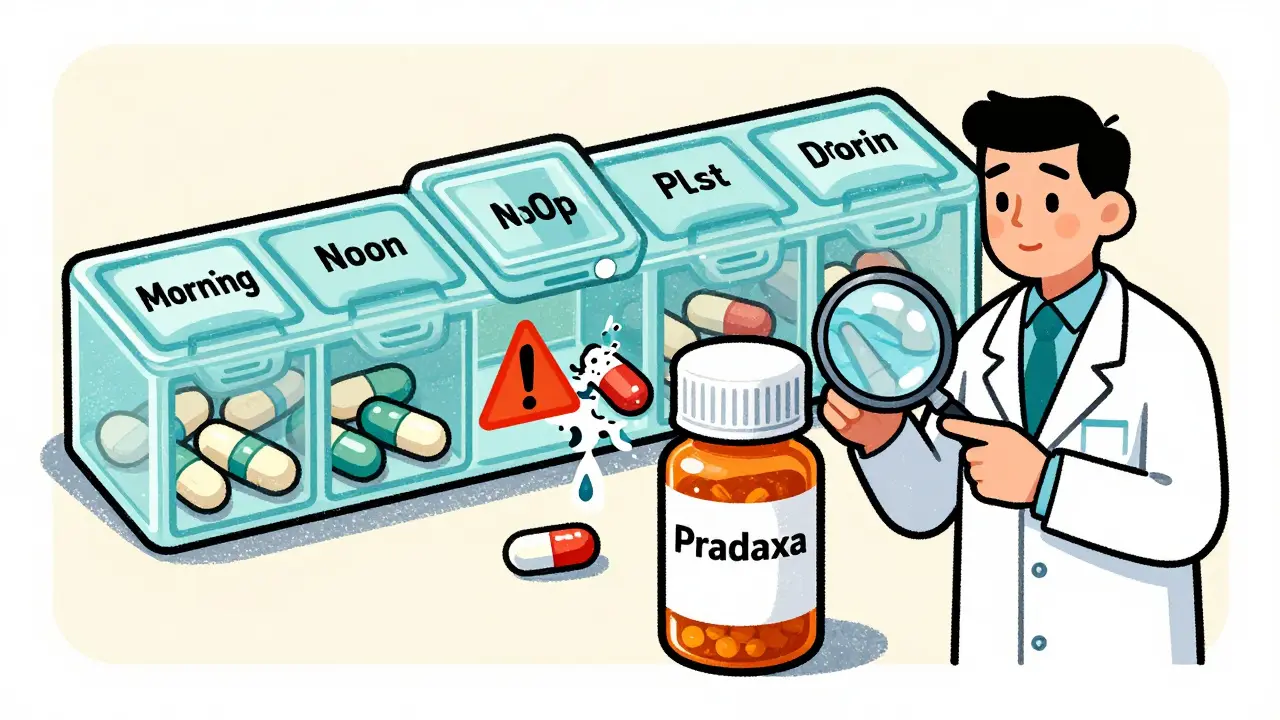
This is where things get dangerous. The FDA has warned for years: some medications must stay in their original bottles. Why? Because pill organizers expose pills to air, moisture, and light-things their original packaging was designed to block. Take Pradaxa (dabigatran). This blood thinner breaks down fast when exposed to humidity. A 2014 Medsafe report showed a patient developed internal bleeding after moving Pradaxa into a weekly organizer. The drug lost potency, and the patient’s INR levels spiked dangerously. The same thing happened with warfarin-another blood thinner-when stored in a plastic box. One user reported an INR of 6.2, which is life-threatening. Other medications that shouldn’t go in pill organizers include:- Effervescent tablets (like Alka-Seltzer): Moisture makes them dissolve prematurely.
- Nifedipine (a calcium channel blocker): Light and humidity degrade it.
- Cabergoline (used for Parkinson’s and prolactin issues): It’s hygroscopic-it absorbs moisture like a sponge.
- Sodium valproate (for epilepsy): Moisture reduces its effectiveness.
Contamination Is Real-And It’s Common
A 2019 study in PMC6843434 found that nearly 29% of pill organizers used in hospitals had bacterial contamination. Staphylococcus aureus was found in over 12% of samples. That’s not just a cleaning issue-it’s a health risk, especially for people with weakened immune systems. At home, the problem gets worse. The CDC reports that 43% of home users share pill organizers among family members. That’s a recipe for cross-contamination. One person’s cold virus on a lid can end up on someone else’s heart medication.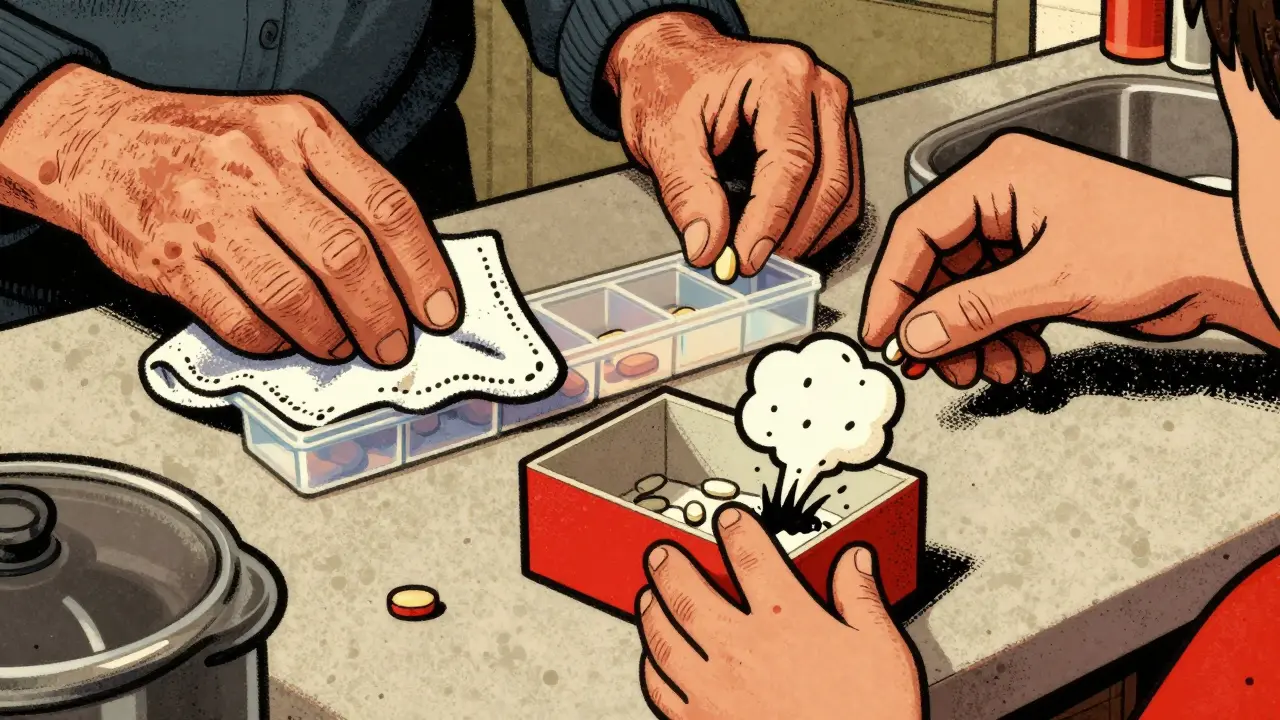
How to Clean Your Pill Organizer Properly
If you’re using one, cleaning isn’t optional. Here’s how to do it right:- Wash your hands with antimicrobial soap for 30 seconds before handling pills.
- Wipe down the organizer daily with a cloth dampened with 70% isopropyl alcohol.
- Once a week, take it apart and wash it in the dishwasher on a sanitize cycle (at least 71°C/160°F for 10 minutes)-but only if the manufacturer says it’s dishwasher-safe.
- Let it air dry completely before refilling.
How to Load Your Organizer Safely
Loading a pill box isn’t just about dumping pills in. It’s a precision task. Follow these steps:- Only put in standing medications-those you take at the same time every day. Don’t put in PRN (as-needed) pills unless they’re part of your routine.
- Double-check each pill against your prescription. Use a magnifying glass if you have trouble reading small print.
- Use a second person to verify your loading, especially if you’re on five or more medications.
- Fill one day at a time. Don’t pre-load a whole week unless you’re confident you won’t change your meds.
- Label each compartment clearly. Use color-coded stickers or a pill app if you’re visually impaired.
Smart Organizers: Helpful or Overkill?
Smart pill dispensers like Hero Health, MedMinder, and Philips Respironics offer alarms, locks, and app alerts. They’re great for people who forget meds often or live alone. One study found 92% of users were satisfied after two months. But here’s the catch: 23% of users over 75 struggled with the setup in the first two weeks. If you’re not tech-savvy, a simple plastic box with big labels might be better. Also, smart boxes cost $200-$300. Medicare doesn’t cover them. Medicaid might, but only in certain states. Check with your provider before buying.Child Safety: A Silent Risk
The CDC says over 65,000 children under 5 were exposed to medications in 2020-many from unsecured pill organizers. If you have young kids or grandkids visiting, get a child-resistant model. These require a specific twist, push, or code to open. Hero’s system needs a 4-digit password. Basic plastic boxes? They pop open with a fingernail.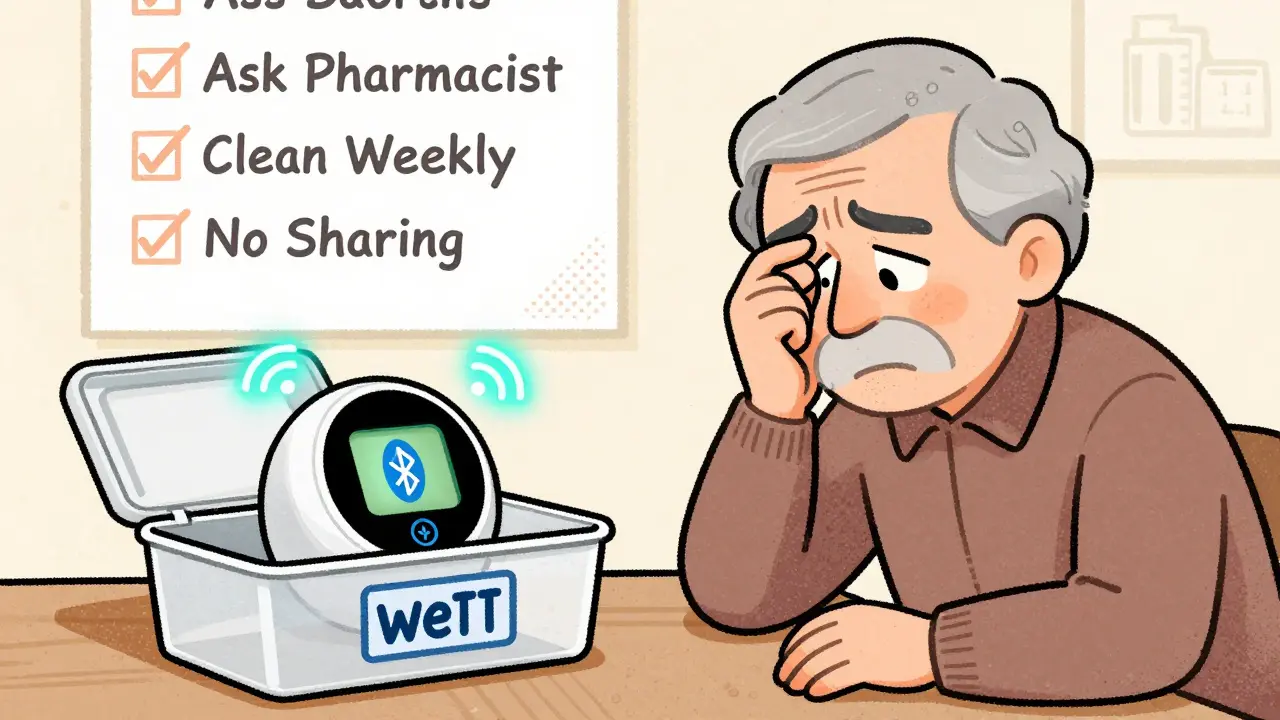
When to Avoid Pill Organizers Altogether
You might not need one if:- You take fewer than three medications daily.
- Your meds change often (like antibiotics or painkillers).
- You’re on any of the moisture-sensitive drugs listed above.
- You have trouble reading small labels or handling tiny pills.
Final Checklist: Is Your Pill Organizer Safe?
Before you use your organizer again, run through this:- Are all my meds safe to store outside original packaging? (Ask your pharmacist.)
- Is it clean? (Wiped daily, deep-cleaned weekly.)
- Are compartments clearly labeled? (Use bold stickers or a marker.)
- Is it child-resistant? (If kids are around, yes.)
- Do I load it with help? (Especially if on 5+ meds.)
- Do I check it weekly with my pharmacist?
What to Do If You Make a Mistake
If you accidentally put the wrong pill in, or you’re unsure if your meds are safe:- Stop using the organizer.
- Go back to original packaging.
- Call your pharmacist or doctor immediately.
- Don’t guess. Even one wrong dose can be dangerous.
Can I store all my medications in a pill organizer?
No. Some medications, like Pradaxa, warfarin, cabergoline, and effervescent tablets, degrade when exposed to air or moisture. These must stay in their original sealed packaging with desiccants. Always check with your pharmacist before repackaging any drug.
How often should I clean my pill organizer?
Wipe it down daily with 70% isopropyl alcohol. Do a deep clean once a week using a dishwasher on the sanitize cycle-if the manufacturer says it’s safe. Never use soap alone; residue can mix with your meds.
Are smart pill organizers worth the cost?
They’re helpful if you forget meds often or live alone, but they cost $200-$300 and aren’t covered by Medicare. For many, a simple, well-used plastic organizer with clear labels works just as well. Consider your tech comfort level and budget before spending.
Can I share my pill organizer with a family member?
Never. Sharing pill organizers risks cross-contamination with bacteria or even accidental ingestion of someone else’s meds. Each person should have their own organizer, even if they take the same drug.
What should I do if I miss a dose because of my pill organizer?
Don’t double up. Contact your pharmacist or doctor right away. They’ll tell you whether to skip the dose, take a reduced dose, or adjust your schedule. Never guess-especially with blood thinners, insulin, or heart meds.
Are there alternatives to pill organizers?
Yes. Many pharmacies offer pre-filled blister packs or dosette boxes with daily doses sealed in foil. These protect meds from moisture and are labeled clearly. Ask your pharmacist about these services-they’re often free or low-cost through Medicare Part D.
Next Steps
If you’re using a pill organizer today:- Call your pharmacist and ask: “Which of my meds are safe to store in a pill box?”
- Check your organizer for signs of moisture or mold-especially around the lids.
- Set a weekly reminder to clean it.
- Keep your original medication bottles in a safe place, just in case.




8 Comments
srishti Jain
December 30 2025Stop putting warfarin in those plastic boxes. I saw my grandma nearly die because of this. Just keep it in the bottle. Done.
Nadia Spira
December 31 2025Let’s be real-pill organizers are a neoliberal illusion of control. You’re outsourcing cognitive labor to a $2 plastic tray while ignoring systemic healthcare failures. The real issue isn’t moisture exposure-it’s that pharma and Medicare won’t fund proper dosette systems. We’re all just scrambling to survive a broken system while being told to clean our compartments like good little consumers.
Kelly Gerrard
January 2 2026It’s irresponsible to suggest people use pill organizers without explicit pharmacist approval. The FDA warnings exist for a reason. If you’re not consulting your provider before repackaging, you’re not being careful-you’re being reckless. Your health isn’t a DIY project.
Henry Ward
January 3 2026Of course people are getting sick. They’re using plastic boxes like they’re cereal containers. No one checks the humidity levels. No one cares about the FDA guidelines. And now we have grandmas bleeding out because they thought ‘it’s just a box.’ Wake up. This isn’t a convenience-it’s a death trap waiting to happen.
Cheyenne Sims
January 5 2026Sharing pill organizers is not just unwise-it’s a violation of basic hygiene and medical ethics. The CDC data is clear: cross-contamination leads to infection, misdosage, and death. If you’re doing this, you’re not just careless-you’re endangering others. There is no excuse.
Kunal Karakoti
January 5 2026There’s a quiet irony here: we’re so obsessed with optimizing our medication routines that we forget the human element. A pill organizer doesn’t care if you’re tired, confused, or grieving. Maybe the real solution isn’t better boxes-but better support systems. Someone to check in. Someone to help. A human voice saying, ‘Did you take it?’
Shae Chapman
January 6 2026Okay but can we just talk about how beautiful it is when someone takes the time to clean their organizer properly?? 🥹✨ I started doing the 70% alcohol wipe daily and now I feel like a medication superhero 🦸♀️💊 #SelfCareIsNotSelfish
henry mateo
January 6 2026i was gonna say somethign about smart ones but i think i misread the part about medicaid coverge… i thought it said medicare covers em but now im not sure… anyone know if it really does in cali? thx