Pulmonary Hypertension: Symptoms, Right Heart Strain, and Modern Therapy
When your lungs can't get enough oxygen, your heart works harder. But when that extra effort becomes constant, it starts to break down. Pulmonary hypertension (PH) isn't just high blood pressure in the lungs-it's a slow, silent strain on the right side of your heart that can lead to failure if ignored. Many people mistake the early signs for asthma, aging, or being out of shape. By the time they get a proper diagnosis, the damage is often advanced. The good news? We know more now than ever about how to catch it early, measure the strain, and treat it effectively.
What Pulmonary Hypertension Really Means
Pulmonary hypertension means the blood pressure in the arteries leading from your heart to your lungs is too high. Not just a little high-high enough to force your right ventricle to pump against serious resistance. The official diagnostic cutoff changed in 2022: it’s now a mean pulmonary arterial pressure greater than 20 mmHg at rest, not 25 mmHg like before. That small change means more people are being diagnosed earlier, before their hearts start to fail.
This isn’t one disease. It’s five different groups, each with different causes. Group 1 is pulmonary arterial hypertension (PAH), where the small arteries in the lungs narrow for no clear reason. Group 2 comes from left heart disease-like a weak left ventricle backing up pressure into the lungs. Group 3 is tied to lung diseases like COPD or pulmonary fibrosis. Group 4 is caused by blood clots that never cleared out. And Group 5 is a mix of weird, rare conditions like blood disorders or metabolic diseases.
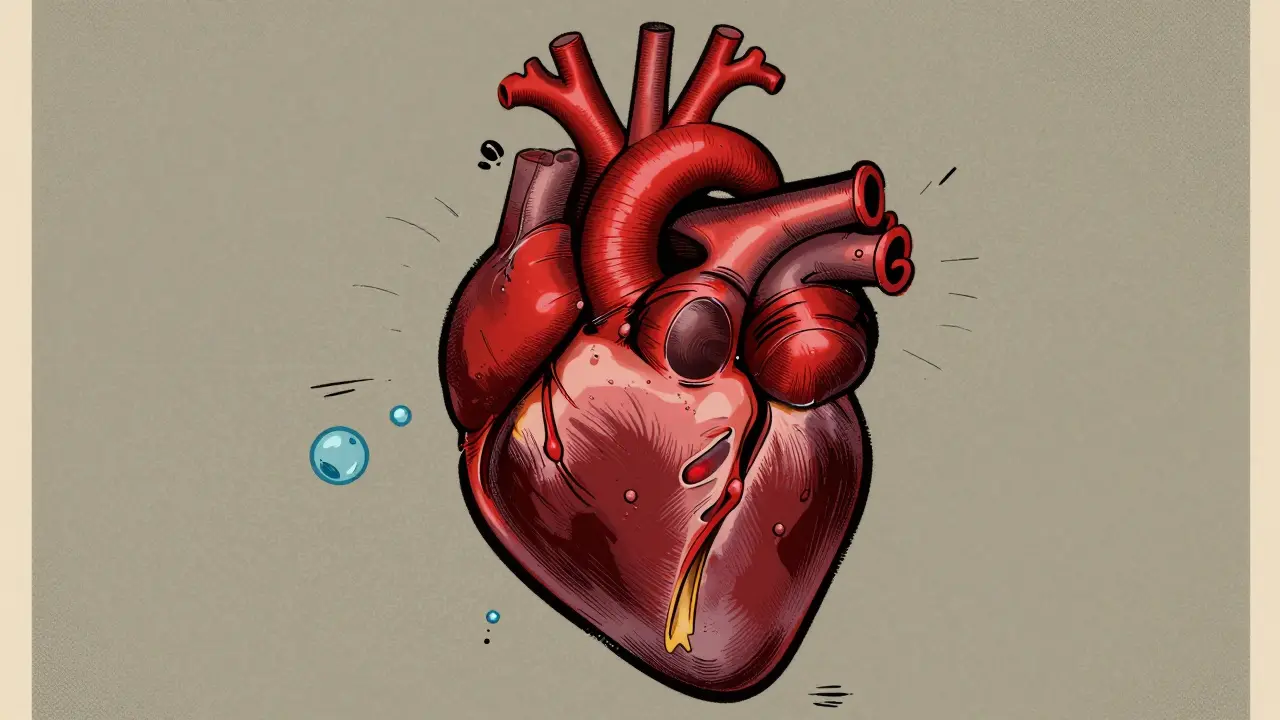
Right heart strain is the real danger. Your right ventricle isn’t built for high pressure. It’s thin-walled, meant to gently push blood through the low-resistance lung network. When pressure climbs, the muscle thickens, stretches, and eventually weakens. Without treatment, this leads to right heart failure-a life-threatening condition where the heart can’t pump enough blood to the lungs to pick up oxygen.
Early Symptoms People Ignore
The first sign? Shortness of breath-especially when it doesn’t match your activity level. You’re not out of shape. You’re not getting older. You’re just getting more breathless than you should be walking up stairs, carrying groceries, or even talking. That’s the classic red flag.
Other early signs include fatigue that doesn’t go away with rest, swelling in your ankles or legs, and a racing or pounding heartbeat. You might feel dizzy or faint when standing up quickly. Some people notice their lips or fingers turning blue during cold weather-not from being cold, but because oxygen isn’t reaching them.
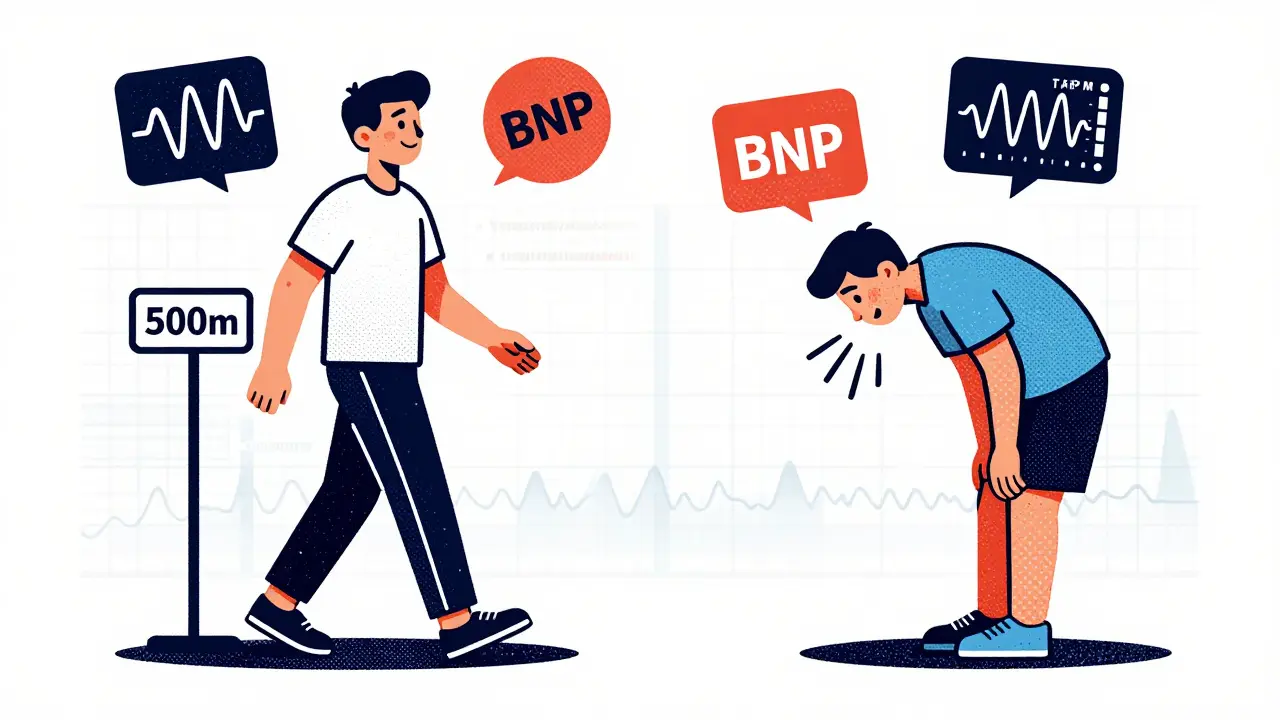
Here’s what’s scary: a 2023 survey from the Pulmonary Hypertension Association found that 78% of patients were first misdiagnosed. Doctors told them they had asthma. Or COPD. Or anxiety. One Reddit user shared how his doctor said he was just “out of shape” for 18 months while his 6-minute walk distance dropped from 500 meters to 220. That’s not laziness. That’s his heart failing.
How Right Heart Strain Shows Up on Tests
Doctors don’t guess at right heart strain-they measure it. The gold standard is right heart catheterization. A thin tube is threaded into the heart to directly measure pressure in the pulmonary arteries. It’s invasive, but it’s the only way to know for sure. Echocardiograms are used first because they’re non-invasive and widely available. But they’re not perfect. They can overestimate pressure by 10 to 15 mmHg, leading to false positives.
Key signs of right heart strain on echo include:
- Right ventricular wall thickness over 5 mm
- Right ventricle size larger than 22 cm²
- TAPSE (tricuspid annular plane systolic excursion) under 17 mm
TAPSE is one of the most telling numbers. If it’s low, your right ventricle isn’t contracting properly. A 2020 study in the CHEST Journal found that people with a TAPSE below 17 mm had more than double the risk of dying within a year.
Biomarkers help too. BNP and NT-proBNP are proteins released when the heart is under stress. Levels above 180 pg/mL for BNP or 1,400 pg/mL for NT-proBNP signal serious strain and higher risk of death. These aren’t just numbers-they’re warning signs.
The 6-minute walk test is simple but powerful. You walk as far as you can in six minutes. If you cover less than 380 meters, your prognosis is worse. A 2020 analysis showed people walking under that mark had a 2.05 times higher risk of death or hospitalization.
Modern Therapy: It’s Not One Drug Anymore
Therapy for pulmonary hypertension has changed dramatically. In the 1980s, the average survival after diagnosis was just 2.8 years. Today, with the right treatment, 5-year survival is over 60%. That’s because we no longer rely on single drugs.
Current guidelines recommend combination therapy from the start for most patients with PAH. That means using two or even three drugs that work in different ways:
- Endothelin receptor antagonists (like bosentan or macitentan) block substances that narrow blood vessels.
- Phosphodiesterase-5 inhibitors (like sildenafil or tadalafil) help relax the arteries.
- Prostacyclin analogs (like epoprostenol or treprostinil) widen blood vessels and reduce clotting. These are often given through continuous IV or inhaled delivery.
- Soluble guanylate cyclase stimulators (like riociguat) boost the body’s natural vasodilators.
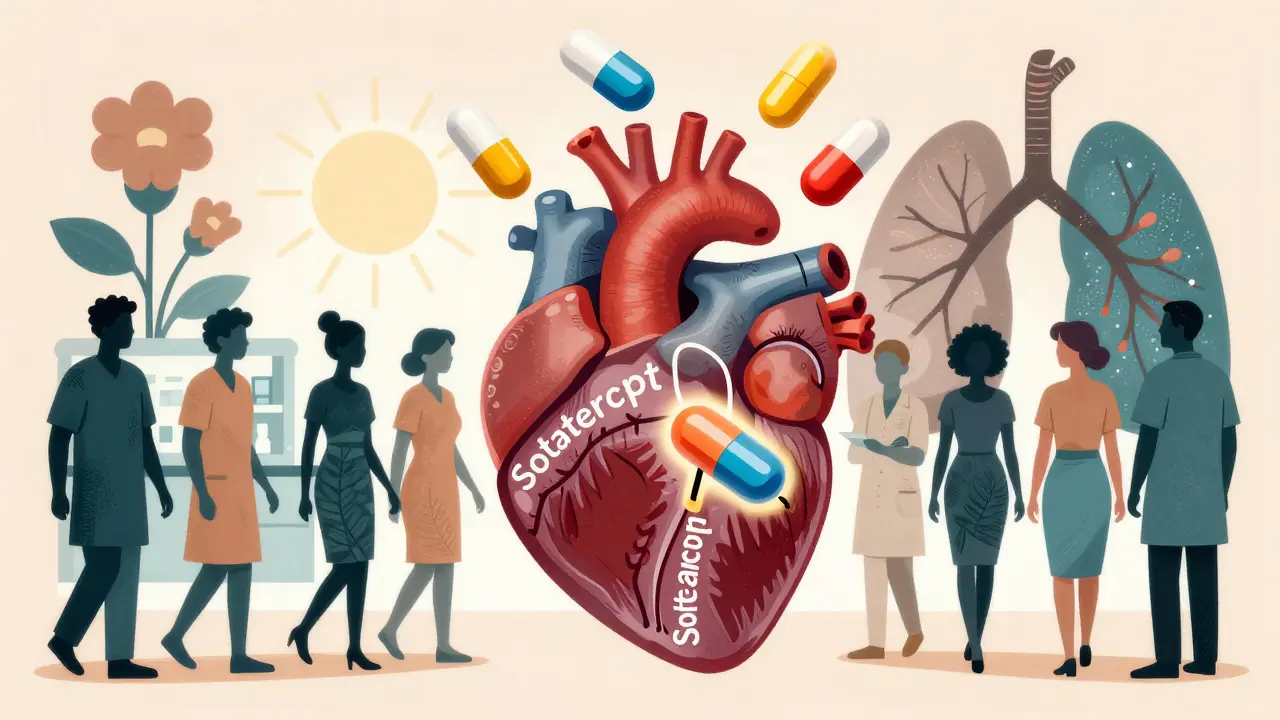
- Sotatercept, approved in 2021, is the first drug that actually reverses vessel remodeling by targeting TGF-β signaling. In the STELLAR trial, it cut the risk of death or worsening by 44%.
Doctors now start with two drugs together in many cases. A 2023 REVEAL Registry report showed 68% of PAH patients are on combination therapy at diagnosis-up from less than 20% before 2015. That’s a game-changer.
But access is a problem. Many patients wait over 30 days for insurance to approve advanced therapies like prostacyclins. A 2023 survey found 63% of patients faced delays. That’s not just frustrating-it’s dangerous.
Why Diagnosis Takes So Long-and What’s Being Done
On average, people wait 2.8 years from first symptoms to diagnosis. That’s almost three years of strain on the heart. Why? Because the symptoms look like other, more common conditions. Doctors don’t always think of PH. Primary care providers aren’t trained to spot the subtle clues.
That’s starting to change. The Pulmonary Hypertension Association’s 2025 plan focuses on educating doctors to recognize three key red flags:
- Progressive shortness of breath that doesn’t match lung function
- Unexplained right ventricular hypertrophy on an EKG
- Swelling in the legs without signs of left heart failure
If you have any of these, you need a referral to a PH specialist. There are only about 35 specialized PH centers in the U.S., but they handle 75% of all cases. They have the right equipment, the right experience, and the right teams-cardiologists, pulmonologists, pharmacists, and nurses all working together.
One patient in the PH registry described how her clinic caught her right ventricular function dropping to 35% on echo before she even felt worse. That’s the power of coordinated care.
The Future: New Biomarkers and Targeted Treatments
Research is moving fast. The LIBERTY trial is testing let-7 microRNA as a blood biomarker that could detect right heart strain before symptoms appear. That could mean catching PH before the heart even starts to strain.
Another exciting area is metabolic therapy. The right ventricle in PH patients runs out of fuel. It’s like a car running on empty. Drugs like dichloroacetate are being tested to help the heart use energy more efficiently. Phase 2 results are expected by late 2024.
But progress isn’t equal. A 2023 AHRQ report found minority patients wait 47% longer for diagnosis and have 32% higher death rates. That’s not a medical issue-it’s a systemic one. Better screening, better access, better education are all needed.
What You Can Do
If you’re experiencing unexplained breathlessness, swelling, or fatigue that won’t go away, don’t wait. Ask your doctor: Could this be pulmonary hypertension? If they say no, ask for a referral to a specialist. Don’t let them dismiss it as aging or being out of shape.
If you’ve been diagnosed, stick with your care team. Take your meds as prescribed. Track your walking distance. Know your BNP levels. These aren’t just numbers-they’re your life indicators.
PH is still serious. But it’s no longer a death sentence. With early detection, proper monitoring, and modern therapy, people are living longer, fuller lives than ever before.
What are the first signs of pulmonary hypertension?
The earliest signs are shortness of breath during normal activities, unexplained fatigue, swelling in the ankles or legs, and a fast or pounding heartbeat. Many people mistake these for being out of shape or aging, but they’re often the first red flags of strain on the right side of the heart.
Can pulmonary hypertension be cured?
There’s no cure yet, but modern treatments can control the disease and significantly extend life. Drugs like sotatercept are now shown to reverse some of the damage to lung arteries. With early diagnosis and combination therapy, many patients live 10 years or more after diagnosis.
How is pulmonary hypertension diagnosed?
Diagnosis starts with an echocardiogram to estimate pressure in the lungs. But the only way to confirm it is through right heart catheterization, which directly measures pulmonary artery pressure. A pressure greater than 20 mmHg at rest confirms pulmonary hypertension. Other tests like BNP levels and the 6-minute walk test help assess severity.
What’s the difference between Group 1 and Group 2 pulmonary hypertension?
Group 1 is pulmonary arterial hypertension (PAH), where the problem is in the lung arteries themselves-they narrow for unknown reasons. Group 2 is caused by left heart disease, like heart failure or valve problems, where pressure backs up from the left side into the lungs. Treatment is very different: Group 1 needs PH-specific drugs, while Group 2 focuses on fixing the left heart issue.
Why is right heart catheterization necessary if echocardiograms are available?
Echocardiograms are great for screening, but they’re not accurate enough for diagnosis. They can overestimate pressure by 10 to 15 mmHg and can’t tell the difference between Group 1 and Group 2 PH. Right heart catheterization gives exact pressure readings, measures resistance, and helps doctors choose the right treatment. It’s the only way to know for sure.
What lifestyle changes help with pulmonary hypertension?
Avoid smoking, high altitudes, and strenuous exercise. Stay active with light walking as tolerated. Follow a low-salt diet to reduce swelling. Get vaccinated for flu and pneumonia to avoid lung infections. Avoid pregnancy-it’s extremely dangerous with PH. And never stop your medications without talking to your PH specialist.

9 Comments
Dylan Smith
December 16 2025Been dealing with this for years and no one believed me until my ankles swelled up like balloons
Souhardya Paul
December 17 2025This is one of the clearest breakdowns of PH I've ever read. The shift from 25 to 20 mmHg as the diagnostic threshold is huge-it means people like my cousin, who was told she was just 'anxious' for two years, might’ve been caught sooner. The stats on misdiagnosis are terrifying, but the combo therapy data gives me real hope. Sotatercept isn’t just another drug-it’s a game-changer. I’ve seen friends go from oxygen-dependent to hiking again after starting it. We need more awareness, not just in clinics but in primary care. This shouldn’t be a specialist-only conversation.
Ron Williams
December 18 2025My uncle had PH. He was 67, never smoked, loved gardening. They told him it was COPD. He died waiting for a proper echo. The part about TAPSE under 17 mm hitting double the risk? That’s the moment I realized how much we’re missing. Not everyone gets referred to a PH center. Some of us live in towns where the nearest specialist is 200 miles away. It’s not just about medicine-it’s about access.
Kitty Price
December 19 2025Just shared this with my mom who’s been breathless for 18 months. She’s finally seeing a pulmonologist next week 🙏
Aditya Kumar
December 20 2025Too much info. I just want to know if it’s fatal.
Colleen Bigelow
December 20 2025They changed the diagnostic threshold because they want more people on expensive drugs. Big Pharma pushed this. The real cause? EMFs from 5G towers weakening lung tissue. You think your heart is failing? It’s the radiation. And don’t get me started on how the CDC ignores minority death rates because they don’t want to admit the system is rigged. Sotatercept? It’s a placebo wrapped in a patent. They’re selling fear, not cures.
Billy Poling
December 22 2025It is of paramount importance to underscore the necessity of rigorous clinical evaluation in the context of pulmonary hypertension, as the diagnostic criteria have undergone a significant recalibration since 2022, reducing the mean pulmonary arterial pressure threshold from 25 mmHg to 20 mmHg, thereby expanding the population eligible for intervention. Furthermore, the classification system into five distinct groups, each with unique pathophysiological mechanisms, necessitates a highly individualized therapeutic approach, particularly given the marked disparity in survival outcomes between Group 1 and Group 2 etiologies. The reliance upon right heart catheterization as the gold standard remains indispensable, despite the widespread utilization of echocardiography, which, as noted, exhibits a propensity for overestimation by as much as 15 mmHg, thereby introducing a nontrivial risk of diagnostic overcall and consequent overtreatment. Additionally, the emergence of combination therapy regimens, including endothelin receptor antagonists, phosphodiesterase-5 inhibitors, and prostacyclin analogs, has demonstrably improved five-year survival rates from less than 30% to over 60%, a transformation that demands systematic implementation across all levels of care, particularly in resource-constrained environments where insurance delays of up to 30 days remain a critical barrier to life-sustaining pharmacotherapy.
SHAMSHEER SHAIKH
December 23 2025As a medical educator in India, I have seen too many patients suffer for years because PH is not on the radar of even experienced physicians. This article is a gift. The part about TAPSE and BNP levels? We don’t even have echocardiograms in half our rural clinics. But we can teach frontline workers to ask: 'Is your breathlessness worse than your age?' and 'Do your feet swell without heart failure?' If they say yes, refer. Now. We need PH awareness campaigns in Hindi, Tamil, Bengali-not just English. And sotatercept? We need it here too. Not just for the rich. This isn’t just science-it’s justice.
James Rayner
December 24 2025I’ve been thinking about how we assign meaning to symptoms. We call breathlessness 'aging' or 'laziness' because it’s easier than admitting our systems are broken. But the body doesn’t lie-it just gets louder. That 6-minute walk test? It’s not a number. It’s a person trying to carry groceries. The real tragedy isn’t the disease. It’s how long we make people wait to be heard. I hope this changes. Not just for diagnosis, but for how we listen.