Spanish-Language Resources to Understand Generic Medications
Many Spanish-speaking patients in the U.S. are told they can save money by switching to generic medications, but they don’t always understand what that really means. They see a different pill - maybe a different color, shape, or size - and worry it’s not the same. Some stop taking it altogether. Others ask their pharmacist, “¿Tiene la versión genérica de esa medicina? La original es muy cara.” (Do you have the generic version of that medicine? The original one is too expensive.) That question is common. And the answer should be clear.
What Exactly Is a Generic Medication?
A generic medication has the same active ingredient, strength, dosage form, and route of administration as the brand-name drug. It works the same way in your body. The FDA requires that generics meet the same strict standards for safety and effectiveness. The only differences are in the inactive ingredients - things like dye, flavoring, or filler - which don’t affect how the medicine works. But many Spanish-speaking patients don’t know this. They think “genérico” means “weaker,” “old,” or “second-rate.” That’s not true.
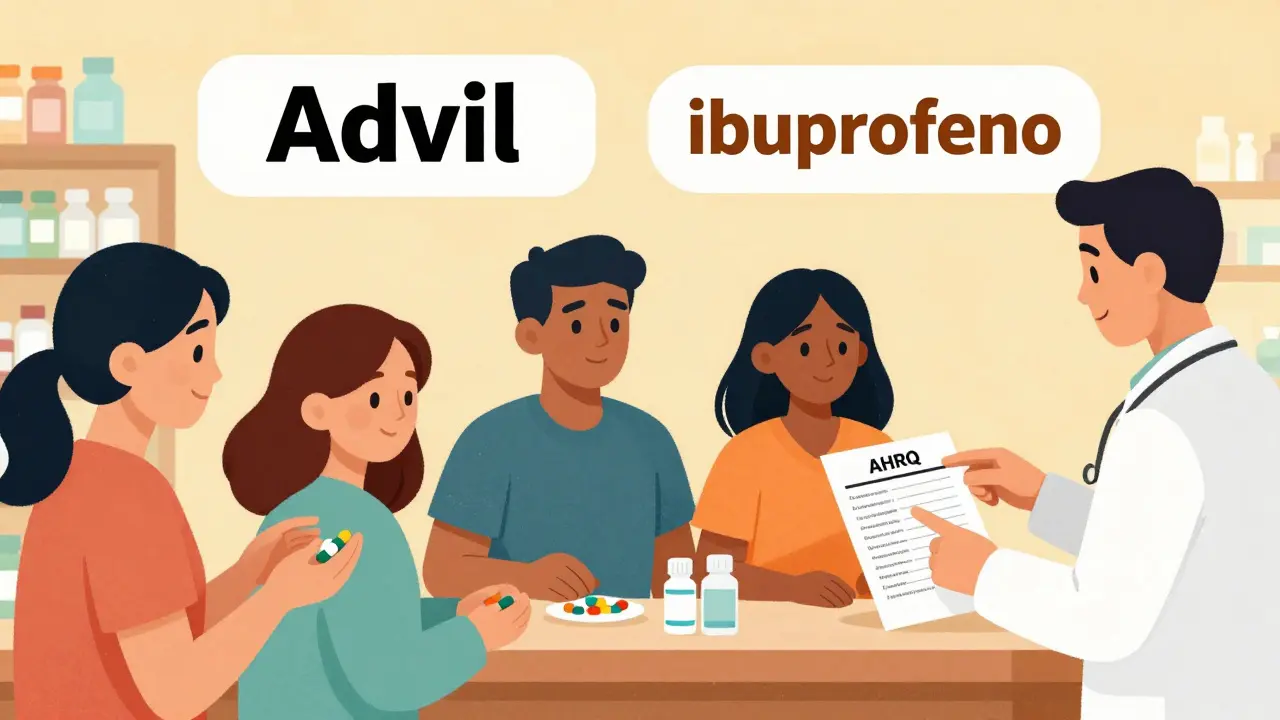
The Spanish term for generic medication is el medicamento genérico. You’ll also hear medicamento de marca for brand-name drugs. In Spanish-language resources, you’ll often see side-by-side comparisons showing that ibuprofeno is the generic version of Advil, or losartán is the generic for Cozaar. These comparisons help patients see that the name on the bottle doesn’t change what’s inside.
Why These Resources Matter
Over 90% of prescriptions filled in the U.S. are for generic drugs. But only 22% of total spending on medications goes to generics - because brand names cost far more. For many Spanish-speaking families, that difference can mean choosing between medicine and groceries. A patient taking a $300-a-month brand-name drug might pay just $10 for the generic. That’s $200 a month saved. But if they don’t trust the generic, they won’t take it - even if they can’t afford the brand.
Studies show that language barriers directly affect medication adherence. Patients with limited English proficiency are 3.2 times more likely to misunderstand their prescriptions. That’s why Spanish-language resources aren’t just helpful - they’re necessary. The Agency for Healthcare Research and Quality (AHRQ) found that when patients received bilingual medication lists, they were 78% more likely to correctly identify their generic drugs. That’s not a small number. It’s life-changing.
Where to Find Reliable Spanish-Language Resources
Not all Spanish-language materials are created equal. Some are well-designed. Others are confusing, outdated, or full of medical jargon. Here are the most trusted sources:
- MedlinePlus.gov (español) - Offers free bilingual PDFs that compare brand and generic names with simple explanations. Updated quarterly.
- AHRQ’s “My Medicines List” - Available in Spanish since 2023, this tool helps patients write down their meds: brand name, generic name, why they take it, dosage, and frequency. It’s simple, practical, and used in clinics nationwide.
- Wake AHEC’s Pharmacy Translation Card - Designed for healthcare providers, this card includes phrases like: “Esta medicina tiene una apariencia diferente, pero es lo mismo.” (This medicine looks different, but it is the same.) Useful for pharmacists explaining why the pill changed.
- Spanish Academy’s Pharmacy Vocabulary Guide - Covers 27 key terms like medicamentos de venta libre (OTC meds), efectos secundarios (side effects), and equivalencia terapéutica (therapeutic equivalence).
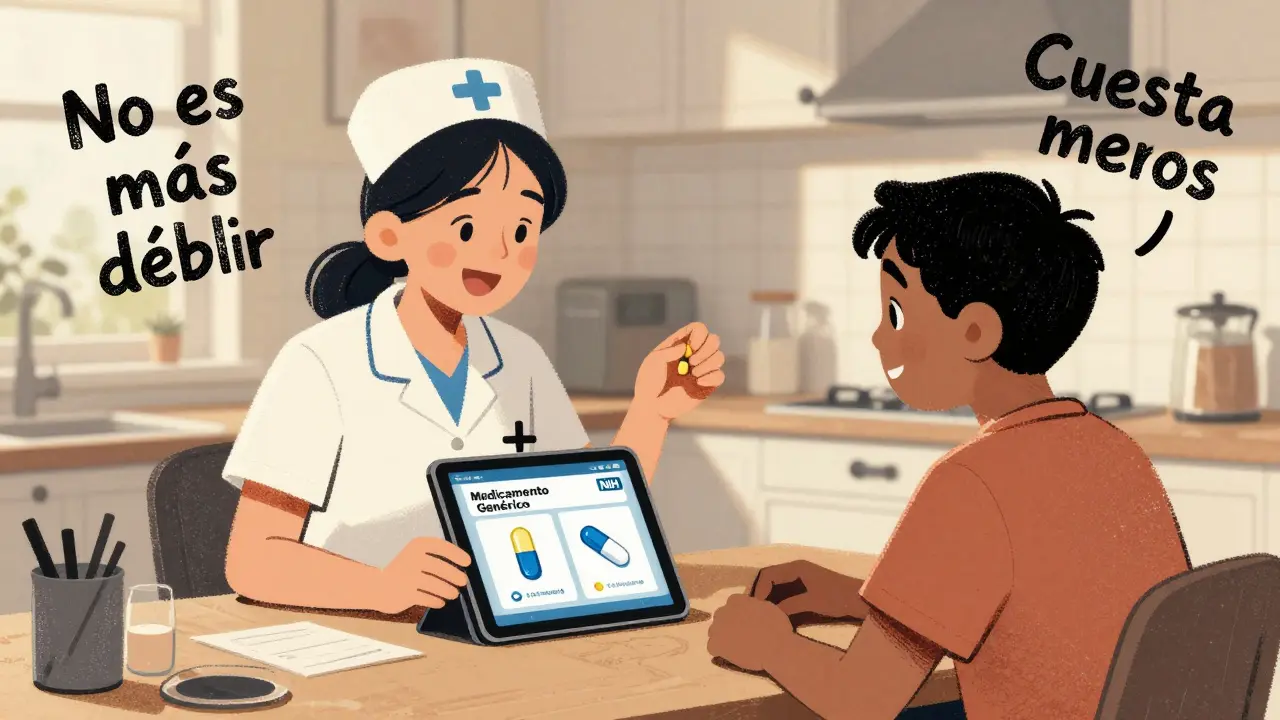
- NIH’s “Medicamento Genérico” App - Launched in 2023, this free app shows side-by-side images of brand and generic pills, includes cost calculators, and lets users record questions for their pharmacist. Over 147,000 people have downloaded it.
Some hospitals, like Kaiser Permanente, now include QR codes on their Spanish medication sheets that link to short videos in different Spanish dialects - explaining how generics work, why they look different, and how to check if they’re safe. These videos have cut patient calls about medication confusion by over half.
Common Misunderstandings and How to Fix Them
Even with good resources, confusion remains. Here are the top three issues patients face:
- “The pill looks different - is it really the same?” - Generic pills often change color or shape because manufacturers use different inactive ingredients. A blue pill one month might be white the next. That doesn’t mean it’s weaker. Visual aids showing side-by-side images help reduce this fear by 37%, according to a University of Miami study.
- “My doctor prescribed this, but the pharmacy gave me something else.” - Pharmacists often substitute generics automatically, unless the doctor says “dispense as written.” Patients need to know this is normal. The phrase “El farmacéutico puede cambiar la marca por la versión genérica” (The pharmacist can switch the brand to the generic version) should be part of every conversation.
- “I heard generics aren’t as good.” - This myth comes from misinformation or past experiences with poor-quality generics. Today’s U.S. generics are held to the same FDA standards as brand names. But regional differences can confuse people. For example, paracetamol is used in Spain, while acetaminofén is used in Mexico and the U.S. - same drug, different name. Patients who travel between regions need to know this.
What’s Missing From Most Resources
Even the best tools have gaps. Many Spanish-language resources use “neutral Spanish,” which tries to avoid regional slang. But that’s not always helpful. A patient from Mexico might not recognize the word pastillas if they’ve only heard comprimidos. Some resources don’t explain bioequivalence - the scientific proof that generics work the same. Others don’t include audio pronunciations. A patient might hear farmacia pronounced “far-ma-see-ah” in a video, but if they’ve always heard “far-MA-sya,” they might think it’s a different word.
Also, only 28% of community health centers in the U.S. have resources that specifically explain generic medication equivalence. Most just hand out a translated list without context. That’s like giving someone a map in a language they don’t speak - it’s useless without someone to explain the landmarks.
What Works: Real Stories
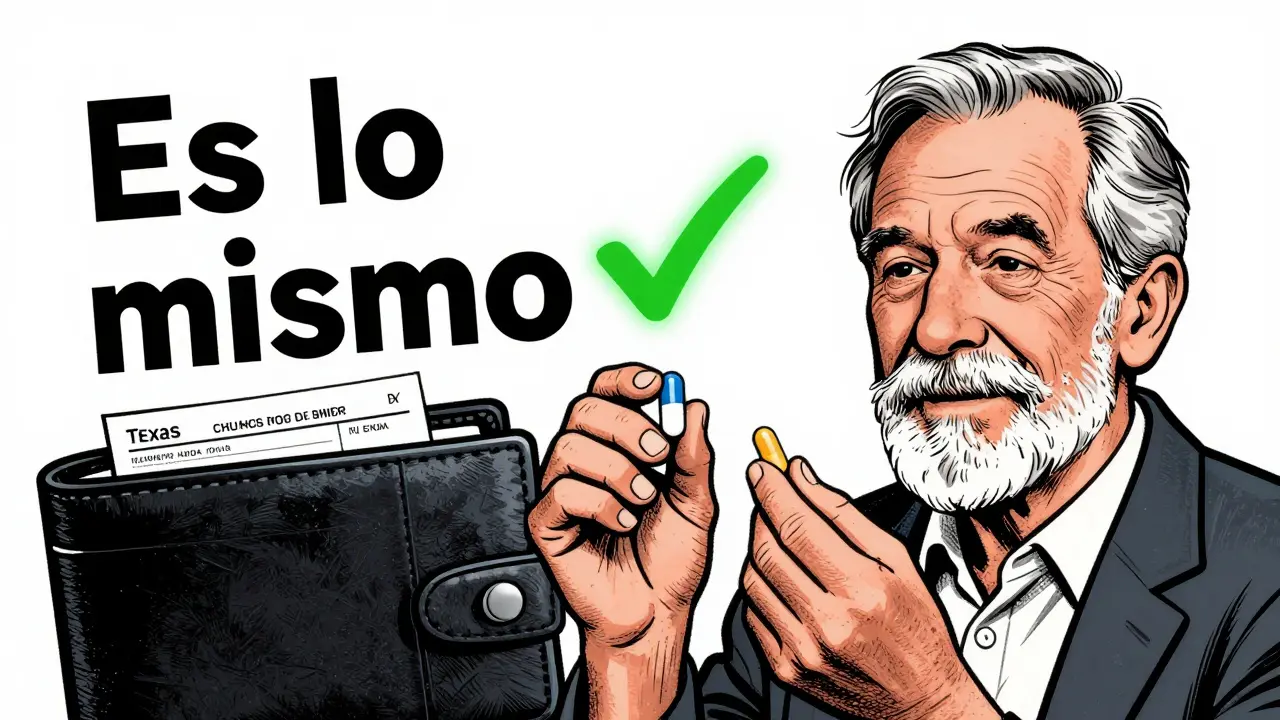
A 68-year-old man in Texas was taking a brand-name blood thinner that cost $280 a month. He stopped taking it because he couldn’t afford it. When his daughter found AHRQ’s Spanish medication list, she showed him the generic version - warfarina - and explained it was the same medicine. He started taking it again. His monthly cost dropped to $12. He now carries the printed list in his wallet.
A nurse in California shared a story about a patient who refused her generic antidepressant because the pill was yellow instead of blue. She showed him a picture from the NIH app - side-by-side images of both versions. He said, “Ah, entonces es lo mismo.” (So it’s the same.) He started taking it. His mood improved. He didn’t know he could have saved $150 a month.
These aren’t rare cases. They’re everyday moments where clear information changes outcomes.
How to Use These Resources
If you’re a patient or caregiver:
- Ask your pharmacist: “¿Este es el medicamento genérico?” and “¿Es lo mismo que mi medicina anterior?”
- Use the NIH app to compare your pill’s shape and color with images of the brand version.
- Keep a printed Spanish version of your medication list - include both brand and generic names.
- Record your questions ahead of time. Don’t be afraid to ask for a translator if needed.
If you’re a provider:
- Use AHRQ’s “My Medicines List” in Spanish during every medication review.
- Display visual aids showing brand vs. generic pills - even simple printed photos help.
- Learn the top 10 pharmacy phrases in Spanish: “No es más débil,” “Es igual,” “Cuesta menos,” “Tiene el mismo ingrediente activo.”
- Don’t assume patients understand the word genérico. Explain it simply: “Es la misma medicina, pero más barata.”
What’s Next
Technology is catching up. Epic Systems, one of the largest electronic health record companies, is testing AI tools that automatically generate personalized Spanish explanations based on a patient’s region and medication history. For example, if a patient is from Puerto Rico, the system might use pastillas instead of comprimidos. Pilot programs in 37 hospitals have reduced medication errors by 31%.
But the real change happens in the clinic, the pharmacy, and the kitchen table - where a patient finally understands that the small, plain pill in their hand is just as powerful as the expensive one they used to take.
Are generic medications as safe as brand-name ones?
Yes. The U.S. Food and Drug Administration (FDA) requires generic medications to have the same active ingredient, strength, dosage, and effectiveness as brand-name drugs. They must meet the same strict manufacturing and quality standards. The only differences are in color, shape, or inactive ingredients - none of which affect how the medicine works in your body.
Why do generic pills look different from brand-name pills?
Generic pills often look different because U.S. law requires them to have a different appearance than the brand-name version. This avoids confusion and trademark issues. The color, shape, or size changes because manufacturers use different dyes or fillers - but the active ingredient that treats your condition is exactly the same. Many Spanish-language resources now include side-by-side photos to help patients recognize this difference isn’t a safety issue.
Can I trust a generic medication if it’s much cheaper?
Absolutely. Generic medications cost less because their manufacturers don’t have to repeat expensive clinical trials. The original brand-name company paid for those studies. Generic makers only prove their version works the same way. That’s why generics can be 80-85% cheaper. A 2023 study found that 98% of patients who switched to generics reported no change in how they felt - proving the lower price doesn’t mean lower quality.
What should I say if my pharmacist gives me a different pill than last time?
Ask: “¿Es la versión genérica de mi medicina?” (Is this the generic version of my medicine?) and “¿Es lo mismo que antes?” (Is it the same as before?) If it’s a generic, it’s normal. But if the active ingredient changed, you should talk to your doctor. Always check the label for the generic name - for example, losartán instead of Cozaar. If you’re unsure, use the NIH Medicamento Genérico app to compare the pill’s appearance.
Are there different names for the same generic drug in Spanish-speaking countries?
Yes. The same generic drug can have different names depending on the country. For example, the pain reliever known as acetaminophen in the U.S. is called acetaminofén in Latin America and paracetamol in Spain. This can cause confusion for patients who travel or get prescriptions from different regions. Reliable resources now include these regional variations. Always check the active ingredient, not just the brand or local name.



10 Comments
Shawn Raja
January 26 2026Bro, I used to think generics were just cheap knockoffs until my abuela started taking warfarina instead of that $400 brand stuff. Now she’s alive, sane, and saving $300 a month. The pill looks different? So does my cousin’s haircut after prison - doesn’t mean it’s not still him. 🤷♂️
Ryan W
January 27 2026Let’s be clear: the FDA doesn’t regulate ‘generic’ - it regulates bioequivalence. If your pill isn’t within 80-125% AUC and Cmax of the innovator, it’s not approved. Period. Stop treating this like a cultural myth. This isn’t ‘trust,’ it’s pharmacokinetics. And if you can’t read the label, that’s your problem, not the system’s.
Allie Lehto
January 29 2026OMG I just cried reading this 😭 Like... why do we let Big Pharma get away with this?? I mean, it’s not like the pills are magic crystals, right?? We’re all just humans trying to survive, and yet we’re punished for being poor?? 🤔💔
TONY ADAMS
January 29 2026My mom took the generic and got sick. So now I just pay extra. Don’t mess with my family’s health.
Napoleon Huere
January 31 2026Think about it - if a generic drug works the same, why do we still have brand loyalty? Is it really about efficacy... or is it about identity? We attach meaning to packaging, color, even the shape of the pill. We don’t just take medicine - we perform health. And when the pill changes, we feel like our story got rewritten without consent. That’s not ignorance. That’s trauma.
Shweta Deshpande
January 31 2026This is so beautiful and needed! I work with immigrant families in Mumbai and we face the same thing - people think cheaper means worse. I show them pictures of paracetamol vs. acetaminophen and their eyes light up like they just discovered a secret. It’s not about language, it’s about dignity. When you explain it simply, they feel respected, not fooled. Thank you for making this accessible. I’m printing all the links and sharing them in my WhatsApp group right now 💕
Aishah Bango
February 1 2026If people can’t read the label, maybe they shouldn’t be taking pills at all. This isn’t a language issue - it’s a responsibility issue. Why are we babying adults who can’t manage basic health literacy? The system shouldn’t bend to ignorance.
Simran Kaur
February 1 2026I just want to say - I’m from Punjab and my dad took a generic blood pressure med for years. He thought it was ‘fake’ because it was white instead of blue. Then one day, his cousin in Mexico sent him a photo of the same pill - same name, same number, different color. He cried. Not because he was scared… but because he finally felt seen. This isn’t just about medicine. It’s about belonging. Thank you for seeing that.
Neil Thorogood
February 2 2026Y’all are out here treating generic meds like a spiritual awakening 😭 I just told my cousin ‘bro, it’s the same damn chemical’ and she said ‘but it’s not blue!’ I swear to god I almost threw my phone. Here’s the NIH app. Use it. Stop crying about pill colors. 🤦♂️💊
Jessica Knuteson
February 3 2026Studies show 98% feel no difference. But correlation isn’t causation. Placebo effect is real. And if patients believe the generic is inferior, their physiological response may reflect that. So the real problem isn’t the pill - it’s the narrative. Fix the narrative first. Then the meds follow.