Specialty Pharmacy: How Providers Manage Generic Specialty Drugs
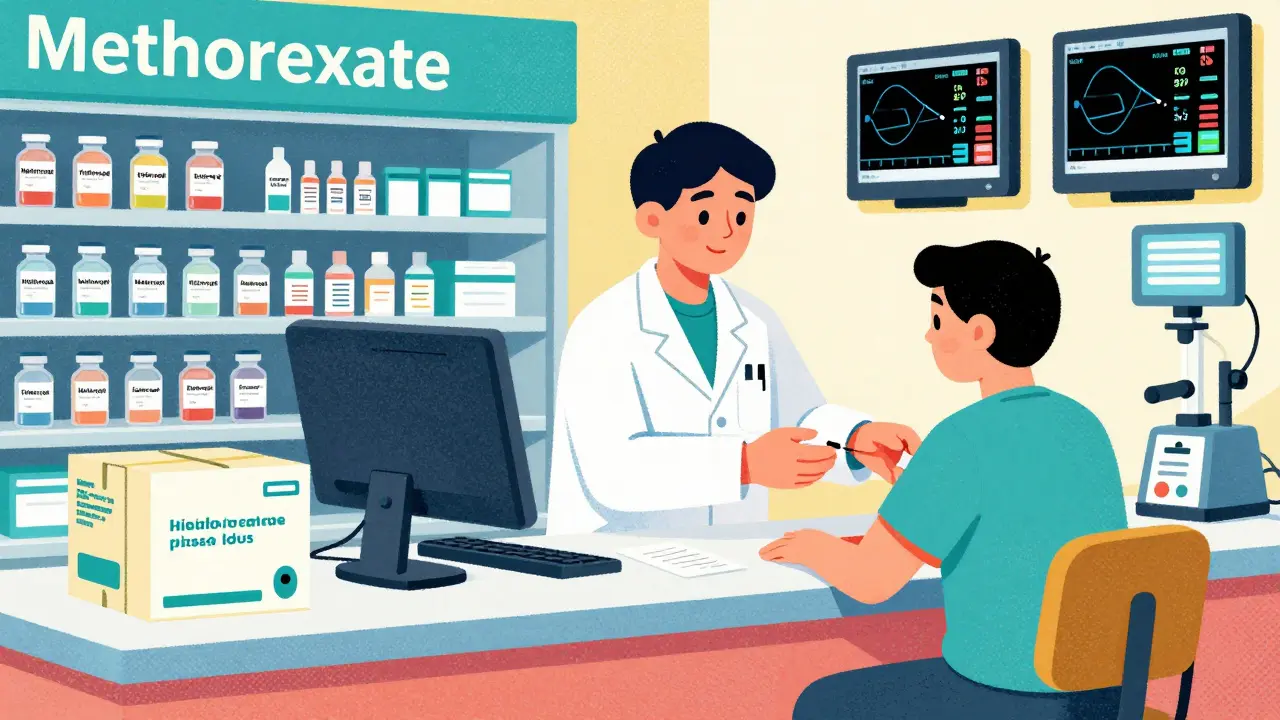
When a patient gets a generic version of a complex medication like methotrexate or etanercept, they might expect to pick it up at their local pharmacy. But that’s not how it works. Even when a specialty drug becomes generic, it often still goes through a specialty pharmacy. Why? Because it’s not about the price tag-it’s about the process.
What Makes a Drug ‘Specialty’?
A specialty drug isn’t just expensive. It’s complicated. These are medications that need special handling: refrigeration, precise dosing, injection or infusion, and close monitoring. Think biologics for rheumatoid arthritis, cancer treatments, or hepatitis C therapies. Even when a generic version becomes available, it doesn’t suddenly become a simple pill you can grab off a shelf. The FDA doesn’t approve true generics for most biologics. Instead, they approve biosimilars-medications that are highly similar but not identical. These still require the same level of care as the original brand. That’s why the distribution model doesn’t change just because the price drops.Why Providers Use Specialty Pharmacies for Generics
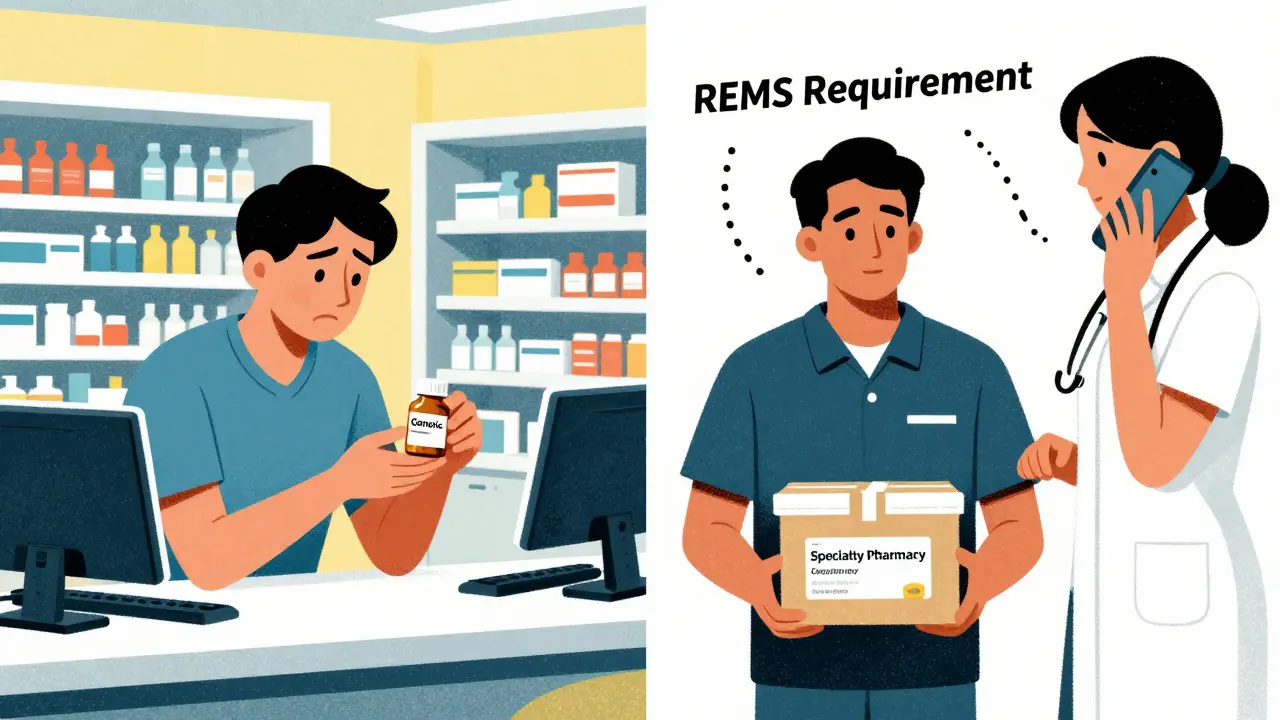
Manufacturers often lock their drugs-brand or generic-into specialty pharmacy networks. This isn’t a loophole. It’s a requirement. If a drug has a Risk Evaluation and Mitigation Strategy (REMS), only certified specialty pharmacies can dispense it. And most complex medications do. For example, a generic version of a biologic used to treat Crohn’s disease might cost 30% less than the brand. But if the manufacturer requires REMS compliance, the patient still gets it through a specialty pharmacy. Retail pharmacies aren’t allowed to fill it, even if it’s generic. The law doesn’t care about the price-it cares about the risk. Providers know this. They don’t choose specialty pharmacies because they like the paperwork. They choose them because they have to. Skipping the specialty channel could mean the patient doesn’t get the drug at all-or worse, gets it without proper training or monitoring.The Workflow: More Than Just Shipping Pills
Dispensing a generic specialty drug isn’t like filling a prescription for antibiotics. It’s a multi-step operation:- Prescription intake and verification
- Prior authorization with insurers
- Financial assistance coordination (many patients can’t afford even generics)
- Clinical assessment by a specialty pharmacist
- Training the patient on how to inject or infuse the drug
- Temperature-controlled packaging and shipping
- Follow-up calls to check for side effects
Speed, Cost, and Patient Frustration
There’s a downside. Turnaround time for specialty prescriptions averages 7.2 days. Compare that to retail pharmacies, where most prescriptions are ready in under 2 hours. For patients on tight schedules-especially those with chronic conditions-those extra days matter. Some patients report sticker shock. One user on Reddit switched from a $15 copay at Walgreens for generic methotrexate to a $75 copay through a specialty pharmacy, even though the drug was the same. Why? Because specialty pharmacies charge dispensing fees-often $250 to $500 per script-billed to the insurer. That cost gets passed down in the form of higher patient copays. But here’s the twist: patients who stay with the same specialty pharmacy through a brand-to-generic switch report higher satisfaction. A January 2024 survey found 68% of patients preferred keeping their existing care team. Why? Because the nurse who taught them how to inject their drug last year still remembers their name, their anxiety, their schedule. That continuity saves lives.Who Runs Specialty Pharmacies?
The market is dominated by three giants: OptumRx, CVS Specialty, and Express Scripts. Together, they control 84% of the U.S. specialty pharmacy market. Smaller regional players exist, but they’re often bought out or partnered with health systems. Health systems are pushing back. In 2024, 63% of surveyed hospitals said they planned to build their own specialty pharmacy operations. Why? Because they’re tired of losing control-and revenue-to outside vendors. If a hospital can dispense a generic specialty drug in-house, they can cut out the middleman, reduce delays, and keep patient data inside their own system. This shift could change everything. If hospitals start handling their own specialty drugs, the traditional specialty pharmacy model may shrink. But the core services-patient education, monitoring, coordination-won’t disappear. They’ll just move inside the clinic.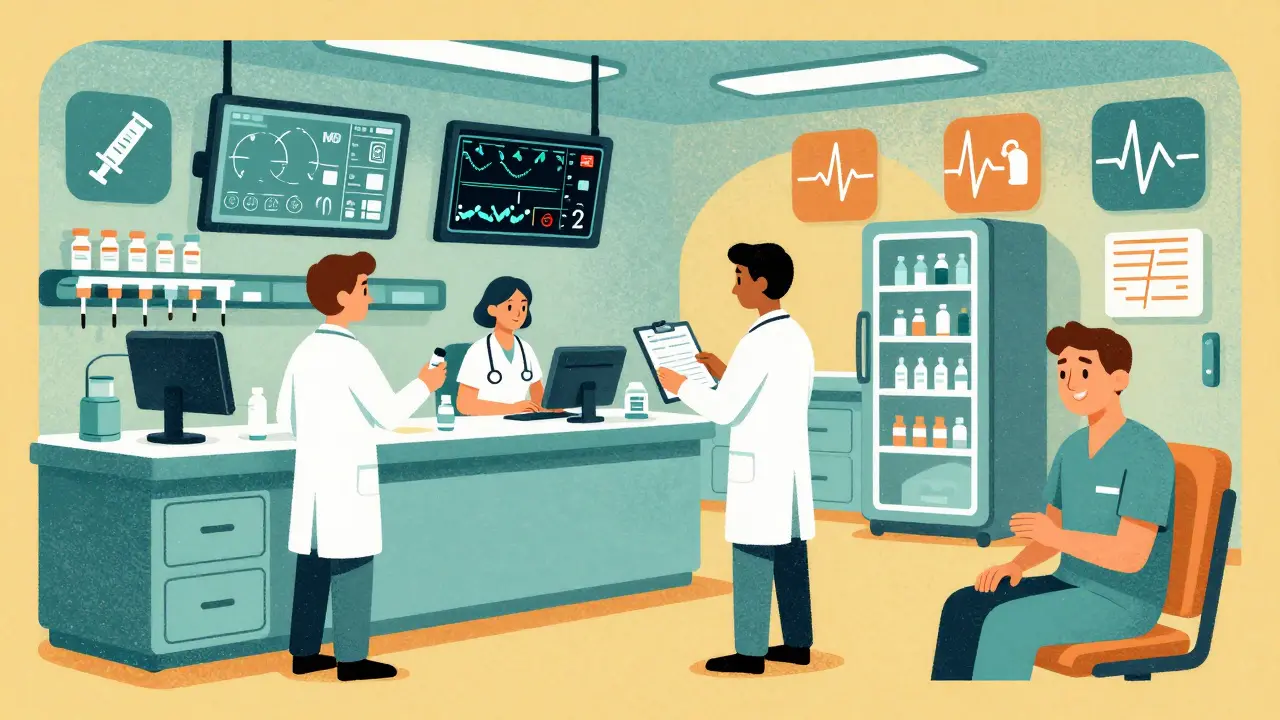
The Future: Biosimilars and Technology
Biosimilars are the big growth area. By 2028, they’re expected to make up nearly half of all specialty drug spending. And they all go through specialty pharmacies. The 2024 CMS rule requiring Medicare Part D to cover all FDA-approved biosimilars means more patients will get these drugs-still through specialty channels. Technology is helping. Real-Time Prescription Benefit (RTPB) systems have cut prior authorization times by over three days. That’s huge. But the human element still matters. A pharmacist who’s trained in rheumatology knows what questions to ask. A care coordinator who’s been with a patient for a year knows when to escalate a side effect.What Providers Should Know
If you’re a provider prescribing a generic specialty drug:- Don’t assume the patient can get it at a retail pharmacy. Check the manufacturer’s distribution rules.
- Know the REMS requirements. Some drugs can’t be dispensed without them.
- Explain to patients why they’re going through a specialty pharmacy-even if it’s cheaper. They’ll be less frustrated if they understand the ‘why’.
- Push for continuity. If a patient is switching from brand to generic, keep them with the same pharmacy and care team.
- Watch for delays. If a prescription is stuck in prior auth for over a week, call the pharmacy. Don’t wait for the patient to complain.
What’s Next?
The line between brand and generic is fading in specialty pharmacy. What matters now is the complexity of the drug, the risk to the patient, and the support they need. The next five years will see more biosimilars, more hospital-run pharmacies, and more pressure to cut costs. But the need for trained professionals who understand these drugs won’t go away. It’ll grow. Patients aren’t buying a pill. They’re buying a system. And that system still needs people.Why can’t I get my generic specialty drug at my local pharmacy?
Even if a specialty drug is generic, manufacturers often require it to be dispensed only through certified specialty pharmacies. This is usually due to FDA-mandated Risk Evaluation and Mitigation Strategies (REMS), which ensure patients receive proper training and monitoring. Retail pharmacies aren’t certified to handle these requirements, so they’re legally prohibited from filling these prescriptions-brand or generic.
Are biosimilars the same as generic drugs?
No. Biosimilars are not exact copies like traditional generics. They’re highly similar versions of complex biologic drugs, made from living cells. Because they’re structurally more complex, they can’t be copied exactly. The FDA requires rigorous testing to prove biosimilars work the same way as the original, but they still require the same handling, storage, and patient support as their branded counterparts-so they’re dispensed through specialty pharmacies.
Do specialty pharmacies charge more for generic drugs?
Yes, often. Specialty pharmacies charge a dispensing fee-typically $250 to $500 per prescription-on top of the drug cost. Even if the generic drug itself is cheaper, that fee remains. Insurers may cover most of it, but patients sometimes see higher copays than they’d pay at a retail pharmacy. The fee covers the clinical services: counseling, monitoring, coordination, and delivery-not just the pill.
Why do specialty pharmacy turnarounds take so long?
It’s not the drug-it’s the process. Specialty prescriptions require prior authorization, insurance verification, financial assistance applications, patient education, and temperature-controlled shipping. On average, it takes 7.2 days from prescription receipt to delivery. Oncology and hepatitis C drugs can take even longer. Retail prescriptions, by comparison, take about 1.2 days because they don’t need this level of oversight.
Should I switch my patient to a different pharmacy when they go from brand to generic?
No, unless there’s a clear benefit. Studies show patients who stay with the same specialty pharmacy during a brand-to-generic switch report higher satisfaction and better outcomes. The care team already knows their history, their side effects, their schedule, and their concerns. Switching disrupts that continuity and can lead to confusion, missed follow-ups, or even treatment delays.

10 Comments
fiona vaz
January 29 2026It’s wild how people think 'generic' means 'simple'. I’ve had to explain this to my mom three times-she still thinks the pharmacy is just trying to upsell her. The fact that they’re still teaching her how to inject it, tracking her labs, and calling to check in? That’s not a fee-it’s care. And honestly, I’d rather pay $75 than risk her messing up the dose because some cashier handed her a vial without a word.
John Rose
January 30 2026The REMS requirement is the real key here. It’s not about profit-it’s about liability. Retail pharmacies don’t have the infrastructure to handle temperature logs, injection training, or adverse event reporting. If a patient has a reaction and the pharmacy didn’t document proper counseling? That’s a lawsuit waiting to happen. The system isn’t broken-it’s just complex.
Rose Palmer
January 31 2026As a clinical pharmacist, I’ve seen the fallout when patients are switched without continuity. One case: a 62-year-old with RA switched pharmacies after her brand-to-generic transition. New team didn’t know she was allergic to the preservative in the prefilled pen. She ended up in the ER with a severe reaction. The old pharmacy had documented it in her file for 18 months. Don’t underestimate institutional memory-it’s not bureaucracy, it’s safety.
Howard Esakov
February 1 2026LOL so the system is designed to make patients pay more under the guise of 'care'? 😏 Classic corporate theater. They call it 'specialty' like it’s a VIP lounge. Meanwhile, I’m paying $500 just to get a drug that costs $12 wholesale. Someone’s making bank. And no, I don’t buy the 'but we educate patients!' excuse-my cousin got her insulin through a retail pharmacy and lived just fine. This is rent-seeking disguised as medicine.
Rhiannon Bosse
February 1 2026Okay but let’s be real-this whole 'specialty pharmacy' thing is just Big Pharma’s way of locking in profits even after patents expire. 🕵️♀️ The same companies that charge $10K for the brand now charge $7K for the 'generic' but still force you through their exclusive pharmacy network. And guess who owns those pharmacies? Yep. OptumRx. CVS. Express Scripts. All owned by the same corporations that make the drugs. It’s not a supply chain-it’s a pyramid scheme with syringes.
And don’t even get me started on the 'patient education'-it’s scripted. 'Hi, this is Sarah from your specialty pharmacy. We’re so excited to help you on your journey!' Translation: We’re billing you $250 for reading a 3-page PDF.
Lance Long
February 2 2026I’ve been on methotrexate for 8 years. First time I got it through a specialty pharmacy, I cried. Not because of the cost-because the nurse spent 45 minutes with me. She asked how I was sleeping, if I’d talked to my kids about it, if I was scared. No one had ever asked me that before. I didn’t need a fancy pharmacy. I needed someone who remembered my name. That’s what they’re selling. Not pills. People.
And yeah, it takes a week. But when you’re scared you’re going to die from your own disease? A week feels like a gift if someone’s holding your hand through it.
Timothy Davis
February 2 2026Actually, the 2023 study cited here is flawed. It measured 'counseling time' but didn’t account for the fact that specialty pharmacies often delay prescriptions to maximize prior auth revenue. A 2024 JAMA study found that 61% of specialty pharmacy delays were due to insurer coordination issues-not patient education. The real problem isn’t complexity-it’s profit-driven inefficiency. Stop romanticizing bureaucracy.
Sue Latham
February 3 2026Ugh. I used to work at a retail pharmacy. We’d get these scripts for generics and be like, 'Wait, why are we not allowed to fill this?' Then we’d call the specialty pharmacy and they’d say, 'Oh, the manufacturer locked it.' And the manufacturer? Totally owned by the same company that owns the specialty pharmacy. So they’re literally charging themselves to dispense their own drug. And we’re supposed to be impressed?
It’s not care. It’s a shell game.
Colin Pierce
February 4 2026My sister’s on a biosimilar for Crohn’s. She switched from brand to generic through the same specialty pharmacy and her copay dropped from $300 to $85. The nurse who’s been helping her for 3 years still calls every month. She knows my sister hates needles and brings her a stress ball with every shipment. That’s not a fee. That’s a lifeline. If hospitals start doing this in-house, I hope they keep the people. The system’s broken, but the people aren’t.
Mark Alan
February 6 2026AMERICA IS BEING SCAMMED. 🇺🇸💉 They make you pay $500 to get a drug that costs $10 to make. And you think it’s 'care'? Nah. It’s corporate feudalism. The only thing 'special' about these pharmacies is how they extract money from sick people. Let hospitals do it. Let pharmacists do it. But stop pretending this is medicine. It’s a tax on suffering.