Antihistamine Allergies and Cross-Reactivity: What to Watch For
Antihistamine Cross-Reactivity Checker
Antihistamine Reaction Checker
Identify potential cross-reactivity between different antihistamines based on your history. Remember: if you reacted to one antihistamine, you may react to others—even from different chemical families.
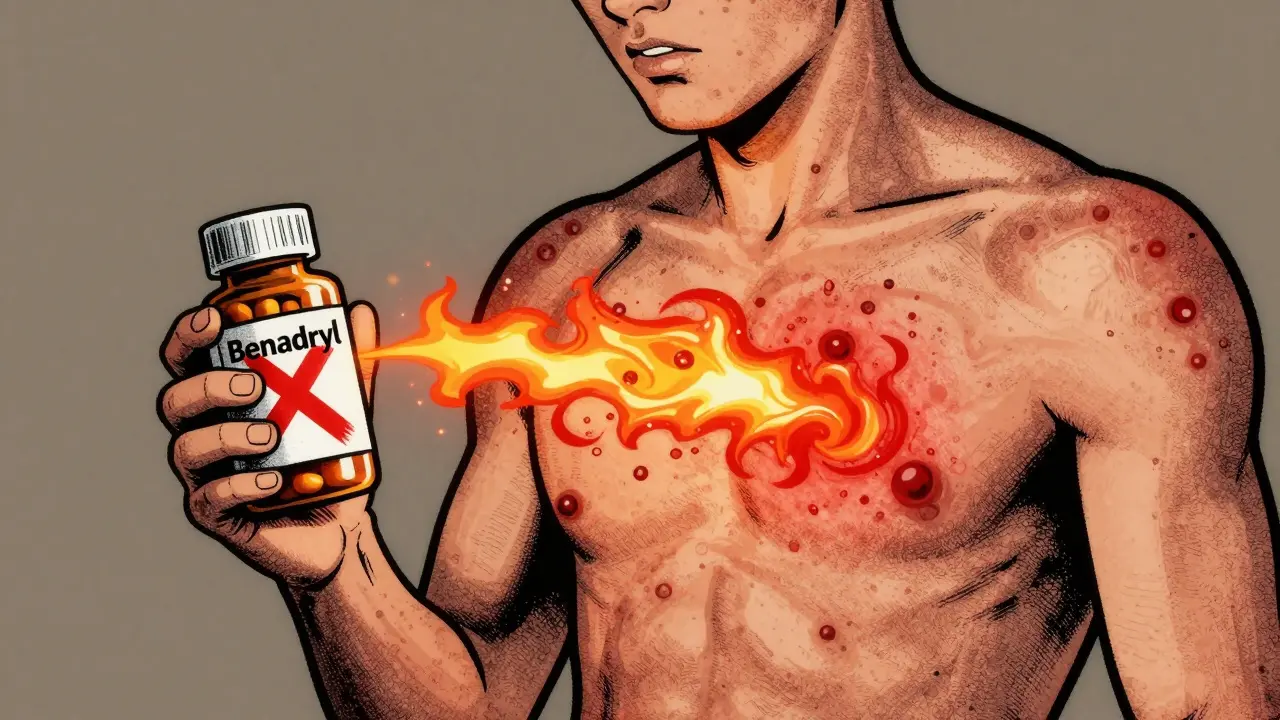
You take an antihistamine to stop your itchy eyes and runny nose. But instead of feeling better, your skin breaks out in hives. Your swelling gets worse. You’re confused - this medicine is supposed to help, not hurt. What’s going on? It’s rare, but it happens: some people have an allergic reaction to antihistamines themselves. And when that occurs, it’s not just a simple allergy. It’s a paradoxical response - the drug that should calm your immune system ends up triggering it.
How Can an Allergy Medicine Cause an Allergy?
Antihistamines work by blocking histamine, the chemical your body releases during an allergic reaction. Most of them are designed to bind tightly to H1 receptors - the main switches that tell your body to itch, swell, or sneeze. In most people, this works perfectly. The drug slots into the receptor like a key in a lock, turning it off. But in rare cases, the key doesn’t turn off the lock. It turns it on. New research from 2024 using cryo-electron microscopy shows how this might happen. Scientists found that antihistamines normally fit into a deep pocket in the H1 receptor, holding it in a relaxed, inactive state. But in people with certain genetic differences in their H1 receptors, the same drug can force the receptor into an active shape - the exact opposite of what it’s supposed to do. Instead of blocking histamine, the antihistamine itself starts acting like histamine. This triggers the same symptoms it’s meant to treat: hives, swelling, itching - even in people who never had allergies before.Which Antihistamines Can Cause This?
It doesn’t matter if it’s old or new. First-generation drugs like diphenhydramine (Benadryl) and hydroxyzine, or second-generation ones like cetirizine (Zyrtec), loratadine (Claritin), or fexofenadine (Allegra) - all have been reported to cause this reaction. A 2017 case study tracked a woman who broke out in hives after taking every common antihistamine available, from piperidine types (like fexofenadine) to piperazine types (like cetirizine). She didn’t react to anything else. Just the antihistamines. Even drugs that seem chemically different can cross-react. One patient in Korea had negative skin tests for ketotifen - a drug that’s usually considered low-risk - but still broke out in hives after taking it orally. The reaction didn’t show up right away. It took two hours. And the worse the dose, the worse the reaction. This means you can’t assume safety just because one antihistamine didn’t trigger a reaction. If you’ve had a bad reaction to one, you might react to others - even ones from different chemical families.Why Skin Tests Don’t Always Work
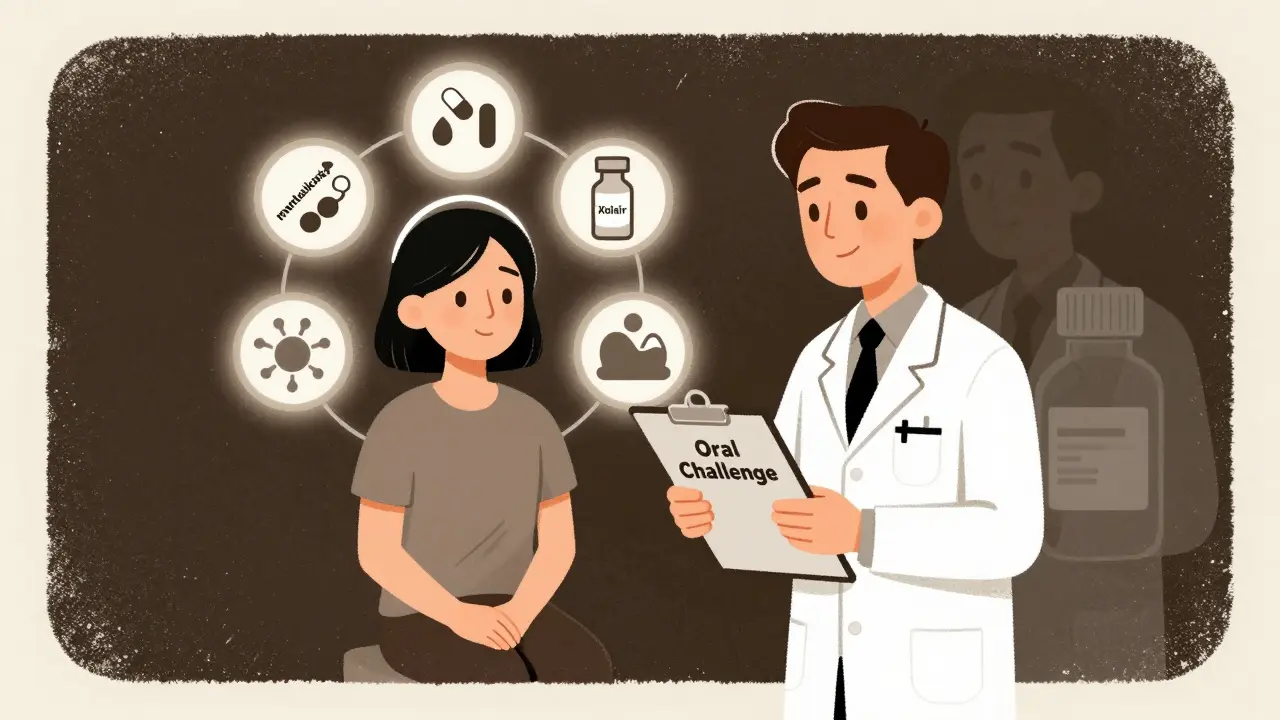
Doctors often use skin prick tests to check for allergies. But with antihistamine hypersensitivity, those tests can be misleading. In the same Korean case, skin tests for ketotifen came back negative. Yet, when the patient took the drug orally, hives appeared. That’s because the reaction isn’t always IgE-mediated like a typical peanut or bee sting allergy. It’s a direct effect on the receptor itself. Oral challenge tests - where you slowly take increasing doses under medical supervision - are still the only reliable way to confirm this. But they’re risky. A reaction can be delayed, unpredictable, and severe. That’s why most doctors avoid them unless absolutely necessary.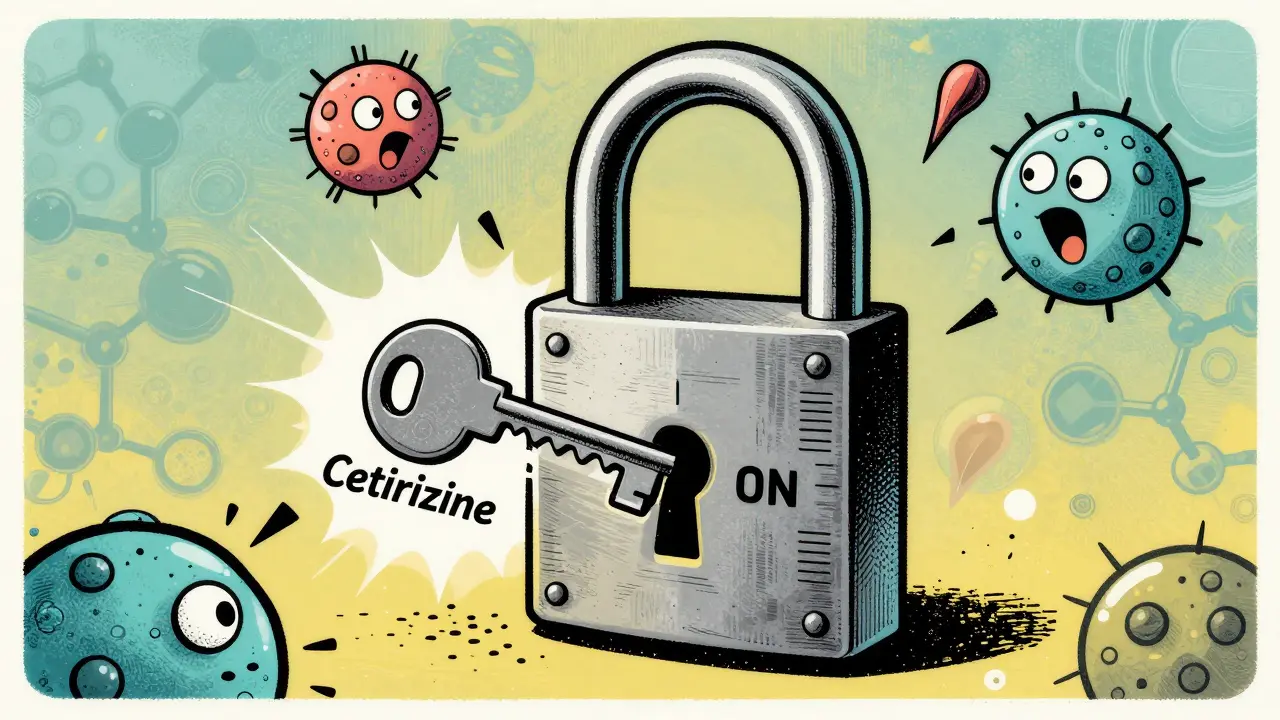
What to Do If You Think You’re Reacting
If you’ve taken an antihistamine and your symptoms got worse - especially if you developed hives, swelling, or difficulty breathing - stop taking it immediately. Don’t try another one. Don’t assume it was just a bad day. Document what you took, when, and what happened. Bring this to your doctor. You might need to see an allergist who specializes in drug reactions. They’ll look for other triggers - like infections, stress, or autoimmune conditions - that could be making you more sensitive. In one documented case, a patient’s hives only disappeared after treating a hidden chronic infection. The antihistamine wasn’t the root cause. It was the trigger.Alternatives When Antihistamines Don’t Work
If you can’t use antihistamines, you still have options. For chronic hives or allergic reactions:- Leukotriene inhibitors like montelukast (Singulair) - these block a different part of the allergic pathway.
- Immunosuppressants like cyclosporine, used in severe cases under close supervision.
- Biologics like omalizumab (Xolair), which targets IgE directly. This is FDA-approved for chronic hives and often works when antihistamines fail.
- Corticosteroids for short-term flare-ups - but not for long-term use.
- Non-drug approaches like cold compresses, avoiding heat and tight clothing, and stress reduction.
What’s Next for Antihistamines?
The 2024 structural studies give scientists a new roadmap. By seeing exactly how antihistamines bind to the H1 receptor - and where they sometimes go wrong - researchers are now designing next-generation drugs that avoid the problematic pockets. The goal? Drugs that lock the receptor shut without ever flipping it on. This could mean safer options in the next 5-10 years. But until then, awareness is key. If you’ve had a strange reaction to an antihistamine, you’re not alone. And you’re not imagining it. This is real, documented, and growing in medical recognition.What You Should Remember
- Antihistamine allergies are rare but real. They’re not a myth.
- Reactions can happen with any antihistamine - old or new.
- Skin tests are not reliable for diagnosing this type of reaction.
- Oral challenges are the gold standard, but only done in controlled settings.
- If you react to one antihistamine, avoid all of them until you’ve been evaluated.
- There are effective alternatives - you don’t have to suffer without treatment.
Don’t dismiss worsening symptoms as "just allergies getting worse." Sometimes, the medicine itself is the problem. Trust your body. Keep track. And get the right help.