Dostinex for Sale: Dosage, Side Effects, and Drug Interactions Explained
Dostinex is the brand name for cabergoline, a dopamine agonist used primarily to lower high levels of prolactin in the blood. It’s prescribed for conditions like hyperprolactinemia, prolactinomas (benign pituitary tumors), and sometimes off-label for infertility or menstrual irregularities. While it’s effective, buying Dostinex without a prescription carries serious risks. This guide covers how it works, what side effects to watch for, how it interacts with other drugs, and the right way to use it.
What Dostinex Does in Your Body
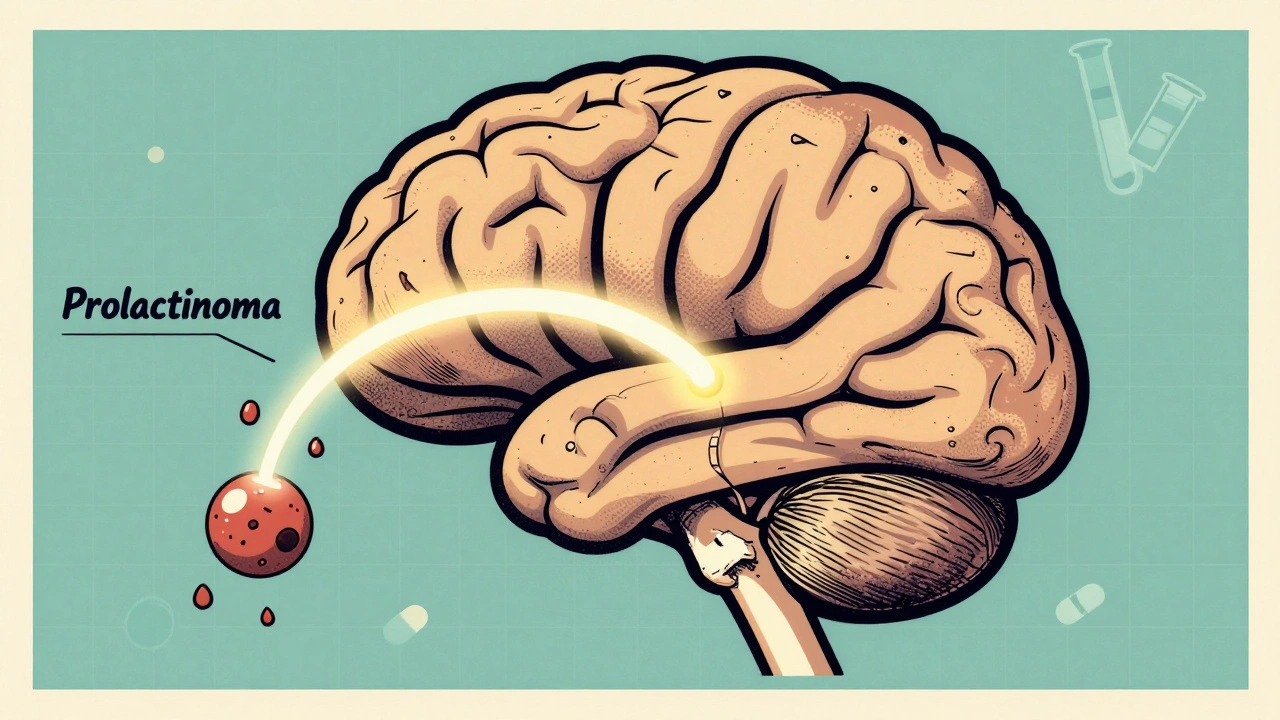
Dostinex works by mimicking dopamine, a brain chemical that naturally tells the pituitary gland to stop making prolactin. When prolactin is too high, it can cause unwanted breast milk production, missed periods, low sex drive, and infertility in both men and women. In some cases, a small tumor on the pituitary gland (called a prolactinoma) is the cause. Dostinex shrinks these tumors over time by reducing prolactin production.
Unlike older drugs like bromocriptine, Dostinex lasts longer in the body. That means most people take it just once or twice a week, not daily. This makes it easier to stick with long-term treatment. Studies show it reduces prolactin levels in over 80% of patients within weeks, and tumor size shrinks in about 75% of cases.
Common Side Effects of Dostinex
Most people tolerate Dostinex well, but side effects are common-especially when starting or increasing the dose. The most frequent ones include:
- Nausea (affects up to 40% of users)
- Dizziness or lightheadedness
- Headaches
- Constipation
- Fatigue or feeling unusually tired
- Low blood pressure, especially when standing up quickly
These usually get better after a few weeks. Taking the pill with food or at bedtime helps reduce nausea. If dizziness is bad, avoid driving or operating heavy machinery until you know how your body reacts.
Less common but serious side effects include:
- Heart valve problems (rare, mostly with long-term high doses)
- Pulmonary fibrosis (scarring in the lungs)
- Impulse control disorders-like compulsive gambling, shopping, or increased sexual behavior
These are rare but require immediate medical attention. If you notice sudden changes in behavior or urges you can’t control, talk to your doctor right away. The FDA issued a warning about these risks in 2007, and they’ve been confirmed in multiple clinical studies since.
Drug Interactions to Avoid
Dostinex doesn’t play well with certain other medications. Mixing it with the wrong drugs can reduce its effectiveness-or make side effects worse.
Don’t take Dostinex with:
- Antipsychotics like risperidone, haloperidol, or olanzapine. These block dopamine receptors and can cancel out Dostinex’s effect.
- Other dopamine antagonists such as metoclopramide (used for nausea). They work against each other.
- Blood pressure medications like beta-blockers or ACE inhibitors. Dostinex can lower blood pressure, so combining them might cause dizziness or fainting.
- Ergot-derived drugs like ergotamine or methysergide. These can increase the risk of blood vessel narrowing and tissue damage.
If you’re on any of these, your doctor may need to adjust your doses or switch you to a different treatment. Always tell your pharmacist and doctor about every medication, supplement, or herbal product you take-even over-the-counter ones.
Typical Dosage and How to Take It
There’s no one-size-fits-all dose for Dostinex. It depends on why you’re taking it and how your body responds.
For high prolactin levels (hyperprolactinemia):
- Start with 0.25 mg twice a week (e.g., Monday and Thursday)
- After 2-4 weeks, your doctor may increase it to 0.5 mg twice a week
- Maximum dose is usually 1 mg twice a week, but many people stay on 0.25-0.5 mg weekly
For prolactinoma:
- Start with 0.25 mg once a week
- After 2 weeks, increase to 0.25 mg twice a week
- Adjust every 2-4 weeks based on prolactin blood tests and MRI scans
- Most patients stabilize on 0.5-1 mg per week
Some patients need to stay on Dostinex for years-even decades-to keep prolactin levels normal. Stopping too soon can cause prolactin to spike again and the tumor to grow back. Your doctor will monitor your blood levels every 3-6 months and do imaging every 1-2 years.
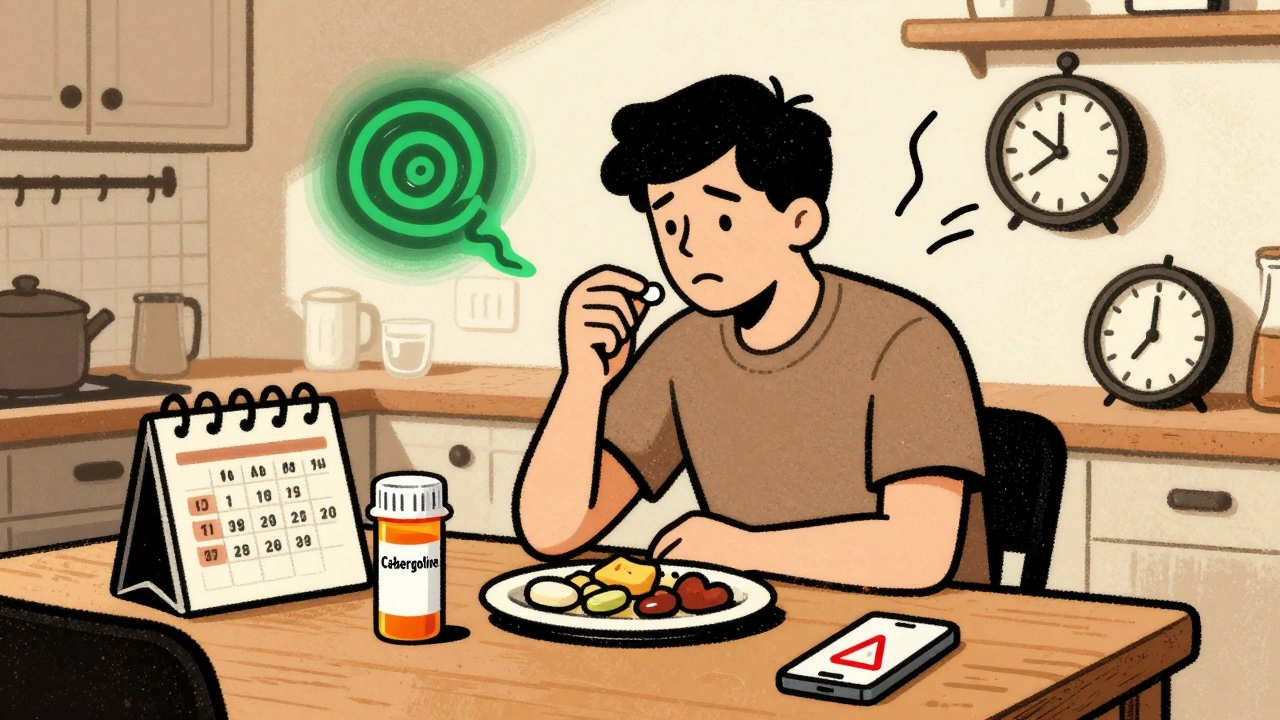
Take Dostinex with food to reduce nausea. Swallow the tablet whole. Don’t crush or split it unless your doctor says so. If you miss a dose, take it as soon as you remember-but don’t double up if it’s almost time for the next one.
Who Should Not Take Dostinex
Dostinex isn’t safe for everyone. Avoid it if you:
- Have uncontrolled high blood pressure
- Have a history of heart valve disease
- Are allergic to cabergoline or ergot derivatives
- Are pregnant without medical supervision (it can affect fetal development)
If you have liver disease, your doctor may lower your dose. Older adults are more sensitive to side effects like dizziness and low blood pressure, so they often start on lower doses.
Women trying to get pregnant should talk to their doctor before stopping Dostinex. While it’s often stopped once pregnancy is confirmed, some women with large tumors are advised to continue it to prevent complications.
Buying Dostinex Online: Risks and Realities
Many people search for Dostinex for sale because of cost or convenience. But buying medication online without a prescription is dangerous. You might get fake pills, wrong doses, or contaminated products. Some sites sell counterfeit Dostinex that contains no active ingredient-or worse, toxic substances like heavy metals or industrial chemicals.
In the UK and EU, Dostinex is a prescription-only medicine. Legitimate pharmacies require a valid prescription from a licensed doctor. If you can’t afford it, ask your doctor about patient assistance programs or generic cabergoline, which is much cheaper and equally effective.
Never trust websites that don’t ask for a prescription, offer "instant shipping," or claim "no doctor needed." These are red flags. Your health isn’t worth the risk.
What to Do If Dostinex Doesn’t Work
If prolactin levels don’t drop after 3 months, or if your tumor grows, your doctor may:
- Increase the dose gradually
- Switch to bromocriptine (an older dopamine agonist)
- Recommend surgery if the tumor is large and pressing on nearby nerves
- Consider radiation therapy in rare cases
It’s rare for Dostinex to fail completely, but it does happen. The key is regular monitoring. Don’t give up-work with your doctor to find the right solution.



9 Comments
Lauryn Smith
December 1 2025Dostinex saved my life after I was diagnosed with a prolactinoma. I was having migraines and lost my period for 14 months. Started at 0.25mg twice a week, nausea was brutal the first week, but food and bedtime dosing helped. Now I’m on 0.5mg weekly and my tumor’s shrunk by 70%. Regular blood work is non-negotiable. Don’t skip follow-ups.
It’s not a miracle drug, but it’s the best tool we’ve got. If you’re considering buying online, just don’t. I’ve seen too many people end up in the ER with fake pills.
Edward Hyde
December 2 2025Oh great, another glorified pharmaceutical ad disguised as medical advice. Everyone and their dog is on dopamine agonists these days. You’re telling me a guy with low libido gets a prescription for this instead of just going to the gym or getting some sleep? This drug’s got more side effects than a bad Tinder date.
And don’t get me started on the ‘buying online is dangerous’ lecture. Yeah, sure, and your doctor’s office isn’t just a profit machine with a stethoscope. Half the people taking this are being overmedicated because Big Pharma wants you hooked.
Charlotte Collins
December 3 2025Let’s be real - Dostinex doesn’t treat the problem, it masks it. The real issue is why prolactin is elevated in the first place. Stress? Poor sleep? Endocrine disruption from plastics? Environmental toxins? No, let’s just pop a pill and pretend biology is a simple equation.
And the impulse control disorders? That’s not a side effect - that’s a personality rewrite. I’ve seen patients become compulsive gamblers after starting this. And the medical community just shrugs and says, ‘Oh, it’s rare.’ Rare doesn’t mean harmless when it’s your life.
They warn about heart valve issues but don’t mention that most studies were funded by the manufacturer. Coincidence? Or is this just another case of the fox guarding the henhouse?
Scotia Corley
December 4 2025While the clinical data presented is largely accurate, it is regrettable that the article fails to emphasize the ethical imperative of physician oversight in the administration of cabergoline. This is not a supplement, nor is it a lifestyle enhancer. It is a potent pharmacological agent with profound neuroendocrine consequences.
Furthermore, the casual tone surrounding dosage adjustments undermines the precision required in endocrine management. The notion that patients may self-titrate based on online forums is not merely irresponsible - it is clinically indefensible.
I urge readers to consult an endocrinologist before even considering this medication. The risks are not hypothetical - they are documented, quantified, and well-known.
elizabeth muzichuk
December 6 2025I know someone who took this and started having uncontrollable urges - she spent $20,000 on online shopping in three months. Her husband left her. She didn’t even realize she was doing it until the credit card statements came.
And now they’re saying it’s ‘rare’? How many people have to lose their marriages, their jobs, their minds before someone admits this drug is a chemical lobotomy in a little white pill?
They don’t tell you this in the pamphlet. They don’t tell you that your dopamine isn’t just being ‘regulated’ - it’s being hijacked. And then they blame you when you can’t stop spending, gambling, or chasing strangers on dating apps.
Who approved this? Who signed off? And why are we still selling it like it’s Advil?
Debbie Naquin
December 6 2025The dopaminergic modulation of the tuberoinfundibular pathway is a mechanistically elegant intervention, yet the downstream pleiotropic effects on limbic circuitry remain grossly undercharacterized in longitudinal studies.
Pharmacokinetic half-life extends beyond 60 hours, enabling intermittent dosing - a clinical advantage over bromocriptine’s short T1/2. But the off-target binding at 5-HT2B receptors correlates with valvulopathy risk, particularly at cumulative doses exceeding 2.5g.
And yet, the FDA’s 2007 advisory remains underutilized in primary care. We’re treating endocrine dysfunction like a software bug when it’s a systemic cascade. The real problem isn’t the drug - it’s the reductionist model of neuroendocrine disease.
Mary Ngo
December 7 2025Have you ever wondered why Dostinex is so aggressively marketed to women with infertility but rarely discussed in men with low testosterone? The pharmaceutical industry knows women are more likely to comply with long-term regimens - and more likely to feel guilty if they don’t.
And what about the 30% of patients who don’t respond? Are they just ‘non-compliant’? Or is the whole model broken?
What if the real solution isn’t suppressing prolactin - but addressing the root cause: chronic stress, poor gut health, or endocrine disruptors in our food and water?
They don’t want you to ask those questions. They want you to take the pill, keep paying, and never look up.
Kenny Leow
December 8 2025Just wanted to say thanks for the clear breakdown. I’m from Singapore and we don’t have easy access to endocrinologists here. This guide helped me understand what to ask my doctor before even scheduling an appointment.
Also, I agree with the warning about online pharmacies. I checked a few sites selling ‘generic Dostinex’ - the packaging looked like it was printed on a home printer. One even had typos in the dosage instructions. Scary stuff.
Stick with licensed pharmacies. Even if it takes longer, your health isn’t something to gamble with.
Kelly Essenpreis
December 10 2025Why do Americans think every health problem needs a pill? We’ve got a whole generation of people who’d rather take a drug than change their diet or sleep schedule. This is why we’re the sickest country on earth.
And now we’re telling people to buy this stuff online because it’s cheaper? That’s not access - that’s a trap. The FDA’s warnings aren’t bureaucracy - they’re protection.
Stop looking for shortcuts. Your body isn’t a car you can tune with a software update.