
How to Reduce Pill Burden with Combination Medications for Seniors
Every year, millions of older adults in the UK and beyond struggle with a simple but overwhelming problem: too many pills. If you or a loved one is taking five, seven, or even ten different medications each day, you’re not alone. This is called pill burden-the physical and mental weight of managing a complex drug regimen. For seniors, it’s not just about swallowing pills. It’s about remembering when to take them, avoiding interactions, dealing with side effects, and keeping track of refills. The result? Missed doses, hospital visits, and worse health outcomes.
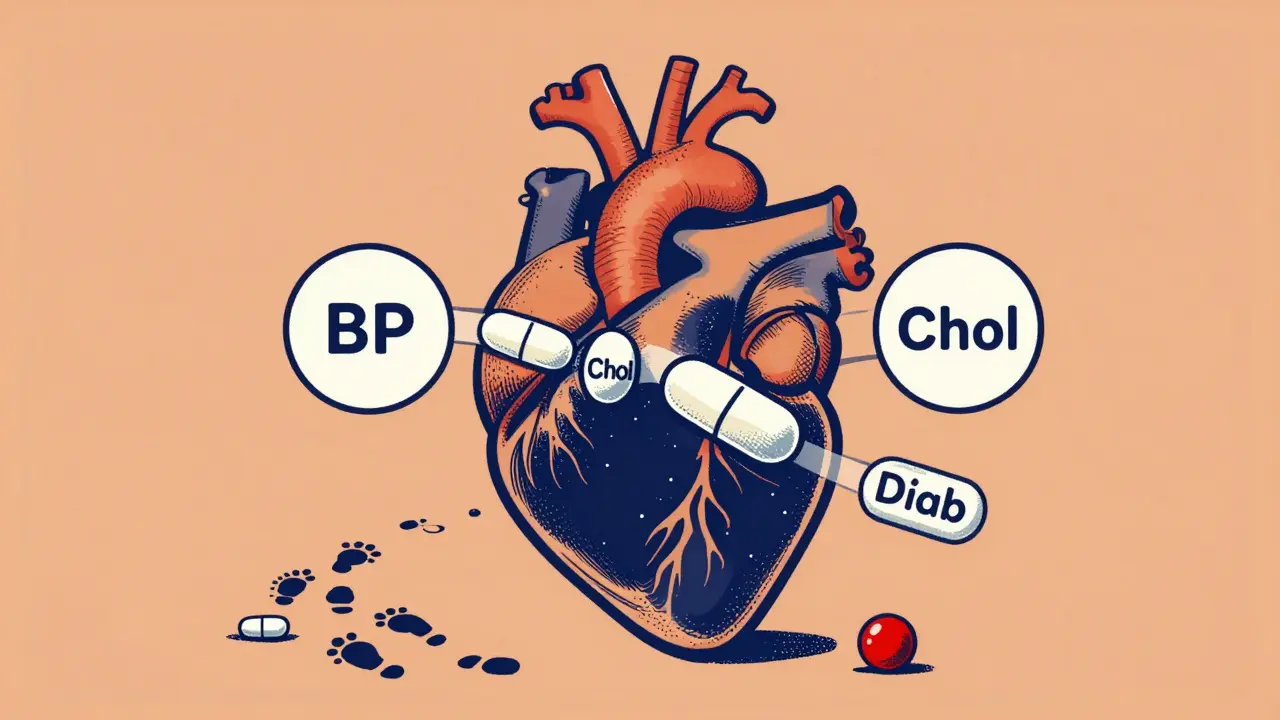
The good news? There’s a proven, practical way to cut that burden in half: combination medications. These are single pills that contain two or more active drugs in one tablet. Instead of taking three separate pills for blood pressure, diabetes, and cholesterol, you might take just one. And it’s not just a convenience-it’s backed by solid science.
Why Pill Burden Matters More Than You Think
Let’s be real: if you’re taking six pills a day, you’re going to forget one. Maybe you skip the afternoon dose because you’re napping. Or you mix up which pill is which because the bottles look alike. A 2007 study in the American Journal of Medicine found that patients who switched from taking separate pills to a single combination pill improved their adherence by 26%. That’s not a small number. That’s life-changing.
For seniors, missed doses aren’t just inconvenient-they’re dangerous. High blood pressure? A missed dose can spike your risk of stroke. Diabetes? Skipping insulin or metformin can lead to emergency room trips. Heart failure? Missing your diuretic or beta-blocker can land you back in hospital. And it’s not just about the drugs themselves. The sheer number of pills increases the chance of harmful interactions, especially when you’re also taking supplements or over-the-counter painkillers.
The CDC says one of the smartest ways to reduce medication errors is to simplify the regimen. And combination pills are the most direct way to do that.
What Are Combination Medications? (And How They Work)
A combination medication-also called a fixed-dose combination (FDC) or single-pill combination (SPC)-is exactly what it sounds like: two or more medicines packed into one tablet. For example:
- A pill with amlodipine and atorvastatin for high blood pressure and high cholesterol
- A pill with metformin and sitagliptin for type 2 diabetes
- A pill with valsartan and hydrochlorothiazide for hypertension
These aren’t just convenience packs. They’re carefully designed drugs. Each ingredient must be tested to make sure it works just as well in the combo as it does alone. The FDA and European regulators require proof that the combination is safe, effective, and stable-meaning the pills don’t break down or lose strength over time.
And here’s the kicker: studies show these pills don’t just help you remember to take them-they actually work better. A 2023 review in the European Journal of Cardiology Practice found that patients on single-pill blood pressure combos had systolic pressure 3.99 mmHg lower than those taking the same drugs separately. That’s a meaningful drop. One study even showed a 12% reduction in heart attacks and strokes over five years in patients using these combos.
Real Benefits Beyond Fewer Pills
Reducing pill count does more than make your medicine cabinet less cluttered. Here’s what really changes:
- Cost savings: Many combo pills cost less than buying each drug separately, especially if you’re paying out-of-pocket. Even if the brand-name combo is pricier, fewer prescriptions mean lower pharmacy fees and fewer co-pays.
- Less confusion: No more sorting pills into boxes or wondering if you took your evening dose. One pill, one time-simple.
- Better side effect management: Some combo pills use lower doses of each drug, which can reduce side effects. For example, a low-dose combo of a diuretic and ACE inhibitor may cause less dizziness than a high dose of one drug alone.
- Stronger adherence: The European Society of Cardiology found patients stayed on their combo therapy 40% longer than those on separate pills. That persistence directly links to fewer hospital stays.
One real-world example: a 74-year-old woman in Birmingham was taking seven pills a day for hypertension, diabetes, and high cholesterol. After her GP switched her to two combo pills-one for blood pressure and cholesterol, another for diabetes-she went from forgetting doses twice a week to never missing one. Her HbA1c dropped from 8.2% to 6.9%, and her blood pressure stabilized. Her daughter said, “She finally feels like she’s in control again.”
When Combination Pills Don’t Work
Combination pills aren’t magic. They have limits. Here’s when they might not be the best choice:
- Dose adjustments needed: If your doctor needs to fine-tune one drug but not the others, a combo pill locks you into fixed doses. You can’t easily reduce just the diuretic if you’re getting too dizzy.
- Allergies or side effects: If you react to one component, you have to stop the whole pill-even if the other drugs are helping. That can mean going back to multiple pills anyway.
- Early treatment phases: When starting treatment, doctors often begin with single drugs to see how you respond. Combos are usually better once the right doses are figured out.
- Cost or availability: Some combos aren’t covered by insurance or aren’t available in the UK. Your GP may need to prescribe separately until a suitable combo is approved.
Experts like Dr. Mark Fendrick from the University of Michigan warn that combo pills can lead to “over-treatment.” For example, if you only need one blood pressure drug but get a combo with two, you might end up with lower blood pressure than you need-raising your risk of falls or dizziness. That’s why your doctor should review your full regimen before switching you over.
How to Talk to Your Doctor About Combination Pills
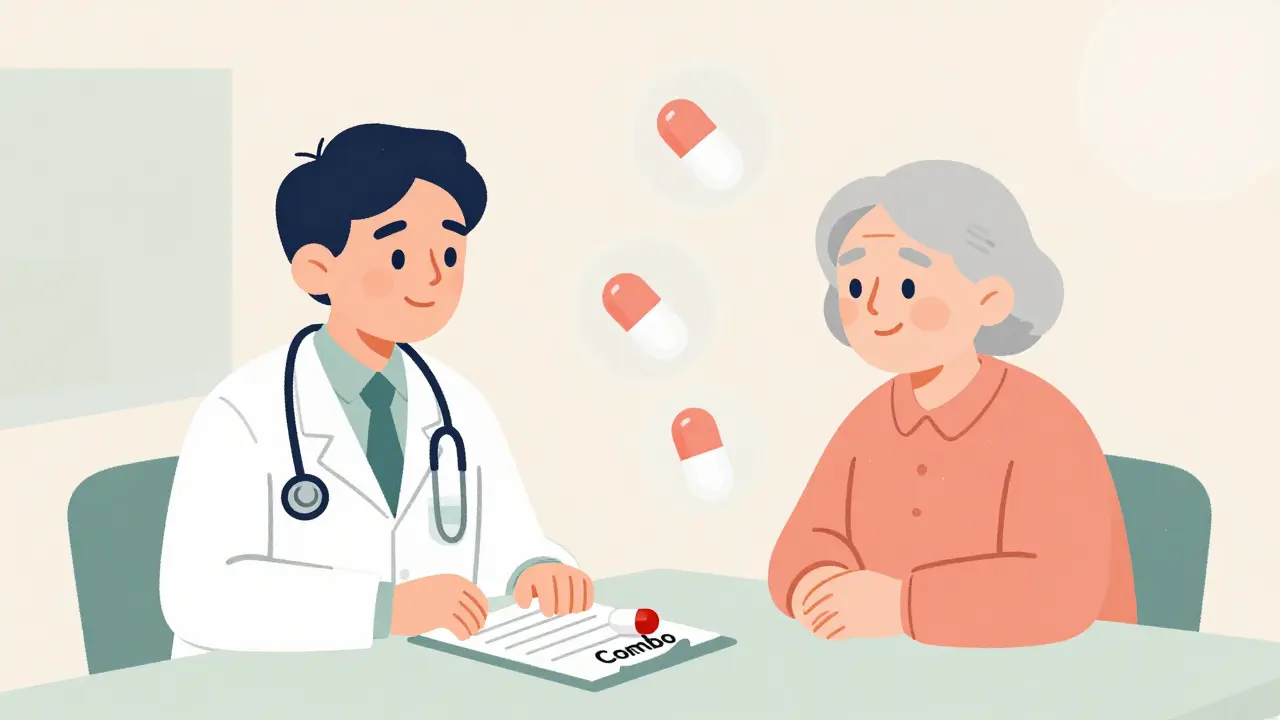
Don’t wait for your doctor to bring it up. Be proactive. Here’s how to start the conversation:
- Bring a list of all your medications-prescription, over-the-counter, and supplements. Include dosages and times.
- Ask: “Are there any combination pills that could replace some of these?”
- Ask: “Would a combo pill help me take fewer pills each day?”
- Ask: “What are the risks if I take a combo instead of separate pills?”
- Ask: “Is there a generic version available?”
Pharmacists are also great allies. Many community pharmacies in the UK now offer medication reviews. They can spot unnecessary repeats, check for interactions, and suggest combos you might not know about.
For example, if you’re on lisinopril, amlodipine, and atorvastatin, your pharmacist might point out that a single-pill combo of lisinopril/amlodipine exists-and you could take atorvastatin separately. That cuts three pills down to two.
What’s Next? The Future of Combination Therapy
Doctors aren’t stopping at two-drug combos. The next wave is the “polypill”-a single tablet with three or more medications for heart disease risk reduction. Some are already being tested in the UK and EU. One polypill under review combines aspirin, a statin, and two blood pressure drugs. Early results show patients are 30% more likely to stick with it long-term.
The CDC and NHS now actively encourage doctors to consider combination pills as first-line therapy for patients with multiple chronic conditions. The message is clear: if you need more than one drug, a combo pill should be the default-not the exception.
And as more seniors live longer with multiple conditions, the demand will only grow. Expect to see more combos for diabetes, COPD, and even mental health conditions like depression and anxiety, where adherence is just as critical.
Bottom Line: Simpler Is Safer
Pill burden isn’t just a nuisance. It’s a silent threat to health. But you don’t have to live with it. Combination medications offer a real, evidence-backed way to reduce the number of pills you take without losing effectiveness. In fact, they often improve outcomes.
If you or someone you care for is taking five or more daily medications, ask your GP or pharmacist: “Can we simplify this?”
It might mean one pill instead of three. One less bottle to carry. One less chance to forget. And that’s not just convenient-it’s life-saving.
Are combination medications safe for seniors?
Yes, when prescribed correctly. Combination pills are rigorously tested to ensure each component works safely together. They’re especially beneficial for seniors with multiple chronic conditions like hypertension, diabetes, and high cholesterol. However, they’re not right for everyone. If you need to adjust doses frequently, have allergies to one component, or are in the early stages of treatment, your doctor may recommend separate pills first. Always discuss your full medical history with your GP before switching.
Can I switch to a combination pill on my own?
No. Never change your medication regimen without talking to your doctor or pharmacist. Combination pills contain specific doses that are carefully balanced. Switching on your own could lead to under-treatment, overdose, or dangerous interactions. Your healthcare provider will evaluate your condition, current medications, and lab results before recommending a combo pill.
Do combination pills cost more than separate medications?
Often, they cost less. Even if the brand-name combo pill has a higher price tag, you’re paying for one prescription instead of two or three. That means lower co-pays, fewer pharmacy fees, and sometimes better insurance coverage. Generic combos are widely available and can save hundreds per year. Ask your pharmacist to compare the total cost of your current regimen versus a possible combination.
What if I miss a dose of my combination pill?
Follow the same rules as you would for any medication. If you miss a dose, take it as soon as you remember-unless it’s close to your next scheduled dose. Then skip the missed dose and go back to your regular schedule. Never double up to make up for a missed pill. Because combo pills contain multiple drugs, doubling up increases your risk of side effects. If you’re unsure, call your pharmacist or GP. Many now offer automated refill reminders to help prevent missed doses.
Are there combination pills for conditions other than heart disease?
Absolutely. While cardiovascular combos are the most common, there are now options for type 2 diabetes (e.g., metformin + sitagliptin), HIV (e.g., tenofovir + emtricitabine + efavirenz), and even asthma/COPD (e.g., long-acting bronchodilators with inhaled steroids). Researchers are also testing combos for depression, Parkinson’s, and epilepsy. The trend is clear: as more people live with multiple chronic conditions, combination therapies will become standard across many areas of medicine.



9 Comments
Nishan Basnet
March 22 2026As someone who helps care for my elderly father in India, I can tell you this isn’t just a Western problem-it’s universal. He was taking eight pills a day, and half the time, he’d forget which was which. We switched him to two combination pills, and it’s like night and day. He actually remembers to take them now. No more frantic calls to the pharmacist asking, "Did I take the blue one?" I wish more doctors here knew about these options. It’s not magic, just common sense.
Timothy Olcott
March 23 2026OMG YES THIS!! 🙌 I’ve been saying this for YEARS. Why are we still making old people juggle 10 different bottles like they’re circus clowns?? 🤡💊 #CombinationPillsAreTheFuture
Desiree LaPointe
March 24 2026Oh please. Let’s not pretend this is some revolutionary breakthrough. This is basic pharmacology 101. The fact that this even needs to be explained suggests the medical system has been in a state of willful negligence for decades. And yet, here we are-2025-and seniors are still being treated like puzzle pieces that don’t quite fit. If you’re prescribing five separate medications to someone with a 70% chance of forgetting one, you’re not a doctor-you’re a liability. Honestly, I’m surprised this isn’t mandatory.
Jackie Tucker
March 25 2026It’s fascinating how we’ve turned healthcare into a logistical nightmare while simultaneously glorifying "personal responsibility." You’re supposed to be disciplined enough to manage six pills at different times of day, but if you’re 78 and forget one, it’s your fault? Meanwhile, the pharmaceutical industry profits from the complexity. I’m not saying combination pills are the answer-I’m saying the entire model is a performance art piece titled "How to Make Elderly People Feel Inadequate."
Thomas Jensen
March 26 2026Look, I get that combination pills sound great, but I’ve seen too many people get screwed by them. My neighbor was switched to a combo for blood pressure and cholesterol, and two weeks later, he ended up in the ER because his potassium dropped to 2.8. They didn’t test him properly. And now? He’s back on three separate pills, but his insurance won’t cover them because "it’s cheaper to keep the combo." What a joke. This isn’t about health-it’s about cost-cutting disguised as convenience. And don’t even get me started on how Big Pharma pushes these combos while hiding the side effects.
matthew runcie
March 27 2026This makes so much sense. My grandma went from 7 pills to 2. She’s sleeping better. Smiling more. Just… lighter. Sometimes the simplest fixes are the ones we overlook.
Johny Prayogi
March 29 2026Just had this exact conversation with my mom’s pharmacist yesterday! She’s on lisinopril, metformin, and atorvastatin-three separate pills. The pharmacist said there’s a combo for the first two, and the statin can stay solo. Cut from three to two. She’s gonna switch next week. I told her, "Think of it like a Netflix subscription-you don’t want ten different apps for ten shows." She laughed and said, "I’ve been waiting for someone to say that."
Nicole James
March 31 2026Wait-so you’re telling me the government, the AMA, and Big Pharma have been deliberately making seniors take more pills than necessary… for profit? And now they’re "recommending" combos like it’s some kind of moral victory? This is a trap. The moment you switch to a combo, you lose flexibility. You lose control. You become a data point in a database. And if something goes wrong? You’re stuck. You can’t adjust one component. You can’t pause one drug. You’re locked in. And who’s monitoring this? Who’s tracking long-term effects? No one. It’s a slow, silent surrender to corporate efficiency. They don’t care if you live longer-they care if you stay on the pills. Forever.
Allison Priole
March 31 2026I just want to say how much this post helped me. My aunt has been on like 9 pills for years and I always felt so helpless watching her struggle. I didn’t even know combination pills existed until now. I took this info to her doctor and we actually got her down to 4 pills total-two combos and two singles. She cried when she realized she wouldn’t have to sort through all those tiny containers anymore. It’s not just about health-it’s about dignity. And honestly? I think we’ve been sold this idea that more pills = better care. But sometimes, less is just… more. Less stress. Less confusion. Less guilt. More peace. And that’s worth so much more than a pill count.