
Medication Reformulations: When Companies Change Drug Formulas
Medication Adherence Improvement Calculator
Discover how reformulated drugs can improve your medication adherence. Input your current dosing schedule and the reformulated version to see potential benefits in adherence rates and health outcomes.
Have you ever picked up your prescription and noticed the pill looks different? Maybe it’s a different color, shape, or even a capsule instead of a tablet. You might wonder if it’s the same medicine-or if something’s been changed without you knowing. That’s not a mistake. It’s medication reformulation.
Reformulation isn’t about swapping out the active ingredient. The drug still works the same way in your body. But how it’s made, how it’s taken, or what’s mixed in with it? That’s where companies make changes. And these changes aren’t random. They’re carefully designed to improve how you experience your medicine.
Why Do Companies Change Drug Formulas?
It’s not about tricking patients or squeezing extra profits-though some critics say that’s the case. The real reasons are practical, and often patient-centered.
Take a drug that used to require three pills a day. If it’s reformulated into a once-daily version, people are far more likely to take it correctly. Studies show that better dosing schedules can boost adherence by 30% or more. That means fewer hospital visits, better control of chronic conditions like high blood pressure or diabetes, and fewer side effects from missed doses.
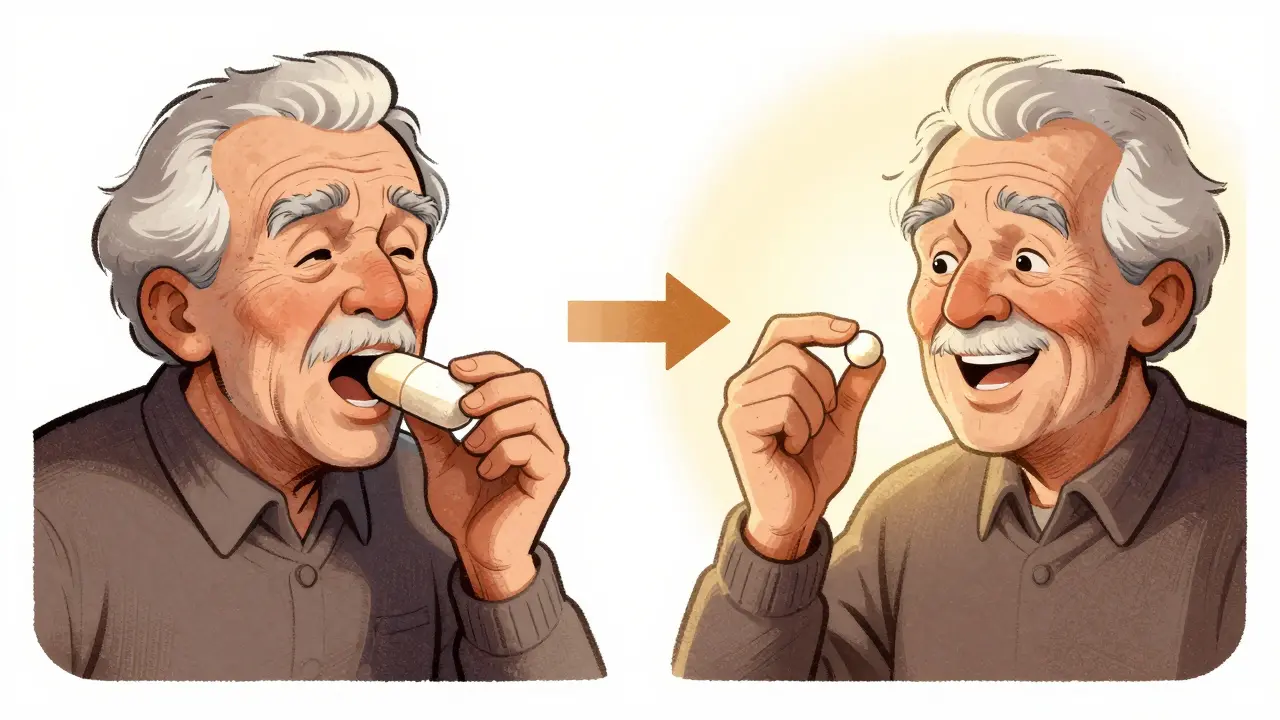
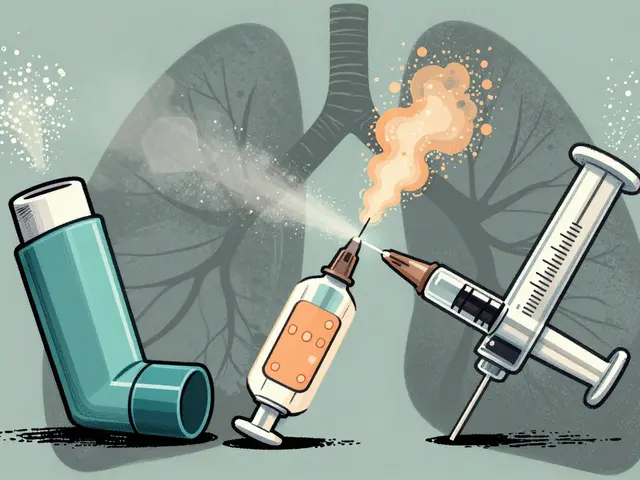
Another big reason? Making drugs easier to swallow. Imagine an elderly patient struggling with large, chalky tablets. Reformulating that same drug into a smaller, coated tablet-or even a liquid or dissolvable strip-can make a huge difference in daily life. Some reformulations even switch delivery methods entirely: turning an injectable into an inhaler or a patch. That’s not just convenient-it’s life-changing for people with needle phobia or mobility issues.
And then there’s shelf life. Some older drugs break down quickly in heat or humidity. Reformulating with better stabilizers or packaging can prevent waste and ensure the medicine works when you need it-especially important in places without reliable refrigeration.
How Is a Reformulated Drug Different From a Generic?
This is where confusion sets in. A generic drug copies the original exactly-same active ingredient, same dose, same inactive ingredients. It’s cheaper because it doesn’t need new clinical trials.
A reformulated drug is different. It keeps the same active ingredient but changes something else: how it’s released, how it’s taken, or what’s inside it. Think of it like upgrading your smartphone. Same processor, but now it has a better battery, a faster charger, or a more comfortable grip.
Because the active ingredient hasn’t changed, companies don’t have to start from scratch. They can use existing safety data from the original drug. That’s why reformulation is faster and cheaper than developing a brand-new medicine. The FDA’s 505(b)(2) pathway lets companies rely on previous studies-cutting development time from 10-15 years down to 3-5, and costs from $2.6 billion to around $50-100 million.
But here’s the catch: even though it’s faster, it’s not easy. Companies still need to prove the reformulated version works the same way in the body. That’s called bioequivalence. They test blood levels to make sure the drug gets absorbed at the same rate and amount. If they change how the drug is released-like making it slow-acting instead of immediate-they need extra studies to prove it’s safe and effective.
What Kind of Changes Count as Reformulation?
Not every small tweak counts. The FDA and experts agree: true reformulation involves meaningful changes to the drug’s form or delivery. Here are the most common types:
- Change in release mechanism: Switching from immediate-release to extended-release (like turning a pill that lasts 4 hours into one that lasts 12).
- Change in dosage form: Going from tablet to liquid, patch, inhaler, or nasal spray.
- Change in excipients: Swapping out fillers, coatings, or stabilizers to improve taste, reduce allergies, or increase stability.
- Change in strength or combination: Combining two drugs into one pill, or adjusting the dose for better results.
- Change in packaging: Using child-resistant caps, blister packs for daily doses, or tamper-evident seals.
What doesn’t count? Just changing the pill’s color or shape for branding. Or changing the bottle size. Those are packaging updates, not reformulations. True reformulation changes how the drug behaves in your body-or how you take it.
Who Benefits the Most From Reformulated Drugs?
Patients with chronic conditions are the biggest winners. People with epilepsy, Parkinson’s, or mental health disorders often need precise, consistent dosing. A reformulated version that releases medication slowly over 24 hours can prevent spikes and crashes in symptoms.
Children and older adults benefit too. A liquid form of a seizure medication is easier to give to a toddler than crushing a pill. A dissolvable tablet helps seniors who have trouble swallowing.
And then there’s the growing market for orphan drugs-medicines for rare diseases. These drugs often start as unappealing, hard-to-take formulations because they were developed for small patient groups. Reformulation turns them into something people can actually use. One case study showed a mid-sized company turning an injectable orphan drug into a daily oral capsule-and patient compliance jumped from 40% to 85% in just six months.
Are Reformulations Safe?
Yes-when done right. Every reformulated drug must meet strict FDA standards. Companies must prove bioequivalence. That means the body absorbs the drug at the same rate and amount as the original. If the change affects how the drug works-like making it last longer-additional clinical data is required.
But there are risks. Sometimes, changing the excipients can cause new side effects. A dye or preservative that was fine in the original might trigger an allergic reaction in someone who never had one before. Or, in rare cases, a reformulation might be less effective if the new formulation doesn’t dissolve properly.
That’s why pharmacists are trained to check for these changes. If your prescription looks different, ask your pharmacist: “Is this the same medicine, just reformulated?” They can tell you if it’s a direct swap or if there’s something new to watch for.
Why Is Reformulation So Popular With Pharma Companies?
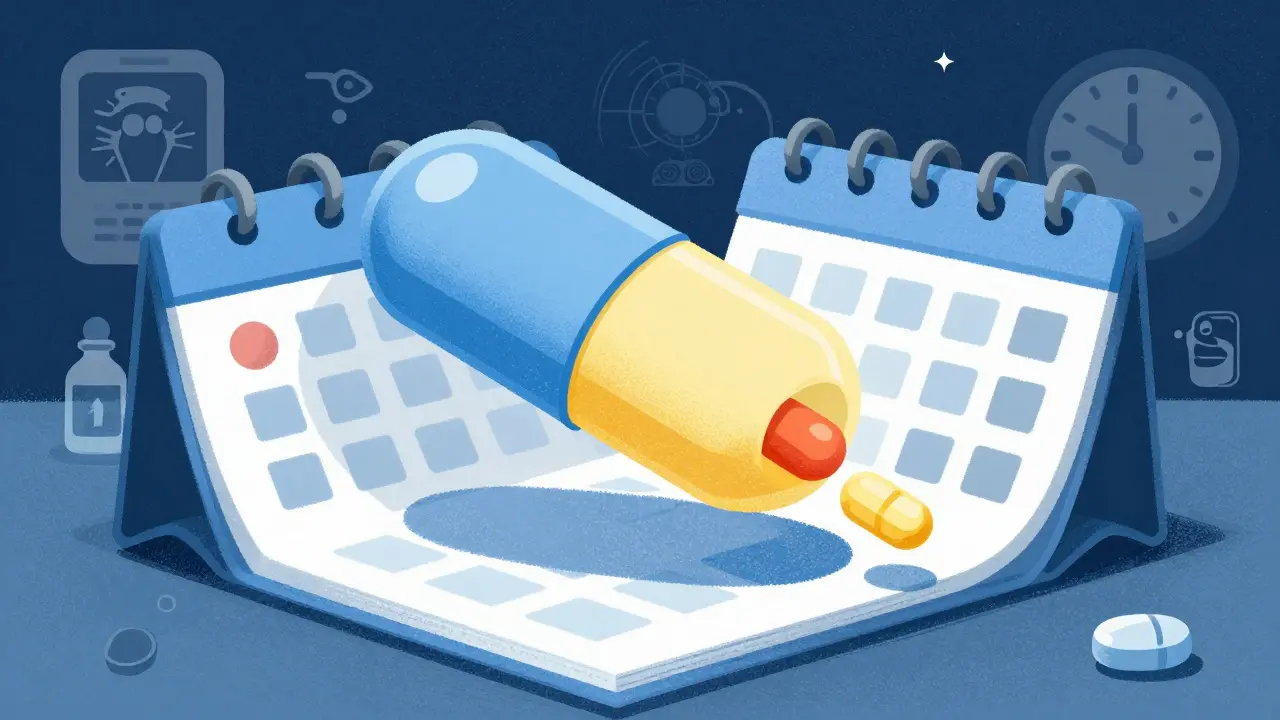
It’s simple math. Developing a brand-new drug has a 10% success rate. Reformulation? Around 30%. That’s three times better odds. And the payoff is fast. While a new drug might take over a decade to hit the market, a reformulation can be approved in under two years.
Companies also use reformulation to extend patent life. When a drug’s original patent expires, generics flood the market. But if a company reformulates it-say, into a once-daily version-they can get a new patent on the delivery system. That gives them a few more years of exclusivity.
Some call this “evergreening.” Critics argue it’s a way to keep prices high without real innovation. But many reformulations aren’t trivial. The best ones solve real problems: making a drug easier to take, reducing side effects, or helping people who couldn’t use the original at all.
What’s Next for Medication Reformulation?
The future is getting smarter. New technologies are making it possible to tailor drug delivery even more precisely. Think of pills that release medicine only when your body needs it-based on your blood sugar, heart rate, or even your sleep cycle.
3D-printed pills are already being tested. These can combine multiple drugs into one pill with different release zones. Imagine a single tablet that releases an antidepressant in the morning, a pain reliever at lunch, and a sleep aid at night.
Also, more reformulations are targeting underserved groups. Kids, the elderly, people with swallowing disorders, and even pets are getting better-formulated versions of medicines they once struggled to take.
The FDA is helping too. In 2022, they released new guidance to make it easier to approve reformulations that improve patient experience-without requiring full clinical trials. That’s a big win for innovation.
What Should You Do If Your Medication Changes?
Don’t panic. But don’t ignore it either.
- Check the label. Is the active ingredient the same? If yes, it’s likely a reformulation.
- Ask your pharmacist. They can tell you if the change affects how you take it or if it’s a direct replacement.
- Watch for side effects. If you feel different after switching, report it. It might be unrelated-but it might not.
- Don’t assume it’s cheaper. Reformulated drugs aren’t always generics. Sometimes they’re still brand-name, just updated.
Most of the time, the change is an improvement. But it’s your right to understand it. You’re not just a patient-you’re the person who has to live with the medicine every day.
Are reformulated drugs the same as generics?
No. Generics copy the original drug exactly-same active ingredient, same inactive ingredients, same form. Reformulated drugs keep the same active ingredient but change how it’s delivered, released, or packaged. Reformulations can be brand-name or generic, but they’re not automatic swaps.
Can reformulation make a drug less effective?
It’s rare, but possible. If the new formulation doesn’t dissolve properly in your stomach, or if the excipients interfere with absorption, effectiveness can drop. That’s why regulators require bioequivalence testing. If you notice your condition isn’t controlled like before, talk to your doctor.
Why does my pill look different now?
It could be a reformulation, a switch to a different manufacturer, or just a new batch. If the active ingredient is unchanged, it’s likely a reformulation or a generic swap. Check the label or ask your pharmacist. Don’t assume it’s a mistake.
Do reformulated drugs cost more?
Sometimes. If it’s still under patent, yes-it can be expensive. But once generics enter the market, prices drop. Reformulations aren’t always pricier than the original. Many are covered the same way by insurance. Always check with your provider.
Are reformulations safe for children and seniors?
Yes, often more so. Many reformulations are designed specifically for these groups-like liquid forms, dissolvable tablets, or once-daily dosing. They reduce side effects and improve compliance. Always confirm with your pharmacist that the reformulated version is appropriate for age and condition.
If you’re managing a long-term condition, a reformulated drug might be the quiet upgrade you didn’t know you needed. It’s not flashy. But it’s real. And for millions of people, it’s the difference between feeling okay-and feeling like yourself again.



15 Comments
anggit marga
January 1 2026This reformulation nonsense is just pharma playing games to keep prices high
Joy Nickles
January 2 2026Wait-so you're telling me that if my pill changes color, it's STILL the same drug?? I don't believe this!! I swear my anxiety spiked when I got the blue one instead of the green one!! I think they're adding fluoride or something?? 🤔💧
linda permata sari
January 2 2026Oh my god, this is so beautiful!! I'm from Indonesia and my grandma couldn't swallow her blood pressure pills until they made them into a dissolvable strip-now she takes them like candy!! 🥹✨ It's not just science-it's love in pill form!!
Brandon Boyd
January 3 2026You got this! Every time you notice a pill change and ask your pharmacist, you're taking control of your health. That’s huge!! Small questions lead to big wins. Keep being curious-you’re doing amazing!! 💪❤️
Frank SSS
January 5 2026Look, I get the ‘patient-centered’ spin, but let’s be real-this is just patent evergreening with a smiley face. They tweak the coating, slap a new label on, and charge $300 instead of $5. Meanwhile, I’m still choosing between meds and groceries. 🤡
Paul Huppert
January 6 2026Interesting point about bioequivalence testing. I always assumed generics and reformulations were the same, but the difference in how they’re approved is way more nuanced than I thought. Thanks for clarifying.
Hanna Spittel
January 7 2026THEY’RE HIDING DRUGS IN THE PILLS!!! I read this one time on a blog-reformulations are coded by the government to track your mood!! That’s why my pill changed to purple right after I got laid off!! 🕵️♀️💜 #ChemtrailsButForPills
Urvi Patel
January 9 2026How can you even call this innovation when the US lets companies exploit loopholes like 505(b)(2) while developing countries can’t even get basic generics? This isn’t progress-it’s medical colonialism
Emma Hooper
January 9 2026My pharmacist told me my antidepressant switched from a chalky brick to a smooth little oval-and suddenly I wasn’t gagging every morning. I cried. Not because I’m emotional, but because for the first time in years, I didn’t hate taking my meds. That’s magic.
Martin Viau
January 10 2026From a pharmacoeconomic standpoint, the 505(b)(2) pathway represents a Pareto-optimal equilibrium between regulatory efficiency and therapeutic innovation. The marginal cost reduction in clinical trial burden is offset by increased adherence metrics, yielding a net positive QALY gain.
Robb Rice
January 11 2026Thank you for this thoughtful, well-researched post. It’s refreshing to see someone explain the science without sensationalism. I’ve had my blood pressure med reformulated twice now, and each time, my doctor and pharmacist walked me through it. Knowledge is power.
Harriet Hollingsworth
January 12 2026So now we’re supposed to be grateful when Big Pharma makes it easier to swallow a pill? What about the fact that they raised the price 400% after the ‘upgrade’? This isn’t care-it’s manipulation. And you’re falling for it.
Deepika D
January 13 2026I work with elderly patients in Mumbai and I’ve seen firsthand how a simple change-like switching from a tablet to a liquid-can mean the difference between someone taking their meds or not. One man stopped having seizures after we switched his epilepsy drug to a flavored suspension. He hadn’t taken it in 2 years because he couldn’t swallow pills. Now he asks for it by name. That’s not reformulation-that’s dignity.
Bennett Ryynanen
January 15 2026Reformulation? More like corporate greed dressed up as kindness. They don’t care if you can swallow it-they care if they can patent it again. I’ve had my ADHD med changed 3 times in 5 years. Each time, it costs more. And guess what? I still feel like a zombie.
Chandreson Chandreas
January 15 2026It’s funny how we get so worked up about pill color but never ask why the system lets this happen in the first place. Maybe the real reformulation we need is in how we value health-not as a product, but as a right. 🌱