Inactive Ingredient Differences: Why Your Generic Medication May Feel Different
Switching from a brand-name drug to a generic feels like a smart move-cheaper, same active ingredient, right? But sometimes, people swear the generic doesn’t work the same. They feel more nauseous, sleep worse, or notice their anxiety creeping back. It’s not all in their head. The difference isn’t in what’s healing them-it’s in what’s holding it together.
What Are Inactive Ingredients, Really?
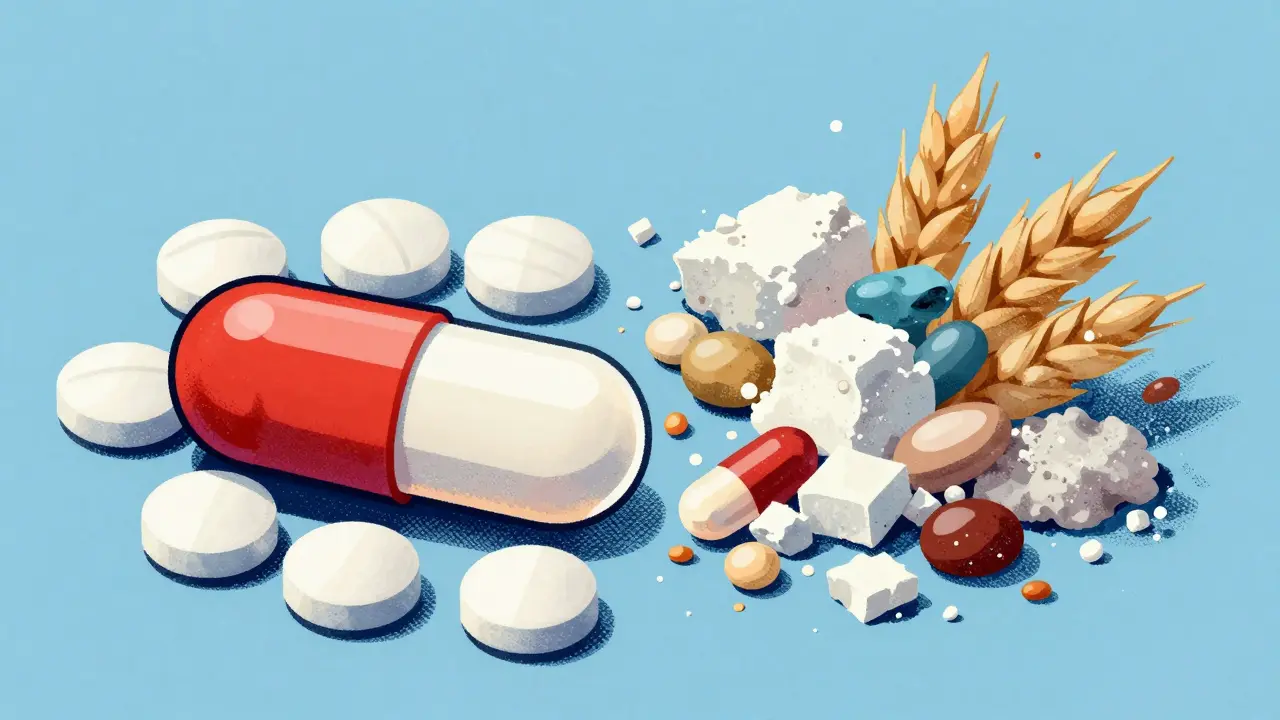
Inactive ingredients, also called excipients, are the non-drug parts of a pill or capsule. They don’t treat your condition. But they do everything else: make the tablet the right size, help it dissolve in your stomach, keep it from crumbling, make it easier to swallow, or even give it color. Think of them like the scaffolding around a building. You don’t pay for the scaffolding, but without it, the structure falls apart.
Common ones include lactose (a milk sugar), microcrystalline cellulose (ground wood pulp), starch, povidone (a binder), croscarmellose sodium (a disintegrant), and dyes like FD&C Blue No. 1. Even preservatives like sodium benzoate or sulfites can be in liquid or injectable forms. The FDA says these are safe for most people. But “safe for most” doesn’t mean “safe for everyone.”
Why the Same Drug Can Feel Different
The FDA requires generics to have the same active ingredient, in the same strength, and deliver it the same way as the brand-name version. That’s the law. But when it comes to fillers, coatings, or binders? No rules. The brand-name company spent millions developing their formula. The generic maker picks what’s cheapest and easiest to source.
Here’s the kicker: a 2021 study in JAMA Internal Medicine tracked 2,000 people who switched from brand to generic. Over 94% saw no difference. But 4.3% reported side effects-mostly stomach upset, headaches, or mood shifts. And 1% had to switch back because the change was too disruptive.
Why? Because your body reacts to these fillers. Lactose, for example, is in about 40% of oral medications. If you’re lactose intolerant (and about 36% of Americans are), even a tiny amount can cause bloating, cramps, or diarrhea. That’s not the drug failing. That’s your gut reacting to the carrier.
Who’s Most at Risk?
Not everyone feels this. But if you fall into one of these groups, pay attention:
- People with allergies-to dyes, sulfites, or aspartame (found in chewable tablets).
- Those with intolerances-lactose, gluten (yes, some pills use wheat starch), or soy lecithin.
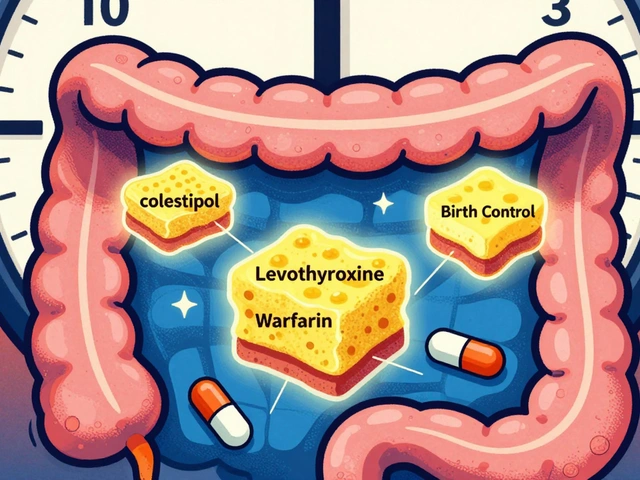
- Patients on narrow-therapeutic-index drugs-medications where the difference between a helpful dose and a dangerous one is tiny. Think levothyroxine (for thyroid), warfarin (blood thinner), or digoxin (heart medication). Even small changes in how the drug is absorbed can throw your levels off.
One patient on Reddit shared: “Switched from Synthroid to generic levothyroxine. My TSH jumped from 2.1 to 7.8. I felt exhausted, gained weight, couldn’t think straight. Went back to brand-TSH back to normal in 4 weeks.” That’s not placebo. That’s real chemistry.

What the Data Shows
Let’s put numbers to the fear:
- 90% of U.S. prescriptions are generic.
- Generics cost 80-85% less. Lipitor (brand) was $370/month; generic atorvastatin? $4.
- Only 1-2% of patients report noticeable differences after switching.
- Of those, 12% blame lactose, 8% blame dyes, 5% blame sulfites.
- Consumer Reports found 89% saw no change, 7% had minor side effects, 4% had serious enough issues to switch back.
The bottom line? For most people, generics work just as well. But for a small group, the difference in inactive ingredients matters. And it’s not just about “feeling different.” It’s about your body actually absorbing the drug differently.
What You Can Do
If you’ve switched and something feels off, don’t ignore it. Here’s what to do:
- Check the label. Look at the “Inactive Ingredients” section on the bottle or package insert. Compare it to your old brand. Are there new fillers? Dyes? Lactose?
- Keep a journal. For 2-4 weeks after switching, write down how you feel. Sleep? Energy? Mood? Digestion? Side effects? Note timing and severity.
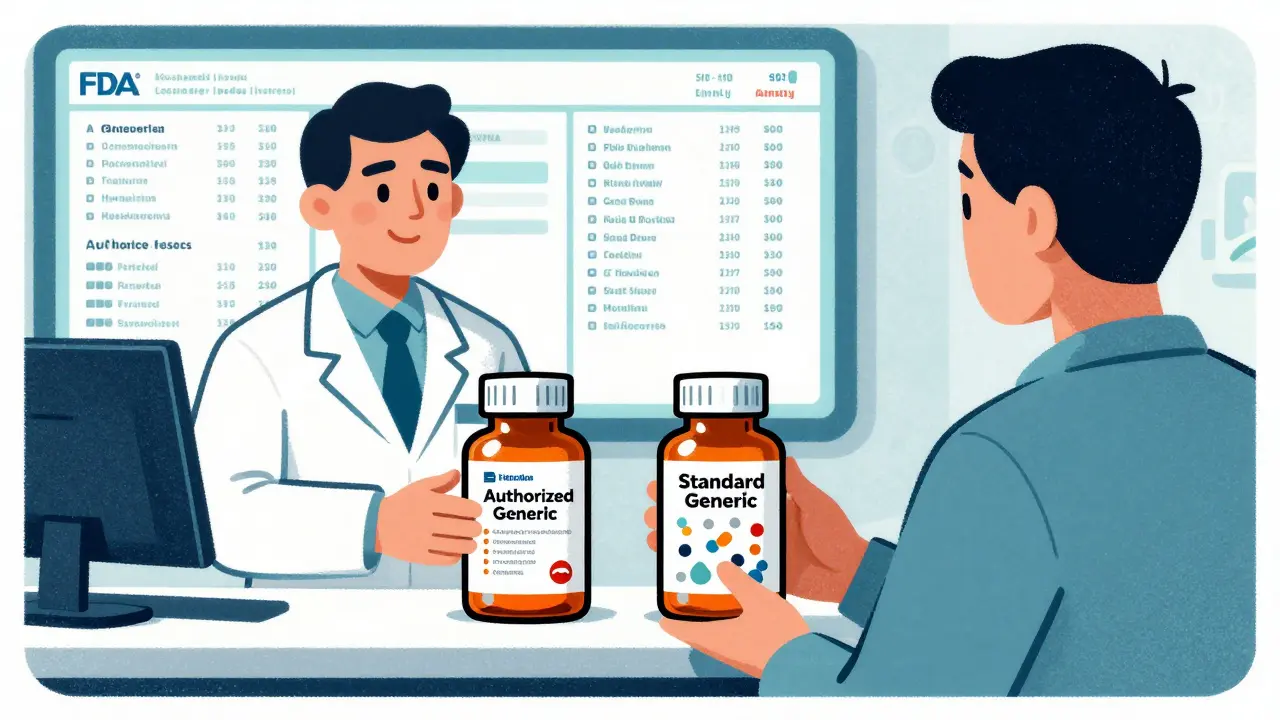
- Talk to your pharmacist. They can look up the exact formulation. Ask: “Is this generic made by the same company as the brand?” Some brands make their own generic versions-called “authorized generics”-and those have identical inactive ingredients. They’re usually cheaper than brand, but pricier than other generics.
- Ask your doctor. If you’re on a narrow-therapeutic-index drug, your doctor may need to retest your blood levels after the switch. A TSH level, INR, or digoxin level can tell you if the drug is working right.
What’s Changing in 2025
The FDA is paying more attention. In 2023, they released draft guidance requiring stricter bioequivalence testing for high-risk generics like levothyroxine and warfarin. By 2025, they plan to expand their Inactive Ingredient Database so you can look up every excipient in every approved drug-down to the exact amount.
Manufacturers are also responding. More companies are now offering “allergen-free” or “lactose-free” versions of common meds. You might see labels like “No Dyes,” “Gluten-Free,” or “Sulfite-Free” on the box. It’s not standard yet-but it’s coming.
It’s Not About Trusting Generics. It’s About Knowing Your Body.
Generics aren’t “inferior.” They’re cheaper, equally effective, and rigorously tested. But your body isn’t a lab. It’s a living system. And sometimes, the little things-the fillers, the coatings, the dyes-make a difference.
If you’ve felt off after switching, you’re not alone. You’re not imagining it. And you’re not being difficult. You’re just one of the 1-2% whose body reacts to the invisible parts of the pill.
Don’t let cost stop you from asking for what works. If a generic makes you feel worse, ask for the brand. Or ask for an authorized generic. Or ask for a different generic made with different fillers. Your health isn’t a compromise. It’s your priority.
Why do some people feel worse on generic medication?
Some people react to inactive ingredients-like lactose, dyes, or sulfites-that differ between brand-name and generic versions. These fillers don’t treat the condition, but they can cause side effects like nausea, bloating, or headaches in sensitive individuals. About 1-2% of patients report noticeable differences after switching.
Are generic drugs less effective than brand-name drugs?
No. The FDA requires generics to deliver the same amount of active ingredient into the bloodstream as the brand-name version, within a very tight range (80-125% bioequivalence). For 94-95% of people, generics work just as well. Differences in how you feel are almost always due to inactive ingredients, not the drug’s effectiveness.
Can I ask for the brand-name drug instead of the generic?
Yes. If you notice side effects after switching, talk to your doctor. They can write “Do Not Substitute” on the prescription, or you can request the brand directly. Some insurance plans require prior authorization, but if your health is affected, they usually approve it.
What are the most common problematic inactive ingredients?
Lactose (in 40% of pills) affects people with intolerance. Dyes like FD&C Red No. 40 or Blue No. 1 can trigger reactions in sensitive individuals. Sulfites (in injectables and some liquids) can worsen asthma. Aspartame (in chewables) is dangerous for those with phenylketonuria. Always check the ingredient list if you have known sensitivities.
Should I avoid generics if I’m on thyroid or blood thinner medication?
You don’t have to avoid them-but you should be careful. Drugs like levothyroxine and warfarin have narrow therapeutic windows. Even small changes in absorption can affect your levels. If you switch, ask your doctor to retest your blood (TSH or INR) within 4-6 weeks. Many patients do fine on generics, but monitoring is key.
How do I find out what’s in my generic medication?
Check the patient information leaflet inside the pill bottle. It lists all active and inactive ingredients. You can also ask your pharmacist for the manufacturer’s product monograph. The FDA’s Inactive Ingredient Database (coming in 2024) will soon let you search by drug name and see every excipient used.



15 Comments
Fabio Raphael
December 26 2025I switched to generic levothyroxine last year and felt like a zombie for weeks. Couldn’t focus, gained 8 pounds, and my anxiety spiked. Didn’t think it was the pill until I checked the label-lactose was the first ingredient. Went back to brand, same dose, and boom, I’m human again. Turns out I’m one of those 1%.
Amy Lesleighter (Wales)
December 27 2025my doc told me generics are just as good but i swear my head feels foggy after switching. i dont even know what excipients are but i know my body and it dont like em. lactose? gluten? why is it in my pills??
Becky Baker
December 28 2025Stop crying about pills. In America we get life-saving meds for $4. If you can’t handle a little filler, maybe you should’ve stayed on brand and paid $300. This is why we’re losing the war on healthcare.
sakshi nagpal
December 28 2025As someone from India where generics dominate, I’ve seen patients react to dyes and fillers too. It’s not about trust-it’s about awareness. Pharmacists here often don’t explain ingredients. Maybe the FDA’s new database will help global patients too.
Sandeep Jain
December 28 2025man i thought i was just depressed but turns out it was the generic zoloft. i checked the bottle and saw cornstarch and dyes i cant even pronounce. switched back to brand and my sleep improved in 3 days. why dont they just label it like food??
Brittany Fuhs
December 30 2025People who blame inactive ingredients are just too lazy to take responsibility for their own health. If you can’t tolerate trace amounts of lactose, maybe you shouldn’t be on oral meds at all. This isn’t a vegan smoothie.
Rick Kimberly
December 31 2025It’s worth noting that bioequivalence testing for narrow-therapeutic-index drugs is not standardized across manufacturers. Even within the same generic brand, batches can vary slightly in dissolution profiles due to excipient sourcing. This is a systemic regulatory gap, not an individual failing.
Oluwatosin Ayodele
January 1 2026Let me explain this to you like you’re five. The active ingredient is the engine. The inactive stuff is the tires, the fuel line, the radio. If you put cheap tires on a Ferrari, it still goes fast-but it might shake you to death. That’s why some people feel awful. It’s not placebo. It’s physics.
Nikki Brown
January 3 2026Ugh. Another person who thinks their body is special. 🙄 I’ve been on generics for 12 years. No issues. If you can’t handle a little starch, maybe you’re just a hypochondriac. 😒
Steven Destiny
January 5 2026STOP letting big pharma scare you. Generics saved my family $10k last year. If you feel weird, drink more water, sleep better, and stop Googling. Your anxiety is the real drug.
Rajni Jain
January 6 2026i had the same thing with my bp med. switched to generic, started getting dizzy. asked my pharmacist-turns out the new one had soy lecithin. i’m allergic. she gave me a different brand with no soy. now i’m fine. talk to your pharmacist, they’re heroes.
Natasha Sandra
January 6 2026OMG YES 😭 I switched to generic Adderall and felt like I was underwater for 2 weeks. Then I checked the label-FD&C Red No. 40. I’m sensitive to dyes. Switched back and I’m back to my 100% self. 🙌 #GenericHurtMe
Erwin Asilom
January 7 2026There is empirical evidence that excipient variability affects pharmacokinetics in sensitive populations. The current regulatory framework prioritizes cost-efficiency over individual physiological variance. Until bioequivalence thresholds account for excipient-induced absorption differences, this issue will persist.
Sumler Luu
January 8 2026My mom’s on warfarin. We always check the generic’s manufacturer. If it’s the same as the brand, we stick with it. Otherwise, we ask for a different one. Small effort, big difference. Don’t just accept whatever the pharmacy gives you.
roger dalomba
January 8 2026Wow. A whole article about pills. Next up: Why your socks feel different depending on the brand of detergent.