Patient Safety Goals in Medication Dispensing and Pharmacy Practice
Why Medication Errors Still Happen - And How to Stop Them
Every year in the U.S., around 250,000 people die because of medication errors. That’s more than car accidents or breast cancer. Most of these deaths aren’t caused by reckless doctors or careless pharmacists. They happen because systems are broken - not because people are bad at their jobs.
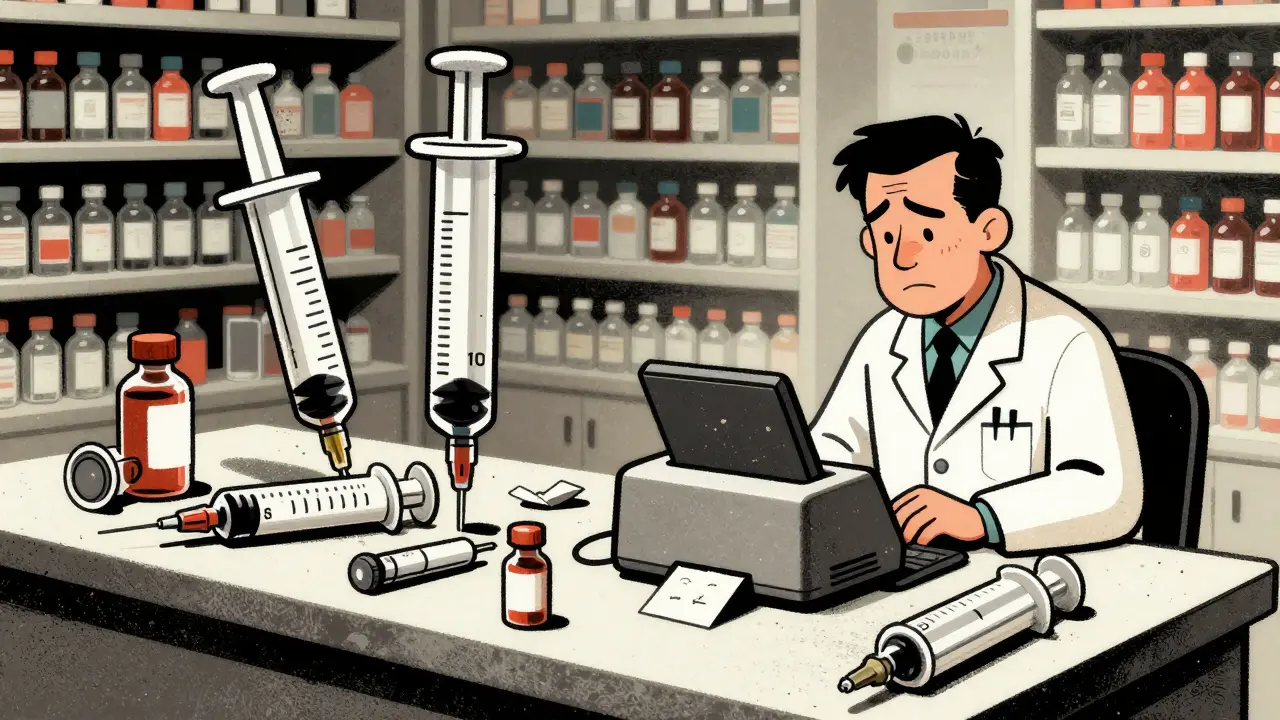
Think about it: a nurse gives a patient the right drug, at the right dose, at the right time - but it’s the wrong patient. Or a pharmacist fills a prescription correctly, but the label says ‘10 mg’ when it should be ‘1 mg.’ These aren’t rare mistakes. They’re symptoms of a flawed system. And the fix isn’t just more training. It’s better design.
The Joint Commission’s Patient Safety Goals: What They Actually Mean
The National Patient Safety Goals (NPSGs), set by The Joint Commission, are the closest thing we have to a national rulebook for keeping patients safe. First introduced in 2003, they’re updated every year. And right now, the biggest focus is on medication safety.
One of the most critical goals - NPSG.03.04.01 - says: Label everything. Every vial, every syringe, every IV bag. No exceptions. The label must include the drug name, strength, and concentration - and the font size must be at least 10-point. Sounds simple, right? Yet in 2025, 27% of operating rooms still use unlabeled syringes. Why? Because someone was in a rush. Because the label printer was out of tape. Because no one checked.
Another key goal, NPSG.03.05.01, targets anticoagulants like warfarin. These drugs can kill you if the dose is off by a milligram. The standard requires hospitals to track INR levels, educate patients, and document therapeutic ranges. But compliance? Only 95% of facilities hit that target. That means 1 in 20 patients on blood thinners are at higher risk because the system didn’t hold up.
Barcode Scanning: The Tech That Works - But Makes Life Harder
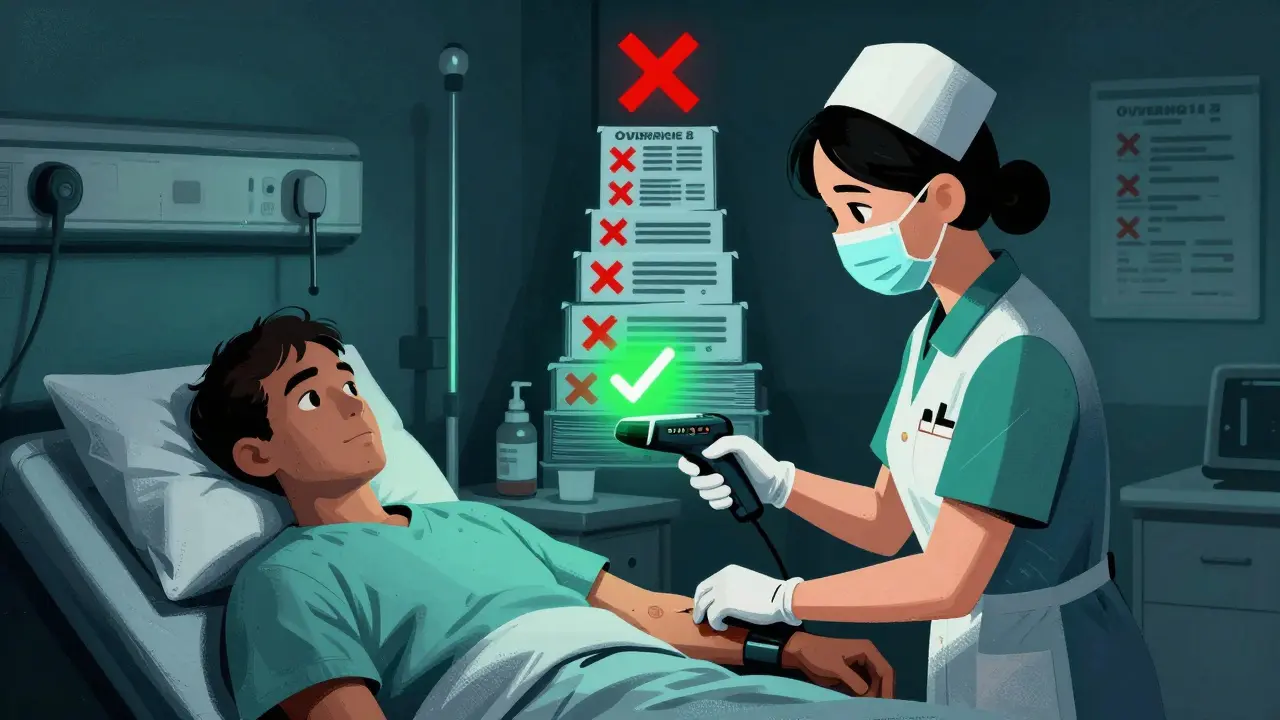
Barcodes on medications and patient wristbands changed everything. When a nurse scans the drug and the patient’s wristband, the system checks: Is this the right person? Is this the right drug? Is the dose correct? If not, it stops the process.
Hospitals that use barcode-assisted dispensing report an 86% drop in wrong-drug errors. That’s huge. But here’s the catch: it adds 7.2 minutes to every single dose. For a nurse juggling eight patients during a 12-hour shift, that’s not a small delay - it’s a burden. Some hospitals had to hire extra staff just to keep up. Others cut corners. And that’s where the real danger lies: when technology slows you down, people start bypassing it.
The Five Rights Are Not Enough
You’ve heard them: right patient, right drug, right dose, right route, right time. They’re taught in every nursing school. But here’s the truth: 83% of medication errors happen even when all five rights are confirmed.
Why? Because the Five Rights put the burden on the person holding the syringe. They assume the system is perfect - that the right drug is in the right place, that the label is clear, that the patient’s chart is up to date. But systems aren’t perfect. And when they fail, the nurse gets blamed.
A nurse in a 2023 survey said it best: “We’re taught to memorize the five rights but not given the tools to actually verify them during 12-hour shifts with 8 patients.” That’s not negligence. That’s a design flaw.
Automated Dispensing Cabinets: A Double-Edged Sword
Automated dispensing cabinets (ADCs) are everywhere now. They hold controlled substances, antibiotics, pain meds - all behind a locked door. Pharmacists program them. Nurses swipe a badge. The cabinet opens. They grab what they need.
But here’s the problem: overrides. When a nurse needs a drug right now - say, during a code blue - they can override the system. It’s supposed to be rare. The recommended limit? Less than 5% of all dispenses. But in 34% of hospitals, override rates are higher. Why? Emergency. Lack of stock. Poor planning. Or just habit.
And here’s the scary part: hospitals with override rates above 5% have 3.7 times more medication errors. The system is supposed to protect you. But when you bypass it too often, it stops working.
What Works: Real Success Stories
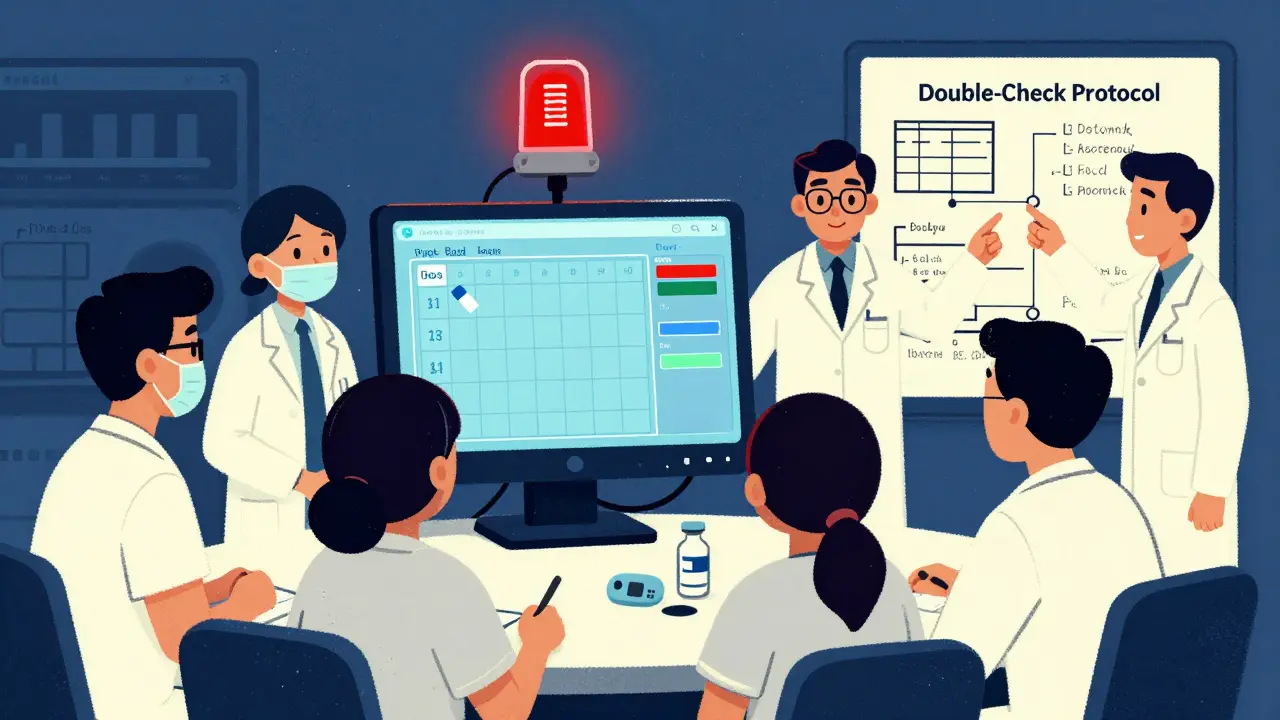
At Children’s Hospital of Philadelphia, they tackled pediatric dosing - a nightmare because kids aren’t just small adults. A wrong dose can kill. They implemented a strict double-check system for high-alert meds like insulin and morphine. They used weight-based dosing calculators built into the EHR. And they trained every nurse, every pharmacist, every tech.
Result? A 91% drop in dosing errors. Not because they hired more staff. Not because they worked harder. Because they redesigned the system.
Another win: bedside specimen labeling. Before 2025, labs got mislabeled tubes all the time. A patient’s blood sample labeled as someone else’s? That leads to wrong diagnoses, wrong treatments. Now, the Joint Commission requires labels to be applied in front of the patient - with two identifiers checked aloud. No more guessing. No more assumptions.
The Hidden Cost of Poor Safety
It’s not just about lives lost. It’s about money. The Hospital-Acquired Condition Reduction Program by CMS withholds 2% of Medicare payments from hospitals with high error rates. That’s millions of dollars per year.
And the tech market is booming. Patient safety software is expected to hit $4 billion by 2028. Why? Because hospitals have no choice. Insurance companies won’t pay. Regulators will fine them. Patients will sue.
But the real cost? The burnout. The guilt. The fear. Pharmacists who lie awake wondering if they misread a script. Nurses who dread handing over a vial. That’s the hidden toll - and it’s harder to measure than a death rate.
What Needs to Change
Safe medication dispensing isn’t about being perfect. It’s about building systems that make mistakes hard to make - and easy to catch.
Start with labeling. Every container, every time. No exceptions.
Use barcodes. Don’t let staff bypass them without a documented reason.
Limit ADC overrides. Track them. Review them weekly. Don’t accept “it was an emergency” as an excuse unless it’s truly rare.
Train staff not just on the Five Rights - but on how the system fails. Show them real cases. Let them see how a mislabeled vial, a misprinted label, a missing weight in the chart, can lead to disaster.
And most importantly: involve pharmacists. They’re not just fillers of prescriptions. They’re safety officers. Give them a seat at the table. Let them lead error reviews. Let them redesign workflows.
What’s Next?
By 2026, the Institute for Safe Medication Practices will add 25 new safety practices - including vaccine administration checks and better handoffs during patient transfers. AI is starting to help too. At Mayo Clinic, AI predicts which patients are at risk for adverse drug events before they happen. It’s not perfect - but it’s a step forward.
The goal isn’t zero errors. That’s impossible. The goal is fewer deaths. Fewer amputations from misplaced injections. Fewer families losing loved ones because a label was too small to read.
Medication safety isn’t a checklist. It’s a culture. And it starts when we stop blaming people - and start fixing systems.
What are the most common causes of dispensing errors in pharmacies?
The top causes include mislabeled medications, incorrect dosing due to unclear handwriting or digital input errors, failure to verify patient identity, overworked staff, and bypassing safety systems like barcode scanners or automated dispensing cabinets. Human error is rarely the root cause - it’s usually a symptom of poor system design, inadequate training, or time pressure.
Are the Joint Commission’s Patient Safety Goals mandatory?
Yes, for any hospital or pharmacy seeking accreditation from The Joint Commission - which includes 96% of U.S. acute care facilities. Compliance isn’t optional. It’s tied to Medicare reimbursement and legal liability. Even if a facility isn’t accredited, most follow the NPSGs because they’re the industry standard.
How do high-alert medications increase risk in dispensing?
High-alert medications - like insulin, opioids, heparin, and sodium chloride - can cause serious harm or death if given incorrectly, even in small doses. They require extra safeguards: double-checks, barcode scanning, restricted access, and specialized training. Many errors happen because these drugs look or sound like others (e.g., hydralazine vs. hydroxyzine), or because staff assume they’re safe because they’re common.
Why are pediatric medication errors more dangerous?
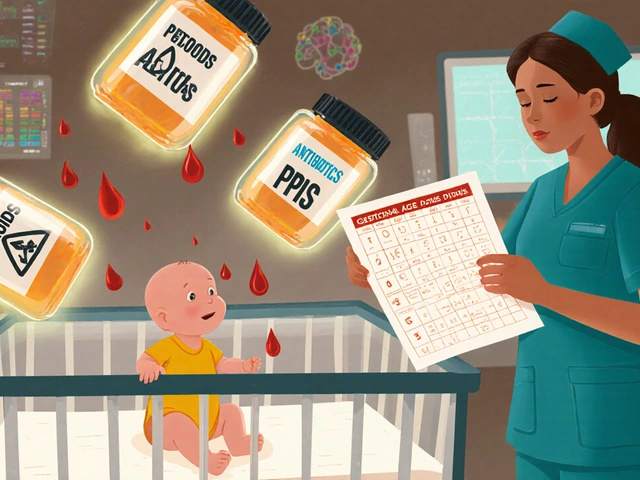
Children’s bodies process drugs differently, and dosing is based on weight - not just age or size. A small calculation error - like mistaking 5 kg for 15 kg - can lead to a 300% overdose. Neonatal and ICU units have error rates three times higher than adult units. That’s why pediatric protocols require double-checks, weight-based calculators, and dedicated training.
Can technology eliminate medication errors?
No technology can eliminate all errors - but it can make them far less likely. Barcodes, EHR alerts, automated dispensing cabinets, and AI-driven clinical decision support reduce errors by up to 86%. But if staff are trained to override systems or if the tech is poorly designed, it creates new risks. The best systems combine technology with culture - where people feel safe reporting near-misses and improving processes together.
What role do pharmacists play in patient safety?
Pharmacists are the last line of defense. They verify prescriptions, catch dosing errors, check for drug interactions, and educate patients. But too often, they’re treated as order fillers. When pharmacists are embedded in care teams, involved in rounds, and given time to review every discharge med, error rates drop significantly. Their expertise should be used - not sidelined.

10 Comments
kabir das
January 30 2026I've seen this too many times...!!! The label printer runs out of tape, and someone just writes 'morphine' on a syringe with a Sharpie...!!! And then they wonder why someone dies...!!! This isn't negligence-it's a crime against humanity...!!!
Keith Oliver
January 31 2026Look, I get it-systems are broken. But let’s be real: the real issue is that nurses and pharmacists are being asked to do the job of three people with half the training and zero support. I worked in a Level 1 trauma center. We had barcode scanners that beeped like a broken microwave. We had ADCs that locked up during codes. And yes, we bypassed them. Not because we were lazy. Because if we waited for the system to work, the patient died first. Technology without workflow redesign is just expensive theater.
Kacey Yates
January 31 2026Barcodes save lives but kill morale. I’ve had nurses cry because they got written up for overriding a scanner during a code. But if you don’t give epinephrine in 90 seconds the patient is dead. The system should adapt to emergencies not punish people for surviving them
Frank Declemij
January 31 2026The real problem is that we treat safety like a checklist instead of a culture. You can have every tech in the world but if people don’t feel safe speaking up about near misses, nothing changes. At my hospital we started a monthly 'Safety Story Hour'-anyone could share a close call without fear. Errors dropped 40% in six months. No new software. Just trust.
Pawan Kumar
February 2 2026Let me ask you this: who profits from the current system? Pharma? EHR vendors? Joint Commission consultants? The $4 billion safety software market didn’t emerge because hospitals care-it emerged because regulators force them to buy it. And guess what? Most of these tools are designed to generate compliance reports, not prevent errors. The real solution? Dismantle the entire accreditation racket and let hospitals innovate without fear of fines.
DHARMAN CHELLANI
February 2 2026NPSGs are just corporate buzzword bingo. Label everything? Sure. But if your pharmacy is understaffed and the EHR crashes every 20 minutes, who cares? You want real change? Pay nurses $100k. Fire the middle managers. Let the people who actually do the work run the place.
ryan Sifontes
February 2 2026they said barcodes would fix everything... now they want ai... next theyll put chips in the meds... im not paranoid... its just... they always lie about the tech
Robin Keith
February 4 2026There’s a deeper metaphysical layer here, you know? We’ve turned healing into a mechanistic algorithm-right patient, right drug, right time-as if life can be reduced to a series of binary checks. But medicine isn’t a factory. It’s a sacred, messy, human dance between vulnerability and expertise. When we outsource compassion to scanners and algorithms, we don’t just risk errors-we erode the soul of care. The label might say 10 mg, but the silence between the nurse and the patient? That’s where healing truly happens. And no barcode can measure that.
Sheryl Dhlamini
February 4 2026I work in a pediatric ICU. I’ve seen a 5kg baby get a 15kg dose because someone typed the weight wrong. I still have nightmares. But I also saw a pharmacist stay 3 hours after shift to recheck every single med for a newborn transfer. That’s the heroism nobody talks about. We need more of that. Not more tech. More time. More respect.
Doug Gray
February 5 2026The paradigm shift required here is non-trivial. We’re operating within a legacy framework that conflates procedural compliance with clinical safety. The cognitive load on frontline staff is unsustainable. The solution space demands a systems engineering approach-human factors integration, error-tolerant design, and adaptive automation-not just policy mandates. We need to move from reactive containment to predictive resilience.