
Warfarin vs. DOACs: Understanding the Safety Differences in Anticoagulant Therapy
When you’re on a blood thinner, the goal is simple: prevent clots without causing bleeding. But choosing between Warfarin and direct oral anticoagulants (DOACs) isn’t just about picking a pill. It’s about understanding how each one works in your body, what risks come with it, and how your lifestyle fits into the equation.
Why the shift from Warfarin to DOACs?
For decades, Warfarin was the only game in town. It’s been around since the 1950s, works well, and costs next to nothing-about $4.27 for a 30-day supply. But managing it? That’s another story. You need regular blood tests-INR checks-to make sure your blood isn’t too thin or too thick. Too high an INR? Risk of bleeding. Too low? Risk of stroke. Most people need 6 to 12 tests in the first month alone, then 2 to 4 every month after that. And even then, your time in the therapeutic range (the sweet spot) often falls below 70%, especially if you’re juggling work, family, or travel. DOACs changed all that. Drugs like apixaban (Eliquis®), rivaroxaban (Xarelto®), dabigatran (Pradaxa®), and edoxaban (Savaysa®) hit the market between 2010 and 2015. No monthly blood tests. No dietary restrictions. No constant adjustments. Today, they make up nearly 80% of all anticoagulant prescriptions in the U.S., with apixaban alone accounting for almost 40% of the market.How do they actually work?
Warfarin works by blocking vitamin K, which your liver needs to make clotting factors. It’s like turning off a faucet slowly-takes days to kick in, and even small changes in diet (like eating a big salad or kale smoothie) can throw your levels off. It interacts with over 300 other medications, from antibiotics to painkillers. Even something as simple as switching brands of warfarin can cause problems. DOACs are different. They target specific parts of the clotting cascade. Dabigatran blocks thrombin (factor IIa). The others-apixaban, rivaroxaban, edoxaban-block factor Xa. These are targeted strikes, not broad shutdowns. That’s why they’re more predictable. Their effects start within hours, and they don’t care if you eat spinach or skip a meal.Safety: Bleeding risk is the big concern
The biggest fear with any blood thinner is bleeding. And here’s where DOACs have a clear edge. A 2023 study in JAMA Network Open found that for people with atrial fibrillation, DOACs reduced the risk of serious bleeding by 28% compared to warfarin. The biggest win? Intracranial hemorrhage-the kind of brain bleed that can be deadly. DOACs cut that risk by about half. Apixaban stands out even more. In head-to-head comparisons, it has the lowest rate of major bleeding among DOACs. One study showed apixaban users had a 42% lower risk of severe bleeding than those on rivaroxaban. That’s not a small difference-it’s life-changing. But DOACs aren’t perfect. If your kidneys are struggling-eGFR below 30 mL/min-your body can’t clear them well. Dabigatran, which is 80% cleared by the kidneys, becomes riskier than warfarin in severe kidney disease. Rivaroxaban and edoxaban also need dose adjustments. Apixaban, cleared mostly by the liver, is often the safest bet for older adults or those with mild-to-moderate kidney issues.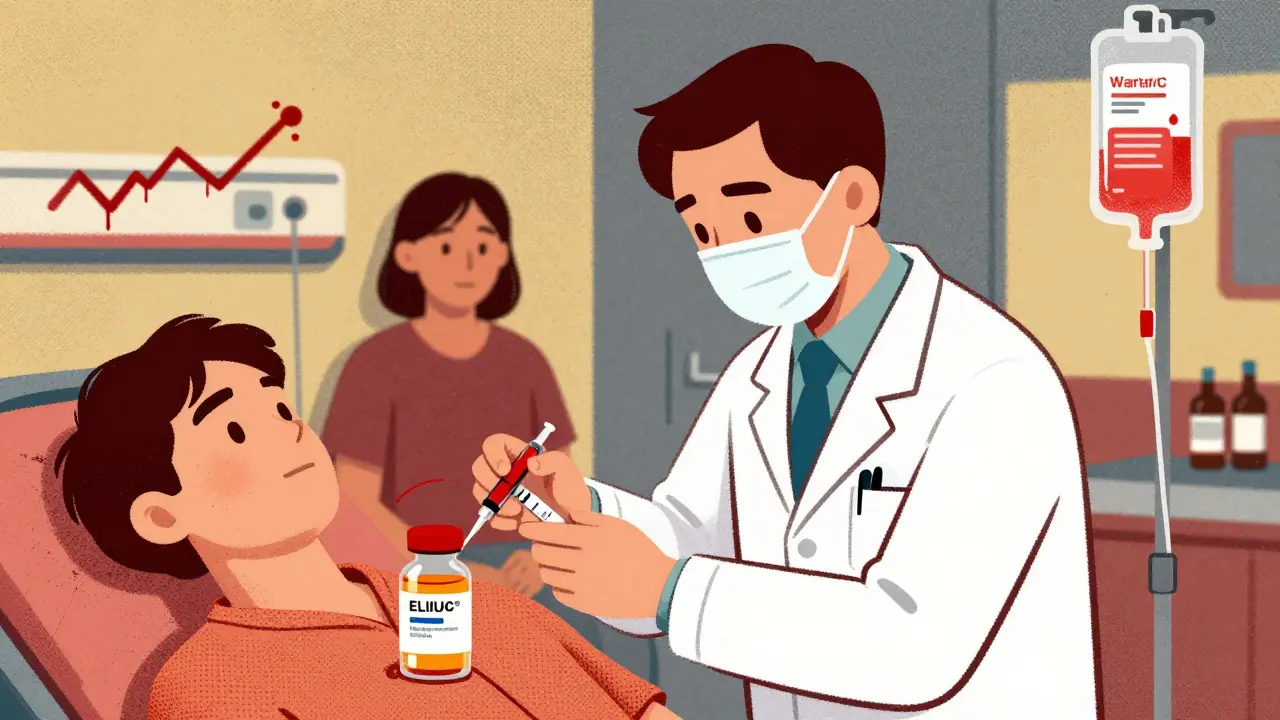
Who still needs Warfarin?
Don’t throw Warfarin out just yet. It’s still the gold standard for certain people. If you have a mechanical heart valve-like a metal one implanted after valve replacement-DOACs are dangerous. They don’t work well here. The risk of clotting on the valve is too high. Warfarin is the only option proven safe in this group. Same goes for people with severe kidney failure on dialysis (eGFR below 15). While some studies show DOACs might be safer even here, the data isn’t solid enough yet. Guidelines still recommend warfarin. And if you’ve had a blood clot in the past and need long-term treatment, DOACs are better at preventing another one. But if you’re on warfarin and your INR has been stable for years, switching might not be worth the risk.Cost vs. convenience
Let’s be real: cost matters. Warfarin is dirt cheap. Apixaban? Around $587 for a month’s supply. Rivaroxaban? $523. That’s not affordable for many, especially without good insurance. But here’s the catch: the hidden costs of warfarin add up fast. Missed appointments, emergency room visits for bleeding, lab fees, time off work. A 2023 study in Circulation: Cardiovascular Quality and Outcomes found that once patient adherence to INR monitoring drops below 65%, DOACs become more cost-effective-even with their higher price tag. And adherence? DOAC users are way more likely to stick with their meds. One study showed 32% higher adherence rates among DOAC users, especially in younger adults. Why? No blood tests. No dietary stress. No constant worry.
What about reversing them if something goes wrong?
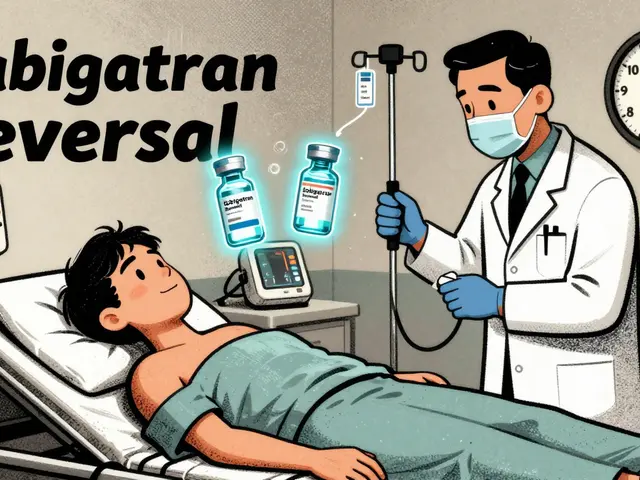
If you bleed badly, can you reverse the drug? Yes-but only for some. For dabigatran, there’s idarucizumab (Praxbind®). For apixaban and rivaroxaban, there’s andexanet alfa (Andexxa®). These are expensive, specialized drugs, but they exist. Warfarin? You can reverse it with vitamin K and fresh frozen plasma, but it takes hours. In an emergency, that delay can be deadly. The availability of reversal agents is a big reason why hospitals now prefer DOACs-even though they cost more upfront.Real-life choices
Think about your life. Are you someone who travels often? Works irregular hours? Has trouble remembering pills? DOACs win here. One pill a day, no fuss. But if you’re on a tight budget, have a mechanical valve, or your kidney function is severely impaired, warfarin might still be your best option. And if you’re in between? Talk to your doctor about your kidney function, your other meds, your lifestyle, and your financial situation. There’s no one-size-fits-all answer.What’s next?
Research is moving fast. A new drug called Librexia™-a combo of warfarin and vitamin K-is in phase 3 trials. It could stabilize INR without daily testing. And the AUGUSTUS-CKD trial, due to finish in late 2024, will tell us more about using apixaban in patients with advanced kidney disease. For now, the message is clear: for most people with atrial fibrillation or a history of blood clots, DOACs are safer, more convenient, and more effective than warfarin. But warfarin still has its place-for the right patient, at the right time.Are DOACs safer than Warfarin?
Yes, for most people. DOACs reduce the risk of major bleeding by about 28% and cut the chance of deadly brain bleeds by half compared to warfarin. They also lower stroke risk in atrial fibrillation. But they’re not safer for everyone-people with mechanical heart valves or very severe kidney disease still need warfarin.
Can I switch from Warfarin to a DOAC?
Many people can, and many doctors now recommend it. But it depends on your health. If you have a mechanical heart valve, severe kidney failure, or certain types of heart disease, switching isn’t safe. Your doctor will check your kidney function, other medications, and medical history before making a recommendation.
Do DOACs need blood tests like Warfarin?
No. DOACs don’t require routine blood monitoring. That’s one of their biggest advantages. But in emergencies-like major bleeding, before surgery, or if you’re not taking your pills-doctors can use special blood tests to check drug levels. These aren’t part of normal care, just backup tools.
What’s the cheapest anticoagulant?
Warfarin is by far the cheapest-around $4 for a 30-day supply. DOACs cost between $480 and $590 per month at retail prices. But when you factor in missed work, ER visits, and lab costs from warfarin, DOACs can actually save money over time, especially if you struggle to keep up with INR checks.
Which DOAC has the lowest bleeding risk?
Apixaban (Eliquis®) has the lowest rate of major bleeding among DOACs. Studies show it’s safer than rivaroxaban, dabigatran, and edoxaban, especially in older adults and those with kidney issues. It’s also the most prescribed DOAC in the U.S. for good reason.
Can I take DOACs if I have kidney problems?
It depends on how bad your kidney function is. DOACs are generally safe down to an eGFR of 25 mL/min. Below that, some DOACs become risky. Dabigatran should be avoided if your eGFR is below 30. Apixaban is the safest choice for mild-to-moderate kidney disease. If you’re on dialysis, warfarin is still preferred until more data is available.
What happens if I miss a dose of a DOAC?
If you miss a dose, take it as soon as you remember-if it’s within 6 hours of your usual time. If it’s longer than that, skip the missed dose and take your next one at the regular time. Never double up. Unlike warfarin, missing one DOAC dose doesn’t immediately spike your clotting risk, but consistent dosing matters for long-term safety.
Do DOACs interact with food like Warfarin?
No. Warfarin interacts with vitamin K-rich foods like leafy greens, which can make it less effective. DOACs don’t have this issue. You can eat spinach, kale, broccoli, or Brussels sprouts without worrying. That’s a huge quality-of-life improvement for most patients.


12 Comments
Sarah Williams
December 20 2025DOACs are a game changer. No more weekly blood draws, no more worrying if your kale smoothie ruined your INR. I switched last year and finally feel like I’m living instead of managing a lab result.
mukesh matav
December 22 2025Interesting read. I’ve been on warfarin for 8 years and it’s just part of my routine now. Not sure I’d want to switch unless the cost dropped.
Christina Weber
December 24 2025Actually, the study cited in JAMA Network Open had a margin of error of ±4.2% for the 28% reduction in bleeding-so calling it a 'clear edge' is statistically misleading. Also, the term 'deadly brain bleeds' is alarmist. Please use precise language.
Peggy Adams
December 24 2025So DOACs are cheaper because they make you go to the ER less? Or because the pharmaceutical companies just want you hooked on $500 pills? Either way, I’m not buying it.
Theo Newbold
December 25 2025Apixaban isn't safer-it's just marketed better. The reversal agents are barely used in real practice. Hospitals push DOACs because they get kickbacks from reps. The data is cherry-picked.
Grace Rehman
December 25 2025Who gets to decide who's 'most people'? What about the grandma on fixed income who can't afford Eliquis but can afford warfarin and a bus ticket to the clinic? Or the guy working two jobs who can't take time off for INR checks? We're talking about life, not convenience metrics.
DOACs are great if you're middle class with good insurance. For everyone else? It's a luxury. And calling warfarin 'archaic' ignores that it's been saving lives since before most of us were born.
There's no 'one-size-fits-all' because medicine isn't a subscription service. It's a human experience. And if we keep pretending it's just about efficacy and cost-per-pill, we're going to leave a lot of people behind.
Also-why is it always the same three DOACs getting praised? What about the ones in trials? Are we just optimizing for profit, not progress?
Michael Ochieng
December 27 2025As someone who grew up in Kenya and now lives in the U.S., I’ve seen both sides. In my village, warfarin was the only option-and people managed it with community support. Here, people get frustrated because they don’t have that network. Maybe the real issue isn’t the drug-it’s the system that makes access unequal.
Let’s not pretend DOACs are the hero. Let’s fix the system so everyone can choose.
Swapneel Mehta
December 28 2025I’m curious-how many of these studies include patients over 80 with multiple comorbidities? Most trials exclude them, but they’re the ones most likely to be prescribed these drugs. The real-world data might tell a different story.
Stacey Smith
December 28 2025DOACs are just another American overpriced scam. Warfarin works fine. We don’t need fancy pills made in Switzerland.
Cara C
December 29 2025Grace hit it on the head. It’s not about which drug is better-it’s about who gets to use it. I’ve seen patients skip doses because they can’t afford the copay. That’s worse than any bleeding risk.
Maybe the real solution isn’t switching drugs-it’s making healthcare affordable so people don’t have to choose between medicine and groceries.
John Hay
December 29 2025Stop romanticizing DOACs. I work in a rural ER. We get the bleeding cases. The reversal agents? We don’t have them. We have FFP and hope. Warfarin’s reversal is simple, cheap, and available everywhere. DOACs are a privilege for the urban elite.
Jay lawch
December 31 2025Let’s be real-the whole DOAC revolution was orchestrated by Big Pharma to kill warfarin’s monopoly. They funded every study, paid every KOL, and bribed every guideline committee. Now they’ve got you believing it’s science when it’s just capitalism dressed in white coats.
Warfarin was good enough for your grandfather. It’s good enough for you. The real danger isn’t clotting-it’s trusting a system that profits from your fear.
And don’t even get me started on the 'apixaban is safest' nonsense. They only tested it against the most dangerous DOACs to make it look better. It’s all rigged.
Why do you think the FDA approved these drugs so fast? Because the lobbyists had dinner with the commissioners. The data? Post-hoc. The trials? Underpowered. The outcomes? Selected.
And now we’re told to trust 'evidence' that was written by the same people selling the pills.
Wake up. This isn’t medicine. It’s marketing with a stethoscope.