Levodopa and Antipsychotics: How Opposing Dopamine Effects Worsen Symptoms
Parkinson's Medication Risk Calculator
How This Tool Works
This calculator estimates the risk of symptom worsening based on medication type and dosage. Use it to understand potential side effects when making treatment decisions.
Important: This tool is for informational purposes only. Always consult with your healthcare provider before making treatment changes.
Risk Assessment
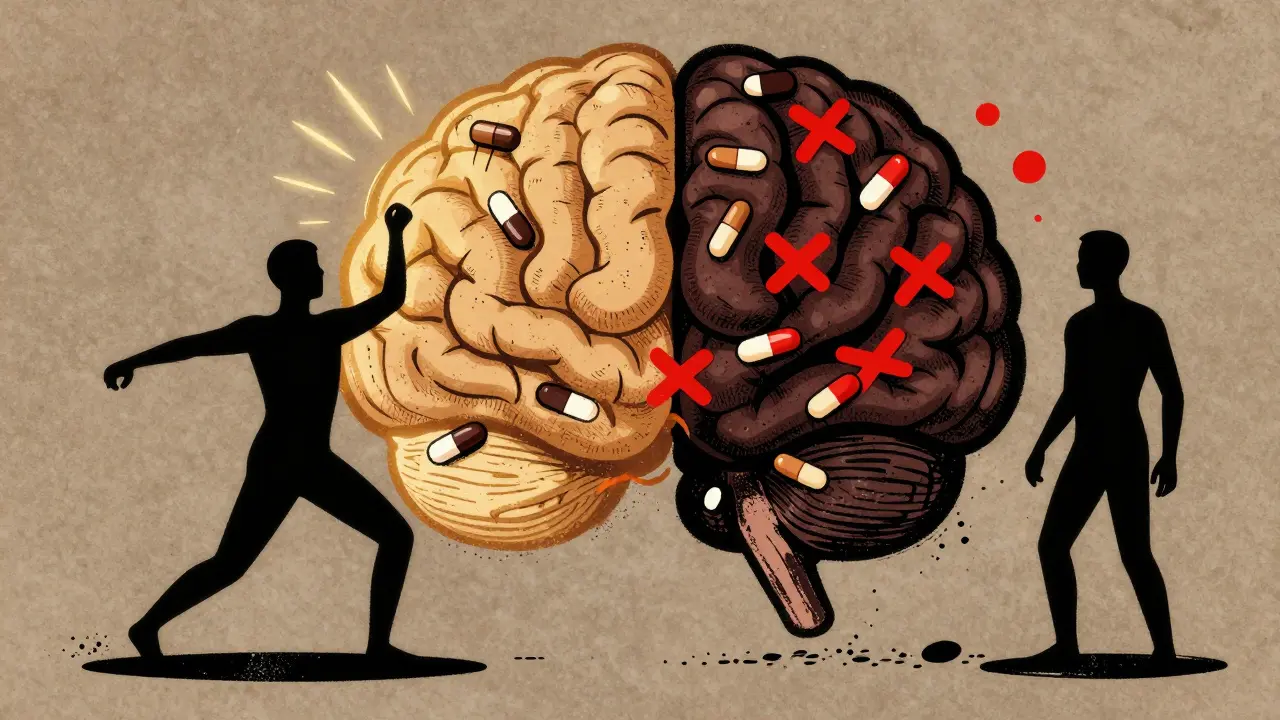
When someone with Parkinson’s disease starts experiencing hallucinations or delusions, doctors face a painful choice: treat the psychosis, or risk making the tremors and stiffness worse. The problem isn’t just complicated-it’s rooted in a biological contradiction. Levodopa and antipsychotics don’t just work differently; they fight each other at the level of dopamine, the brain’s key chemical for movement and mood. This clash isn’t theoretical. It’s happening right now in clinics, homes, and hospitals, and it’s leaving patients caught in the middle.
How Levodopa Works-And Why It’s a Double-Edged Sword
Levodopa is the gold standard for treating Parkinson’s. It’s not a drug that mimics dopamine-it’s the raw material your brain uses to make dopamine. In a healthy brain, dopamine is produced, stored, and released slowly by nerve cells in a controlled way. But in Parkinson’s, those cells die off. By the time symptoms show up, you’ve lost 60-80% of them. What’s left can’t handle dopamine properly anymore.
That’s where levodopa comes in. Taken with carbidopa (which stops it from breaking down in the gut), levodopa crosses into the brain and gets turned into dopamine. But here’s the catch: without healthy nerve cells to regulate it, dopamine levels spike and crash. One hour after a dose, dopamine might surge past normal levels. Three hours later, it’s gone. This rollercoaster isn’t just annoying-it’s what causes the uncontrolled movements called dyskinesias. And as Parkinson’s gets worse, those spikes get bigger. A 2004 brain imaging study showed that the same dose of levodopa causes dramatically higher dopamine swings in advanced patients than in early-stage ones.
How Antipsychotics Block Dopamine-And Why That’s Dangerous
Antipsychotics like haloperidol, risperidone, and quetiapine were designed to calm psychosis by blocking dopamine receptors, especially the D2 type. In schizophrenia, too much dopamine in certain brain areas leads to hallucinations and paranoia. Blocking those receptors helps. But in Parkinson’s, dopamine is already too low. When you block what little dopamine remains, motor symptoms get worse-fast.
Studies show that when antipsychotics are given to Parkinson’s patients, their movement scores on the UPDRS scale-used to measure stiffness, slowness, and tremor-typically jump by 25-35%. That’s not a small change. It means someone who could walk with a cane might need a wheelchair within days. And it’s not just older drugs like haloperidol. Even newer ones like risperidone, which are supposed to be safer, still cause this. A 2021 Cleveland Clinic case review tracked 17 Parkinson’s patients who started risperidone at just 0.5 mg per day. Within 72 hours, all of them saw major motor decline.
The Paradox: Treating One Illness Makes the Other Worse
This is the cruel twist. If you have Parkinson’s and develop psychosis, you need an antipsychotic. But antipsychotics make Parkinson’s worse. If you have schizophrenia and start developing Parkinson’s-like symptoms from long-term antipsychotic use, you might be given levodopa to help. But levodopa can trigger a psychotic episode. A 1988 study found that 60% of schizophrenia patients given 300 mg of levodopa had their hallucinations come back-sometimes worse than before.
It’s not just about dosage. It’s about timing and brain chemistry. In advanced Parkinson’s, the brain’s dopamine system is broken. It can’t buffer or regulate anything anymore. So when you add an antipsychotic, you’re not just reducing dopamine-you’re pushing a system already on the edge into collapse. That’s why some patients develop neuroleptic malignant syndrome (NMS), a rare but deadly condition with fever, muscle rigidity, and confusion. The risk is small-about 1 in 5,000-but the death rate is 10-20%. And here’s the kicker: stopping levodopa suddenly can also trigger NMS. So you can’t just quit one drug to fix the other.
What Doctors Do When There’s No Good Option
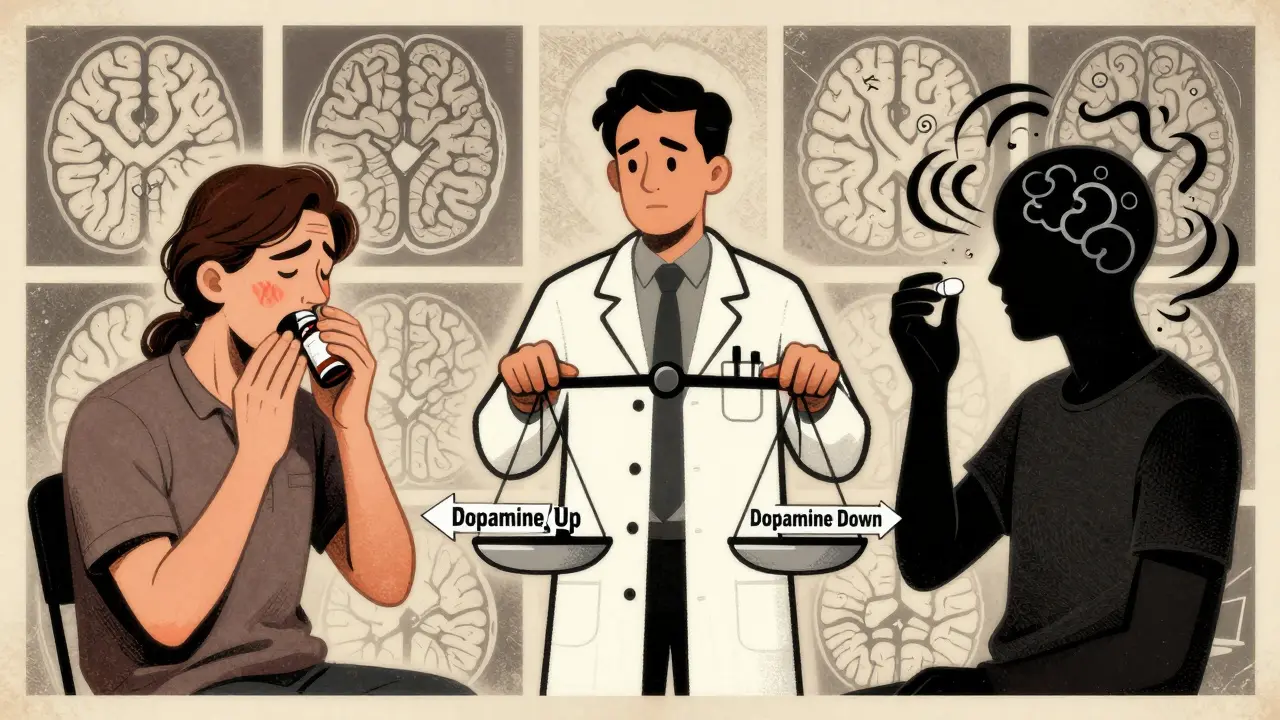
Most neurologists avoid typical antipsychotics like haloperidol completely in Parkinson’s patients. About 89% of movement disorder specialists say they never use them. Quetiapine is the most common choice because it’s less likely to block dopamine receptors strongly. But even then, 30-50% of patients still get worse motor symptoms. Pimavanserin (Nuplazid) is the only FDA-approved drug made specifically for Parkinson’s psychosis. It doesn’t touch dopamine at all-it works on serotonin receptors instead. That’s why it doesn’t worsen movement. But it’s expensive, and not everyone responds to it.
And what about schizophrenia patients who develop Parkinson’s symptoms? That’s even trickier. Many are on long-term antipsychotics, which can cause a condition called tardive dyskinesia-uncontrollable movements that look like Parkinson’s. Giving them levodopa might help the shaking, but it can also bring back the hallucinations. One Reddit user, posting under ‘MindfulSchizo,’ described how taking 300 mg of levodopa for restless legs brought back his hallucinations after two years of being stable.
What Works-And What Doesn’t
There’s no perfect solution, but some approaches are better than others:
- Avoid typical antipsychotics-haloperidol, fluphenazine, chlorpromazine. They’re too risky.
- Use quetiapine cautiously-start at 12.5 mg, never go above 75 mg, and monitor motor function daily.
- Try pimavanserin-if available and affordable. It’s the only dopamine-sparing option approved for Parkinson’s psychosis.
- Don’t stop levodopa suddenly-this can cause NMS. Taper slowly under medical supervision.
- Monitor both sides-track motor symptoms with UPDRS and psychosis with PANSS. A 10-point change on either scale is clinically meaningful.
Some clinics, like the Cleveland Clinic, now require daily motor assessments for the first two weeks after starting any antipsychotic in Parkinson’s patients. If movement worsens by more than 15 points on UPDRS, the drug is stopped immediately.
The Future: New Drugs That Don’t Touch Dopamine
The real breakthroughs aren’t coming from tweaking old drugs-they’re coming from new targets. KarXT, a combination of xanomeline and trospium, showed in a 2023 trial that it could reduce psychosis in Parkinson’s patients without making their tremors worse. It works by stimulating muscarinic receptors, not dopamine ones. That’s huge. Another drug, targeting alpha-synuclein (the protein that clumps in Parkinson’s brains), is in late-stage testing and could one day treat the root cause of both movement and psychiatric symptoms.
Meanwhile, researchers are using brain scans to predict who’s at risk. If a patient’s dopamine transporter scan shows very low binding, they’re far more likely to have severe motor decline if given an antipsychotic. That means doctors might soon be able to test before they treat-avoiding the guesswork entirely.
What Patients and Families Should Know
If you or a loved one is on levodopa and starts seeing things that aren’t there, don’t panic-but don’t delay either. Talk to your neurologist. Ask if pimavanserin is an option. If you’re on an antipsychotic and your walking or balance has gotten worse, tell your doctor. Don’t assume it’s just the disease getting worse. It might be the medication.
And if you’re a caregiver, keep a symptom journal. Note when tremors get worse, when hallucinations appear, and when meds are changed. Small details matter. One patient’s wife noticed her husband’s walking slowed exactly two days after starting a new sleep aid-turns out, it was a low-dose antipsychotic. That kind of pattern saves lives.
This isn’t about choosing between two illnesses. It’s about finding a path that doesn’t destroy one to save the other. The science is getting better. The tools are improving. But until then, awareness, careful monitoring, and honest conversations with your care team are the best tools you have.
Can levodopa make psychosis worse in Parkinson’s patients?
Yes. About 15-20% of Parkinson’s patients develop worsening hallucinations or delusions when taking levodopa, especially at higher doses. This happens because levodopa increases dopamine levels beyond what the damaged brain can regulate, triggering overactivity in areas linked to perception and emotion.
Why are antipsychotics risky for Parkinson’s patients?
Antipsychotics block dopamine receptors, which are already in short supply in Parkinson’s. This worsens motor symptoms like stiffness, slowness, and tremor. Studies show a 25-35% increase in UPDRS motor scores within days of starting these drugs. Even newer ones like risperidone carry this risk.
Is there an antipsychotic that doesn’t worsen Parkinson’s symptoms?
Yes-pimavanserin (Nuplazid) is the only FDA-approved antipsychotic for Parkinson’s psychosis that doesn’t block dopamine. It works by targeting serotonin receptors instead. While not effective for everyone, it avoids the motor side effects of traditional antipsychotics.
Can stopping levodopa suddenly cause serious problems?
Absolutely. Abruptly stopping levodopa can trigger neuroleptic malignant syndrome (NMS), a life-threatening condition with high fever, muscle rigidity, confusion, and organ failure. Mortality rates are 10-20%. Always taper under medical supervision.
What should I do if my Parkinson’s symptoms get worse after starting a new medication?
Contact your neurologist immediately. Keep a log of when symptoms started, what new meds were added, and how they changed over time. Many antipsychotics cause motor decline within 72 hours. Early recognition can prevent permanent damage.
Are there new treatments on the horizon for Parkinson’s psychosis?
Yes. KarXT, a non-dopamine drug targeting muscarinic receptors, showed promise in a 2023 trial by reducing psychosis without worsening movement. Other drugs targeting alpha-synuclein and serotonin receptors are in development. The goal is to treat psychosis without touching dopamine at all.
Bottom Line: Balance Over Quick Fixes
This isn’t a problem with a simple answer. It’s a tightrope walk between two critical systems in the brain. The key is patience, monitoring, and choosing treatments that avoid dopamine disruption whenever possible. As new drugs emerge, the future looks brighter. But for now, the best defense is knowledge-knowing what each drug does, how it might backfire, and when to speak up.


9 Comments
Alex Danner
January 6 2026Levodopa is basically giving your brain a sugar rush while it’s diabetic. One minute you’re walking fine, next you’re twitching like you’re being electrocuted. And then they throw in an antipsychotic like it’s a magic fix? No. It’s like trying to put out a fire with gasoline.
My uncle was on quetiapine for 6 months. Started fine. Then one day he couldn’t lift his coffee cup. We thought it was dementia. Turns out, it was the med. Pimavanserin? Yeah, that’s the only thing that didn’t turn him into a statue. Expensive as hell, but worth every penny.
Paul Mason
January 7 2026Look, if you’re on antipsychotics and you’ve got Parkinson’s, you’re basically playing Russian roulette with your motor skills. Haloperidol? Don’t even go there. It’s like giving a diabetic insulin and then telling them to eat a whole cake. D2 receptors aren’t just ‘involved’-they’re the whole damn engine. Block ‘em, and the car stops.
Quetiapine’s the least worst option, sure. But even that? I’ve seen people go from walking to wheelchair in 48 hours. Pimavanserin’s the future. Serotonin fix? Genius. Why the hell didn’t we think of this sooner?
LALITA KUDIYA
January 8 2026So hard for families
My mom had both
She stopped dancing because of the meds
Not the disease
Just the meds
😭
Poppy Newman
January 10 2026Okay but can we talk about how wild it is that the same brain chemical that lets you move also makes you see things that aren’t there? 🤯 Dopamine is the ultimate double agent. It’s like your brain’s got a civil war going on and the doctors are stuck in the middle with two guns pointed at each other.
Also-KarXT? That’s the new kid on the block? I’ve been waiting for this. If it works without touching dopamine… I’m crying. 🥹
Anastasia Novak
January 10 2026Let’s be real-most neurologists are just winging it. They read the guidelines, nod, and prescribe quetiapine like it’s a band-aid on a ruptured aorta. And then they wonder why patients crash.
Pimavanserin? Oh, sure, it’s ‘FDA-approved.’ But the trials were tiny. 300 patients? That’s not science-that’s a pilot episode. And don’t get me started on the $12,000/month price tag. This isn’t medicine. It’s pharmaceutical extortion wrapped in a white coat.
Meanwhile, the real breakthroughs? KarXT. Alpha-synuclein. These are the only things worth talking about. Everything else is just damage control for a system that’s been broken for decades.
Jonathan Larson
January 11 2026It is a profound ethical dilemma, one that reveals the limits of reductionist pharmacology in the face of neurobiological complexity. The dopaminergic system, as the cornerstone of both motor control and affective regulation, cannot be manipulated without cascading consequences. The very mechanism that restores mobility-levodopa-introduces the very pathology it seeks to suppress. Antipsychotics, designed to quell aberrant signaling, extinguish the remaining signal essential for voluntary motion.
Thus, the therapeutic imperative becomes not merely pharmacological, but epistemological: to recognize that the brain is not a machine with interchangeable parts, but a dynamic, self-organizing network. We must move beyond binary interventions toward systems-based, biomarker-guided, and neuromodulatory strategies. The future lies not in blocking dopamine, but in restoring its homeostasis-through receptor modulation, circuit-level targeting, and perhaps even gene therapy.
Until then, we are left with palliation, vigilance, and humility.
Elen Pihlap
January 11 2026Wait so you’re telling me my dad’s hallucinations are because of his Parkinson’s meds? I thought it was just him getting old…
And you’re saying we should stop his antipsychotic? But he’s scared to sleep now…
What if he sees ghosts again? I can’t handle that…
Can I just… give him more meds? I don’t know what to do anymore. 😭
Sai Ganesh
January 13 2026My cousin in Delhi was given haloperidol for hallucinations after Parkinson’s diagnosis. Within a week, he couldn’t stand. Family blamed the disease. We found out later it was the drug. Now he’s on pimavanserin. Slow improvement. Expensive. But he walks again.
Doctors here don’t know this stuff. They give what’s cheap. Not what works. This post should be shared in every clinic in India.
Knowledge saves lives.
Katrina Morris
January 13 2026omg i had no idea levodopa could cause hallucinations 😳 i thought it was just for shaking… my aunt’s been on it for 5 years and lately she’s been talking to people who aren’t there… i thought it was just her getting confused… i’ll tell my mom to ask the dr about pimavanserin!!
also karxt sounds like a superhero drug 😍 hope it comes out soon!!
ps sorry for typos im typing on my phone and my thumbs are tired 😅