Managing Functional Impairment in Autoimmunity: Rehab and OT Guide
Living with an autoimmune condition often feels like a gamble. One morning you might wake up feeling capable of tackling your entire to-do list, and by the afternoon, a sudden flare-up leaves you struggling to open a jar or walk to the mailbox. This unpredictable shift in physical ability is what clinicians call functional impairment. It isn't just about the disease itself, but how the inflammation, medication side effects, and general inactivity strip away your independence. The good news? You don't have to just "deal with it." A targeted approach combining rehabilitation and occupational therapy can actually reclaim a significant amount of that lost function.
Research shows that structured rehab programs can boost functional capacity by 35-42%. The real secret is starting early-ideally within the first year of symptoms-to prevent the cycle of muscle loss and joint stiffness from becoming permanent. But this isn't about "pushing through the pain," which often leads to a devastating crash. Instead, it's about precision dosing your movement, much like a doctor doses medication.
The Core Pillars of Autoimmune Recovery
Rehabilitation for autoimmune diseases isn't a one-size-fits-all gym routine. It's a multidisciplinary effort designed to handle three specific problems: tissue damage caused by inflammation, the sluggishness that comes from medication, and general deconditioning from avoiding movement out of fear.
To get these results, therapists use a phased approach. During an acute flare-when joints are swollen and hot-the focus is on isometric exercises. These are gentle muscle contractions that don't require moving the joint, usually kept at about 20-30% of your maximum effort. Once you hit a remission phase, the intensity ramps up to aerobic training, targeting 40-60% of your heart rate reserve to improve cardiovascular health without triggering a systemic inflammatory response.
A critical part of this process involves Hydrotherapy, which is the use of water-based exercises to reduce joint load and pain. Because water supports your weight, it often provides 22% more pain reduction than land-based workouts during active disease phases. If you can find a facility with a pool kept between 92-96°F, you'll likely find it much easier to move your limbs through a full range of motion without the sharp pain associated with gravity.
Occupational Therapy: Mastering the Art of Daily Living
While physical therapy focuses on how your body moves, Occupational Therapy (OT) focuses on how you live. If you can't button your shirt or cook a meal because your hands are stiff, an OT is the specialist who steps in. They use a tool called the Canadian Occupational Performance Measure (COPM) to identify exactly which tasks are frustrating you the most.
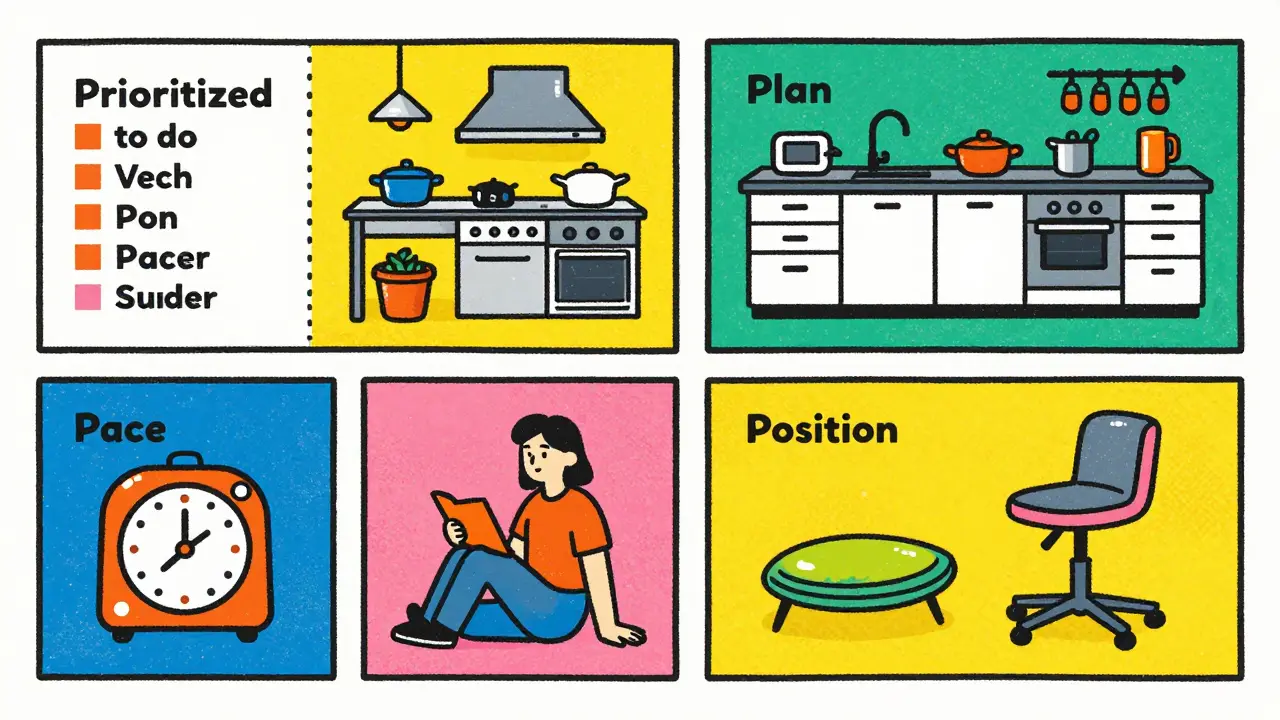
One of the most powerful tools in the OT toolkit is the "4 Ps" principle of energy conservation. This is designed to stop the "boom-bust cycle," where you do too much on a good day and spend the next three days in bed. The 4 Ps are:
- Prioritize: Decide what absolutely must be done today and what can wait.
- Plan: Organize your tools and space to minimize unnecessary movement.
- Pace: Break tasks into small chunks. A gold standard rule is limiting continuous work to 15-20 minutes, followed by a mandatory 5-10 minute rest.
- Position: Use chairs, stools, or adaptive grips to keep your body in the most efficient alignment.
Beyond pacing, OTs introduce adaptive technology. For those with severe upper extremity impairment, voice-activated smart home systems have been shown to increase independence by 31%. Whether it's a specialized kitchen tool or a voice-controlled light switch, these aren't "cheating"-they are strategic ways to save your limited energy for the things that truly matter.
| Feature | Physical Therapy (PT) | Occupational Therapy (OT) |
|---|---|---|
| Primary Focus | Gross motor function & strength | Activities of daily living (ADLs) |
| Key Strength | Lower extremity & mobility (28% more effective) | Upper extremity & fine motor (33% more effective) |
| Core Tools | TENS units, underwater treadmills | Adaptive devices, energy pacing plans |
| Typical Goal | Improve walking speed/balance | Independent dressing/grooming/cooking |
Avoiding the "Push Through" Trap
There is a dangerous myth in some rehab circles that you should "push through the pain" to get stronger. In the world of autoimmunity, this is a recipe for disaster. When your Disease Activity Score (DAS28)-a metric used to measure inflammation-exceeds 5.1, aggressive exercise can actually do more harm than good.
Expert guidelines from the American Physical Therapy Association warn against high-impact activity if you have active swelling in more than two joints or a fever over 100.4°F. Many patients report "post-therapy crashes" when therapists ignore these red flags. To avoid this, follow the 70% effort rule: never exert yourself beyond 70% of your perceived maximum capacity. If you feel like you can give 100%, stop at 70%. This leaves a buffer for your immune system and prevents the inflammatory spike that leads to a crash.
To track this, consider an activity diary. By recording your heart rate and symptom levels in real-time, you can start to see the patterns of your flare-ups before they happen. This allows you to shift from a reactive approach ("I'm exhausted, I need to sleep") to a proactive one ("My heart rate is elevated today, I'll switch to isometric stretches instead of a walk").
The Road Ahead: Tech and Personalization
The future of autoimmune rehab is moving toward extreme personalization. We are seeing the rise of biomarkers, such as serum IL-6 levels, which can tell a therapist exactly how much inflammation is in your system on a given Tuesday. Adjusting exercise intensity based on these markers has already shown 39% better outcomes in recent trials.
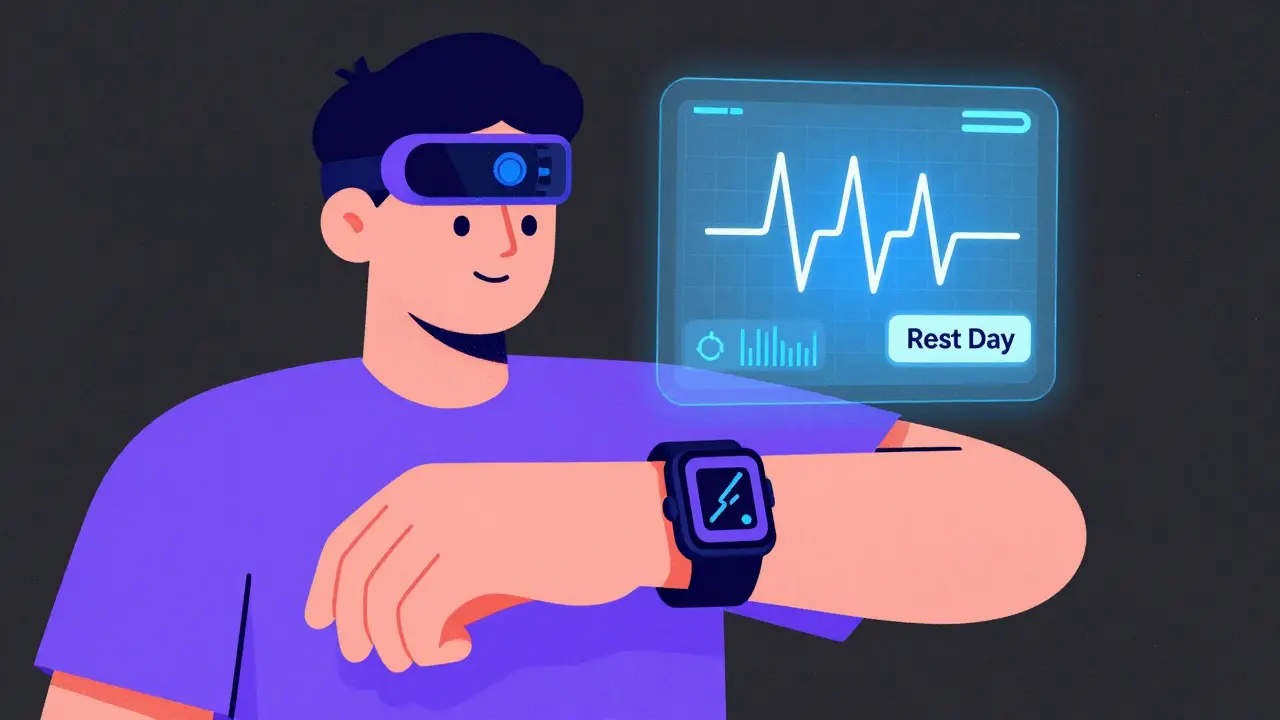
We are also seeing a shift toward AI-driven support. New apps are being developed to predict flare risks using wearable sensor data with over 80% accuracy. This means your phone might tell you to take a rest day before you even realize you're heading toward a flare. Combined with the increase in telehealth-which 68% of patients now prefer-rehab is becoming more accessible, especially for those living in rural areas where specialized hydrotherapy pools are rare.
Will rehabilitation make my autoimmune flare-ups worse?
Not if it is done correctly. Rehabilitation should be "dosed" based on your current disease activity. During severe flares (high DAS28 scores), high-intensity exercise can exacerbate symptoms. However, gentle isometric exercises and energy conservation techniques usually help manage symptoms. The key is to avoid the "push through the pain" mentality and follow the 70% effort rule.
What is the difference between PT and OT for autoimmune patients?
Physical Therapy (PT) focuses on overall mobility, strength, and lower body function, making it better for improving your ability to walk or stand. Occupational Therapy (OT) focuses on specific daily tasks-like dressing, eating, and working-and uses adaptive tools and energy pacing to help you maintain independence in your home and job.
How long does it take to see results from occupational therapy?
Most patients take about 8 to 12 weeks to fully master energy pacing techniques and adapt their home environment. Significant improvements in functional capacity, often measured by the HAQ-DI or COPM scales, are typically seen within the first 6 months of a consistent, multidisciplinary program.
Is hydrotherapy better than land-based exercise?
During active disease phases, yes. Hydrotherapy provides roughly 22% greater pain reduction because the buoyancy of the water removes pressure from inflamed joints. However, land-based exercise is still essential for maintaining bone density and muscle strength during remission periods.
What are the "4 Ps" of energy conservation?
The 4 Ps are Prioritize (focusing on essential tasks), Plan (organizing your environment), Pace (breaking tasks into short intervals with rests), and Position (using ergonomic supports). These techniques help prevent the "boom-bust cycle" of overexertion and subsequent crashes.
Next Steps for Your Recovery
If you are just starting this journey, your first step should be finding a therapist who specializes in autoimmune conditions-look for those with advanced certifications in rheumatological rehab. Start by tracking your symptoms in a diary for two weeks; this data is gold for your therapist and will help them build a plan that doesn't trigger a crash.
For those already in therapy, if you feel a "crash" coming on after a session, speak up immediately. Your program needs to be adjusted downward. Remember, the goal isn't to hit a specific gym target, but to maintain the highest possible quality of life without sacrificing your long-term health.