Medications Never to Put in Household Trash: A Safety List
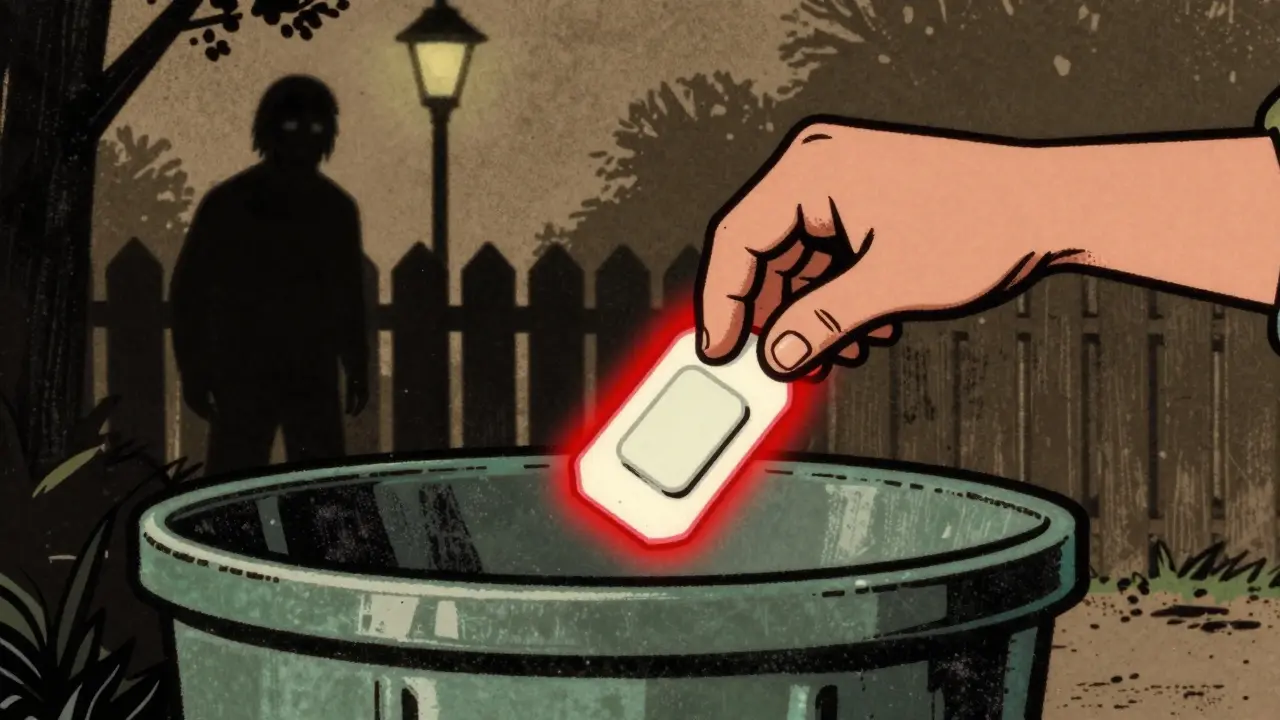
Putting unused medications in the trash might seem harmless-until it isn’t. Every year, children, teens, and even adults accidentally-or intentionally-take drugs they find in household trash. Some of these drugs can kill in a single dose. The FDA flush list exists for one reason: to prevent deaths before they happen.
Why Some Medications Can’t Go in the Trash
Not all expired pills or leftover patches belong in the garbage. The U.S. Food and Drug Administration (FDA) has identified 11 specific categories of medications that must be flushed down the toilet immediately after they’re no longer needed. These aren’t random choices. They’re drugs with extreme potential for abuse and lethal power-even in tiny amounts. Take fentanyl, for example. It’s 50 to 100 times stronger than morphine. A single patch, if pulled from the trash and applied to the skin, can stop someone’s breathing. In 2022, the American Association of Poison Control Centers recorded over 8,900 cases of accidental fentanyl exposure, nearly half of them in children under five. These aren’t hypothetical risks. They’re real, documented tragedies. The same goes for opioids like oxymorphone (OPANA ER), methadone (DOLOPHINE), and buprenorphine (SUBOXONE). These drugs are often diverted from medicine cabinets or trash bins. According to the Substance Abuse and Mental Health Services Administration, more than half of people who misused prescription painkillers got them from friends or family-often because the drugs were easily accessible.The FDA Flush List: What’s on It?
Here’s the official list of medications that must be flushed, not thrown away:- Buprenorphine - brands: BELBUCA, BUAVAIL, BUTRANS, SUBOXONE, SUBUTEX, ZUBSOLV
- Fentanyl - brands: ABSTRAL, ACTIQ, DURAGESIC, FENTORA, ONSOLIS
- Hydromorphone - brand: EXALGO
- Meperidine - brand: DEMEROL
- Methadone - brands: DOLOPHINE, METHADOSE
- Morphine - brands: ARYMO ER, AVINZA, EMBEDA, KADIAN, MORPHABOND ER, MS CONTIN, ORAMORPH SR
- Oxymorphone - brands: OPANA, OPANA ER
- Tapentadol - brands: NUCYNTA, NUCYNTA ER
- Sodium oxybate - brands: XYREM, XYWAV
- Diazepam rectal gel - brands: DIASTAT, DIASTAT ACUDIAL
- Methylphenidate transdermal system - brand: DAYTRANA
These aren’t just any painkillers. They’re controlled substances with high abuse potential and a documented history of causing death from a single exposure. The FDA doesn’t include them on the list lightly. Their guidance is clear: if it’s on this list, flush it-no waiting, no mixing, no hesitation.
What About the Environment? Isn’t Flushing Bad?
Yes, flushing medications can end up in waterways. Wastewater plants don’t remove all pharmaceuticals. Studies show that compounds like carbamazepine (an epilepsy drug) survive treatment in over 80% of cases. Fish in some rivers have shown hormonal changes due to trace medications. But here’s the trade-off: the EPA and FDA agree that for these 11 medications, the risk of death outweighs environmental harm. Dr. John Scott, a research chemist at the EPA, testified in 2022 that the environmental impact of flushing one fentanyl patch is negligible compared to the chance of multiple overdoses if that patch ends up in a child’s hands. Environmental groups aren’t ignoring the problem-they’re pushing for better solutions. Companies like DisposeRx now offer single-use powder packets that turn pills into a gel-like sludge when mixed with water. These packets are being used in over 1,200 pharmacies nationwide. But until every home has access to these tools, flushing remains the only reliable way to destroy these deadly drugs immediately.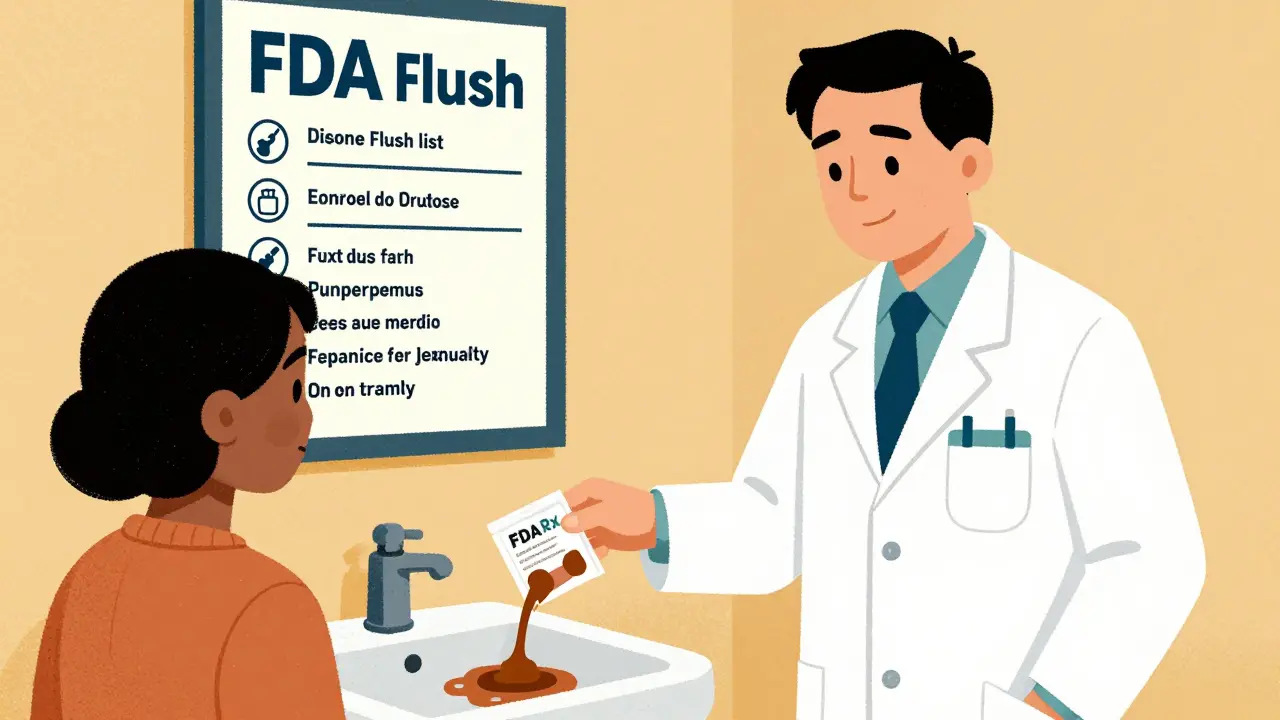
What Should You Do With Other Medications?
If your medication isn’t on the flush list, don’t flush it. Instead, follow these steps:- Take pills or liquids out of their original bottles.
- Mix them with something unappealing-used coffee grounds, cat litter, or dirt.
- Put the mixture in a sealed plastic bag.
- Throw the bag in your household trash.
Do not crush tablets or capsules. That’s a common mistake. Crushing can release dangerous dust or make the drug easier to extract. The FDA specifically says not to do this.
Also, remove personal information from the prescription label before tossing the empty bottle. It’s a simple step that protects your privacy.
Where to Find Safe Disposal Options
The best way to dispose of any medication-flush or not-is through a take-back program. These are drop-off locations run by pharmacies, police stations, or local health departments. - Walgreens has over 2,000 disposal kiosks across the U.S. - CVS Health operates 1,800 more in 48 states. - Minnesota alone has more than 300 collection boxes at law enforcement offices and pharmacies. These programs accept both controlled and non-controlled substances. No questions asked. No paperwork needed. Just drop it in and walk away. If you’re unsure where to find one, visit the DEA’s Diversion Control Division website or call your local pharmacy. Many communities also host annual drug take-back days, usually in April and October.Why People Still Get It Wrong
A 2022 study in the Journal of the American Pharmacists Association found that only 43% of patients could correctly identify which drugs needed flushing. Most people assume all expired meds should go in the trash-or worse, they flush everything because they’re afraid of misuse. Pharmacists report constant confusion. One pharmacy technician on Drugs.com shared that 73% of patients ask, “Can I just flush this?” when handed a new prescription. The answer isn’t always yes. That’s why it’s critical to read the disposal instructions on your label or ask your pharmacist. And don’t rely on memory. If you’re not sure, check the FDA’s current flush list online. It’s updated regularly to include new formulations.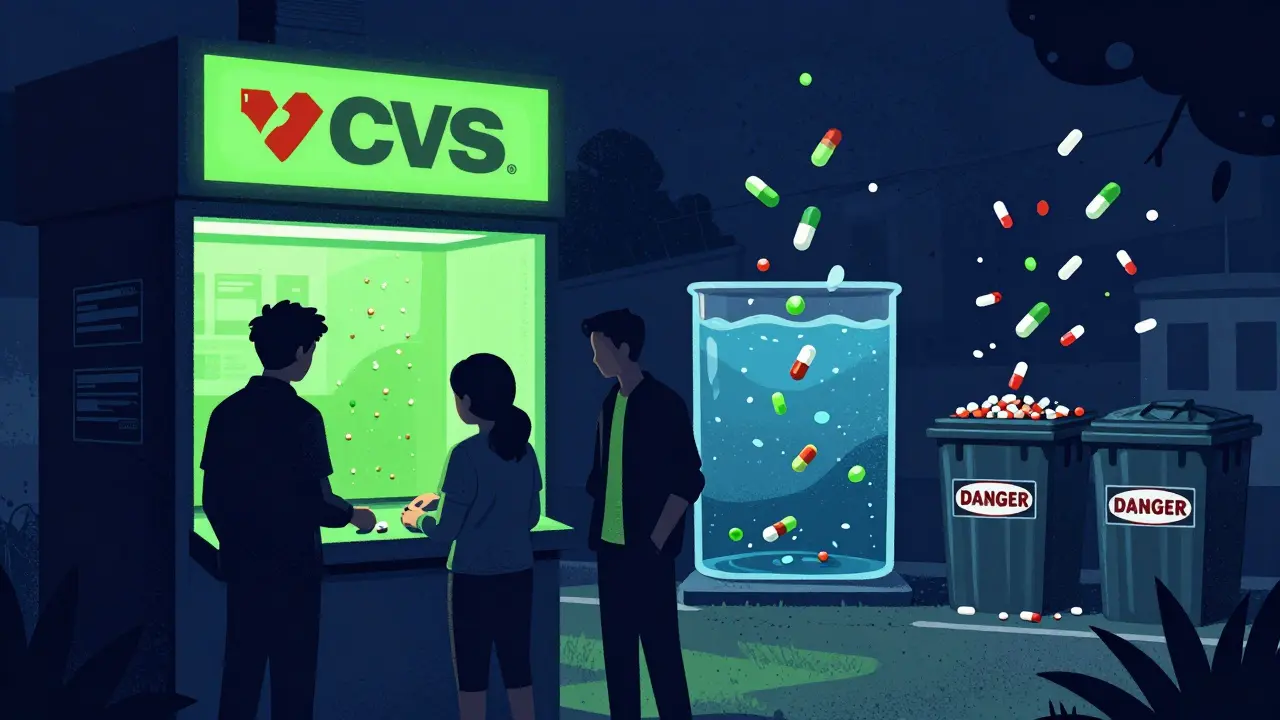
A Real-Life Example: The Neighbor’s Trash
In 2021, a teenager in Montgomery County, Ohio, died after finding a bottle of OPANA ER in a neighbor’s trash. The neighbor had thrown it out instead of flushing it. The teen didn’t know the drug’s strength. He took one pill. He never woke up. That death led to a local law requiring special disposal instructions for all Schedule II medications. It’s now illegal in that county to dispose of these drugs without following FDA guidelines. This isn’t an isolated case. It’s a pattern. And it’s preventable.What’s Changing in 2026?
New packaging is starting to appear on shelves. Some drugmakers are testing envelopes lined with activated charcoal that neutralize pills when water is added. A pilot program at the University of Florida showed a 63% drop in improper disposal when patients used these envelopes. Congress is also moving. The SNIPED Act, introduced in 2023, would require doctors to give written disposal instructions with every prescription for Schedule II drugs. That could make a huge difference. But for now, the rule stays simple: if it’s on the FDA flush list, flush it. If it’s not, mix it with coffee grounds and toss it.What to Do Right Now
1. Go through your medicine cabinet. 2. Look for any medications on the FDA flush list. 3. If you find any, flush them immediately. 4. For everything else, mix with coffee grounds or cat litter, seal in a bag, and throw it out. 5. Find a nearby take-back location and drop off any remaining pills.Don’t wait for a tragedy to make you act. The safest choice isn’t always the most convenient one. But in this case, convenience isn’t worth the risk.
Can I flush all expired medications down the toilet?
No. Only medications on the FDA’s official flush list should be flushed. Flushing other drugs unnecessarily contributes to water contamination. For all other medications, mix them with an unappealing substance like coffee grounds or cat litter, seal them in a plastic bag, and throw them in the trash.
Why can’t I just throw fentanyl patches in the trash?
Fentanyl is so potent that a single patch can be lethal to someone who didn’t take it. Children, pets, or adults with substance use disorders may find and use discarded patches. Flushing ensures the patch is destroyed immediately, eliminating the risk of accidental or intentional overdose.
What if I don’t have a toilet? Can I flush it down the sink?
The FDA recommends flushing down the toilet because the water flow carries the medication directly into the sewage system, where it’s treated and broken down. Flushing down a sink or drain doesn’t guarantee the same result and may leave residue. If you have no toilet, contact your local pharmacy or health department for disposal options.
Are there penalties for not flushing these medications?
There are no legal penalties for individuals who don’t flush medications. But in some areas, like Montgomery County, Ohio, local laws require proper disposal of Schedule II drugs. More importantly, failing to flush these drugs puts lives at risk. The consequences aren’t legal-they’re deadly.
How do I know if my medication is on the FDA flush list?
Check the label or the prescribing information that came with your medication. If it contains buprenorphine, fentanyl, oxymorphone, methadone, or any other substance on the FDA’s list, it must be flushed. You can also visit the FDA’s official Drug Disposal page or ask your pharmacist directly. Never guess-always verify.
Can I donate unused medications instead of disposing of them?
No. In the U.S., it’s illegal to donate prescription medications, even if they’re unopened. Medications are regulated drugs, not generic goods. Donating them could put someone else at risk if they’re not appropriate for that person’s condition. Always dispose of them properly through flushing or take-back programs.

12 Comments
Eileen Reilly
January 13 2026so like… i just flushed my ex’s old oxycontin last week. no regrets. that man was a walking disaster and i’m not letting his junk poison my kid’s future. 🤷♀️
Monica Puglia
January 13 2026thank you for this. i’ve been meaning to clean out my cabinet but kept putting it off. now i’m gonna do it tonight with a glass of wine and some true crime podcast. 💊🫡
Cecelia Alta
January 15 2026oh please. like the government actually cares if a kid finds a fentanyl patch. they’re too busy banning gender affirming care and letting Big Pharma get richer. flush it? sure. but don’t act like this is about safety-it’s about control. they’d rather you stay scared than fix the system. 🤡
steve ker
January 16 2026why flush when you can just burn it. trash is for weak people. africa handles waste better than you
George Bridges
January 18 2026i’ve worked in ER for 18 years. i’ve seen too many kids brought in after finding pills in trash. this isn’t theoretical. flushing saves lives. period.
Faith Wright
January 18 2026so you’re telling me the same people who tell us to recycle everything else are like ‘nah, just flush this deadly poison’? classic. 🙄
Rebekah Cobbson
January 20 2026if you’re nervous about flushing, try this: grab a disposal pouch from your pharmacy (they’re free), mix your meds with water, let it gel, toss it. easy, safe, no guilt. you got this 💪
Abner San Diego
January 21 2026so let me get this straight. i’m supposed to flush a pill because some lazy parent didn’t lock their cabinet? nah. i’m not flushing my meds just because america can’t parent.
Audu ikhlas
January 21 2026flushing is for cowards. real men bury it in the backyard. if the water gets dirty its the government problem not mine
Sonal Guha
January 22 2026the FDA list is outdated. they missed gabapentin. everyone knows it’s abused now. fix the list or shut up
TiM Vince
January 24 2026my grandma used to save all her meds in a shoebox. i finally convinced her to take them to the pharmacy last month. she cried. said she didn’t know it was so dangerous. this post saved her life.
gary ysturiz
January 24 2026just did it. flushed two patches, mixed the rest with coffee grounds, dropped off the rest at the pharmacy. felt good. small step, big impact. thanks for the reminder. 💙