Opioid-Induced Itching: Causes and Best Management Strategies for Patients
Treatment Effectiveness Simulator
Select Clinical Context
Based on your situation, we recommend the intervention with the highest probability of success.
Treatment Comparison Matrix
The effectiveness of these drugs changes based on the cause of the itch (Histamine vs. Neural Pathway).
Diphenhydramine
Standard Antihistamine
Best for: True allergies. Often ineffective for pure neural itch.
Naloxone
Opioid Antagonist
Best for: ICU settings requiring immediate symptom stop.
Nalbuphine
Mixed Agonist
Best for: Cesarean recovery. Considered "Gold Standard".
Lignocaine
Local Anesthetic
Best for: Patients who cannot tolerate other opioids.
The Science Behind It
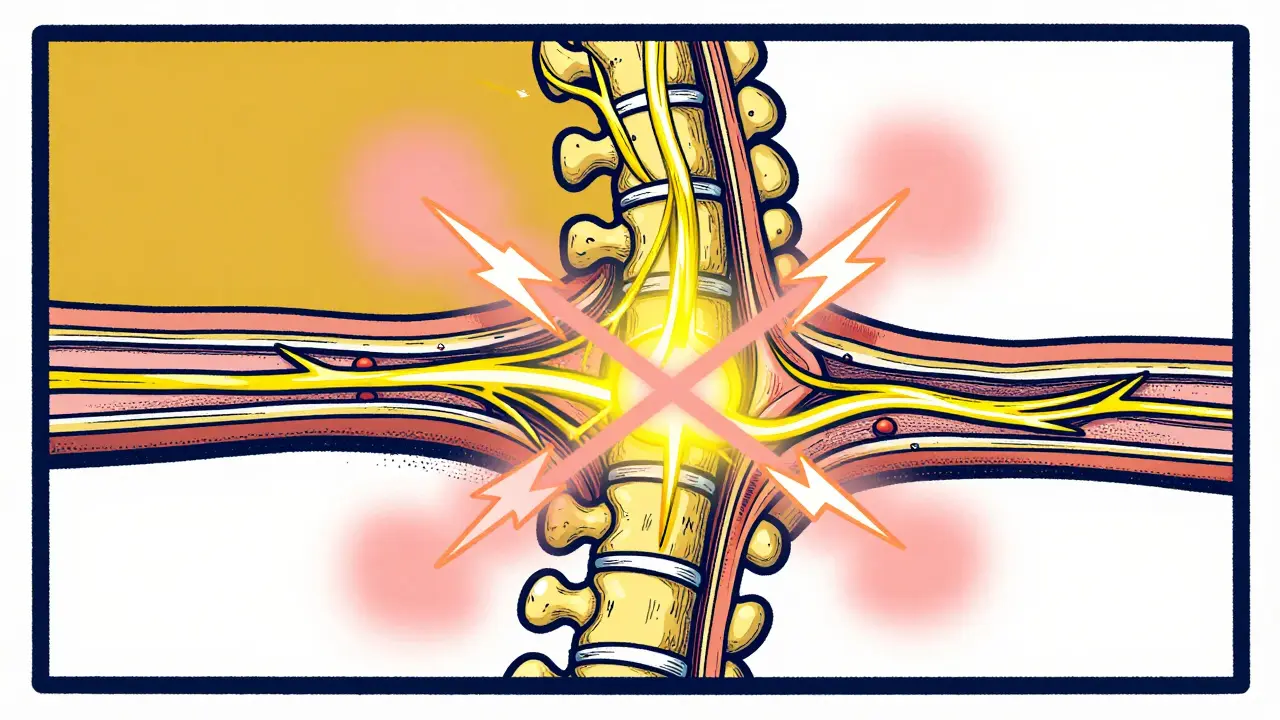
Historically, doctors thought itching was caused by Histamine release (allergies). Modern imaging proves the signal actually travels through nerves called TRPV1 Receptors. This is why antihistamines often fail—they target the blood chemistry, not the neural nerve firing.
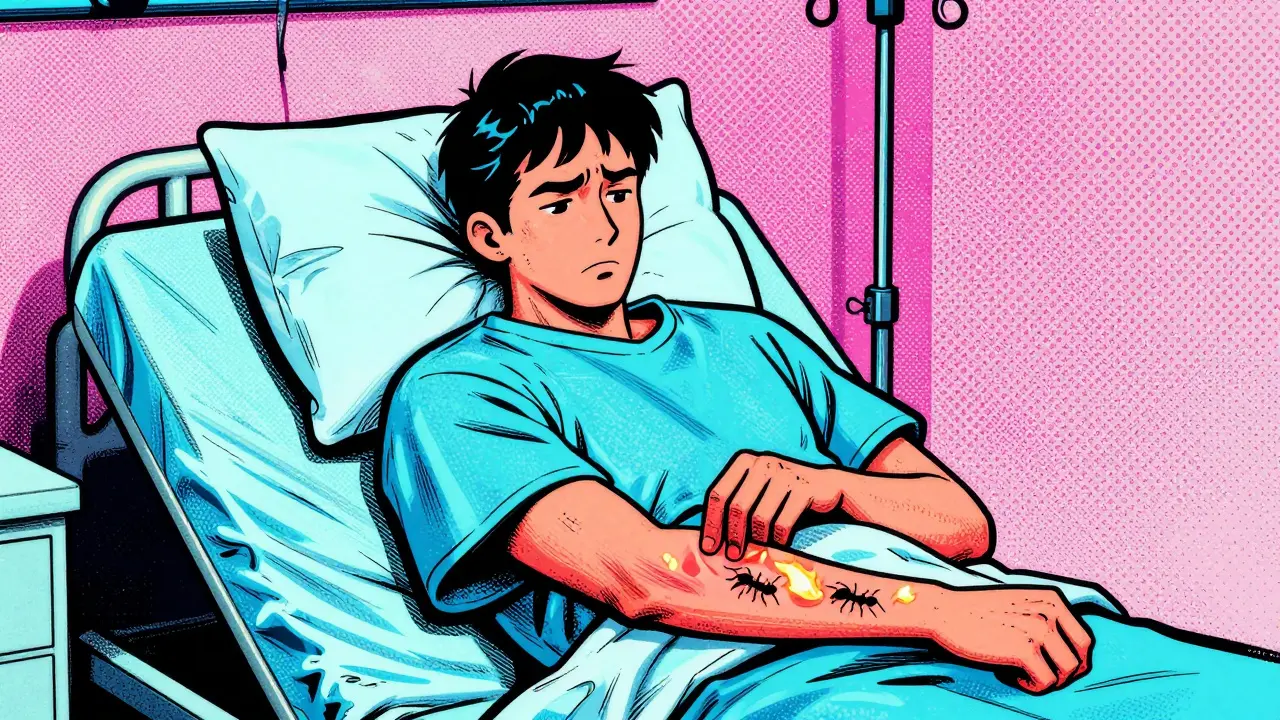
If you have ever received strong pain relief after surgery, you know the irony can be frustrating. You feel no pain, yet your skin feels like fire ants are crawling under it. This isn't just a nuisance; it is a recognized clinical phenomenon affecting millions. We call this Opioid-Induced Pruritus a specific side effect where pain relief triggers an uncontrollable urge to scratch, often without visible hives. It complicates recovery for patients ranging from post-surgery individuals to those managing chronic conditions.
This condition strikes hardest when doctors administer certain classes of drugs. While it can happen with various medications, it occurs most frequently with Morphine, which is a potent analgesic used widely in hospitals for moderate to severe acute pain. Studies show that depending on how the drug enters your body, nearly everyone who gets it through spinal injection experiences itching. For those getting it intravenously, the number drops to roughly half the patients. Understanding why this happens helps explain why over-the-counter allergy medicines often fail to fix the problem.
The History Behind the Itch Theory
For decades, medical professionals operated under a single assumption. They believed that opioids caused itching simply by triggering Histamine release a compound released by immune cells during allergic reactions that causes redness, swelling, and itchiness. This made sense logically. If a patient felt itchy, we treated them for allergies. We gave them antihistamines like diphenhydramine. Logic dictated that stopping the chemical responsible for allergies should stop the symptom.
However, research over the last thirty years has flipped this script. Early papers from the 1990s noted that histamine levels did not always correlate with the severity of the itch. In fact, some patients had intense scratching with zero histamine elevation in their blood. Experts like Dr. L.B. Hough suggested early on that opiate-induced histamine release was pharmacologically distinct from standard receptor binding. This meant the traditional "allergy" explanation was incomplete, bordering on incorrect for many cases. Modern imaging shows the signal actually travels through nerves rather than just circulating chemicals in the blood.
How the Neural Pathway Works
To understand the treatment options, we need to look deeper at the biology. Current understanding points toward a specific set of nerve fibers. These are neurons expressing TRPV1 Receptors, which are proteins found on nerve endings that detect heat, acid, and capsaicin, playing a key role in itch sensation. When opioids bind to mu receptors in the brain and spinal cord, they seem to activate these specific pathways designed to protect us from irritants, essentially tricking the brain into feeling an itch even when there is no external irritant present.
This discovery changed how we approach care. If the itch comes from nerve activation rather than mast cell explosion, blocking histamine won't stop the signal. Instead, we need to target the receptor itself. Research published recently indicates that co-stimulation with capsaicin, the spicy component in chili peppers, can actually eliminate the trigger. This proves the mechanism is neural. The implications are massive for patient comfort, especially in obstetric settings where mothers need to bond with newborns immediately after delivery without distraction.
Treatment Comparisons and Effectiveness
When the itch sets in, the goal is relief without waking the patient or reversing pain control. Doctors have several tools available, but they vary wildly in performance. Below is a breakdown of the common interventions compared against their success rates and drawbacks based on recent clinical data.
| Treatment Type | Success Rate | Side Effects | Ideal Use Case |
|---|---|---|---|
| Diphenhydramine (Antihistamine) | 20-30% | Drowsiness, Dry Mouth | Suspected true allergy |
| Naloxone (Opioid Antagonist) | 60-80% | Pain Return Risk | Rapid relief in ICU |
| Nalbuphine (Mixed Agonist) | 85% | Nausea, Low Blood Pressure | Cesarean Recovery |
| Lignocaine (Local Anesthetic) | 70% | Cardiac Sensitivity | Non-opioid alternative |
As the data suggests, relying on older drugs is often ineffective. First-generation antihistamines simply miss the mark on the primary mechanism. They might help if there is a mixed reaction involving actual histamine, but for pure neural itch, they are largely useless. A nurse practitioner in Birmingham with twelve years of experience in post-anesthesia care noted that nalbuphine remains the gold standard. She reported that patients wake up itch-free within five minutes of administration. That timeline matters immensely when sleep is already disrupted by surgery.
It is worth mentioning that timing is everything. Interventions work best within ten minutes of symptom onset. Waiting too long allows the itch signals to cement themselves in the nervous system, making them harder to reverse. This creates a narrow therapeutic window for hospital staff. The challenge lies in balancing itch relief against pain relief. If you block too much opioid activity to stop the itch, the patient wakes up screaming in pain. If you do nothing, they cannot sleep and may quit their medication prematurely.
Real-World Impact on Quality of Life
The consequences extend beyond mere annoyance. In postpartum forums, mothers consistently describe this symptom as "severely disruptive" to bonding with their infants. Sleep deprivation compounds the issue. One analysis showed that over sixty percent of women reported losing more than four hours of sleep due to uncontrollable scratching. This matters because rest is critical for healing wounds and recovering from trauma.
We also see this in chronic pain groups. Some users state they would prefer unmanaged pain over the constant burning sensation. This leads to dangerous behavior. Up to twenty-two percent of patients discontinue necessary pain medication early because they fear the side effect returning. That leaves them vulnerable to complications from untreated injury. Recognizing this psychological toll helps justify the aggressive use of better-targeted therapies like naltrexone or low-dose naloxone infusions.

Clinical Protocols and Diagnosis
Differentiating this condition from anaphylaxis is vital for safety. Clinicians often mistake severe itching for a life-threatening allergy. Thirty-two percent of severe presentations are misdiagnosed initially, leading to unnecessary epinephrine shots. Proper diagnosis involves looking for other signs. True allergies usually involve breathing issues, swelling of the throat, or widespread rash. Opioid-induced itching is typically confined to the face and upper torso, matching where the receptor density is highest.
Hospitals are starting to adopt formal protocols to manage this risk. Academic centers lead this charge with dedicated algorithms for response. Standardized documentation ensures nurses capture the right details: location of the itch, timing relative to the dose, and response to previous trials. This data feeds into better dosing calculators. The American Society of Anesthesiologists updated their toolkit recently to include specific guidance on maintaining analgesia while treating the itch. Implementing these checks reduces rescue medication needs by forty percent in institutions that follow them strictly.
Emerging Therapies and Future Outlook
Innovation continues to shift the landscape. Researchers are developing drugs that target the kappa receptors without messing up the mu receptors needed for pain. Difelikefalin, currently in trials, represents a peripherally restricted agonist. Early results show significant reduction in symptoms without dizziness or sedation. By targeting specific parts of the nervous system, we hope to eliminate the trade-off between pain relief and side effects entirely.
By 2028, experts predict that mixed antagonist combinations could become standard in seventy-five percent of major centers. This evolution addresses the root cause identified in earlier studies. We are moving away from guessing with antihistamines toward precision medicine. For now, if you undergo surgery requiring morphine, discussing a prevention plan beforehand is wise. Ask your provider about alternatives or pre-emptive strategies that keep you comfortable without compromising your recovery.
Is opioid-induced itching an allergic reaction?
While historically thought to be related to allergens, modern research indicates it is primarily a neurological response triggered by receptor activation in the nerves. True allergic reactions usually involve breathing difficulties or hives, whereas this itching lacks those systemic signs.
Can antihistamines cure opioid itching?
They often fail to provide relief. Success rates for common antihistamines range between 20% and 30%. Drugs that target the opioid receptor pathway directly are significantly more effective for stopping the sensation.
How long does the itching last after taking pain meds?
Symptoms typically begin within 15 minutes of intravenous administration and can last for hours. Spinal or epidural doses tend to produce longer-lasting effects, often persisting until the medication wears off completely.
What are the safest ways to treat the itch?
Low-dose naloxone or nalbuphine are generally considered safer because they target the itch mechanism specifically. These require careful titration to avoid reducing the pain-relieving benefits of the original medication.
Does every person get itchy from morphine?
Not everyone experiences this side effect, but incidence is high. Rates depend on the method of delivery, with spinal injections causing issues in almost 100% of cases, while oral medications affect fewer people.


12 Comments
Cullen Zelenka
March 31 2026Definitely going to save this for my upcoming surgery notes.
Eleanor Black
April 2 2026This information is truly vital for anyone undergoing anesthesia procedures.
We must acknowledge how distressing the physical sensation can be for patients.
The distinction between histamine release and neural pathways is crucial here.
It seems the medical field spent decades chasing the wrong mechanism entirely.
Understanding the TRPV1 receptors changes everything we thought was known.
Patients deserve better management than simply scratching themselves endlessly.
The table provided shows that nalbuphine offers a superior alternative option.
Sleep disruption during recovery is something no mother wants to endure alone.
Bonding with a newborn requires focus that itching completely destroys instantly.
We cannot ignore the psychological impact of fearing necessary medication side effects.
Stopping pain drugs early puts individuals at risk for significant complications later.
Clinicians need to differentiate this reaction from life-threatening anaphylaxis clearly.
Misdiagnosis leads to unnecessary epinephrine shots which carry their own risks.
Future therapies targeting kappa receptors show immense promise for relief soon.
Everyone should discuss prevention plans with their provider before the procedure starts.😊
Jenny Gardner
April 2 2026This is excellent info!!! Please share this widely!!!!! The grammar is perfect!!!
Rod Farren
April 4 2026The mu-opioid receptor agonism correlates directly with spinal trigeminal pathways and pruritic signaling.
Pharmacological antagonists like nalbuphine modulate this via kappa-receptor partial agonism.
Standard antihistamines fail because H1 blockade does not interrupt the neuronal transmission cascade.
Clinical trials demonstrate superior efficacy in the perioperative setting using targeted analgesics.
We must prioritize neurobiology over allergic paradigms in modern patient care protocols.
Julian Soro
April 6 2026I love how you explained the science without making it too confusing.
It really helps to understand why Benadryl didn't work last time.
Hope doctors read this stuff more often to help us feel better. 🙂
Cara Duncan
April 7 2026So scary 😱 but glad to learn more 📚💊🩹❤️ Keep writing please!! 💖
Rocky Pabillore
April 7 2026Most people fail to grasp the nuance of receptor binding dynamics here.
This discussion suggests a lack of sophistication among lay readers regarding pharmacology.
Christopher Beeson
April 7 2026The suffering described feels like a modern form of torture disguised as medicine.
It highlights the grim reality of medical intervention and its unforeseen costs.
Human resilience is tested when pain relief becomes another source of agony.
Sharon Munger
April 9 2026Good read thanks
Helped me understand my hospital visit better
Doctors never explain this part
Arun Kumar
April 9 2026Healthcare access varies globally so sharing this knowledge matters deeply for everyone.
Patients in different regions may not have access to newer treatment options listed here.
We should advocate for wider availability of effective therapies for all communities.
James DeZego
April 10 2026Thanks for breaking this down :)
It helps clarify why the itch is different from a rash.
I learned something new today! 👍
Owen Barnes
April 11 2026i think this is gud stuff for peolpe to know
maybe hospitals shud put this in prep packets
its realy importnt for saftey and comfort