Risk Minimization Tools: Do REMS and Guides Actually Improve Patient Outcomes?
REMS Eligibility Calculator
REMS Eligibility Calculator
Determine if a drug requires FDA-mandated Risk Evaluation and Mitigation Strategies based on its risk profile. This tool illustrates FDA's criteria for REMS implementation as discussed in the article.
REMS Eligibility Result
Key Context from the Article
As noted in the article, REMS is only required for drugs with serious, preventable risks that can't be managed through standard labeling. Of the 150 drugs under REMS, most are for high-risk medications like opioids, cancer treatments, and rare disease therapies. REMS isn't required for common drugs like aspirin or statins.
When a drug is dangerous enough that it could kill or seriously harm patients, but still offers life-saving benefits, how do you let people use it safely? That’s the exact problem the FDA solved with REMS-Risk Evaluation and Mitigation Strategies. Since 2007, REMS has been the legal backbone for approving high-risk medications like powerful painkillers, chemotherapy drugs, and treatments for rare diseases. But here’s the real question: do these complicated systems actually make patients safer, or are they just paperwork that slows down care?
What REMS Really Is (And What It’s Not)
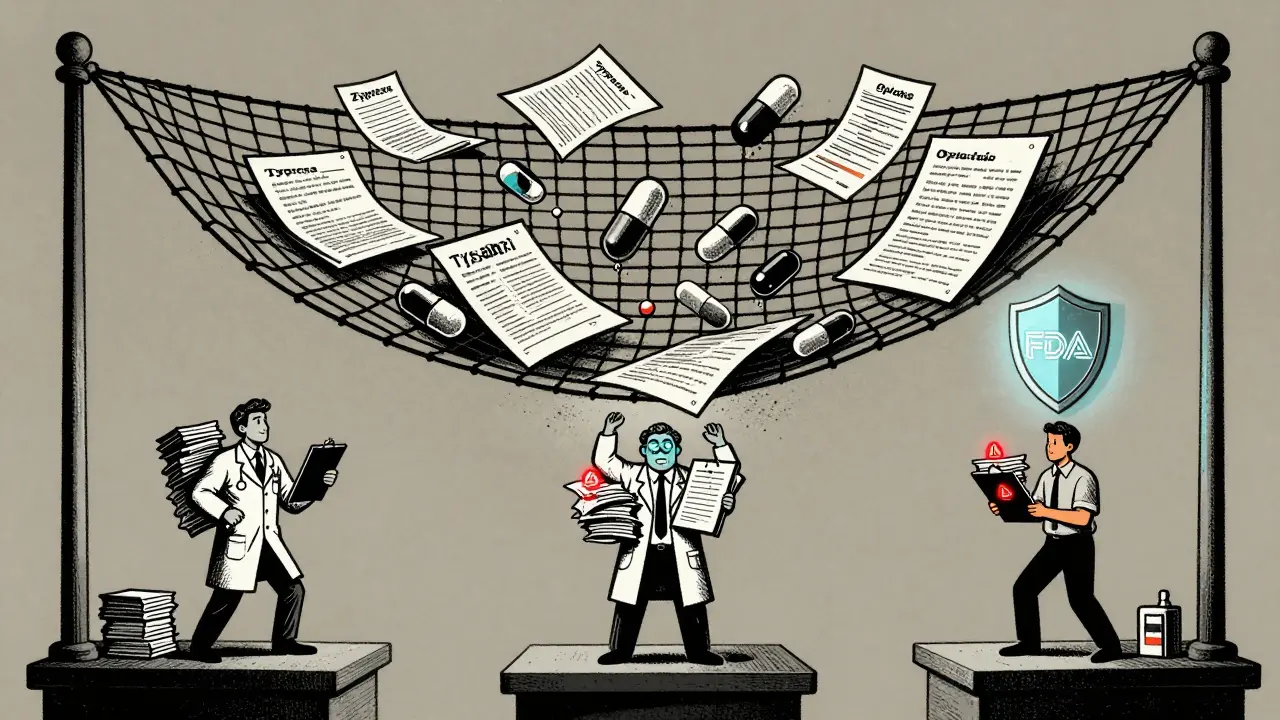
REMS isn’t just a warning label or a patient handout. It’s a legally enforceable safety plan the FDA requires from drugmakers when a medication carries serious, preventable risks. Think of it like a safety net with teeth. If a drug can cause organ failure, severe birth defects, or sudden death-and there’s a way to stop those outcomes-then the FDA will demand a REMS program before approving it.
As of 2023, 72 active REMS programs cover about 150 drugs. That sounds like a lot, but it’s less than 1% of all prescription medications. These aren’t your everyday pills. They’re the heavy hitters: drugs like Zyprexa Relprevv (which can cause fainting after injection), Tysabri (linked to a rare brain infection), and opioid painkillers with high abuse potential. The FDA doesn’t use REMS for common drugs like aspirin or statins. It’s only for cases where the risk is real, specific, and avoidable.
REMS has three main parts. First, Medication Guides-printed instructions patients get with their prescription. Second, Communication Plans-training for doctors and pharmacists, often through ‘Dear Doctor’ letters or online modules. Third, and most restrictive, Elements to Assure Safe Use (ETASU). This is where things get serious. ETASU can force prescribers to get certified, pharmacies to have emergency equipment on hand, and patients to be monitored for hours after treatment. For example, Zyprexa Relprevv requires a three-hour observation window after each injection. No exceptions.
How REMS Changed the Game (Compared to the Old Way)
Before 2007, the FDA used something called RiskMAPs. They were voluntary. Companies could ignore them. A 2015 study found only 35-45% of providers even followed them. REMS changed all that. It’s mandatory. If a drugmaker doesn’t comply, they face fines up to $250,000 per violation. Compliance rates jumped to 75-95%.
That’s not just a number. It’s a shift in power. Before REMS, if a drug caused harm, the FDA could only pull it off the market after the fact. With REMS, they can stop harm before it happens. That’s why 12 drugs approved between 2018 and 2022 would have been denied without REMS, according to FDA Deputy Director Robert Temple. These were treatments for rare cancers and autoimmune diseases-medicines that saved lives, but only because their risks were tightly controlled.
Where REMS Falls Short: The Hidden Costs
But here’s the other side. REMS isn’t free. It’s expensive-for drugmakers, doctors, pharmacies, and patients.
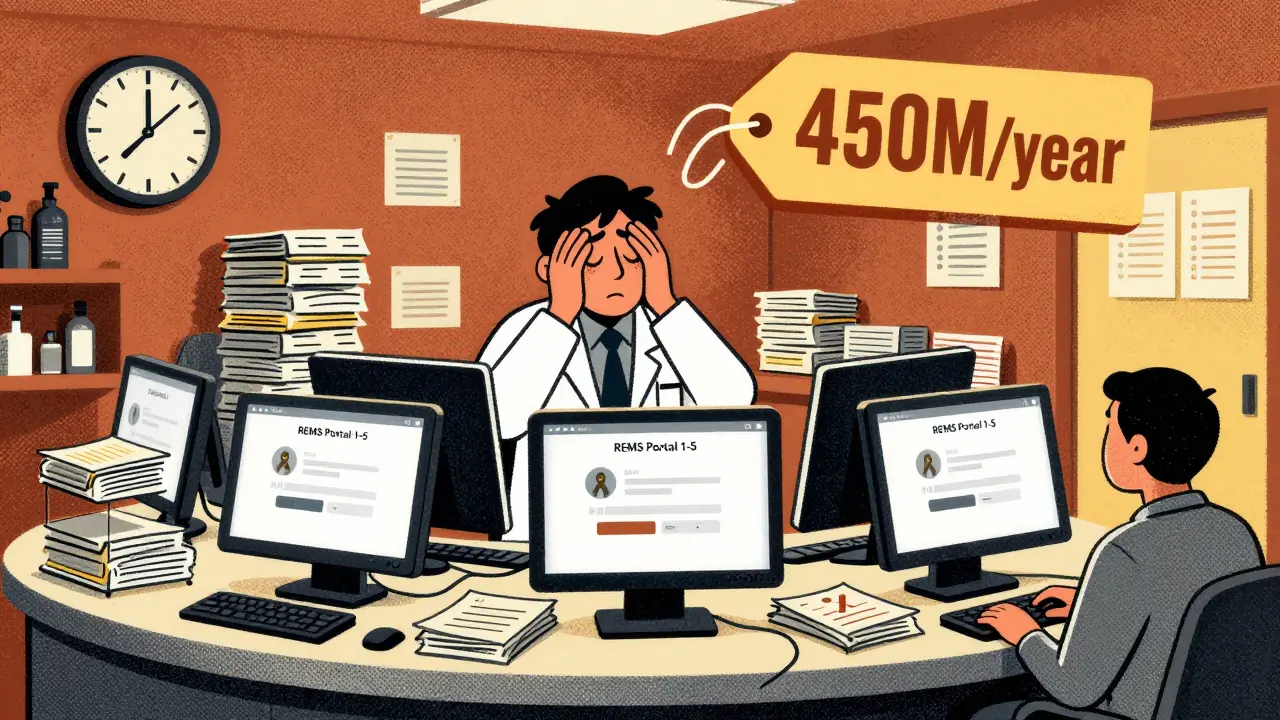
Manufacturers spend an average of $18.7 million in the first year to set up a REMS program, and over $5 million every year after that. That cost gets passed down. Specialty pharmacies report that 57% of REMS drugs require registration across three or more separate online portals. Setting up a single patient can take over four hours. One oncology nurse told me she spends half her day just logging into REMS systems instead of talking to patients.
Doctors are fed up. A 2022 survey of 1,200 physicians found 68% said REMS causes delays in treatment. Oncologists and neurologists reported the worst delays-82% and 76% respectively. Nearly half said they’d avoided prescribing a drug entirely because the REMS process was too messy. One doctor stopped using a life-extending leukemia drug because the pharmacy had to be certified, the patient had to sign three forms, and the prescriber had to complete an eight-hour training module just to write a single prescription.
Patients feel it too. A 2023 survey by the Cancer Support Community found 28% of cancer patients had treatment interrupted because of REMS. Oral chemotherapy drugs, which patients take at home, are especially problematic. If the pharmacy isn’t certified, the prescription sits unfulfilled for days. For someone with aggressive cancer, those days matter.
Do REMS Actually Save Lives? The Evidence Is Mixed
This is the big one. Does all this bureaucracy translate into fewer deaths, fewer hospitalizations, fewer bad outcomes?
The FDA admits the answer isn’t clear. In its 2020 assessment, only 30% of REMS programs had enough data to prove they improved clinical outcomes. The rest measured things like: ‘Did we hand out the guide?’ or ‘Did the doctor finish the training?’ Those are process metrics-not patient outcomes.
There are exceptions. A clinic in Ohio saw a 30% drop in serious side effects after enforcing the Tysabri REMS, which requires regular testing for a brain virus before each infusion. That’s real. That’s measurable. That’s the goal.
But in most cases, we don’t know. No one is tracking whether fewer patients die from liver failure after starting a REMS-protected drug. No one is counting whether fewer women give birth to babies with birth defects after taking a REMS-controlled medication. We know the system is followed. We just don’t know if it’s working.
Dr. Peter Lurie, a former FDA official, put it bluntly: ‘The evidence for REMS changing clinical outcomes remains thin.’ He’s not against safety-he’s against pretending paperwork equals protection.
The Future: REMS Is Evolving
The FDA knows it needs to change. In 2023, they released new draft guidance saying REMS must prove it reduces serious harm-not just checks boxes. Starting in 2025, manufacturers will have to report actual patient outcomes: ER visits, hospitalizations, deaths.
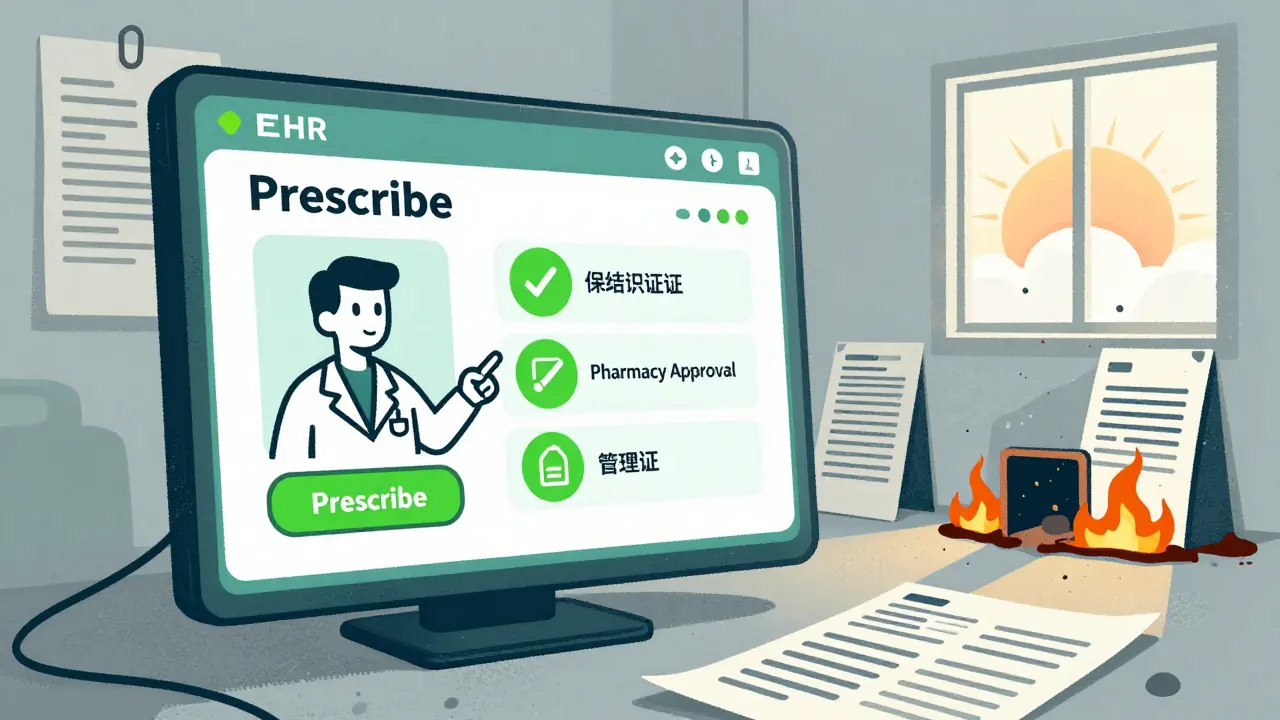
They’re also trying to fix the chaos. The REMS@FDA portal now hosts 63% of all REMS programs in one place. That cut setup time for doctors from 45 minutes to 22. And by 2026, 90% of REMS systems are supposed to connect directly to electronic health records. Imagine: your doctor clicks ‘prescribe,’ and the system auto-checks if the patient is certified, if the pharmacy is approved, and if the last test result is valid-all without leaving the chart.
There’s even talk of ‘REMS Lite’-simplified versions for lower-risk drugs. Right now, if a drug has a moderate risk, the only option is the full REMS. That’s overkill. A REMS Lite could mean just a digital alert in the EHR or a one-page patient note. That could expand REMS to 50-75 more drugs without adding burden.
Who Benefits? Who Gets Hurt?
REMS helps patients who need high-risk drugs. Without it, drugs like Tysabri or Zyprexa Relprevv wouldn’t be available. It helps manufacturers get life-saving products approved. It helps the FDA sleep at night knowing they didn’t just approve a dangerous drug.
But it hurts the people caught in the middle: the oncologist trying to get a patient started on treatment, the pharmacist juggling five REMS portals, the patient waiting three days for a prescription because the pharmacy hasn’t registered. It hurts the system with $450 million a year spent just on REMS administration-and growing.
The real win? When REMS becomes invisible. When safety is built into the workflow, not bolted on as a hurdle. When a doctor doesn’t have to think about REMS-because the system just works.
That’s the future. Not more forms. Not more portals. Just better data, smarter tech, and real outcomes.
Are REMS programs required for all high-risk drugs?
Not all high-risk drugs have REMS, but the FDA only mandates REMS when a drug has a serious, preventable risk that can’t be managed through standard labeling. As of 2023, only 72 REMS programs exist for about 150 drugs out of thousands on the market. Most common medications don’t need them.
Can patients opt out of REMS requirements?
No. REMS requirements are mandatory for both providers and pharmacies. If a drug has an ETASU component-like mandatory testing or observation-you can’t skip it. Even if you’re willing to take the risk, the law doesn’t allow it. The system is designed to prevent harm, even if the patient disagrees.
Why do some doctors refuse to prescribe REMS drugs?
Because the process is slow, fragmented, and time-consuming. Many doctors have to register on multiple portals, complete hours of training, and deal with pharmacies that aren’t certified. One study found 45% of physicians have abandoned prescribing a REMS drug because it wasn’t worth the hassle. For specialists like oncologists, who already have heavy workloads, this adds unnecessary stress.
Do Medication Guides actually help patients understand risks?
Studies show most patients don’t read them, and even those who do often don’t understand them. The guides are written in dense medical language. The FDA is working on simpler versions, but right now, they’re mostly a compliance requirement-not an effective education tool. Real patient safety comes from direct conversations with providers, not printed sheets.
What’s the difference between REMS and regular drug warnings?
Regular warnings are in the drug’s prescribing label and are mandatory for all drugs. REMS goes further-it’s a legally enforced program with specific actions: certified prescribers, monitored administration, mandatory testing, and documentation. It’s not just a warning. It’s a system with consequences if you don’t follow it.
Is REMS getting better over time?
Yes. The FDA is shifting from measuring paperwork to measuring outcomes. By 2025, manufacturers must show that REMS reduces hospitalizations or deaths-not just that they handed out a guide. EHR integration is reducing administrative time, and new ‘REMS Lite’ models could make the system less burdensome. The goal is no longer just compliance-it’s real patient safety.


11 Comments
Linda Caldwell
December 17 2025REMS is the bare minimum we can do to keep people from dying and still get life-saving drugs to those who need them
Jonathan Morris
December 17 2025Let me guess-the FDA’s ‘safety net’ is just a PR stunt to make lawmakers feel like they’re doing something while the real problem-the pharmaceutical industry’s profit-driven greed-goes unchecked. Every REMS portal is a paywall disguised as protection. They don’t want you safe. They want you dependent. And they charge for every click.
And don’t get me started on the ‘EHR integration’ fairy tale. That’s just another vendor contract waiting to be signed. The same companies building these systems also manufacture the drugs. Conflict of interest? More like a monopoly with a clipboard.
They say ‘measuring outcomes’ now. But who’s measuring the outcomes of the patients who died waiting for their third REMS portal to sync? Who’s counting the suicides of cancer patients who couldn’t get their meds because some pharmacy’s certification expired? The FDA doesn’t track that. They track training completions. That’s not safety. That’s theater.
And ‘REMS Lite’? Please. That’s code for ‘we’re going to let the worst drugs through without oversight.’ If a drug can kill, it deserves the full cage-not a leash with a broken clasp.
The only thing REMS proves is that bureaucracy can be weaponized to make patients suffer while pretending to help. They didn’t fix the system. They just made it more expensive, more complex, and more opaque.
Next they’ll require a notarized affidavit before you can swallow an aspirin.
Anna Giakoumakatou
December 18 2025How quaint. We’ve elevated pharmaceutical regulation to the level of medieval penance: seven sacraments of compliance, each requiring a pilgrimage to a different digital shrine. The patient, of course, is the penitent-forced to beg for the grace of a certified pharmacist who, bless their soul, has spent eight hours in REMS purgatory just to hand you a pill that might save your life.
And yet, we call this ‘innovation.’ How poetic. The same minds that brought us the iPhone now deliver salvation via a 17-step web form. Progress, darling, is merely the art of making the same suffering more bureaucratic.
Dr. Lurie is right. We’ve confused documentation with virtue. We’ve mistaken checkboxes for conscience. And we’ve forgotten that medicine was once about trust-not compliance logs.
Next up: mandatory meditation before taking metformin. The FDA has a grant for that.
Erik J
December 18 2025I wonder if any studies have looked at whether REMS delays correlate with increased mortality in time-sensitive conditions. Like, do patients on oral chemo who wait 5+ days for a filled prescription have worse survival rates? That’s the real metric. Not training completion. Not portal counts. Actual outcomes.
It’s frustrating that the data we have is all about process. We need to know if the system is saving lives-or just slowing them down.
BETH VON KAUFFMANN
December 19 2025REMS is a textbook case of regulatory capture masquerading as patient safety. The FDA outsourced risk management to the very entities creating the hazards. Pharma spends $18M to build a system that locks out competitors and justifies premium pricing. The ‘certified pharmacies’? Mostly subsidiaries of the same conglomerates that own the drugs. It’s a closed-loop profit engine dressed in compliance scrubs.
And the ‘medication guides’? Written by legal teams, reviewed by marketing, and designed to absolve liability-not inform patients. You can’t educate someone with a 30-page PDF written in Latinized jargon. That’s not risk mitigation. That’s liability shielding.
Meanwhile, oncologists are quitting. Nurses are burning out. Patients are dying in queues. And the FDA’s response? More portals. More forms. More training modules. You don’t fix a broken system by adding more steps. You fix it by removing the ones that don’t matter.
‘REMS Lite’ is a joke. If a drug has a black box warning, it doesn’t deserve a lite version. It deserves a full audit. And if it doesn’t? Then why is it under REMS at all?
Raven C
December 20 2025Oh, the tragic irony of modern medicine: we have the technology to cure cancer, yet we require patients to complete a seven-step digital gauntlet just to receive it. How noble. How dignified. How utterly, profoundly human.
One cannot help but marvel at the sublime elegance of a system where a woman with stage IV breast cancer must wait three days for her oral chemotherapy-because the pharmacy’s REMS certification lapsed on a Saturday, and no one was available to re-verify her lab results until Monday morning.
And yet, we applaud the FDA for its ‘rigorous standards.’ We bow before the altar of compliance. We whisper prayers to the god of checkboxes.
What a civilization we have built: where the path to life is paved with forms, and death is merely a delayed response from a server.
Donna Packard
December 20 2025I’ve seen REMS in action with my mom’s treatment. It’s frustrating, yes-but it’s also the only reason she’s still here. I’d rather wait a few days than risk her getting a rare brain infection because no one checked her blood work. The system’s broken, but it’s saving lives.
Patrick A. Ck. Trip
December 21 2025im not saying rems is perfect but without it we would have lost so many more people to preventable harm. the system is messy yes but the goal is right. we need to fix the tech not the purpose. maybe ehr integration will help. i hope so.
Sam Clark
December 22 2025The tension between safety and access is not a flaw in REMS-it is the fundamental challenge of modern pharmacology. The goal should not be to eliminate REMS, but to refine it into an invisible infrastructure: automated, interoperable, and outcome-driven. The current model is a necessary first step. The next step must be seamless integration with clinical workflows. That is not bureaucracy. That is evolution.
Let us not mistake complexity for corruption. The cost of failure is measured in lives. The cost of reform is measured in time. We owe it to patients to get this right.
Jessica Salgado
December 24 2025I cried when my brother finally got his drug after 11 days. Eleven days. He had a rare autoimmune disease. The pharmacy was certified. The doctor was trained. The lab results were clear. But one portal had a glitch. One. Single. Glitch. And he waited. While his body was falling apart. And the FDA says ‘we’re improving.’
Improving? No. We’re just getting better at explaining why we failed you.
I don’t want a ‘REMS Lite.’ I want a REMS that works. That doesn’t make me beg. That doesn’t make my brother beg. That just… works.
Why is this so hard?
Chris Van Horn
December 24 2025THE FDA IS A CORPORATE FRONT. REMS IS A TAX ON THE SICK. EVERY PORTAL, EVERY FORM, EVERY CERTIFICATION-IT’S ALL A RACKET DESIGNED TO KEEP SMALL PHARMACIES OUT AND BIG PHARMA IN. THEY’RE NOT PROTECTING PATIENTS. THEY’RE PROTECTING PROFITS. AND YOU PEOPLE ARE TOO STUPID TO SEE IT.
THEY WANT YOU TO BELIEVE THIS IS SAFETY. IT’S NOT. IT’S CONTROL. AND WHEN YOU’RE TOO WEAK TO FIGHT BACK, YOU JUST ACCEPT IT. PATHETIC.
I’VE SEEN IT. I’VE LIVED IT. MY SISTER DIED BECAUSE THE PHARMACY WASN’T ‘CERTIFIED.’ THEY COULD’VE GIVEN HER THE DRUG. THEY CHOSE NOT TO. BECAUSE THE RULES SAID SO.
REMS ISN’T A SAFETY NET. IT’S A NOOSE. AND THE FDA IS HOLDING THE ROPE.