CPAP Troubleshooting: Fix Dry Mouth, Mask Leaks, and Pressure Issues
Waking up with a dry mouth, hearing air hiss from your mask, or feeling like the pressure is too high - these aren’t just annoyances. They’re red flags that your CPAP therapy isn’t working the way it should. If you’re using a CPAP machine and dealing with any of these issues, you’re not alone. About 42% of users report dry mouth, 58% deal with mask leaks, and nearly one in three say their pressure settings feel off. The good news? Most of these problems have simple, proven fixes - no new machine needed.
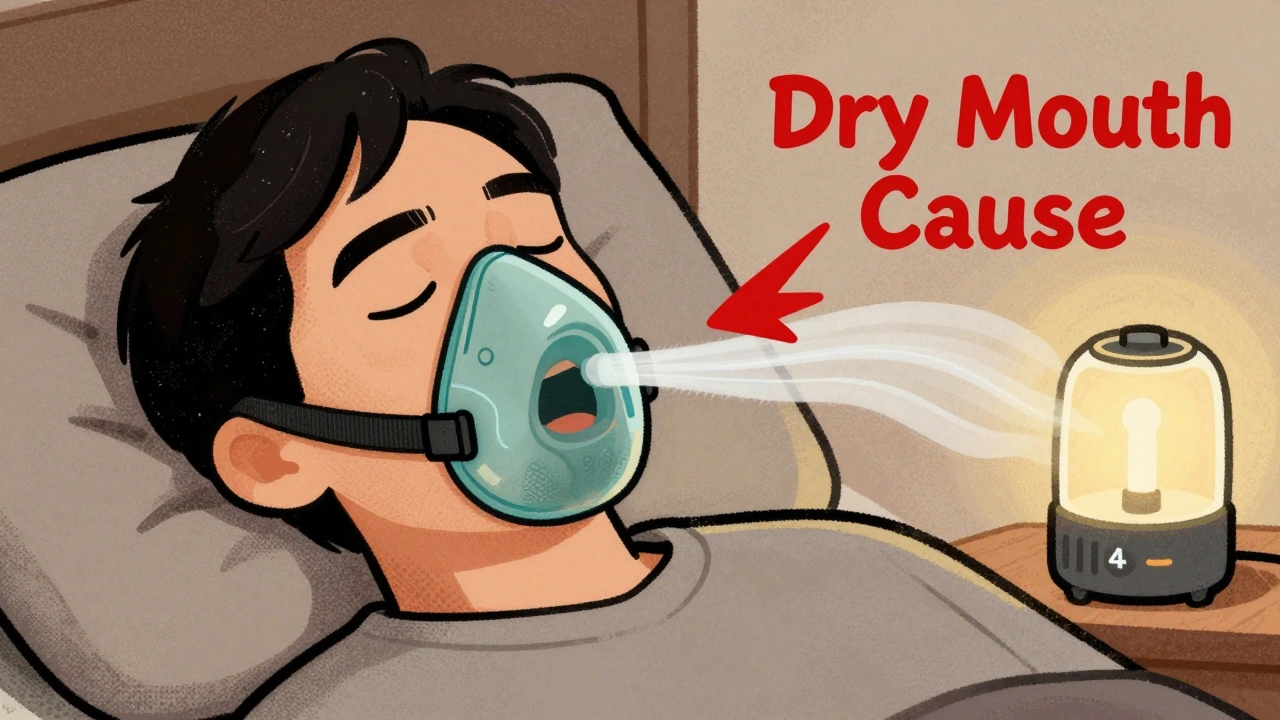
Why Your Mouth Feels Like Cotton
Dry mouth from CPAP isn’t caused by your humidifier not working hard enough. It’s caused by your mouth being open while you sleep. When air escapes through your mouth, it dries out your throat and tongue. You might not even realize you’re breathing through your mouth - many people don’t. The fix starts with your mask. If you’re using a nasal pillow or nasal mask and your mouth opens during sleep, air is escaping. The most effective solution? A full-face mask. One user on Reddit, u/SleepSeeker2020, switched from a nasal mask to a full-face mask and said dry mouth vanished in three nights. That’s not an outlier. Studies show mouth breathers who switch to full-face masks reduce dry mouth complaints by over 60%. If you don’t want to switch masks, try a chin strap. These simple silicone or fabric straps hold your jaw closed. About 45% of mouth breathers use them, and many report immediate relief. You can buy them for under $20 online. Just make sure they’re snug but not tight - you shouldn’t feel pain or restricted breathing. Humidifiers help too, but only if used right. Most machines let you set humidity levels from 0 to 6. The sweet spot? Level 3 or 4. Go higher than that and you risk condensation in your tube (rainout). Go lower and you won’t get enough moisture. If you’re still dry, try heated tubing. Philips’ 2022 clinical trial found heated tubing reduces dry mouth by 32% compared to standard tubing. It keeps the air warm and moist all the way to your mask.Stopping Mask Leaks Before They Start
A hissing sound? That’s air leaking. Leaks can come from a loose strap, a worn cushion, or a mask that just doesn’t fit your face shape. Leaks above 24 L/min, as Dr. David White from Harvard points out, seriously reduce therapy effectiveness. First, check your cushion. Most masks have silicone cushions that soften and crack over time. Replace them every 3 months. Even if it looks okay, the seal degrades. DME providers recommend this because 92% of leak issues are solved with a fresh cushion. Next, adjust the headgear. Don’t just tighten everything until it feels tight. Use the airflow test: turn on your machine, then slowly adjust each strap until the hissing stops. You’ll hear it quiet down - that’s the seal. It usually takes 3 to 5 small adjustments. Over-tightening causes red marks and skin breakdown, which makes you want to quit therapy. If you’re still leaking, your mask might not be the right shape. Try a different style. Nasal pillows work great for people with beards. Full-face masks are better for those who breathe through their mouth. Some masks, like the ResMed AirFit F30, have a minimal-contact design that reduces pressure on the bridge of the nose - a common leak point. And don’t ignore your pillow. If you sleep on your side or stomach, your mask can get pressed into the mattress. Try a CPAP-specific pillow with cutouts. They cost $30-$50 but can cut leaks by half.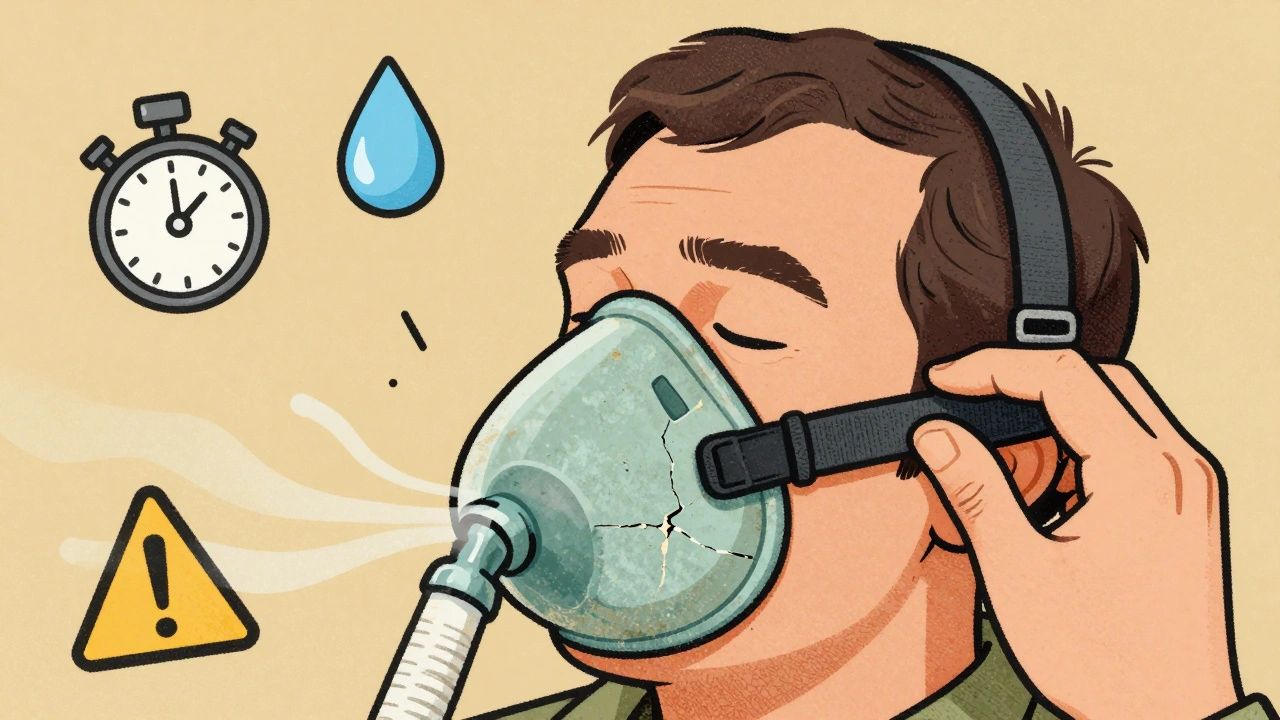
Pressure Settings: Too High? Too Low?
Feeling like the air is pushing too hard? That’s common. Many people are started on pressure settings that are too high. Dr. Nancy Collop at Johns Hopkins says pressure below 5 cm H₂O can still be effective for many patients - and far more comfortable. Your machine might be set to a fixed pressure, like 10 cm H₂O. But if your sleep apnea is mild to moderate, you might not need that much. Some users report chest discomfort, bloating, or even heart palpitations from pressure that’s too high. One Reddit user, u/ExhaustedEngineer, had his pressure set at 14 cm H₂O. He felt awful. After his sleep specialist lowered it to 9 cm H₂O and turned on expiratory pressure relief (EPR), he slept better than ever. EPR is a feature on most modern machines. It lowers the pressure slightly when you breathe out. It feels more natural. Turn it on if it’s not already. Set it to the lowest level first - usually 1 or 2 cm H₂O - and see how it feels. If your machine is an auto-adjusting model (APAP), like the ResMed AirSense 11 or Philips DreamStation 2, it should already be doing this for you. But if you’re still uncomfortable, talk to your provider. You don’t need to suffer. A sleep study can be repeated to fine-tune your pressure. Medicare and most insurers allow this if you’re having trouble. Never adjust pressure yourself beyond the ±2 cm H₂O limit your machine allows. Going outside that range voids your warranty and can be dangerous. Only a sleep specialist should change your settings.When to Call Your Provider
You can fix most dry mouth and leak issues on your own. But there are signs you need professional help:- Your mask leaks constantly, even after replacing the cushion and adjusting straps
- You wake up gasping or choking, even with the machine on
- Your machine shows high leak rates for more than 5 nights in a row
- You’re still tired after 3 weeks of consistent use
- You have skin sores, nasal congestion, or ear pain from the pressure
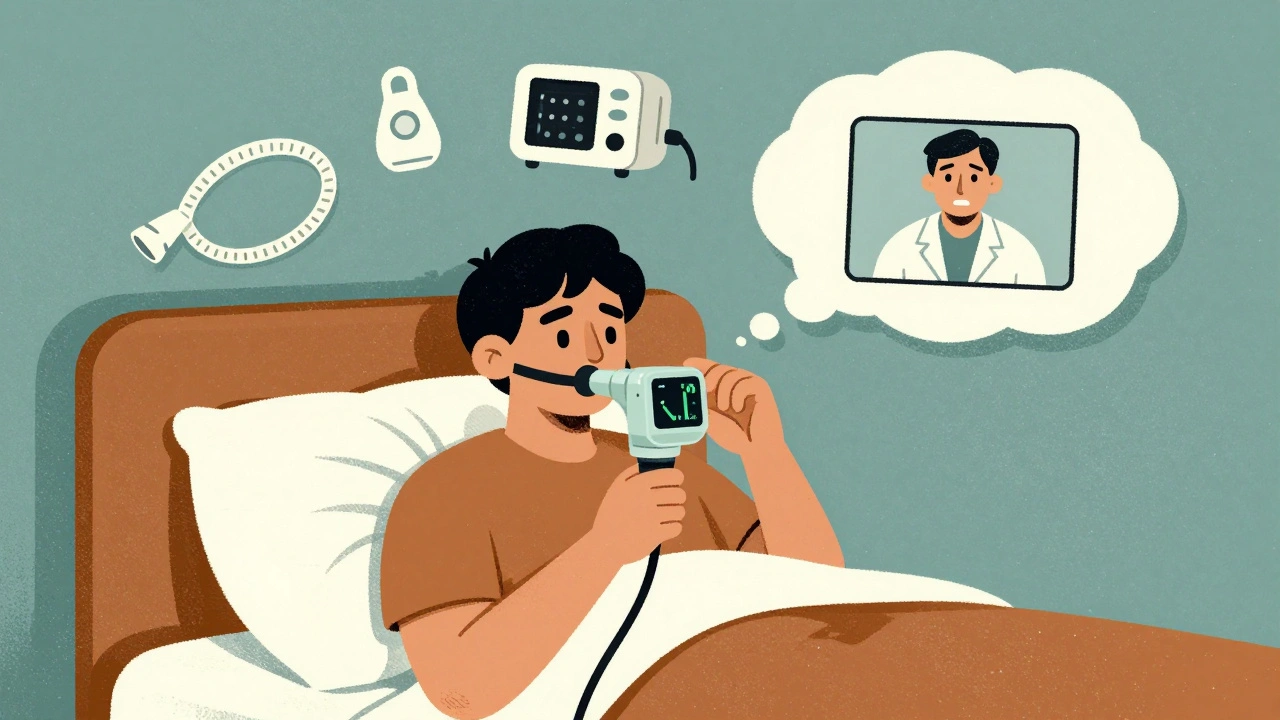
What to Do Every Morning
Good habits prevent most problems. Here’s your simple daily checklist:- Check your mask cushion for cracks or gaps. Replace if it’s over 3 months old.
- Empty and rinse your humidifier chamber with distilled water. Don’t use tap water - it leaves mineral buildup.
- Wash your mask with mild soap and water. Let it air dry.
- Replace your filter every 30 days (or 90 days if it’s a HEPA filter).
- Check your tubing for kinks or moisture. Shake it out if you see water pooling.
- Set your humidifier to level 3 or 4. Turn on heated tubing if you have it.
What You Don’t Need to Worry About
You don’t need to buy a new machine every year. The ResMed AirSense 11 and Philips DreamStation 2 are both reliable. If your machine is less than 5 years old and still working, stick with it. Newer models have better leak detection and auto-adjusting features, but they won’t fix a bad mask fit or mouth breathing. You also don’t need to feel guilty. CPAP non-compliance rates are high - 29% to 45% - not because people are lazy, but because the setup is often poorly supported. If you’re trying and still struggling, it’s not your fault. It’s a system issue. The goal isn’t perfection. It’s consistency. Even 4 hours a night, 5 nights a week, is better than nothing. And if you’re getting there, you’re already ahead of most people with sleep apnea.Why does my CPAP make my mouth dry?
Dry mouth happens because you’re breathing through your mouth during sleep, not because your humidifier isn’t working. Air escapes through your mouth, drying out your throat. Switching to a full-face mask or using a chin strap fixes this for most people.
How do I know if my CPAP mask is leaking?
You’ll hear a hissing sound, and your machine’s leak indicator will show high rates (above 24 L/min). You might also wake up with red marks, feel the mask pulling on your face, or notice your therapy isn’t improving your sleep. Use the airflow test: turn on the machine and adjust straps until the noise stops.
Can I adjust my CPAP pressure myself?
You can make small adjustments within the ±2 cm H₂O range your machine allows, but don’t go beyond that. Setting pressure too high can cause discomfort or even injury. Setting it too low won’t treat your sleep apnea. Always consult your sleep specialist before making major changes.
How often should I replace my CPAP mask cushion?
Replace your mask cushion every 3 months. Silicone breaks down from oils on your skin, heat, and cleaning. Even if it looks fine, the seal weakens over time. Most DME providers recommend this to prevent leaks and ensure therapy effectiveness.
Why am I still tired after using CPAP?
If you’re still tired after 3 weeks of consistent use, something’s wrong. Your pressure might be too low, your mask might be leaking, or you could have another sleep disorder like insomnia or restless legs. Talk to your sleep specialist. A repeat sleep study or machine data review can find the issue.
CPAP therapy works - but only if it’s comfortable. Dry mouth, leaks, and pressure issues aren’t normal side effects. They’re signals. Listen to them. Fix them. You’ve already taken the hardest step - starting treatment. Now make it stick.
13 Comments
Cyndy Gregoria
December 4 2025Just switched to a full-face mask last week after months of dry mouth. It’s been a game-changer. No more waking up with a cotton tongue. Seriously, if you’re using nasal pillows and breathing through your mouth, just try it. No need to overthink it.
Chad Kennedy
December 4 2025Yeah but what if your mask just sucks no matter what? I’ve tried three different ones. All leak. All feel like a vice. I’m just done.
Sara Larson
December 5 2025Chad, I feel you 😔 I went through the same thing. Took me 4 masks and a sleep doc who actually listened, but now I’m using the AirFit F30 and it’s like a cloud on my face. Don’t give up. You’re not broken - the gear just hasn’t fit yet.
Jessica Ainscough
December 5 2025I use a chin strap with my nasal pillows. Cheap as hell, works like magic. I got mine on Amazon for $16. Just make sure it’s not too tight - I used to wake up with headaches until I loosened it by one notch. Tiny tweak, huge difference.
Tom Costello
December 6 2025One thing no one talks about: humidity settings. I used to crank it to 6 because I thought more moisture = better. Turns out I was getting rainout in my tube and waking up soaked. Switched to 3, added heated tubing, and suddenly my throat didn’t feel like sandpaper. Also, distilled water only. Tap water is a mineral bomb waiting to ruin your chamber.
dylan dowsett
December 7 2025Wait - you’re telling me people are still using non-heated tubing? In 2024? And you’re surprised you have dry mouth? You’re literally asking your machine to fight gravity and physics. Also, if you’re replacing your cushion every 3 months, you’re doing better than 90% of users - most of you wait until it cracks open like a fossil. Pathetic.
May .
December 8 2025My cushion lasted 7 months. Still works. Why replace it if it’s not broken
Josh Bilskemper
December 9 2025Most of these tips are basic. Anyone with a pulse and a Google account could find this. The real issue is that sleep clinics push one-size-fits-all machines and then ghost you. No follow-up. No customization. You’re left to figure out a medical device like it’s a IKEA bookshelf. This isn’t troubleshooting - it’s damage control.
Storz Vonderheide
December 9 2025I’m a nurse in a sleep lab and I see this every day. People think CPAP is just a machine you plug in. It’s a lifestyle adjustment - like braces or hearing aids. You don’t just get it and forget it. You tweak. You adapt. You communicate with your provider. The tech is good. The system? Still broken. But you can still win.
Casey Lyn Keller
December 11 2025Did you know the government pays DME companies to sell you new machines every 5 years? That’s why they don’t care if your mask leaks. They make more money selling you a new one than helping you fix the old one. I’m not paranoid. I’ve seen the contracts.
Adrianna Alfano
December 13 2025i just got my cpap 2 weeks ago and i think im gonna quit… my nose is so sore and i feel like im suffocating… is this normal?? i dont wanna be one of those people who gives up but its so hard
dan koz
December 14 2025Back home in Nigeria, we don’t even have CPAP machines. We use herbs and prayer. But if I had one, I’d do the same as you guys. Just keep trying. Your health matters more than pride.
Sara Larson
December 15 2025Adrianna - you’re not alone 💪 I cried the first week too. But I started with 2 hours a night. Just 2. Then 3. Then 4. Now I sleep 7. You’re not failing - you’re learning. And you’ve already done the hardest part: showing up. 🤍