Cholestyramine: What It Is, How It Works, and What You Need to Know
When your body makes too much cholesterol, sometimes the answer isn’t another pill—it’s a powder you mix with water. Cholestyramine, a bile acid sequestrant that binds to bile acids in the gut and forces the liver to pull cholesterol from the blood to make more. Also known as a bile acid binding resin, it’s been around since the 1960s and still helps millions manage high LDL cholesterol without statins. Unlike most cholesterol drugs, cholestyramine doesn’t get absorbed into your bloodstream. Instead, it works right in your intestines, trapping bile acids so your body has to use up stored cholesterol to replace them. That’s how it lowers your LDL—the "bad" cholesterol linked to heart disease.
It’s not just for cholesterol. Doctors also prescribe cholestyramine for itching caused by liver problems, like primary biliary cholangitis, because bile acids build up in the skin and cause irritation. By pulling those acids out of circulation, the itching fades. But it’s not magic. You have to take it consistently, usually before meals, and mix it well with water or juice. If you don’t, it can taste like chalk and cause stomach upset. And because it sticks to things in your gut, it can mess with how other drugs get absorbed. If you take thyroid meds, blood thinners, or even some antibiotics, you need to space them out by at least four hours. Otherwise, cholestyramine might block them from working.
It’s also one of the few cholesterol treatments that’s safe during pregnancy. If you’re trying to avoid statins or can’t tolerate them, cholestyramine gives you a real alternative. But it’s not for everyone. People with bowel obstructions or severe constipation should avoid it. And while it lowers LDL, it doesn’t always raise HDL—the "good" cholesterol—so it’s often paired with other therapies. The real value? It’s cheap, generic, and doesn’t cause muscle pain or liver issues like some newer drugs do.
What you’ll find below are posts that connect to cholestyramine in practical, real-world ways. You’ll see how it fits into broader medication safety, how drug interactions can sneak up on you, and why some treatments stick around decades after they’re first approved. Whether you’re taking it now, considering it, or just curious why a powder can lower cholesterol, these articles give you the full picture—not just the marketing.
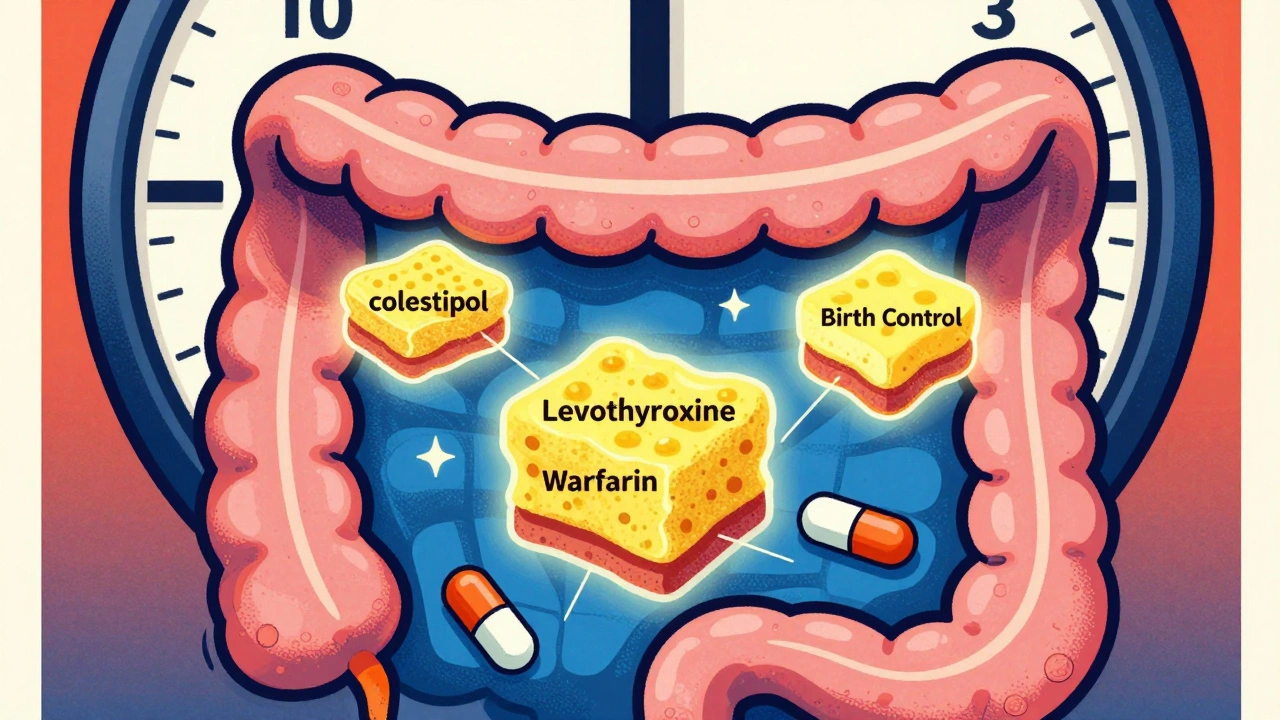
Bile acid sequestrants lower cholesterol but can bind to other medications, reducing their effectiveness. Learn the exact timing rules to avoid dangerous interactions with warfarin, thyroid meds, birth control, and more.
Continue Reading