Colesevelam: What It Is, How It Works, and What You Need to Know
When you hear colesevelam, a bile acid sequestrant used to lower LDL cholesterol and improve blood sugar in type 2 diabetes. Also known as Welchol, it doesn’t get absorbed into your bloodstream—it works right in your gut. Unlike statins that block cholesterol production in the liver, colesevelam grabs onto bile acids in your intestines and flushes them out. Your body then pulls cholesterol from your blood to make more bile, lowering your LDL levels naturally.
This makes colesevelam a go-to for people who can’t take statins due to muscle pain or liver issues, or those who need a second option after statins alone aren’t enough. It’s also one of the few cholesterol drugs that can help manage type 2 diabetes, a chronic condition where the body doesn’t use insulin properly, leading to high blood sugar—not by lowering glucose directly, but by improving how your body responds to insulin. Studies show it can reduce HbA1c by about 0.5% on average, which might not sound like much, but in diabetes, every fraction counts.
It’s not a magic pill, though. You’ll need to take it with meals, usually three to four pills a day, and drink plenty of water to avoid constipation—something nearly half of users report. It can also interfere with how your body absorbs other meds like thyroid hormones, birth control pills, or fat-soluble vitamins. That’s why timing matters: take colesevelam at least four hours before or after other drugs. If you’re on multiple prescriptions, your pharmacist should flag this. It’s also why you won’t find it sold over the counter—it’s a prescription cholesterol drug, a medication that requires a doctor’s authorization due to its specific dosing needs and interaction risks.
What’s interesting is how colesevelam fits into the bigger picture of lipid management. It’s often paired with statins or ezetimibe when LDL stays high despite treatment. It doesn’t raise HDL or lower triglycerides much, so it’s not a full solution—but it’s a reliable piece of the puzzle. For people with familial hypercholesterolemia or those who’ve had heart attacks, even a 15-20% drop in LDL from colesevelam can mean fewer plaques, fewer blockages, and fewer hospital visits.
And while it’s not new—FDA-approved in 2000—it’s still widely used because it’s non-systemic. That means fewer side effects on organs like the liver or kidneys compared to other cholesterol drugs. It’s also safe for long-term use, which matters if you’re managing high cholesterol for decades. But don’t assume it’s risk-free. If you have bowel obstructions, trouble swallowing, or severe constipation, your doctor will likely skip it.
Below, you’ll find real-world posts that dig into how colesevelam compares to other cholesterol meds, what patients actually experience on it, how it interacts with diabetes drugs, and why some insurers push it over pricier options. You’ll also see how it fits into broader topics like medication adherence, drug pricing, and how generic versions are changing access. Whether you’re on it, considering it, or just trying to understand why your doctor recommended it, these posts give you the facts without the fluff.
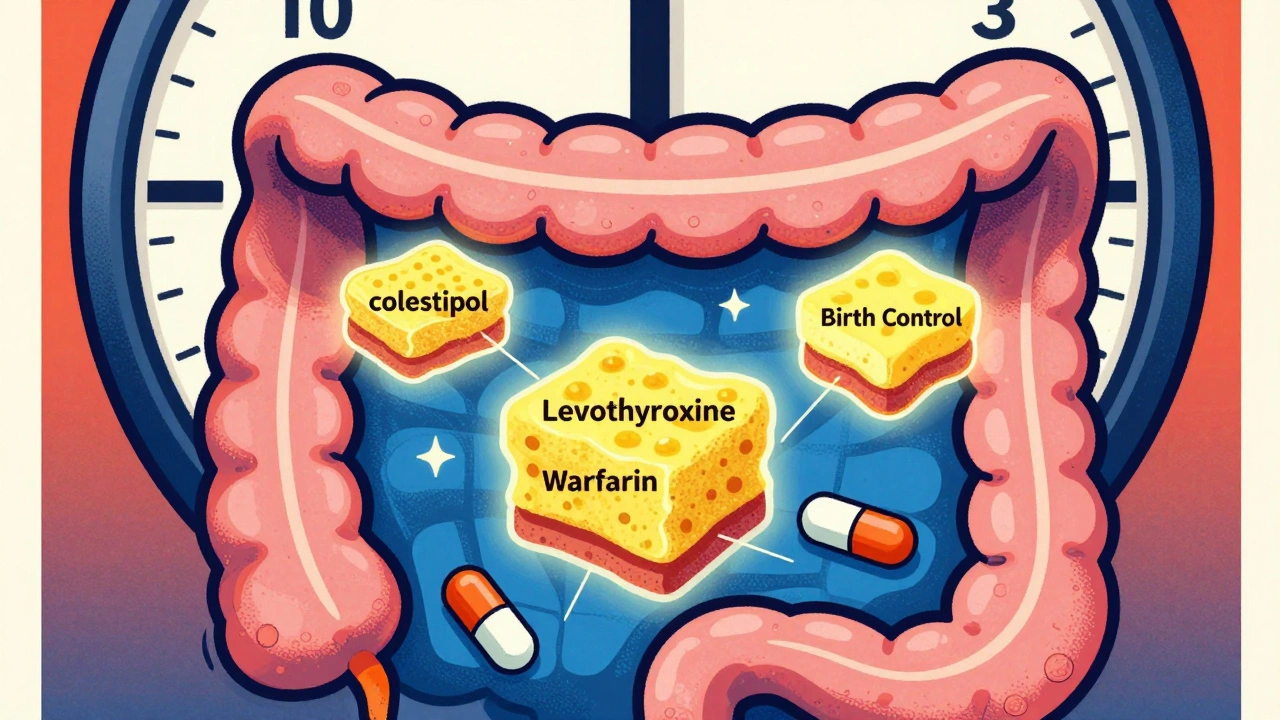
Bile acid sequestrants lower cholesterol but can bind to other medications, reducing their effectiveness. Learn the exact timing rules to avoid dangerous interactions with warfarin, thyroid meds, birth control, and more.
Continue Reading