
Prescription Label Warnings: What Medication Stickers Really Mean
Ever looked at the small sticker on your pill bottle and thought, What does this even mean? You’re not alone. Millions of people in the U.S. take prescription meds every day, but prescription label warnings are often confusing, rushed, or ignored - and that’s dangerous.
These little stickers aren’t just paperwork. They’re your last line of defense against serious harm. The FDA requires them to stop injuries, hospital visits, and even deaths. Yet, studies show only about 55% of patients understand what they say. That’s a huge gap. And it’s not because people are careless. It’s because the labels are written for doctors, not patients.
What the Colors Really Mean
Red, yellow, blue - these aren’t just random colors. They’re coded signals. In pharmacies across the country, red stickers mean danger. If you see a red label that says “May cause severe liver damage” or “Black Box Warning”, this is the highest level of risk. These are reserved for drugs that can kill or cause life-threatening reactions. About 40% of new drugs approved between 2013 and 2017 carried one of these. If your pill has a red sticker, don’t skip the fine print. Talk to your pharmacist.
Yellow stickers are caution signs. They might say “May cause drowsiness” or “Avoid alcohol”. These aren’t emergencies, but ignoring them can still land you in trouble. One study found patients correctly understood red warnings 85% of the time - but only 45% got yellow ones right. That’s a big drop. Don’t treat yellow like a suggestion. It’s a warning.
Blue, white, and green? Those are usually reminders - things like “Take with food” or “Refrigerate”. They’re important, but they’re not emergencies. Still, skipping them can make your medicine less effective. A blood pressure pill taken without food might crash your pressure too hard. A pill that needs refrigeration can break down if left on the counter.
Text Warnings You’re Probably Misreading
“Swallow whole.” Sounds simple, right? But nearly 30% of patients think it means “chew it up so it dissolves faster.” That’s dangerous. Some pills are designed to release slowly. Crush them, and you get a full dose all at once - which can overdose you.
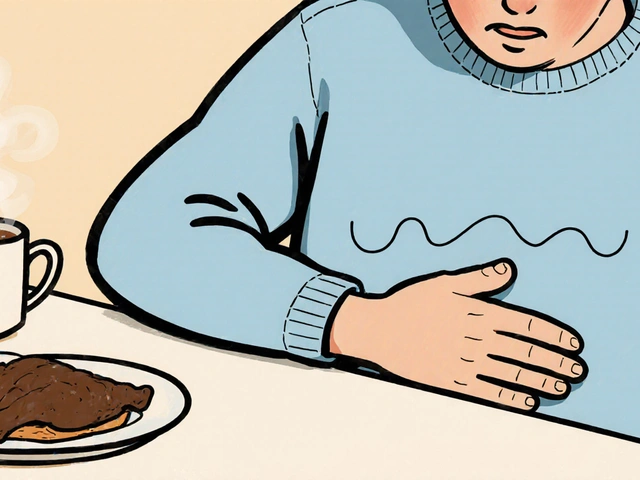
“Take on empty stomach.” That means no food for at least an hour before, and two hours after. People often think “empty stomach” just means no breakfast. It doesn’t. Even a cracker or a sip of milk can interfere. Antibiotics like tetracycline and some thyroid meds are especially sensitive.
“Do not operate heavy machinery.” That’s code for “you might fall asleep.” It’s not just about driving. It applies to operating power tools, climbing ladders, or even walking down stairs if you’re dizzy. One patient told me they ignored this after starting a new anxiety med - and ended up falling down their basement stairs. They broke their hip.
“For external use only.” Sounds clear. But a study found 90% of people didn’t understand it. Some thought it meant “only use it outside” - like not indoors. Others thought the symbol (a hand with a circle) meant “radioactive.” That’s not your fault. The symbols are poorly designed.
Why You’re Missing Critical Warnings
Most people spend less than 10 seconds looking at their prescription label. That’s less time than it takes to read this sentence. Pharmacists are rushed. Patients are tired. The sticker is small. The font is tiny. And the information is packed with medical jargon.
Worse, many patients throw away the printed Patient Prescribing Information (PPI) sheet that comes with the bottle. One study found 68% of people toss it out, thinking it’s just extra paper. But that sheet has the full details: what to watch for, what to avoid, what to do if you miss a dose. That’s where you’ll find warnings about grapefruit juice, sun exposure, or pregnancy risks.
And here’s the scary part: 80 million American adults have trouble reading health materials. They might not know what “contraindicated” means. They might not realize “adverse reaction” is just a fancy way of saying “bad side effect.” If you’re one of them, you’re not alone - but you’re at higher risk.

What Works Better Than the Current Labels
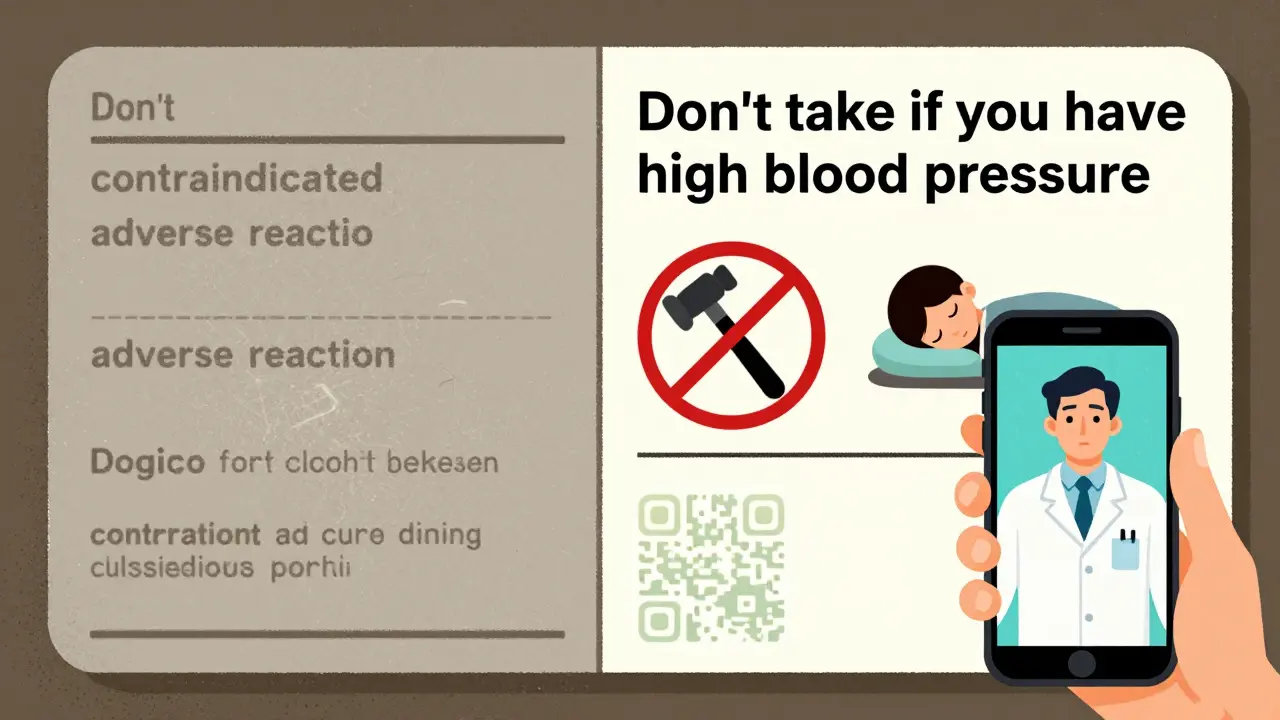
There’s a better way. Kaiser Permanente ran a test with simplified labels. Instead of “Avoid alcohol,” they wrote: “Don’t drink while taking this pill.” Instead of “Contraindicated with hypertension,” they said: “Don’t take if you have high blood pressure.”
Comprehension jumped from 55% to 89%. That’s not magic. It’s clarity.
Another solution? Video. Starting in 2024, some hospitals are putting QR codes on labels. Scan it with your phone, and a pharmacist appears on screen to explain the warning in plain language. In trials, this boosted understanding by over 50%.
The FDA is pushing for change too. In 2023, they approved a new set of universal symbols - like a crossed-out hammer for “do not crush.” Early tests showed misinterpretation dropped from 31% to just 8%. That’s huge.
And by June 2025, 20 high-risk drug classes will have to use new “Facts Labels” - shorter, simpler, and designed for real people, not pharmacists.
How to Read Your Label Right (3 Steps)
You don’t need to be a doctor to understand your meds. Here’s how to do it:
- Check the pill first. Does the color, shape, and imprint match what’s on the label? If it looks different, ask. Pills can be switched without you knowing.
- Look for color. Red = danger. Yellow = caution. White/blue = reminder. Don’t skip the red ones.
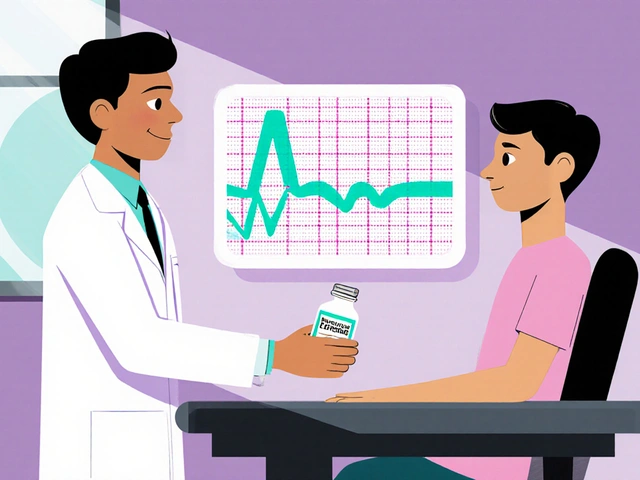
- Ask for the “teach-back.” When the pharmacist gives you the bottle, say: “Can you explain this to me like I’m 12?” Then repeat it back in your own words. Studies show this cuts mistakes by nearly half.
Don’t wait for the pharmacy to explain everything. Most are busy. Take charge. Bring a list of questions. Write down what you’re told. If something doesn’t make sense, call back. Better yet, ask for a pharmacist consultation - many pharmacies offer it free.
What’s Changing Soon
The system is finally waking up. By 2026, most pharmacies will be required to use simpler, standardized labels. The old, cluttered, jargon-filled stickers are being phased out. New ones will use larger fonts, clearer icons, and plain language.
But change is slow. Right now, 67,000 community pharmacies use over 3,500 different label formats. That’s chaos. One pharmacy might use red for drowsiness. Another uses orange. You can’t rely on consistency.
That’s why your role matters. Don’t just take the label as gospel. Ask. Double-check. Don’t guess. If you’re on multiple meds, keep a list - including the warnings - and bring it to every appointment.
Real Stories, Real Risks
A 68-year-old woman in Ohio took her blood pressure med with grapefruit juice. The label said “avoid grapefruit.” She didn’t know why. She thought it was just a suggestion. She ended up in the ER with dangerously low blood pressure. Her pill was a calcium channel blocker - grapefruit can turn it into a dangerous overdose.
A man in Texas took a muscle relaxant and ignored the “do not drive” warning. He fell asleep at the wheel. He didn’t hurt anyone - but he lost his license for six months.
On the flip side, a woman in Minnesota used the “teach-back” method after getting a new antidepressant. She repeated back: “This makes me sleepy, so I can’t drive until I know how it affects me.” Her pharmacist smiled. “That’s exactly right.” She avoided a bad reaction.
These aren’t rare. They happen every day.
Prescription labels are meant to protect you. But they only work if you understand them.
What does a black box warning mean on a prescription label?
A black box warning is the strongest safety alert the FDA requires. It appears at the top of the label and means the drug has been linked to serious, potentially life-threatening side effects - like liver failure, heart problems, or suicidal thoughts. These aren’t common side effects. They’re rare but dangerous enough that doctors must carefully weigh the risks before prescribing. If your medication has this warning, don’t ignore it. Talk to your doctor or pharmacist about what signs to watch for.
Why do some pills say ‘take on an empty stomach’?
Some medications are absorbed better - or only safely absorbed - when there’s no food in your stomach. Food can block the drug from entering your bloodstream, making it less effective. Or, it can cause too much to be absorbed at once, leading to side effects. Antibiotics like amoxicillin or thyroid meds like levothyroxine are common examples. The rule is usually: take it at least one hour before eating, and wait two hours after.
Can I ignore a warning if I’ve taken the medicine before without problems?
No. Just because you didn’t have a reaction last time doesn’t mean it’s safe now. Your body changes. You might be taking a new drug that interacts with it. You might be older, sicker, or taking a higher dose. Warnings are based on science, not your personal experience. Even if you’ve taken the same pill for years, always read the label each time - changes happen without you knowing.
What should I do if I don’t understand a warning?
Call your pharmacist. They’re trained to explain this stuff in plain language. Don’t rely on Google. Don’t ask a friend. Don’t guess. Say: “I don’t understand what this means.” Ask them to explain it like you’re a beginner. Many pharmacies offer free 5-minute consultations just for this. If you’re still unsure, ask your doctor during your next visit. It’s better to ask than to risk harm.
Are color-coded warnings the same at every pharmacy?
Not always. While red usually means danger and yellow means caution, there’s no national standard yet. Some pharmacies use orange for warnings, others use purple. That’s why you can’t rely on color alone. Always read the words. Color is a quick hint, but the text tells you the real risk. The FDA is working on a universal symbol system to fix this, but it’s not fully in place yet. Until then, trust the words, not just the color.
What’s the most common mistake people make with prescription labels?
The biggest mistake? Ignoring the “take with food” or “avoid alcohol” warnings because they seem minor. People think, “I’ve had wine before - it’s fine.” But mixing alcohol with painkillers, antidepressants, or sleep aids can cause dizziness, breathing problems, or liver damage. Same with food - skipping a meal with a pill can cause nausea, low blood sugar, or make the drug useless. These aren’t suggestions. They’re safety rules.
What to Do Next
Don’t wait for the system to fix itself. Take action today:
- Keep a list of all your meds and their warnings - in your phone or a notebook.
- Ask your pharmacist to explain each new label in plain English.
- Use the teach-back method: say it back to them in your own words.
- Save the Patient Prescribing Information sheet. Don’t throw it away.
- If you’re on multiple drugs, ask for a medication review - many pharmacies offer it free.
Your safety isn’t just the pharmacist’s job. It’s yours too. Prescription labels are meant to protect you. But they only work if you read them - and understand them.
11 Comments
Raja P
December 24 2025Man, I never realized how much I was ignoring those little stickers. Just last week I took my blood pressure med with grapefruit juice because I thought it was just a "suggestion." Now I’m reading every label like it’s a treasure map. Thanks for the wake-up call.
Also, the teach-back thing? Genius. I’m gonna start doing that with my grandma’s meds too.
Harsh Khandelwal
December 25 2025Red stickers = government mind control. I’ve been taking my pills with a pinch of sea salt and lemon water since 2018. The FDA doesn’t want you to know this, but the real danger is the pharmaceutical cartel hiding the truth behind color codes. Blue means "you’re being watched."
Also, QR codes? That’s just a Trojan horse for your phone’s camera to track your pill intake. I burn my labels and whisper affirmations instead. Works better.
Lindsey Kidd
December 26 2025OMG YES. 🙌 I work in a pharmacy and I see people throw away the PPI sheet like it’s junk mail. I literally hand them a sticky note and say: "Write down the 3 most important things. I’ll wait."
And the teach-back? It’s magic. One lady repeated back, "So if I eat a banana, I might turn into a zombie?" and I was like… 😅 "Close enough. Let’s try again."
So proud of this post. Please share with your uncle who thinks "take with food" means "take while eating tacos."
Rachel Cericola
December 26 2025This is one of the most important public health pieces I’ve read in years. The fact that 68% of people toss the Patient Prescribing Information sheet is a national disgrace. Pharmacists aren’t magicians - they’re overworked, underpaid, and expected to explain complex pharmacology in 90 seconds while the next customer yells for their insulin.
And let’s talk about the color system: it’s not just inconsistent - it’s actively dangerous. I’ve seen orange used for "caution," purple for "allergy," and green for "take at night." No wonder people are confused. The FDA’s new universal symbols are long overdue. But until then, here’s the truth: if you can’t read the text, you’re not safe. Color is a cue, not a substitute. And if your pharmacist says "it’s fine" without explaining why, walk out and call someone else. Your life isn’t a gamble.
Also - "take on empty stomach" means NO FOOD, NO WATER, NO COFFEE, NO TOAST CRUMB. Not even a mint. I’ve seen patients take levothyroxine with a yogurt parfait and wonder why their TSH is still 12. It’s not their fault. The system failed them. We need to fix it - starting with the labels.
And yes, the QR code idea? Brilliant. If you can scan a beer bottle for nutrition facts, you can scan your pill for a 30-second video from a pharmacist who actually cares. This isn’t tech hype. It’s harm reduction.
Stop guessing. Start asking. And if someone tells you "it’s probably fine," ask them if they’d let their kid take it. If they hesitate? You’ve got your answer.
Blow Job
December 28 2025Just wanted to say this is one of those posts that makes you pause and rethink everything. I used to think "don’t crush" meant "don’t chew it like gum." Turns out I’ve been crushing my extended-release meds for years. No wonder I felt weird after lunch.
Also, the "take with food" thing? I thought it meant "eat something nearby." Turns out I was supposed to eat right before. My stomach’s been happier since I fixed that.
Thanks for the clarity. And yeah - the teach-back method? I’m using it on my mom now. She’s 72, takes 8 pills, and never asks questions. Now she says them back to me like a quiz. It’s weird. But it works.
Christine Détraz
December 28 2025I’m a nurse and I’ve seen people die because they didn’t understand "avoid alcohol." One guy mixed his antidepressant with whiskey because he thought "it’ll help me sleep." He didn’t wake up.
And don’t even get me started on the "for external use only" sticker. I had a patient put a topical steroid cream in his eye because he thought "external" meant "outside the house."
People aren’t dumb. The system is just designed to confuse us. I’ve started printing out plain-language summaries for my patients and taping them to the pill bottles. It’s not perfect - but it’s better than nothing.
EMMANUEL EMEKAOGBOR
December 28 2025It is with profound respect for the medical profession and the diligence of pharmacists that I offer this reflection. The complexity of pharmaceutical labeling, while rooted in scientific rigor, often fails to accommodate the cognitive and linguistic diversity of the patient population. In Nigeria, where literacy rates vary and access to healthcare professionals is uneven, such ambiguity can lead to catastrophic outcomes. The proposed standardized symbols and plain-language labels represent not merely administrative reform, but a moral imperative. One does not need to be a physician to recognize that safety must be accessible, not arcane. I commend the initiative and urge global adoption.
CHETAN MANDLECHA
December 29 2025When I first saw the "black box warning" on my dad’s heart med, I thought it was a typo. Like, someone forgot to remove a Photoshop layer. Turns out it’s real. And scary.
Now I keep a notebook. Every new pill? I write the warning in my own words. "Don’t drink. Don’t drive. Don’t be dumb."
Also - the QR code idea? I’m gonna scan every label now. If a pharmacist can record a 15-second video, why can’t I? I’ll make a TikTok: "What my pill actually says."
Ajay Sangani
December 30 2025you know… i think the real issue isnt the labels… its that we’ve been taught to trust authority without question. if the doctor says take it, we take it. if the sticker says "avoid alcohol" we assume it means "maybe dont." but what if the system itself is broken? what if the drugs are overprescribed? what if the warnings exist because the meds are inherently dangerous… and we’re just supposed to live with it?
im not saying dont take meds. im saying… maybe we should ask why we need so many.
also i think "take with food" should just say "eat something first"… i keep forgetting what "with" means in medical speak. 😅
Pankaj Chaudhary IPS
January 1 2026As a public servant who has witnessed the consequences of health misinformation firsthand, I commend this comprehensive breakdown. In India, where polypharmacy is common and literacy varies widely, such clarity is not a luxury - it is a lifeline.
I have distributed printed versions of this guide to community health workers across five districts. We are now training ASHA workers to conduct "Label Literacy Sessions" - 10 minutes after each prescription is dispensed. The results? A 40% drop in reported adverse events in pilot areas.
Let this not remain an online post. Let it become policy. Let it become practice. The people deserve nothing less.
Gray Dedoiko
January 3 2026My mom just started a new med and I made her read the label out loud to me. She said, "It says don’t drink grapefruit juice… but I love grapefruit." So I Googled it and found out it can make her blood pressure crash. She cried. I cried.
Now we have a rule: no new pill without a 5-minute "explain it like I’m 5" talk with the pharmacist. And I write it down on my phone.
Thanks for reminding me that asking questions isn’t being difficult - it’s being smart.