Sensorineural Hearing Loss: What Causes Inner Ear Damage and Permanent Deafness
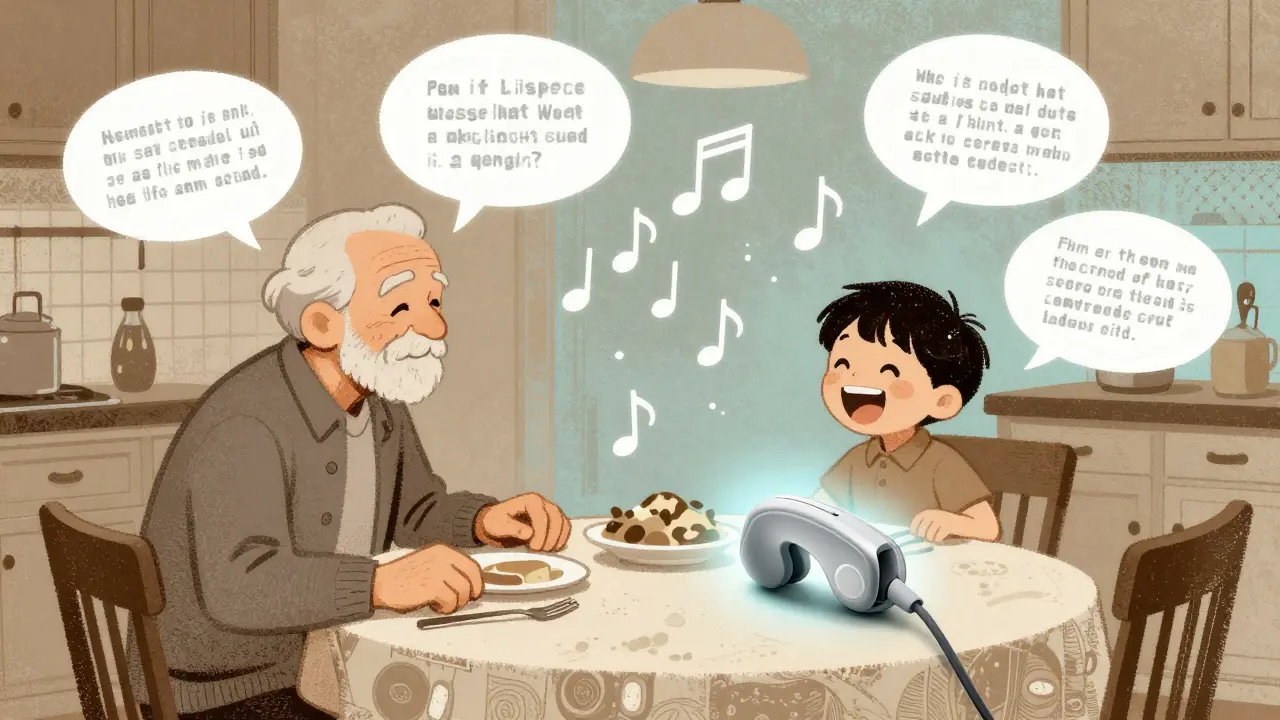
When you can’t hear your grandkids laugh over dinner, or you’re constantly asking people to repeat themselves in noisy rooms, it’s not just frustration-it could be sensorineural hearing loss. This isn’t a simple earwax blockage or temporary muffled hearing. It’s damage deep inside your inner ear, to the tiny hair cells that turn sound into signals your brain understands. And once they’re gone, they don’t come back. Unlike other types of hearing loss, sensorineural hearing loss (SNHL) is permanent in most cases. But here’s the thing: you can still hear better. You just need to know how.
What Exactly Is Sensorineural Hearing Loss?
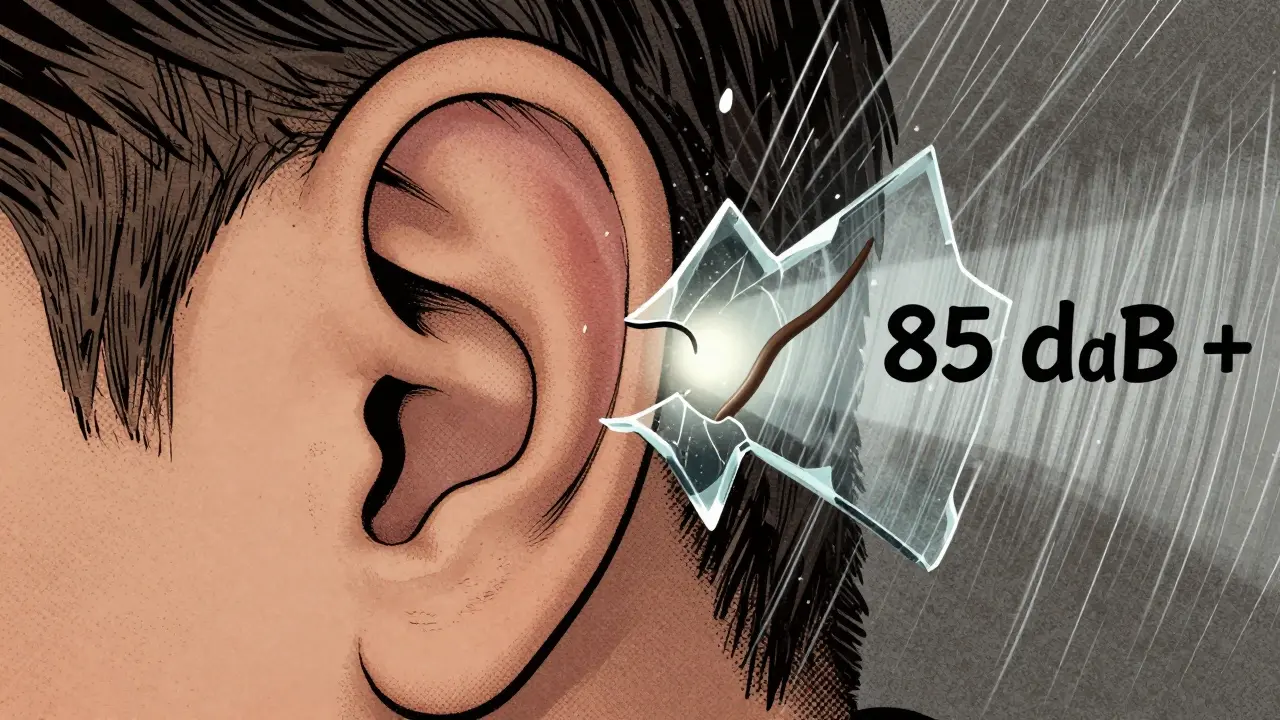
Sensorineural hearing loss happens when the cochlea is damaged-specifically, the hair cells inside it. These aren’t actual hairs. They’re microscopic, delicate structures called stereocilia that wiggle when sound waves hit them. Each movement triggers an electrical signal that travels along the auditory nerve to your brain. When these cells die or get worn out, they don’t regenerate. No medicine, no pill, no miracle cure can bring them back.
This is different from conductive hearing loss, which is caused by something blocking sound-like earwax, fluid, or a perforated eardrum. That kind can often be fixed with surgery or cleaning. SNHL? It’s a signal problem. The ear isn’t blocked. It’s broken.
It’s also not rare. About 90% of people who need hearing aids have sensorineural hearing loss. In the U.S., roughly 30 million adults have it. By age 65, one in four people do. By 75? Half of them.
How Does It Happen?
The damage doesn’t happen overnight. Most of the time, it’s slow. Here’s how:
- Noise exposure: Continuous sounds over 85 decibels-like lawnmowers, power tools, or loud concerts-can kill hair cells over time. One night at a concert won’t do it. But 8 hours a day, 5 days a week? That’s a recipe for permanent damage.
- Aging (presbycusis): This is the #1 cause. As you get older, those hair cells just wear out. It’s like the batteries in your remote-eventually, they stop working.
- Genetics: Some people are born with genes that make their hair cells more fragile.
- Medications: Certain antibiotics, chemotherapy drugs, and high-dose aspirin can be toxic to the inner ear.
- Illness: Meniere’s disease, autoimmune disorders, and even severe infections like meningitis can attack the cochlea.
The worst part? You won’t always notice it right away. Your brain compensates. You start turning up the TV. You nod along in conversations, even when you didn’t catch the last word. By the time you realize something’s wrong, you’ve already lost a lot.
What Are the Signs?
If you’re experiencing any of these, it’s time to get tested:
- Sounds seem muffled, especially high-pitched ones like children’s voices or birds chirping.
- You struggle to follow conversations in noisy places-restaurants, family gatherings, busy streets.
- You hear ringing, buzzing, or hissing in your ears (tinnitus). About 80% of SNHL patients have it.
- Sudden loud sounds feel painfully overwhelming (recruitment).
- You feel off-balance or dizzy sometimes.
These aren’t just annoyances. They’re red flags. A 2023 study from Mass Eye and Ear found that 87% of people with SNHL reported major trouble hearing speech in background noise. That’s not just inconvenient-it’s isolating.
How Is It Diagnosed?
Your doctor won’t guess. They’ll run an audiogram. This is a hearing test where you wear headphones and press a button every time you hear a tone. The test compares air conduction (sound through the ear canal) to bone conduction (sound through the skull). If bone conduction is better than air conduction by at least 15 decibels-and there’s no gap between them-it’s SNHL.
That’s the gold standard. No X-ray. No MRI. Just sound and your response.
Can It Be Fixed?
Here’s the hard truth: Most cases of sensorineural hearing loss are permanent. No medication can regrow hair cells. No laser can repair them. The damage is done.
But there’s one exception: sudden sensorineural hearing loss (SSHL). If you lose hearing suddenly-over hours or days-you might still be able to save it. If you get steroid treatment within 48 to 72 hours, recovery rates jump to 32-65%. Delay it beyond two weeks? The chance drops to under 10%.
For everything else? You don’t fix the damage. You work around it.
What Are the Real Solutions?
There are two main tools that actually work:
Hearing Aids
Modern digital hearing aids don’t just make everything louder. They’re smart. They can boost only the frequencies you’ve lost-usually between 2,000 and 8,000 Hz-while keeping background noise down. Brands like Widex Moment and Phonak Paradise have 4.6 out of 5 ratings from users who say they finally hear their grandkids clearly.
But they’re not magic. In noisy rooms, they only improve speech understanding by 30-50%. You’ll still miss words. You’ll still need to watch lips. You’ll still feel tired after long conversations.
And cost? It’s brutal. A good pair runs $2,500 to $7,000. Insurance rarely covers it. That’s why many turn to over-the-counter (OTC) models-like Costco’s Kirkland Signature-which cost under $1,000 and work fine for mild to moderate loss.
Cochlear Implants
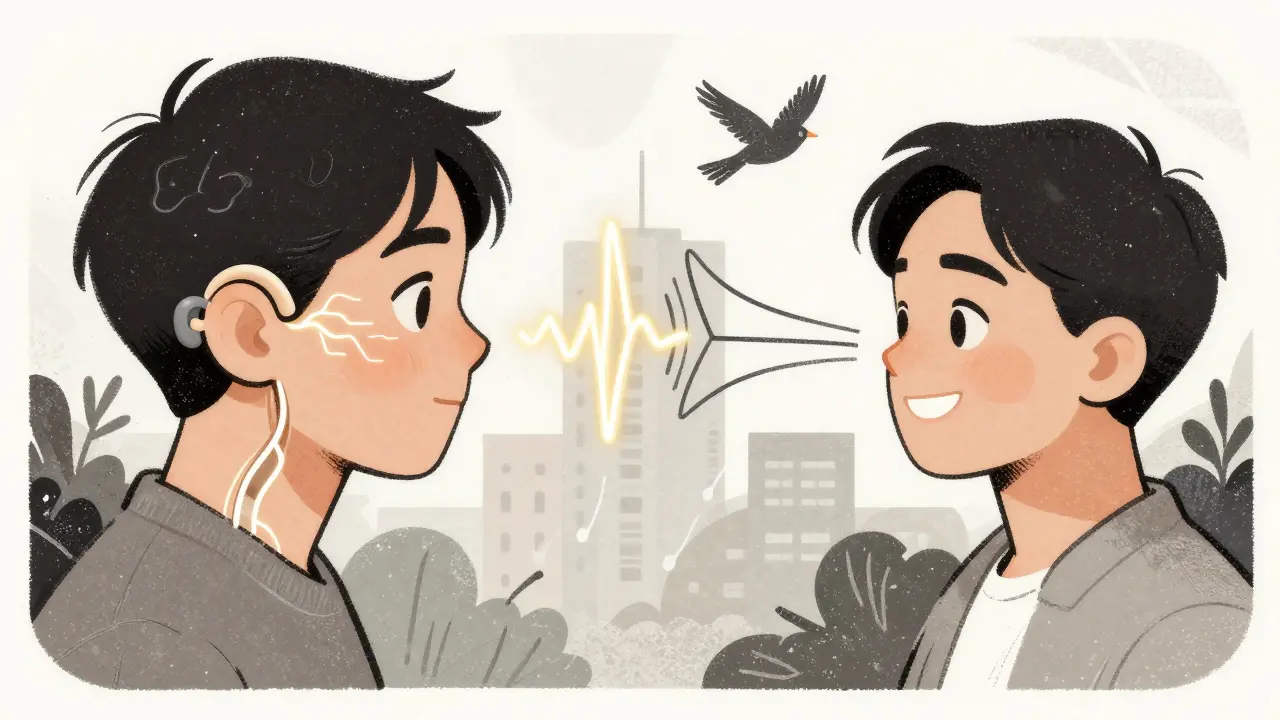
If your hearing loss is severe to profound-meaning you can’t hear even loud shouts-you might be a candidate for a cochlear implant. This device bypasses the damaged hair cells entirely. It has an external processor that picks up sound and sends electrical signals directly to your auditory nerve.
It’s surgery. It’s expensive. It takes months of rehab. But 82% of users achieve open-set speech recognition-meaning they can understand conversations without lip-reading. That’s life-changing.
But it’s not for everyone. Some users say the first weeks after activation are overwhelming. A Reddit user described everyday sounds-like running water or clinking dishes-as painfully loud. It takes time for your brain to relearn what noise means.
What Doesn’t Work
Don’t waste your money on:
- Herbal supplements claiming to “restore hearing”
- “Hearing therapy” apps that promise to “retrain your ears”
- Ear candles, acupuncture, or magnets
None of these have scientific backing. The FDA doesn’t approve them. They prey on hope.
What You Can Do Right Now
If you suspect SNHL, don’t wait. Here’s your action plan:
- Get a hearing test. Ask your GP for a referral to an audiologist. It’s quick, painless, and often covered by insurance.
- Try a hearing aid trial. Most clinics offer 30-90 day trials. Use them. Test them in real life-restaurants, family dinners, the car.
- Protect what’s left. Wear earplugs at concerts. Turn down the volume. Give your ears quiet time.
- Learn lip-reading. Even a little helps. Online courses are free.
- Join a support group. The Hearing Loss Association of America has 300+ local chapters. Talking to others who get it makes a difference.
The Future Is Coming
Scientists aren’t giving up. Stanford Medicine is testing stem cell therapies to regrow hair cells. Cochlear Limited just launched a smaller, smarter processor. AI-powered hearing aids can now detect whether you’re in a car, a café, or a quiet room-and adjust automatically.
But these are still years away. For now, the best thing you can do is act now. Don’t wait until you’re missing birthdays, phone calls, or your favorite songs.
Permanent doesn’t mean powerless. With the right tools, you can still hear the things that matter.
Is sensorineural hearing loss always permanent?
Most of the time, yes. Damage to the inner ear hair cells is irreversible. But there’s one exception: sudden sensorineural hearing loss (SSHL). If you lose hearing suddenly-over hours or days-and get steroid treatment within 48-72 hours, recovery is possible in up to 65% of cases. After that window, the chance drops sharply.
Can hearing aids restore normal hearing?
No. Hearing aids don’t fix the damage. They amplify sound and filter out background noise to help your brain make better sense of what’s left. Most users report 30-50% improvement in noisy environments, but they still struggle with fast speech or multiple people talking. They’re tools, not cures.
Why do I hear better in quiet rooms but not at dinner?
That’s classic sensorineural hearing loss. Your hair cells that detect high-pitched sounds-like consonants (s, t, k, f)-are damaged. In quiet rooms, your brain fills in the gaps. In noisy places, background sound overwhelms the signals your brain is already struggling to process. That’s why you nod along but miss half the conversation.
Are over-the-counter hearing aids any good?
For mild to moderate SNHL, yes. OTC models like those from Costco or Eargo are FDA-approved, digitally adjustable, and cost a fraction of clinic-fitted devices. They won’t match the precision of a custom-tuned hearing aid, but for many people, they’re a practical first step. They’re not for severe hearing loss.
Does tinnitus mean my hearing loss is getting worse?
Not necessarily. Tinnitus-ringing, buzzing, or hissing in the ears-is common in SNHL, affecting about 80% of patients. It’s a symptom, not a sign of ongoing damage. Many people find it fades over time. Some hearing aids now include built-in notch therapy, which reduces tinnitus perception by playing soothing sounds that mask the ringing.
How long does it take to get used to hearing aids?
Most people need 4 to 8 weeks. Your brain has to relearn how to process sound. At first, everything might sound too loud, tinny, or echoey. That’s normal. Keep wearing them daily. Most clinics offer 3-5 free adjustments during the trial period to fine-tune the settings. Don’t quit too soon.