CPAP Dry Mouth: Causes, Fixes, and What You Can Do Today
When you use a CPAP machine, a device that delivers continuous air pressure to keep airways open during sleep for people with sleep apnea. Also known as continuous positive airway pressure therapy, it’s one of the most effective treatments for sleep apnea—but many users struggle with a simple but frustrating side effect: dry mouth. If you wake up with a parched throat, sticky tongue, or that awful cotton-mouth feeling, you’re not alone. Up to half of CPAP users report dry mouth, and it’s often the #1 reason people stop using their machine.
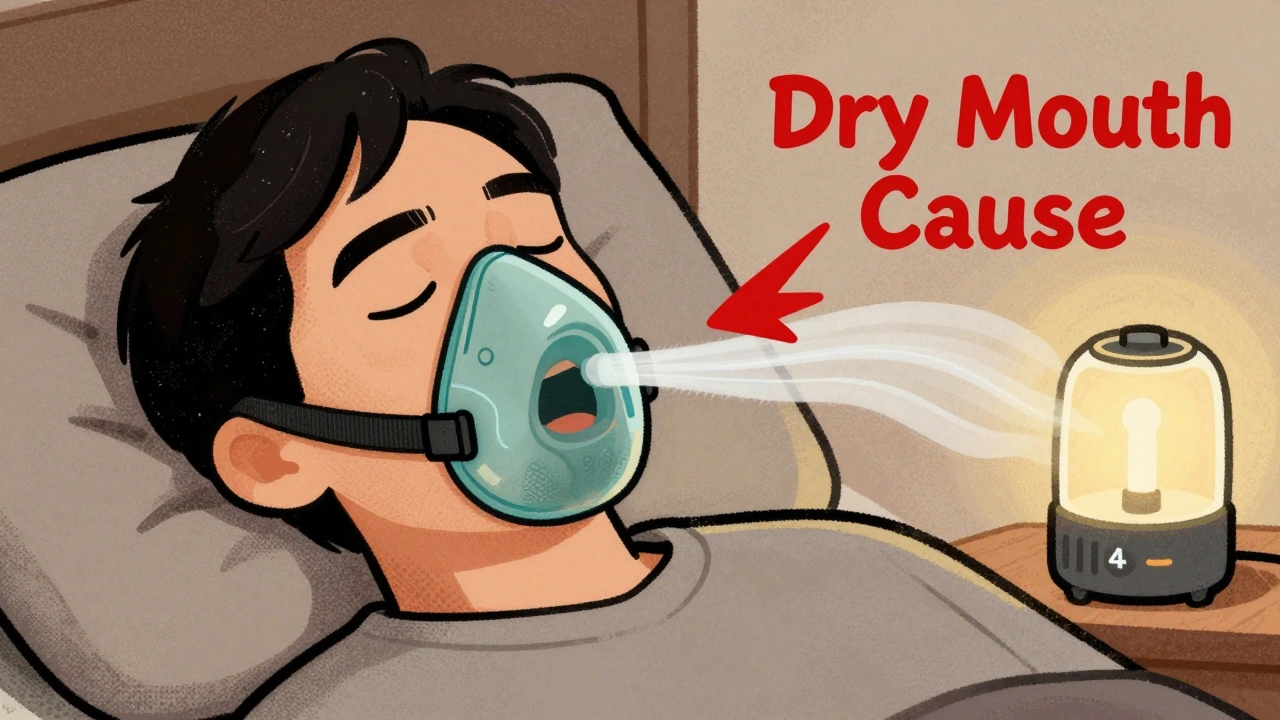
Why does this happen? Most CPAP machines push air through a mask, and if that air isn’t warmed or moistened, it dries out your mouth and throat as you breathe through it all night. This gets worse if you sleep with your mouth open—something that’s common if you have nasal congestion, a deviated septum, or just aren’t used to the mask. Some medications, like antihistamines or antidepressants, can make dryness worse. Even drinking alcohol before bed or breathing through your mouth while sleeping can turn a mild issue into a nightly nightmare.
Thankfully, this isn’t something you just have to live with. The fix often starts with something simple: a heated humidifier, a device that adds moisture to the air your CPAP delivers. Many modern CPAP machines come with built-in humidifiers, but if yours doesn’t—or if it’s not set right—you’re missing out on a major relief tool. Adjusting the humidity level, switching to a full-face mask (so you’re not breathing through your mouth), or using a chin strap to keep your mouth closed can make a huge difference. Some people even find relief with over-the-counter oral moisturizers or saline sprays designed for nighttime use.
It’s also worth checking your mask fit. A leaky mask doesn’t just waste air—it can blow dry air straight into your mouth. If you’re using a nasal pillow mask and your mouth keeps opening, that’s a red flag. Talk to your sleep specialist about trying a full-face mask or adjusting pressure settings. A few small tweaks can turn sleep apnea treatment from a chore into something you actually look forward to.
And don’t ignore the long-term effects. Chronic dry mouth isn’t just uncomfortable—it can lead to tooth decay, gum disease, and bad breath. It can also make you more likely to skip your CPAP, which puts your heart and brain at risk. The good news? Most of these issues are preventable with the right adjustments.
In the posts below, you’ll find real advice from people who’ve been there—how to choose the right humidifier, what products actually help with dry mouth, how to fix mask leaks, and even how to deal with dry mouth if you’re using a BiPAP or auto-CPAP. No fluff. No marketing. Just what works.
Fix dry mouth, mask leaks, and pressure problems with CPAP therapy. Learn simple, proven solutions backed by sleep specialists and user data to improve comfort and adherence.
Continue Reading