Tumor Genetics: How DNA Changes Drive Cancer and Shape Treatment
When we talk about tumor genetics, the study of DNA changes inside cancer cells that cause them to grow uncontrollably. Also known as cancer genetics, it’s not just about finding mutations—it’s about understanding how those mutations decide whether a tumor spreads, responds to chemo, or hides from the immune system. This isn’t science fiction. Every cancer you hear about—breast, lung, colon, melanoma—has its own genetic fingerprint. And that fingerprint is what doctors now use to pick the right drug, not just the right organ.
Tumor genetics connects directly to genetic testing cancer, the process of analyzing a tumor’s DNA to find specific changes like BRCA1, EGFR, or KRAS mutations. These aren’t random errors. They’re signals. A BRCA mutation means a higher risk of ovarian or breast cancer and may make a tumor sensitive to PARP inhibitors. An EGFR mutation in lung cancer can mean a targeted pill works better than chemo. And targeted cancer therapy, drugs built to attack only cells with certain genetic flaws is now standard for many cancers because of this. It’s not one-size-fits-all anymore. Two people with the same type of cancer might get completely different treatments because their tumors have different mutations.
What’s missing from most conversations is how tumor genetics affects real people. If your tumor has a mutation that responds to a targeted drug, you might avoid harsh chemo altogether. If it doesn’t, you’re spared the side effects of something that won’t work. Genetic testing can even reveal inherited risks—like if your cancer came from a family mutation—so your relatives can get screened early. And it’s not just for advanced cases anymore. Doctors are using tumor genetics to catch cancer sooner, predict recurrence, and even design vaccines that train the immune system to hunt down cells with those exact mutations.
You’ll find posts here that dig into how these genetic changes interact with medications, why some drugs stop working over time, and what new tests are making this more accurate. Whether you’re a patient, a caregiver, or just trying to understand why your doctor ordered a genetic test, this collection cuts through the noise. No jargon. No fluff. Just what matters: how your DNA shapes your cancer—and your next step.
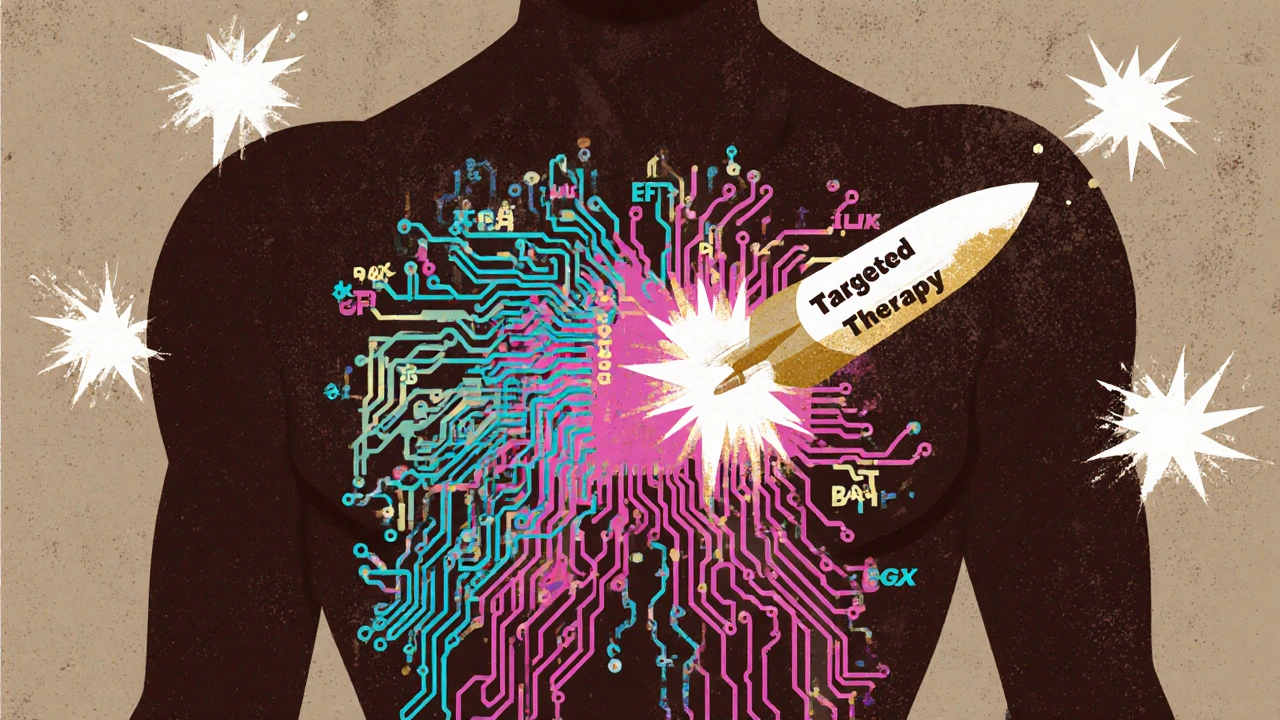
Targeted therapy uses tumor genetics to treat cancer more precisely than chemotherapy. Learn how genomic testing identifies mutations, which drugs work best, and why access remains unequal despite major advances.
Continue Reading