Warning Letters: FDA Responses to Manufacturing Violations in Pharmaceutical Production
When the FDA finds serious problems in a drug factory, they don’t just give a nod and a smile. They send a warning letter-a formal, public notice that says: you’re breaking the rules, and we’re watching. These aren’t gentle reminders. They’re legal notices with real consequences: delayed product launches, millions in lost revenue, and even bans on selling your drugs in the U.S.
Every year, the FDA issues hundreds of these letters to pharmaceutical companies around the world. In 2023 alone, there were 327 warning letters sent to manufacturers-up from 289 the year before. That’s a 12.7% increase. And it’s not random. These letters target specific, repeat violations of Current Good Manufacturing Practices (CGMP), which are the rules that ensure drugs are consistently made safe, pure, and effective.
What Exactly Is in an FDA Warning Letter?
These letters aren’t vague. They’re detailed, technical, and exact. Each one points to specific violations using the exact language from the Code of Federal Regulations (CFR). Most commonly, they cite 21 CFR Parts 210 and 211-the rules that govern how drugs are made, tested, and controlled.
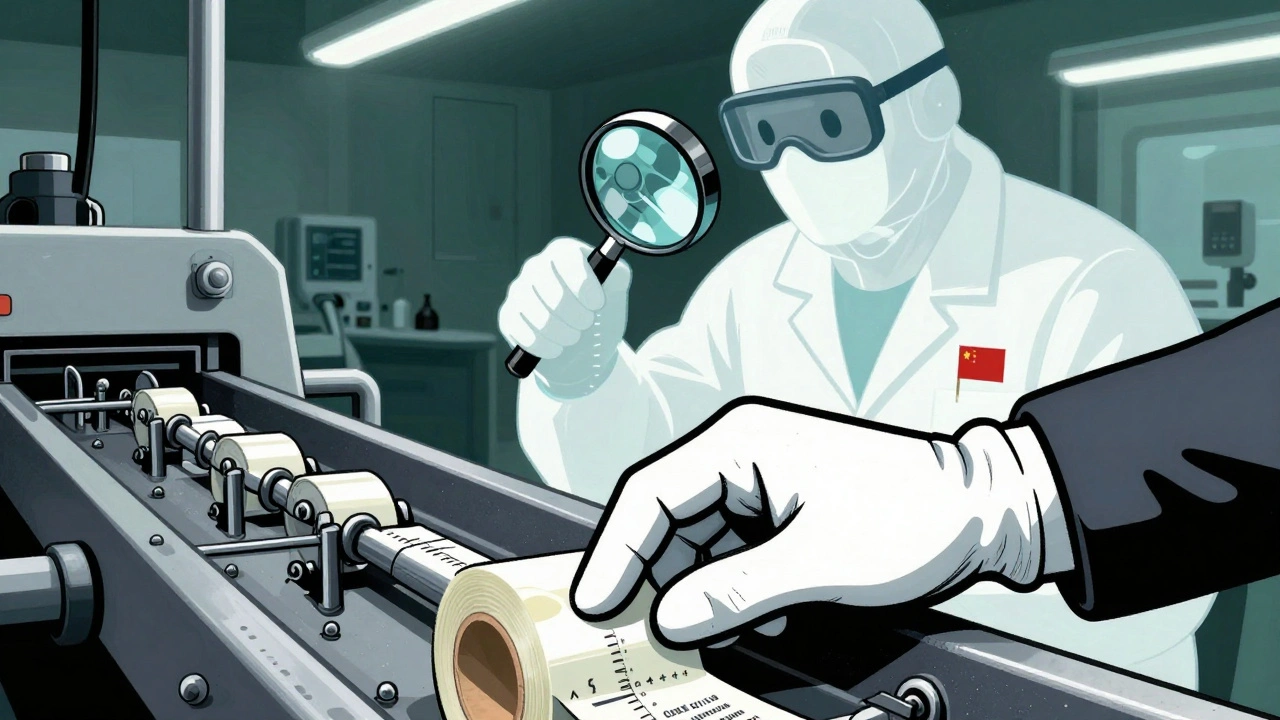
Take the July 2, 2025 letter to Daewoo Pharmaceutical Co., Ltd. The FDA found workers with exposed skin-like foreheads-inside an ISO 5 cleanroom, where sterile drugs are filled. That’s a direct breach of aseptic processing rules. Another example: non-sterile tape used on a filling line. Tape that hasn’t been sterilized can introduce bacteria into a vial of medicine. One small mistake like that can lead to a patient getting infected.
Each letter has three parts:
- Violation details: Exactly what was seen, when, and where. Photos, logs, and inspection notes are referenced.
- Regulatory citations: The specific CFR sections broken. No guessing allowed.
- Required actions: What the company must do next. This isn’t optional. It’s a deadline.
For example, Oasis Medical, Inc. was told to examine every single batch of product from January 2023 onward for defects. They also had to conduct full investigations with corrective and preventive actions (CAPA)-not just fix the problem, but prove they won’t let it happen again.
Why Warning Letters Are Different from Other FDA Actions
The FDA doesn’t jump straight to shutting down a plant. They have a step-by-step enforcement ladder.
First, inspectors give a Form 483 during an inspection. It’s a list of observations-things they saw that don’t meet standards. About 62% of inspections result in a Form 483. But a warning letter? That’s the next level. Only about 18-22% of inspections with violations turn into warning letters. Why? Because the violations have to be serious, systemic, or repeated.
Warning letters are the FDA’s way of saying: We’ve seen this before, and you didn’t fix it. A 2023 analysis found that 85% of warning letters included violations that had been cited in past communications. That’s not a one-off mistake. That’s a culture problem.
Compare that to a Form 483. It’s a heads-up. A warning letter is a legal notice. It’s public. It’s on the FDA’s website forever. Investors, customers, and regulators all see it. That’s why companies panic when they get one.
Most Common Violations: What the FDA Keeps Seeing
After analyzing hundreds of warning letters, experts have found patterns. These aren’t random errors-they’re the same failures, over and over.
- Inadequate investigation of out-of-specification (OOS) results: Found in 63.4% of letters. If a drug test comes back wrong, you can’t just ignore it or retest until you get a good number. You have to find out why.
- Lack of quality unit oversight: 57.8% of letters. The quality team must be independent, empowered, and involved in every decision. Too many companies treat them as paperwork clerks.
- Aseptic processing failures: 78.3% of letters for sterile products. This includes bad media fills, unsterile equipment, and poor gowning procedures. One 2022 study found 41.6% of these letters cited failed media fill tests-meaning the company didn’t prove their sterile process actually works.
- Data integrity issues: Up from 42% in 2019 to 67% in 2023. That means deleted files, backdated logs, or not recording raw data. The FDA now checks electronic systems like it’s a forensic audit.
One letter to Creative Essences, Inc. in September 2025 specifically called out failure to test incoming glycerin and propylene glycol for diethylene glycol-a toxic contaminant that’s killed people in the past. That’s not a technicality. That’s life or death.
Who Gets Warning Letters-and Why It’s Unequal
It’s not just about violations. It’s about who’s being inspected and how.
In 2022, Indian manufacturers received 38.7% of all warning letters (112 out of 289). U.S. companies came second at 31.5%. But here’s the problem: a 2022 Government Accountability Office report found that similar violations at two different facilities sometimes got different responses-one got a warning letter, the other got just a Form 483.
And foreign facilities? They’re 22% more likely to get a warning letter than U.S. ones for the same problem. That’s not just about standards. It’s about perception, resources, and pressure.
Small companies feel this the hardest. One Reddit user, u/QualityAssurancePro, said their 15-person team had to hire three consultants at $250/hour just to write a response. The cost nearly bankrupted them. Meanwhile, big pharma has entire departments dedicated to FDA compliance.
What Happens After You Get a Warning Letter
Getting the letter is only the beginning. The real work starts now.
The FDA gives you 15 working days to respond. That’s not a suggestion. It’s a deadline. And your response has to be perfect.
Effective responses include:
- Complete root cause analysis-with data, not guesses
- Proof that the fix actually works (e.g., new media fills, revalidated processes)
- Updated procedures with signatures and training records
- Timeline for full implementation
Companies that respond well can recover. Teva Pharmaceuticals fixed a warning letter at their Israeli plant in just 11 months. They reduced product defects by 30% and got off the import alert list.
But most don’t. A 2023 survey found that 68% of companies had to pause new product submissions while fixing the issue. The average delay? 8.7 months. One company lost $28 million in revenue because their ophthalmic drug launch was delayed by 14 months.
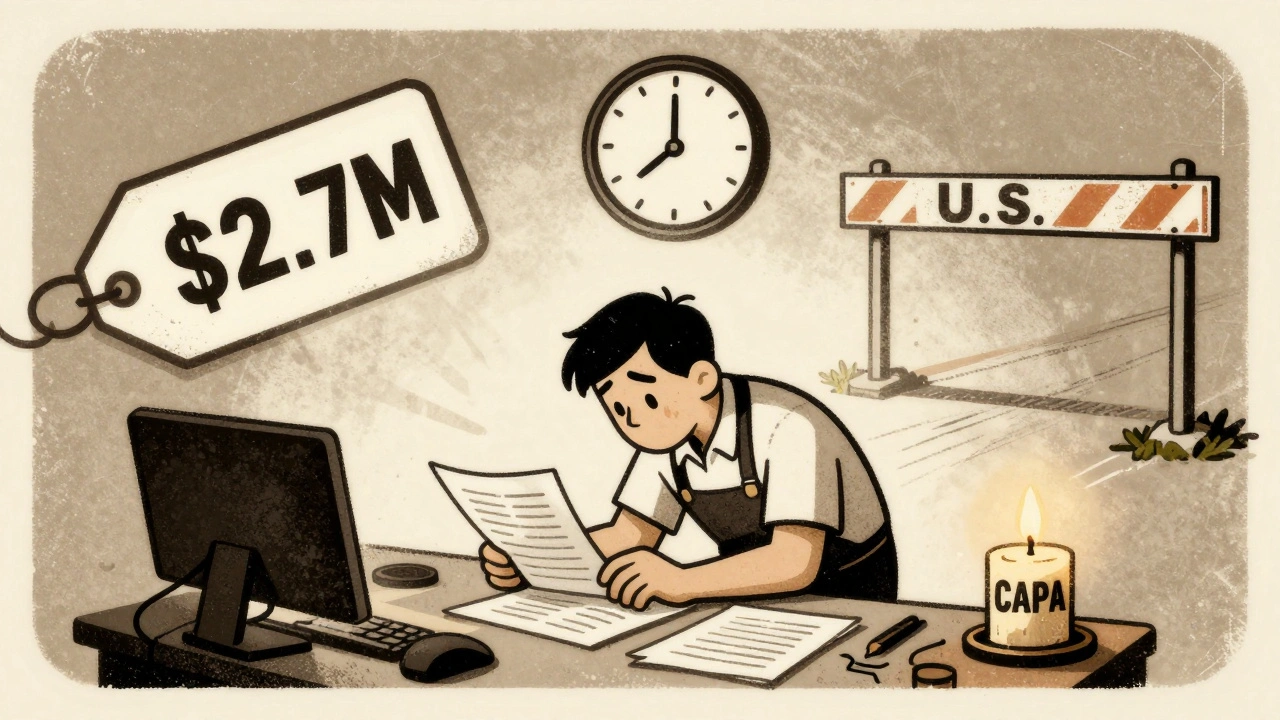
Costs are brutal. EY’s 2023 survey found the median cost to fix a warning letter: $1.8 million for U.S. facilities, $2.7 million for foreign ones. That’s not just labor-it’s new equipment, training, audits, and consultants.
The Bigger Picture: Why the FDA Is Cracking Down
The number of warning letters has jumped 92% since 2018. Why now?
The FDA’s budget for foreign inspections rose from $87.7 million in 2020 to $112.7 million in 2023. They’re sending more inspectors overseas. They’re using new tools to check data integrity. They’re prioritizing facilities with past violations.
Their 2023-2027 Strategic Plan says they want to reduce repeat violations by 25% by 2027. That means they’re not just punishing mistakes-they’re trying to force companies to change their culture.
But there’s a risk. A 2023 FDA inspector general report found that 31% of follow-up inspections were delayed past the 6-month target. That means some companies get a warning letter, pay for fixes, and then the FDA doesn’t check back for a year. During that time, the problem could come back.
And small manufacturers? They’re caught in the middle. The system works great for big companies with compliance teams. But for a 20-person factory? One warning letter can be existential.
What You Need to Do If You’re in Manufacturing
If you’re making drugs, even in a small facility, you need to treat CGMP like your life depends on it-because it does.
Here’s what actually works:
- Don’t wait for an inspection. Do internal audits every quarter. Look for the same things the FDA does.
- Train your quality unit like they’re the last line of defense. They need authority, access, and time-not just a title.
- Fix OOS results properly. Don’t retest until you get a pass. Investigate. Document. Prove it.
- Protect your data. If you’re using electronic systems, make sure logs can’t be edited or deleted. Audit trails aren’t optional.
- Practice sterile procedures like your life is on the line. Because it is. Media fills aren’t paperwork-they’re proof.
The FDA isn’t trying to shut you down. They’re trying to make sure your medicine doesn’t kill someone. But if you ignore the rules, they will act. And when they do, the cost isn’t just financial-it’s reputational, operational, and sometimes, human.
What happens if I don’t respond to an FDA warning letter?
If you don’t respond within 15 working days, the FDA will escalate. This could mean an import alert (blocking your products from entering the U.S.), a seizure of your drugs, a consent decree (a court-enforced plan), or even criminal charges. Ignoring the letter guarantees worse consequences.
Can a warning letter be removed from the FDA website?
No. Warning letters are permanent public records. Even if you fully fix the issues, the letter stays on the FDA’s website. But you can submit a follow-up response showing your corrective actions. This helps rebuild trust with regulators and customers.
How long does it take to fix a warning letter?
Most companies need 6 to 12 months to fully resolve the issues and prove compliance. Root cause analysis alone can take 45 to 90 days. The FDA then takes another 45 to 120+ days to review your response. Delays are common, so plan for at least a year of intense work.
Are warning letters only for pharmaceuticals?
No. The FDA issues warning letters for medical devices, biologics, food facilities, and cosmetics too. But pharmaceuticals make up the majority-especially for sterile products and CGMP violations. The rules are stricter because drugs go directly into the body.
Do warning letters affect stock prices?
Yes. A 2023 IQVIA analysis showed companies with active warning letters had 18.4% lower stock performance over 12 months compared to industry averages. Investors see them as signs of poor quality control and future financial risk.

15 Comments
Michael Robinson
December 9 2025It’s not about punishment. It’s about people not dying because someone cut corners. That’s it. No fancy words needed.
Andrea Petrov
December 10 2025Let’s be real - this is all a scam to push more pharma into outsourcing. The FDA knows Indian factories can’t afford the same equipment as Big Pharma, so they pick on them to scare everyone into buying American. It’s not about safety. It’s about control.
And don’t tell me about ‘data integrity’ - half the FDA’s own systems are outdated. They’re just using this to justify their budget hikes. Wake up.
Guylaine Lapointe
December 11 2025Someone actually wrote a 2,000-word essay on how not to kill patients and you’re still asking if it’s fair? The fact that you’re even questioning the rigor of these letters proves you’ve never worked in a lab where a single contaminated vial could kill a child.
There’s no ‘unequal’ here - there’s only negligence and accountability. If your facility can’t meet basic sterile standards, you shouldn’t be making medicine. Period.
Suzanne Johnston
December 12 2025I’ve seen this play out in three different countries. The real tragedy isn’t the warning letters - it’s how few companies actually listen until it’s too late.
Quality isn’t a department. It’s a culture. And if your CEO thinks compliance is a cost center, you’re already dead. The FDA doesn’t create these problems - they just expose them.
We need to stop treating CGMP like a checklist and start treating it like oxygen. You don’t get to pick and choose when to breathe.
Graham Abbas
December 13 2025Oh my god. I just read this whole thing and I’m crying. Not because I’m emotional - because this is the most honest, terrifying, beautiful thing I’ve read all year.
That line about ‘media fills aren’t paperwork - they’re proof’? That’s poetry. That’s the soul of this whole industry.
Someone needs to turn this into a TED Talk. Or a Netflix doc. Or both. We need to see this.
Haley P Law
December 14 2025OMG I JUST READ THIS AND I’M SHAKING 😭
THEY FOUND PEOPLE WITH FOREHEADS IN A CLEANROOM?? LIKE… WHAT??
Also I just spent 3 hours fixing my lab’s SOPs because of this. Thank you? I think? 😅
George Taylor
December 15 2025So… let me get this straight. You’re telling me that after spending millions on consultants, audits, and ‘CAPA initiatives,’ a company still gets a warning letter… and then they’re expected to just… fix it? And then they’re publicly shamed for YEARS? And the FDA doesn’t even follow up properly? And you think this is ‘fair’?
Who’s really being held accountable here? The workers? The QA team? The CEO who doesn’t even know what ‘aseptic’ means?
This isn’t regulation. It’s a circus. And we’re all clowns.
ian septian
December 17 2025Check your equipment.
Train your people.
Document everything.
Don’t retest until you fix the root cause.
That’s it. No magic. No excuses.
Chris Marel
December 18 2025This made me think of my cousin in Lagos. He works in a small lab that makes generic antibiotics. They don’t have cleanrooms. They use gloves twice. They don’t have audit trails.
I don’t know if they’ll ever get a warning letter - but if they do, they won’t survive it. And yet, their medicine saves lives every day.
Is the system protecting people… or just protecting the system?
Evelyn Pastrana
December 19 2025So let me get this straight - the FDA is basically saying, ‘Hey, you made a drug that could kill someone, but hey, at least you’re not a bad person, right?’
Meanwhile, my mom’s insulin came from a plant that got a warning letter last year… and now it’s on the shelf at CVS.
Y’all are all just playing pretend with human lives. 😒
Nikhil Pattni
December 20 2025Bro I work in a pharma lab in Pune and I can tell you this is all true but you don't know the real story - we have 12 people doing the work of 50, no budget for new equipment, and the owner says ‘just fix it during lunch break’ - and then they wonder why we get warning letters? We are not lazy we are trapped! And now the FDA is coming after us like we are criminals but they never ask how we got here? The system is broken not us! Also I saw a video on YouTube where a guy said FDA uses AI to pick targets and it's biased against Asian labs - is that true? Someone please tell me!
Also I think we should have a WhatsApp group for warning letter survivors - we can share templates and cry together 😭
Arun Kumar Raut
December 22 2025Look - I’ve been in this game for 25 years. I’ve seen plants shut down. I’ve seen people lose their jobs. I’ve seen patients get sick.
The FDA isn’t the enemy. The real enemy is the mindset that says ‘good enough’ is okay.
If you’re reading this and you’re in charge of quality - stop waiting for an inspection. Go look. Really look. Talk to the floor staff. They know what’s broken.
You don’t need more money. You need more courage.
Carina M
December 22 2025It is imperative to underscore that the regulatory framework governing Current Good Manufacturing Practices (CGMP) is not merely advisory; it is codified under Title 21 of the Code of Federal Regulations, and noncompliance constitutes a statutory violation of federal law.
Furthermore, the persistent recurrence of violations - particularly in the domains of aseptic processing and data integrity - reflects not merely operational deficiencies, but a fundamental failure of corporate governance and ethical stewardship.
It is unconscionable that any entity entrusted with the production of pharmaceuticals would permit such lapses to persist, especially in light of the documented public health consequences.
The FDA’s issuance of warning letters is not punitive - it is a moral imperative.
Elliot Barrett
December 22 2025Wow. Another self-congratulatory article from someone who’s never had to answer to a real customer. You think warning letters fix anything? They just make small companies fold so Big Pharma can buy their patents cheap.
Meanwhile, the same companies that get warning letters still make 80% of the world’s generic drugs. So who’s really at risk? The patients who can’t afford $1,000 pills?
Stop pretending this is about safety. It’s about market control.
Michael Robinson
December 24 2025So you’re saying we should let people die so big pharma can make more money? That’s your philosophy?