Antiemetics and Parkinson’s Disease: Avoiding Dopamine Antagonist Risks
Parkinson's Antiemetic Risk Checker
Instructions: Select a medication below to evaluate its risk profile and see if it is a safe alternative for someone managing Parkinson's Disease.
Medication List
Select a medication from the list to view the detailed risk analysis.
Medication Analysis
When these two forces collide, the antiemetic doesn't just stop nausea; it can effectively "turn off" the Parkinson's medication, leading to a severe return of tremors, stiffness, and freezing episodes. For someone already dealing with the progressive loss of neurons in the substantia nigra, this isn't just a side effect-it's a therapeutic emergency.
The Tug-of-War: How Dopamine Antagonists Work
To understand why this happens, we have to look at the D2-receptor. In a healthy brain, dopamine binds to these receptors to regulate movement. In Parkinson's, there isn't enough dopamine, so doctors prescribe levodopa, which the brain converts into dopamine to mimic the natural process. This is often paired with a dopa-decarboxylase inhibitor like carbidopa to ensure the drug reaches the brain.
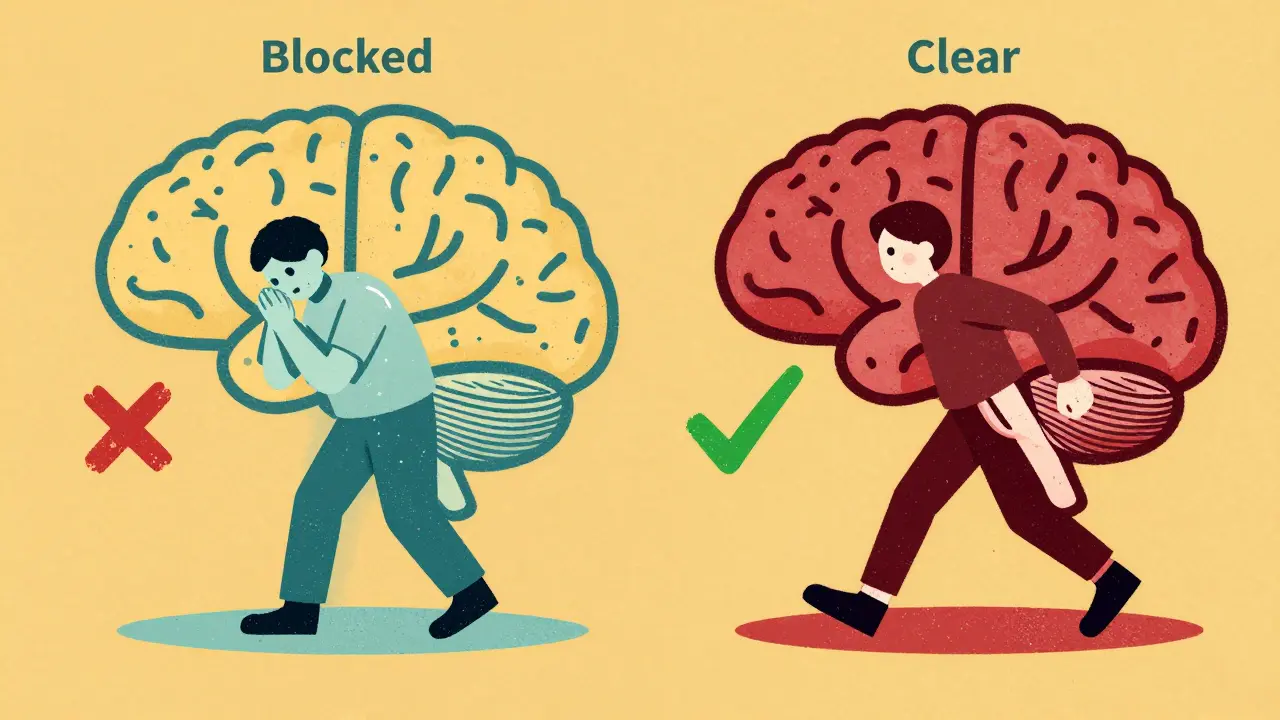
Many antiemetics work by blocking these same D2 receptors in the chemoreceptor trigger zone of the brain to stop the "urge" to vomit. However, if the drug crosses the blood-brain barrier, it blocks the receptors in the basal ganglia too. This creates a total blockade: your Parkinson's medication is trying to push the "go" button, but the antiemetic has essentially glued the button down. The result is a dramatic worsening of motor symptoms, sometimes requiring hospitalization to resolve.
The Danger Zone: Which Antiemetics to Avoid?
Not all nausea meds are created equal. The primary danger comes from drugs that penetrate the central nervous system (CNS) and have a high affinity for dopamine receptors. Metoclopramide (often known by the brand Reglan) is perhaps the most notorious example. It is frequently prescribed for gastric emptying and nausea, but it has a high risk of worsening Parkinsonian symptoms because it crosses the blood-brain barrier.
Other high-risk agents include phenothiazines like prochlorperazine and butyrophenones such as haloperidol. These are potent dopamine antagonists. While they are effective at stopping nausea or treating psychosis, they are devastating for someone with Parkinson's. In fact, the American Parkinson Disease Association lists several of these as "medications to avoid" because they directly oppose the goals of dopamine replacement therapy.
| Medication | Mechanism | Risk Level | CNS Penetration |
|---|---|---|---|
| Metoclopramide | D2 Antagonist | Very High | Significant |
| Prochlorperazine | D2 Antagonist | Very High | High |
| Domperidone | D2 Antagonist | Very Low | Minimal |
| Cyclizine | H1 Antagonist | Low | Moderate |
| Ondansetron | 5-HT3 Antagonist | Low | Minimal (Dopamine) |
Safer Alternatives for Nausea Management
The "catch-22" of Parkinson's is that levodopa interaction and the initiation of dopamine therapy often cause nausea in 40% to 80% of patients. You need the medicine to move, but the medicine makes you sick, and the common cure for the sickness stops the medicine from working. So, what is the safe way out?
The key is selecting drugs that either don't block dopamine or don't enter the brain. Domperidone is a gold standard for those who can access it. While it is a dopamine antagonist, it barely crosses the blood-brain barrier (less than 5% CNS penetration), meaning it stops nausea in the gut and the periphery without interfering with the brain's dopamine receptors. However, it is restricted in some regions, such as the US, due to other cardiovascular concerns.
For a different approach, cyclizine is often a first-line choice because it primarily targets H1 receptors rather than dopamine. Similarly, ondansetron works on serotonin (5-HT3) receptors, leaving the dopamine system largely untouched. For those in severe or palliative care, levomepromazine is sometimes used, but only at very low doses and under strict specialist supervision, as it carries a moderate risk of exacerbating rigidity.

Real-World Consequences and Medical Errors
This isn't just a theoretical concern. In emergency rooms, where a patient's full medical history might be overlooked in the rush, errors happen. There are documented cases of patients receiving metoclopramide after a dental procedure or during a hospital stay, only to experience a total "freeze" of their motor functions. Some patients report it taking weeks to return to their baseline movement even after the drug is stopped and levodopa doses are increased.
Research shows a worrying gap in provider education. Some studies indicate that over 60% of Parkinson's patients have received an inappropriate antiemetic during a hospitalization. This highlights why patients and caregivers must be the final line of defense. Carrying a "medications to avoid" wallet card or having a clear list of contraindicated drugs can literally be the difference between walking out of a hospital and being stuck in a bed for an extra week due to preventable drug-induced parkinsonism.
Practical Strategies for Patients and Caregivers
If you or a loved one are managing Parkinson's, you shouldn't have to hope the doctor knows every interaction. Take a proactive approach to nausea management. Before reaching for a pill, consider non-pharmacological options. Ginger (around 1g daily) and eating smaller, more frequent meals can significantly reduce the nausea associated with levodopa without any risk to your motor skills.
When medication is necessary, follow this priority hierarchy for safety:
- First Choice: Non-drug options (ginger, hydration) and H1 blockers like cyclizine.
- Second Choice: Peripheral agents like domperidone (if available and safe for your heart).
- Third Choice: Serotonin blockers like ondansetron.
- Avoid: Metoclopramide, prochlorperazine, and haloperidol.
Always ensure your medical records have a prominent alert: "Parkinson's Disease: Verify Antiemetic Safety." This simple notation can prevent a nurse or resident from administering a standard anti-nausea drug that could derail your treatment.
Why is metoclopramide specifically dangerous for Parkinson's patients?
Metoclopramide is a dopamine D2-receptor antagonist that easily crosses the blood-brain barrier. Because Parkinson's is caused by a lack of dopamine, blocking the remaining receptors in the brain can lead to a severe increase in tremors, rigidity, and bradykinesia, essentially neutralizing the effect of levodopa.
Is domperidone a safe alternative?
Yes, domperidone is generally much safer because it has very poor penetration into the central nervous system. It blocks dopamine receptors in the gut and the area postrema (outside the blood-brain barrier), meaning it controls nausea without worsening the motor symptoms of Parkinson's.
What should I do if I accidentally take a dopamine antagonist?
Contact your neurologist immediately. You may experience an acute worsening of symptoms. Your doctor may need to adjust your levodopa dosage or provide other supportive care until the antagonist wears off and the receptors are freed again.
Can I use over-the-counter nausea remedies?
Many natural options like ginger are safe. However, always check the active ingredients of over-the-counter medications. If a product contains a dopamine-blocking agent, it should be avoided. Consult your pharmacist to ensure any OTC choice doesn't interact with your Parkinson's meds.
Are there any safer antipsychotics if I need one for mood or psychosis?
Yes. If an antipsychotic is necessary, "atypical" antipsychotics like quetiapine, clozapine, or the Parkinson's-specific pimavanserin are preferred. These have a much lower affinity for D2 receptors and are less likely to cause motor deterioration compared to typical antipsychotics like haloperidol.