Authorized Generic Pricing: Why They Cost Less Than Brand-Name Drugs
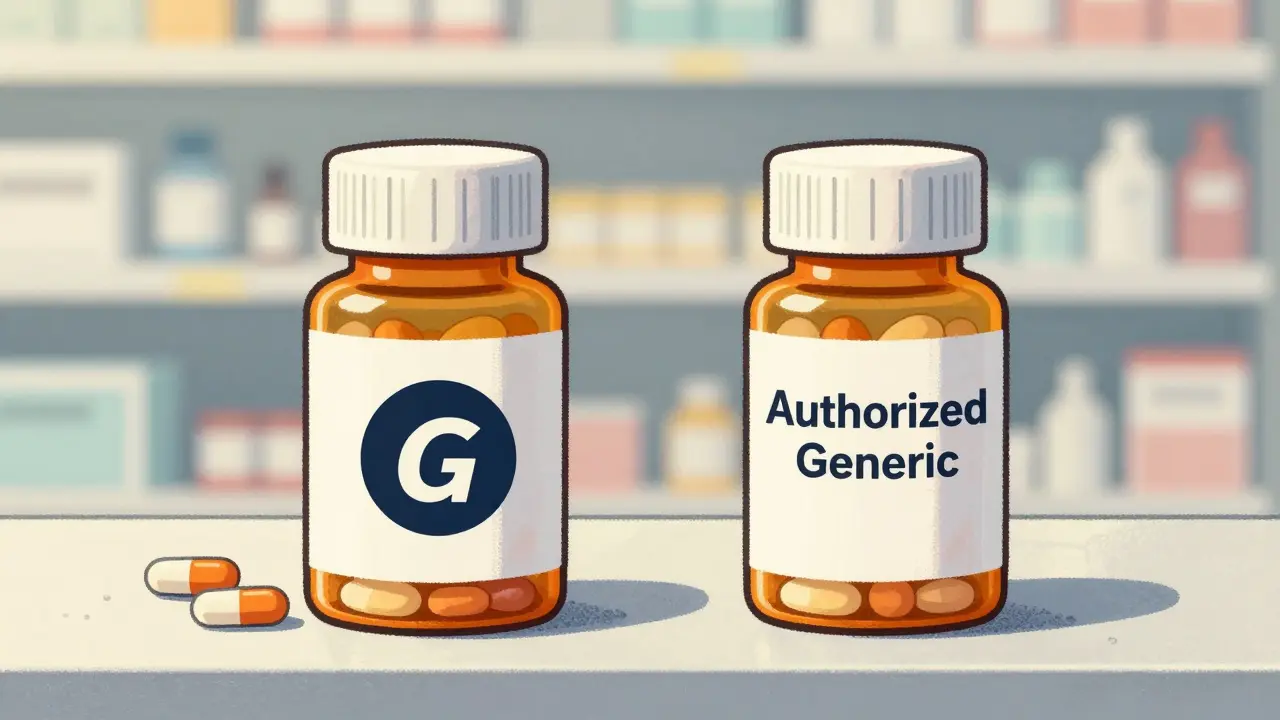
When you pick up a prescription, you might notice two similar-looking bottles on the counter-one with a well-known brand name, another labeled as an "authorized generic." They look almost identical. The pills are the same size, color, and shape. The instructions are the same. So why does one cost nearly half as much?
What Exactly Is an Authorized Generic?
An authorized generic is a drug that is chemically identical to a brand-name medication, manufactured in the same facility, using the same ingredients and quality controls, but sold under a different label. It’s not a knockoff. It’s not a copy. It’s the exact same product, just without the brand name.
These drugs are produced either by the original brand company itself or by a partner company with full permission from the brand owner. They operate under the original FDA-approved New Drug Application (NDA), which means they don’t need to go through the lengthy and expensive approval process that traditional generics do. That’s a big deal.
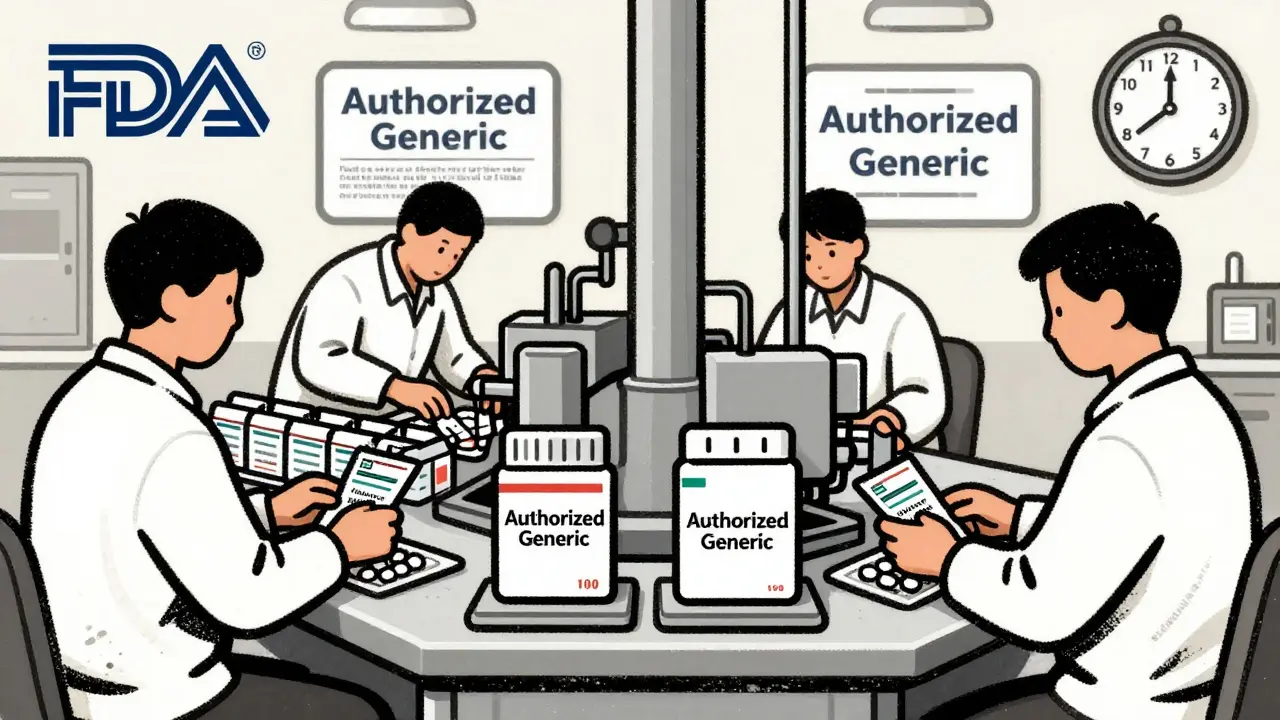
Traditional generics must file an Abbreviated New Drug Application (ANDA), prove they’re bioequivalent, and wait for FDA review. Authorized generics skip that. They’re already made in the same factory, on the same line, under the same quality standards as the brand. No extra testing. No extra paperwork. Just lower costs.
Why Do Authorized Generics Cost Less?
The answer isn’t complicated: no marketing costs.
Brand-name drugs spend billions on TV ads, doctor promotions, patient support programs, and direct-to-consumer campaigns. That’s all gone with an authorized generic. There’s no need to convince people the drug works-it already has a proven track record. The brand’s reputation is already built.
Also, no patent protection means no monopoly pricing. Once a drug’s patent expires, competition is supposed to drive prices down. But in the U.S., the first generic company to file gets 180 days of exclusive rights to sell the generic version. During that time, they often set prices high-sometimes as much as 80% of the brand price-because there’s no competition yet.
That’s where authorized generics change the game.
When a brand company launches its own authorized generic at the same time as the first generic entrant, it creates instant competition. The first generic can’t charge premium prices anymore. If they do, the authorized generic undercuts them. And because the authorized generic is made by the same company that made the brand, it’s often priced 4% to 8% below the original brand drug.
Real data backs this up. The Federal Trade Commission found that when an authorized generic enters the market alongside the first generic, retail prices drop by 4% to 8%, and wholesale prices drop by 7% to 14%. In some cases, especially with high-cost drugs like those for heart disease or mental health, the price drop was even sharper-up to 18% off the invoice price pharmacies pay.
How Do Authorized Generics Compare to Traditional Generics?
Many people assume all generics are the same. They’re not.
Traditional generics come from third-party manufacturers that have gone through the ANDA process. They’re often produced in different facilities, sometimes overseas, and may have slight differences in inactive ingredients (like fillers or coatings). While they’re required to be bioequivalent, they’re not always made in the same plant as the brand.
Authorized generics? They’re the same pill. Same factory. Same batch process. Just a different label.
Here’s a quick comparison:
| Feature | Brand-Name Drug | Authorized Generic | Traditional Generic |
|---|---|---|---|
| Active Ingredient | Identical | Identical | Identical |
| Manufacturing Facility | Brand’s own plant | Same as brand | Third-party facility |
| Approval Process | New Drug Application (NDA) | Uses brand’s NDA | Abbreviated NDA (ANDA) |
| Price Compared to Brand | $100 | $92-$96 | $20-$40 |
| Market Entry Timing | Patent-protected | At or right after patent expiry | After 180-day exclusivity |
Notice something? The authorized generic isn’t the cheapest. But it’s the closest to the brand in every way-except price. And that’s the point.
Real-World Examples That Changed the Game
In 2016, Mylan faced public outrage after raising the price of the EpiPen from $100 to $600. Within months, they launched an authorized generic version for $300. That wasn’t charity-it was damage control. But it worked. The authorized generic gave consumers a cheaper option, and it forced competitors to lower their prices too.
Another example: Gilead Sciences, the maker of Harvoni and Epclusa (hepatitis C drugs), launched authorized generics before their patents even expired. Why? Because they knew other companies were preparing to enter the market. By launching their own version early, they captured a chunk of the future generic market and kept prices from spiraling even higher.
These aren’t rare cases. According to IQVIA, 67% of brand-name drug manufacturers have used authorized generics for at least one product since 2010. The strategy isn’t just common-it’s standard.
Why Your Pharmacy Might Not Tell You About Them
Here’s the catch: authorized generics aren’t always easy to find.
Pharmacy Benefit Managers (PBMs) control which drugs go on insurance formularies. Some PBMs place the authorized generic on the same tier as the brand-name drug. That means you pay the same copay for both. So if your plan doesn’t push the authorized generic as the preferred option, you might never know it exists.
But if your PBM puts the authorized generic on the same tier as traditional generics, you’ll pay the lowest price possible-often less than $10 for a 30-day supply.
One 2022 study of 1.2 million Medicare Part D patients found that when authorized generics were properly positioned, medication adherence improved by 8.2 percentage points. People didn’t skip doses because they couldn’t afford them.
Ask your pharmacist: "Is there an authorized generic for this drug?" If they don’t know, ask your insurance provider. Sometimes, it takes a little digging to get the best price.
What’s Next for Authorized Generics?
The Inflation Reduction Act of 2023 capped out-of-pocket drug costs for Medicare beneficiaries at $2,000 per year. That’s good news-but it also means insurers and PBMs are under more pressure to find the cheapest options.
Authorized generics are now more important than ever. With 137 active authorized generics listed by the FDA as of October 2023, and more coming every quarter, this strategy isn’t fading. It’s growing.
Industry analysts predict authorized generics will continue to capture 15% to 25% of the generic market share through 2030. That’s billions in savings for patients, and billions less spent by insurers.
But there’s a dark side. Some critics argue that brand companies use authorized generics as a tactic to delay true competition. By launching their own generic, they can settle patent lawsuits and keep other manufacturers out longer. The FTC has raised concerns about this. But even if the strategy is sometimes used to slow competition, the result is still lower prices-at least in the short term.
Bottom line: authorized generics aren’t magic. But they’re real. And they’re saving people money right now.
How to Get the Best Price on Your Prescription
- Always ask your pharmacist: "Is there an authorized generic for this drug?"
- Check your insurance formulary-see if the authorized generic is listed as preferred.
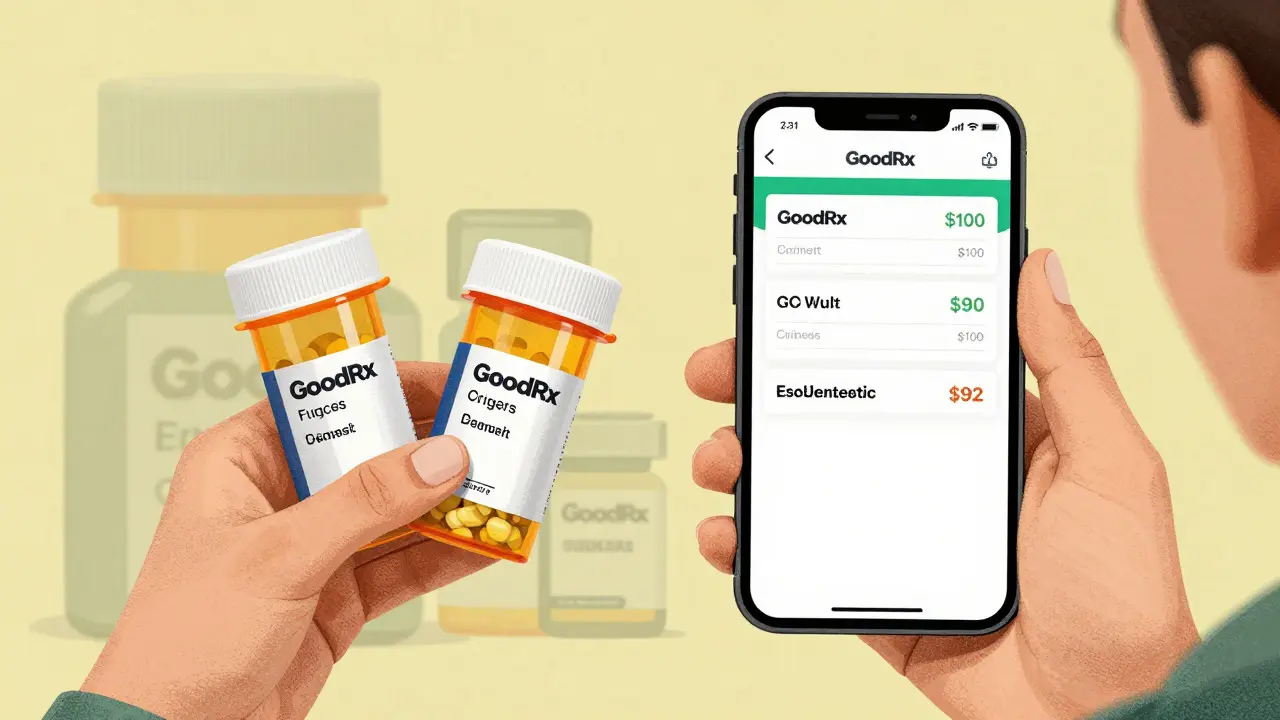
- Use a price comparison app like GoodRx or RxSaver to compare brand, authorized generic, and traditional generic prices.
- If your plan doesn’t cover the authorized generic, ask if you can switch to it for a lower copay.
- Don’t assume the brand is better. Authorized generics are identical in every way that matters.
You don’t need to be a pharmacy expert to save money. You just need to ask the right questions.
Are authorized generics as safe as brand-name drugs?
Yes. Authorized generics are made in the same facility, with the same ingredients, and under the same quality controls as the brand-name drug. The FDA requires them to be identical in dosage, strength, safety, and performance. The only difference is the label.
Why don’t all drugs have authorized generics?
Brand companies choose whether to launch an authorized generic. It’s a business decision. They may skip it if they think the market won’t support it, or if they want to protect their brand image. Some drugs have too few patients or too little profit to justify the effort.
Can I switch from a brand to an authorized generic without issues?
Absolutely. Since they’re chemically identical, switching is safe and common. Many patients switch without even noticing a difference. Your doctor doesn’t need to approve the switch unless your insurance requires it.
Do authorized generics work faster than traditional generics?
No, they don’t work faster. But they enter the market faster. Because they use the original brand’s approval, they can launch immediately when the patent expires-unlike traditional generics, which can take months or even years to get approved.
Are authorized generics covered by insurance?
Yes, if they’re on your plan’s formulary. Many insurers favor them because they’re cheaper than the brand. But some still place them on the same tier as the brand, which means you pay the same copay. Always check your plan details or ask your pharmacist.
If you’re paying full price for a brand-name drug, you’re likely overpaying. Authorized generics exist to change that. And they’re working.

15 Comments
Michelle Jackson
March 18 2026So let me get this straight - the same exact pill, same factory, same everything, just with a different label, and suddenly it’s 50% cheaper? And we’re supposed to be impressed? This isn’t innovation, it’s just capitalism with a smiley face. Pharma companies have been playing this game for decades. They patent something, milk it dry, then slap a generic label on the same bottle and call it a win. Meanwhile, people still can’t afford insulin. Don’t act like this is a victory.
Suchi G.
March 19 2026I come from a country where even the most basic medications are out of reach for most people, and I’ve seen how drug pricing works in both India and the US. In India, generics are everywhere, but they’re often made in different facilities, with different fillers, and sometimes the quality is hit or miss. But here, an authorized generic? It’s like finding a diamond in the rough - same source, same purity, just no marketing overhead. It’s not perfect, but it’s the closest thing to fairness we’ve seen in this broken system. I wish more people knew this existed.
Paul Ratliff
March 20 2026Just asked my pharmacist about my blood pressure med. Turns out the authorized generic is $8. Brand? $92. I switched. No difference. Zero. Now I’m wondering why I paid $92 for 5 years. 🤦♂️
SNEHA GUPTA
March 20 2026This is a fascinating case study in how value is constructed. The pill doesn’t change. The chemistry doesn’t change. The manufacturing doesn’t change. But the price? It collapses because we’ve assigned meaning to a logo, a name, a brand story. We’ve been trained to believe that the wrapper matters more than the contents. And yet, when we remove the branding, the price drops - not because the product is cheaper to make, but because we stop paying for the illusion. It’s almost philosophical. What are we really buying? The medicine? Or the myth?
Gaurav Kumar
March 21 2026US is so soft. In India, we’ve had generics for decades. Real generics. Not this watered-down corporate trick. You think this is saving money? Wait till you see what happens when real generic manufacturers enter the market - prices drop 90%. This is just pharma playing chess while the rest of us play checkers. 😎
David Robinson
March 21 2026Let’s be real - authorized generics are a trap. They’re not here to help you. They’re here to keep you from switching to a real generic. The brand company launches its own version to block competitors, then quietly raises prices on the brand to make up the difference. It’s a monopoly with a side of ‘we care.’ And don’t get me started on PBMs - they’re the real villains. They get kickbacks from brands. They bury authorized generics in tier 2. They’re the reason you don’t know this exists. Stop praising pharma. Start blaming the middlemen.
Jeremy Van Veelen
March 21 2026Imagine this: you spend 15 years and $2 billion developing a drug. You get your patent. You save lives. Then, one day, you’re told: ‘Hey, just make the same pill, put a different label on it, and sell it for half price.’ And you do it. Why? Because you’re not evil - you’re strategic. You’re not a villain, you’re a businessman. And if you don’t do this, someone else will undercut you. So you do it - and suddenly, thousands of people who couldn’t afford it before can. Is it perfect? No. But it’s better than the alternative. Let’s not turn a pragmatic business move into a moral crusade.
Laura Gabel
March 23 2026My mom switched to the authorized generic for her cholesterol med. Same pill. Half the cost. She’s been on it for a year. No side effects. No issues. Why are we making this complicated? Just ask. Switch. Save. Done.
jerome Reverdy
March 25 2026From a market dynamics standpoint, this is textbook predatory pricing with a public relations veneer. The brand owner leverages their existing NDA, manufacturing infrastructure, and regulatory goodwill to flood the market with a near-identical product at a lower price point - effectively preempting independent generics from gaining traction. It’s not altruism, it’s strategic market capture. But here’s the kicker: even if the motive is self-serving, the outcome is still a net positive for consumers. The FTC data shows real price erosion. So yes, it’s a corporate tactic - but it’s one that’s working in favor of patients right now. We should be leveraging this mechanism, not vilifying it.
Andrew Mamone
March 27 2026Just switched my ADHD med to the authorized generic. Same pill. Same effects. $12 instead of $110. 🙌 Thank you, capitalism, for finally doing something useful.
MALYN RICABLANCA
March 28 2026Oh my GOD. I JUST FOUND OUT ABOUT THIS. I’ve been paying $147 a month for my antidepressant. I asked my pharmacist. The authorized generic? $11. I cried. I actually cried. I’ve been struggling for years. I thought I was being ‘responsible’ by sticking with the brand. I wasn’t - I was being exploited. This isn’t just about money. This is about dignity. This is about being able to breathe without worrying about your next pill. I’m telling everyone. Everyone. This changes everything.
gemeika hernandez
March 29 2026My sister has diabetes. She’s on metformin. Brand: $80. Generic: $15. Authorized generic: $10. She switched. She’s fine. No problems. Why does anyone overpay? It’s not magic. It’s just a pill. Stop being scared of the word ‘generic.’
Nicole Blain
March 31 2026Just checked my Rx. Authorized generic for my anxiety med: $7. Brand: $95. I switched. No side effects. Just… cheaper. 🤷♀️
Kathy Underhill
March 31 2026The authorized generic model is one of the few instances where the pharmaceutical industry’s structural incentives align with patient outcomes. It’s not perfect, but it’s a rare example of market pressure producing a net benefit without regulatory intervention. The key is transparency - if PBMs and insurers consistently place these on preferred tiers, adherence improves and costs fall. The system isn’t broken - it’s just misaligned. Fix the incentives, not the pills.
David Robinson
March 31 2026You think that’s bad? Wait till you see what happens when the authorized generic expires and the real generics come in. Prices drop another 70%. The whole system is designed to keep you confused until it’s too late. They want you to think this is the best you can get. It’s not.