Home Hemodialysis: Schedules, Training, and Outcomes
For someone living with end-stage renal disease, the idea of doing dialysis at home isn’t just convenient-it can be life-changing. Home hemodialysis lets you take control of your treatment, not the other way around. No more rigid clinic schedules, no more three-times-a-week commutes, no more feeling like your life is on hold. But it’s not as simple as plugging in a machine. Success depends on training, support, and choosing the right schedule for your body and lifestyle.
What Home Hemodialysis Really Means
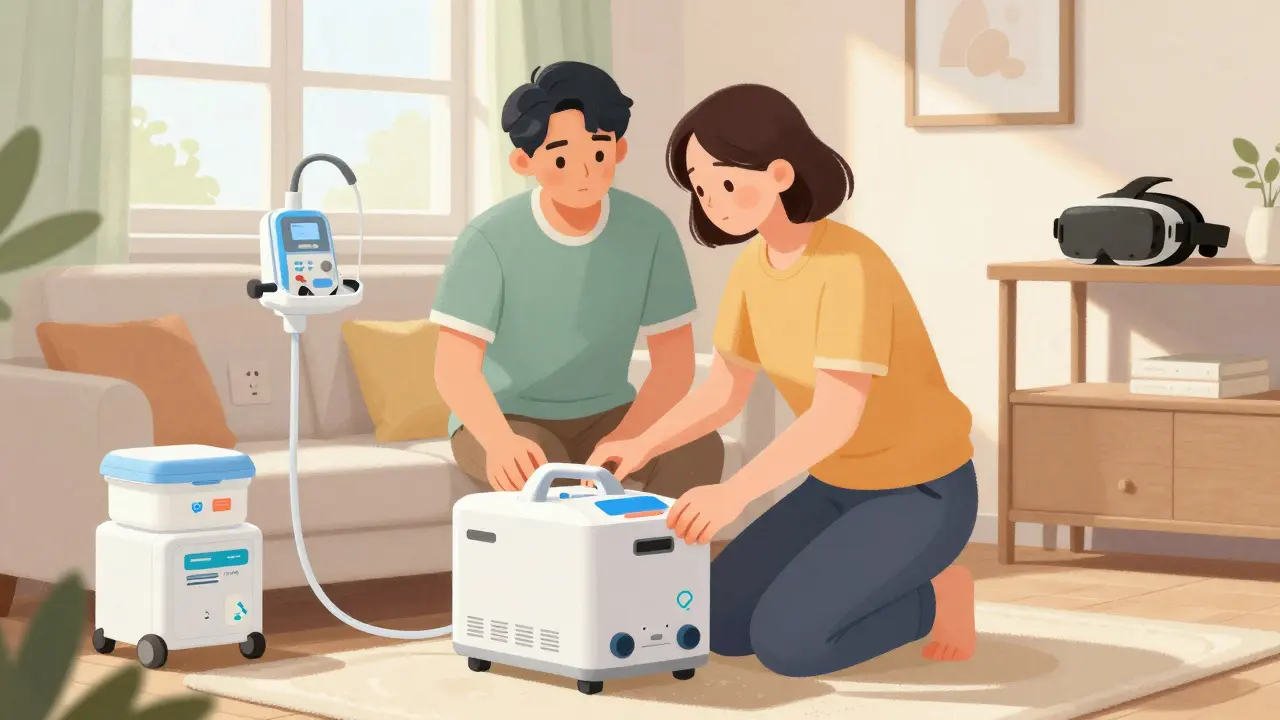
Home hemodialysis (HHD) is when you or your care partner perform dialysis treatments in your own home using a machine that filters your blood. Unlike in-center dialysis, where you’re tied to a clinic’s hours, HHD gives you flexibility. You can dialyze in the morning, late at night, or even while you sleep. The machines are smaller than they used to be, and many are designed for home use. But this freedom comes with responsibility. You’re not just a patient-you’re part of the medical team.
The technology has come a long way since the 1960s. Today’s systems, like the NxStage System One or Fresenius machines, are safer, quieter, and easier to use. But they still require a dedicated space-about 6 feet by 6 feet-for the machine, water system, and supplies. You’ll need a dedicated electrical circuit (120-volt, 20-amp), a reliable water line, and a drain. Water quality matters too. Every home dialysis program must meet strict AAMI standards, with monthly water and dialysate testing to prevent infections.
Training Isn’t Just a Checklist
Training for home hemodialysis isn’t a one-size-fits-all course. It can take anywhere from three to twelve weeks, depending on your experience, physical ability, and whether you’re learning self-needling. Most programs require 20 to 30 supervised sessions before you’re cleared to go solo. The Maryland Department of Health and DaVita both say you’ll need to pass written and hands-on tests. You can’t just watch a video and start.
You’ll learn how to:
- Set up the machine and connect tubing properly
- Perform sterile technique to avoid infections
- Insert needles into your vascular access (fistula or graft) - this is the hardest part for many
- Monitor your blood pressure and fluid removal
- Handle alarms and emergencies like low blood pressure or air in the line
- Order and store supplies without running out
- Keep accurate treatment logs
Self-needling-inserting your own needles-is a major milestone. About 45% of patients struggle with it at first. Some clinics now use virtual reality simulators to practice before touching skin. At the University of Washington, this approach boosted competency rates from 78% to 92%. If you’re nervous, ask if your center offers simulator training. It makes a difference.
And here’s something many don’t tell you: your care partner trains with you. They learn everything you do. In fact, most programs require a partner to be present during every treatment. You cannot dialyze alone. This isn’t just a safety rule-it’s a legal requirement in many states. If you don’t have someone reliable to help, home dialysis may not be an option. About 30% of potential candidates are turned away simply because they lack a care partner.
Your Schedule, Your Rules
There are three main home hemodialysis schedules, each with different effects on your health.
Conventional home hemodialysis is three times a week for three to four hours-same as in-center, but you pick the time. It’s the easiest transition if you’re used to clinic dialysis. But it doesn’t offer the same benefits as more frequent treatments.
Short daily hemodialysis means five to seven sessions a week, each lasting two to three hours. This is where the real clinical advantages kick in. A 2021 study in the Clinical Journal of the American Society of Nephrology found patients on this schedule had a 28% lower risk of death compared to those on conventional in-center dialysis. Why? Because your body isn’t overwhelmed with fluid and toxins between treatments. Blood pressure improves. Heart strain decreases. You feel less tired.
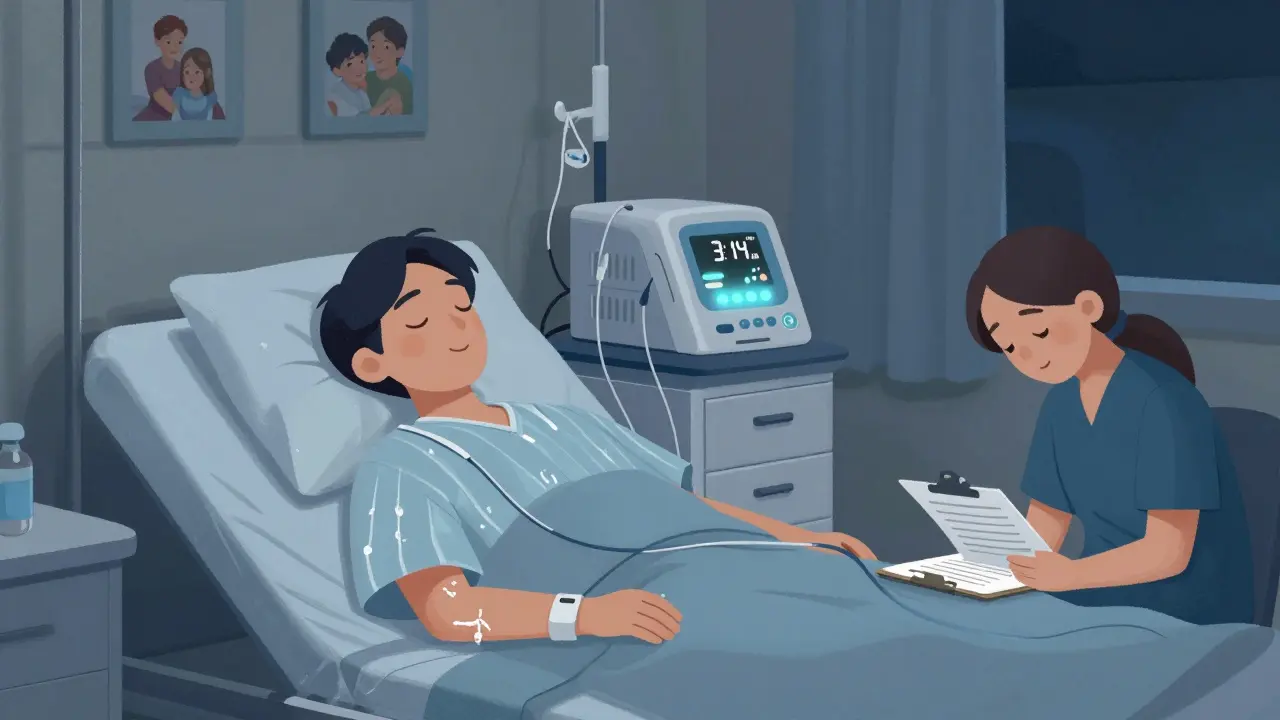
Nocturnal home hemodialysis happens while you sleep. Six to ten hours, three to seven nights a week. It’s slow, gentle, and incredibly effective. One study showed patients on nocturnal dialysis had 42% lower phosphate levels than those on standard treatment. That means fewer phosphate binders-sometimes three fewer pills a day. Many patients say they feel more like themselves, with better sleep, more energy, and fewer dietary restrictions.
There’s no “best” schedule. It depends on your body, your job, your family, and your goals. If you want to travel, short daily might be easier than nocturnal. If you’re tired of feeling wiped out, nocturnal could be the answer. Talk to your nephrologist about your lifestyle, not just your lab numbers.
Outcomes: More Than Just Numbers
Home hemodialysis isn’t just about living longer-it’s about living better. A 2019 review in the American Journal of Kidney Diseases found home dialysis patients scored 37% higher on quality-of-life surveys than those in clinics. They reported less anxiety, better sleep, and more control over their daily routines.
Survival data from the U.S. Renal Data System shows home hemodialysis patients have a 15-20% lower mortality rate than in-center patients. But here’s the catch: that advantage is strongest with frequent treatments. Patients on short daily or nocturnal schedules see the biggest gains. Conventional home dialysis offers only a small survival edge over clinic dialysis.
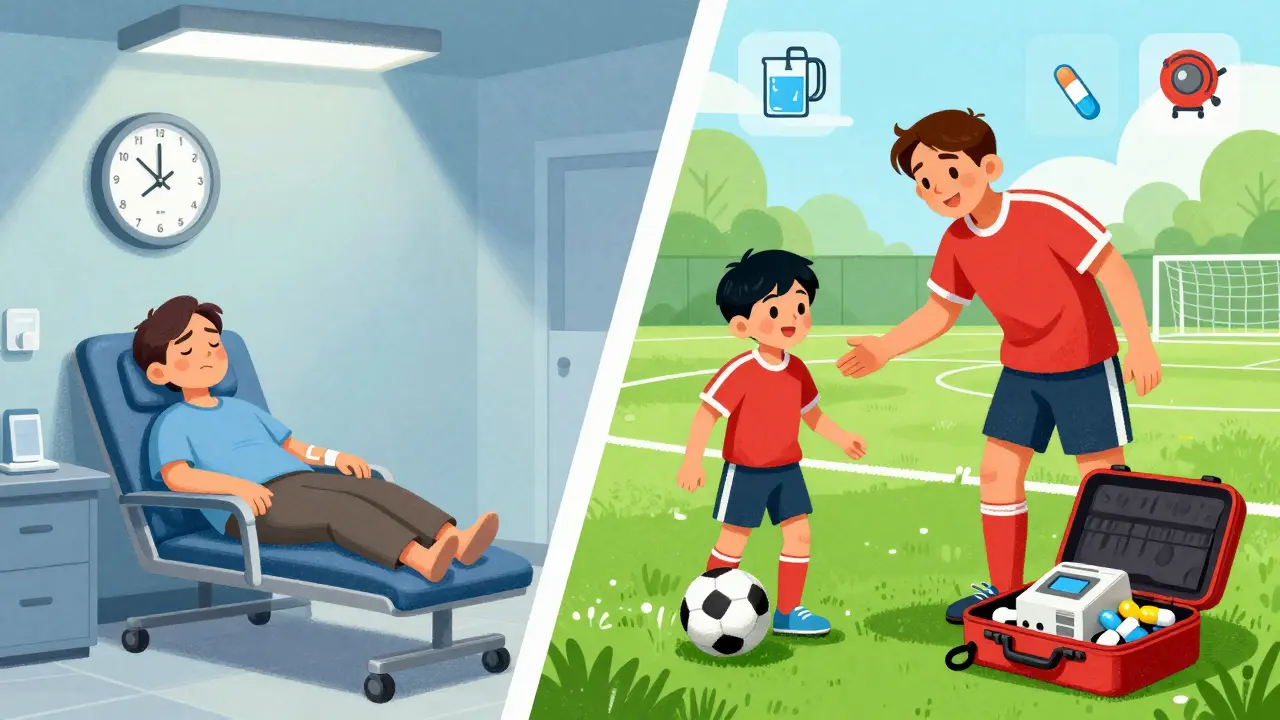
And it’s not just physical. People who dialyze at home save an average of 10 hours a week-not commuting, not waiting, not sitting in a clinic chair. One Reddit user wrote: “I went from missing my kid’s soccer games to coaching her team. That’s not a medical stat. That’s life.”
But it’s not all smooth sailing. Machine alarms go off. Supplies run out. Care partners get tired. In a 2022 survey of 85 home dialysis users, 67% said alarms were stressful, 58% struggled with supply management, and 52% felt burdened by their partner’s role. Relationships can strain under the pressure. That’s why psychological readiness matters as much as technical skill. As Dr. Steven Weisbord from the University of Pittsburgh says, “The most critical factor isn’t how well you can needle-it’s whether you have the support to handle the stress.”
Barriers and Real-World Challenges
Despite the benefits, home hemodialysis remains rare. Only 12% of U.S. dialysis patients use it. Why? Because most centers don’t offer it. The National Institute of Diabetes and Digestive and Kidney Diseases reports that only 12% of dialysis facilities provide home training. Even if you want it, you might have to drive hours to find a program.
Reimbursement is another hurdle. Medicare pays for up to 25 training sessions for home hemodialysis, but staff time is expensive. Many clinics say they can’t afford the staff to train patients properly. A 2022 survey found 71% of nephrologists cite lack of training capacity as the biggest barrier.
And then there’s the equipment. Standard machines aren’t portable. If you want to travel, you have to plan ahead-find a clinic at your destination, arrange for supplies to be shipped, and hope everything works. Portable systems like the NxStage System One make travel possible, but they’re not available everywhere. And they still require water and electricity.
The good news? Change is coming. The 2021 Advancing American Kidney Health initiative aimed for 80% of new ESRD patients to start with home dialysis or transplant by 2025. We’re not there yet-but the tide is turning. New FDA-approved devices like the WavelinQ endoAVF system make access easier. And starting in 2025, Medicare will tie payments to patient outcomes, not just treatment location. That means centers will be incentivized to push home dialysis harder than ever.
Is It Right for You?
Home hemodialysis isn’t for everyone. But if you’re tired of the clinic routine, if you want more energy, more freedom, and more control, it’s worth exploring. Ask yourself:
- Do I have a reliable care partner who’s willing to learn and help?
- Can I set aside space in my home for equipment and supplies?
- Am I comfortable with needles and troubleshooting alarms?
- Do I want to dialyze more often-even if it’s just for 30 minutes extra each day?
There’s no shame in choosing in-center dialysis. But if you’re eligible, don’t let fear or misinformation hold you back. Talk to your nephrologist. Ask about training programs. Visit a home dialysis center. See the machines. Meet someone who’s been doing it for five years. You might be surprised by how much better life can feel when your treatment fits your life-not the other way around.
Can I do home hemodialysis alone?
No, most programs require a trained care partner to be present during every treatment. Solo home hemodialysis is possible with special equipment and additional training, but it’s rare and not recommended for most patients. Safety is the top priority, and having someone else there reduces the risk of serious complications.
How long does home hemodialysis training take?
Training typically lasts between three and twelve weeks, with most patients completing it in four to six weeks. The length depends on your pace, whether you’re learning self-needling, and your center’s protocol. Some programs use virtual reality simulators to speed up the learning process and improve confidence.
What’s the difference between short daily and nocturnal hemodialysis?
Short daily hemodialysis means five to seven treatments per week, each lasting two to three hours during the day. Nocturnal hemodialysis happens while you sleep, usually three to seven nights a week for six to ten hours per session. Nocturnal is gentler and removes more toxins, leading to better phosphate control and less need for medications. Short daily is easier to fit into a daytime schedule and may be better for travel.
Does Medicare cover home hemodialysis training?
Yes, Medicare covers up to 25 training sessions for home hemodialysis, which is more than the 15 sessions covered for peritoneal dialysis. Training includes both patient and care partner instruction, and all sessions must be supervised by certified staff at a Medicare-certified home dialysis program.
What supplies do I need for home hemodialysis?
You’ll need dialysis machines, dialysate solution, tubing sets, needles or catheters, disinfectants, gloves, alcohol wipes, and a water purification system. You’ll also need storage space for supplies and a dedicated drain line. Most centers provide a supply delivery schedule, but you must monitor inventory to avoid running out.
Can I travel with home hemodialysis equipment?
It depends on your machine. Standard home hemodialysis machines are not portable. But portable systems like the NxStage System One allow travel with proper planning. You’ll need to arrange for dialysis at clinics along your route or bring your machine and ensure access to clean water and electricity at your destination.
What happens if I have a problem during treatment?
Every home hemodialysis patient is trained to recognize and respond to common issues like low blood pressure, air in the line, or machine alarms. You’ll have a 24/7 emergency contact number from your dialysis center. In serious cases, you may need to call 911 or go to the nearest emergency room. Most complications can be handled at home with training-but knowing when to get help is critical.




15 Comments
Amanda Eichstaedt
January 11 2026Home dialysis changed everything for me. I used to miss my daughter’s recitals because I was stuck in a chair for four hours. Now I do my treatments at 10 p.m. while watching Netflix. I sleep better, I eat what I want, and I actually feel human again. It’s not easy, but it’s worth every minute of training.
Alex Fortwengler
January 12 2026They’re lying about the survival stats. Big Pharma doesn’t want you doing this at home-too cheap, too hard to control. They push clinic dialysis because they make bank off the overtime, the meds, the ‘emergency visits.’ You think they care about your quality of life? Nah. They care about your insurance billing code.
jordan shiyangeni
January 14 2026It’s profoundly irresponsible to suggest that home hemodialysis is a viable option for the average patient without acknowledging the systemic collapse of caregiver support networks in this country. The expectation that a spouse, sibling, or friend will willingly assume the role of medical technician-without compensation, without training subsidies, without psychological support-is not merely unrealistic; it is a moral failure of the healthcare industrial complex. The burden of care has been externalized onto the most vulnerable, and the narrative of ‘empowerment’ is just a euphemism for abandonment.
Abner San Diego
January 14 2026Why are we even talking about this? We’ve got people in this country who can’t afford insulin, and we’re telling them to set up a dialysis lab in their garage? This isn’t freedom-it’s austerity dressed up as innovation. And don’t get me started on the ‘care partner’ requirement. What if your partner works two jobs? What if you’re single? What if you’re homeless? This isn’t healthcare. It’s a luxury for people who still have a home to begin with.
Eileen Reilly
January 15 2026ok but like the alarms?? like every single night?? my bf got so stressed he started sleeping on the couch. and then he got mad at me for needing to live. also the supplies? i had to order 3x a month and one time they sent the wrong thing and i had to call 5 people and one guy was like ‘we’ll ship it next week’-next week?? i had to go to the clinic and pay $150 to get a set. this is not freedom. this is a full time job with no pay.
Cecelia Alta
January 15 2026Ugh. I’ve seen this story before. Someone posts about how ‘life-changing’ home dialysis is, and then the comments are full of people pretending it’s not a nightmare. My mom did it for two years. She had three strokes from low BP during treatments. The care partner? My dad. He had a heart attack from stress. They lost their house because they couldn’t afford the water bill from the purification system. And now? They’re back in center dialysis. Because the ‘freedom’ was a lie. The machine doesn’t care if you’re tired. The alarm doesn’t pause for grief. And the ‘better outcomes’? Only if you’re young, rich, and have a nurse for a spouse.
laura manning
January 16 2026It is imperative to note that the statistical advantages associated with home hemodialysis are contingent upon strict adherence to AAMI water quality standards, which are not uniformly enforced across all regional programs. Moreover, the reported 15–20% reduction in mortality is derived from longitudinal cohort studies that exhibit significant selection bias-patients who pursue home dialysis are, by necessity, more medically stable, cognitively intact, and socioeconomically privileged. To generalize these findings as universally applicable is both statistically unsound and ethically hazardous.
Lawrence Jung
January 17 2026They say you’re part of the medical team but who’s paying the team? Who’s answering the 3 a.m. alarm? Who’s cleaning the lines after you pass out from low BP? You’re not a team member. You’re a volunteer for a broken system. And they call it empowerment? It’s just guilt wrapped in a manual.
Alice Elanora Shepherd
January 17 2026Thank you for sharing this thoughtful overview. I’ve worked with several home dialysis patients in the UK, and while the challenges are real, the quality-of-life improvements are undeniable when support systems are in place. One key tip: many patients find it helpful to create a printed checklist for each session-simple things like ‘check water pressure’, ‘verify dialysate expiry’, and ‘confirm partner is awake’ reduce anxiety significantly. Also, connecting with local patient groups makes the isolation much more bearable.
Christina Widodo
January 19 2026Has anyone tried the new portable machines for international travel? I’m planning a trip to Japan next year and I’m terrified I won’t be able to find a clinic that uses NxStage. Does anyone have experience with shipping supplies overseas? I’m worried about customs.
Jennifer Phelps
January 19 2026self needling is the worst i still cry every time i do it and my partner says he gets nauseous watching but we dont have a choice so we do it anyway
beth cordell
January 21 2026just started home dialysis 3 weeks ago 🥹 the first time i did it alone with my partner (he’s learning too) we both cried and hugged after. it’s scary but it’s mine now. also i got a little plant for my dialysis corner 🌱 it’s my little victory garden
Lauren Warner
January 22 2026Everyone talks about how ‘empowering’ this is like it’s some kind of yoga retreat. It’s not. It’s a 24/7 medical emergency you have to manage while pretending you’re normal. The ‘freedom’ is just the illusion of control. You’re still trapped. Just now you’re trapped in your own living room with a machine that beeps at 2 a.m. and your partner who’s slowly turning into a resentful ghost.
Craig Wright
January 23 2026As a British citizen, I find it deeply concerning that American healthcare has devolved into a system where patients must become technicians to survive. In the NHS, we provide trained nurses for home dialysis. We do not expect families to become medical staff. This is not innovation-it is privatized neglect dressed in motivational slogans.
Lelia Battle
January 25 2026Thank you for writing this with such care. I’ve spent years working in nephrology, and I’ve seen how easily the narrative of ‘patient empowerment’ can obscure the real human cost. The real triumph isn’t in the statistics-it’s in the quiet moments: a patient who sleeps through the night for the first time in a year, a partner who learns to laugh again, a child who gets to see their parent smile before bedtime. Those are the outcomes that matter. Not the numbers. The moments.