Cancer Treatment: What Works, What to Watch For, and How Medications Play a Role
When it comes to cancer treatment, a range of medical approaches used to destroy or control cancer cells, including chemotherapy, radiation, surgery, and newer biological therapies. Also known as oncology therapy, it's not just about killing tumors—it's about managing how your body handles the drugs that do the work. Every patient’s journey is different, but the common thread? Medications. Whether it’s chemo, targeted therapy, or immunotherapy, drugs are at the heart of most modern cancer care—and they don’t come without risks.
Take chemotherapy, a systemic treatment using drugs to kill rapidly dividing cells, often used for aggressive cancers. It’s powerful, but it doesn’t distinguish between cancer cells and healthy ones. That’s why side effects like nausea, fatigue, and low blood counts show up. Then there’s targeted therapy, a type of treatment that blocks specific molecules involved in tumor growth, often with fewer side effects than chemo. These drugs are smarter—they go after cancer’s weak spots, like mutated genes or proteins. But they only work if your cancer has those exact targets. And immunotherapy, a treatment that helps your immune system recognize and attack cancer cells, can lead to long-lasting results… or serious autoimmune reactions. It’s not magic. It’s biology. And biology doesn’t always play nice.
Here’s the thing no one always tells you: cancer drugs don’t exist in a vacuum. They interact with everything else you’re taking. A blood thinner for atrial fibrillation? A stomach acid reducer for heartburn? A sleep aid or antidepressant? All of them can change how your body processes chemo or targeted drugs. Some make them less effective. Others make side effects worse. That’s why knowing your full medication list matters—not just to your oncologist, but to every doctor you see. One wrong combo can turn a treatment plan into a crisis.
You’ll also find that cancer treatment doesn’t just affect your body—it changes how you feel, think, and live. Mood swings from steroids. Constipation from pain meds. Sleep problems from anxiety. These aren’t side notes. They’re part of the treatment. And they’re covered in real patient experiences across the posts below—like how prednisone can trigger severe mood changes, or how kidney disease alters drug clearance, making standard doses dangerous. This isn’t theoretical. These are daily realities for people in treatment.
What you’ll find here isn’t a textbook. It’s a practical look at what really happens when cancer treatment meets real life. From how drug interactions can sneak up on you, to what to watch for when bleeding risks rise, to how common meds like PPIs or statins can interfere with your care. These aren’t abstract concepts. They’re the hidden details that make the difference between managing treatment and being overwhelmed by it.
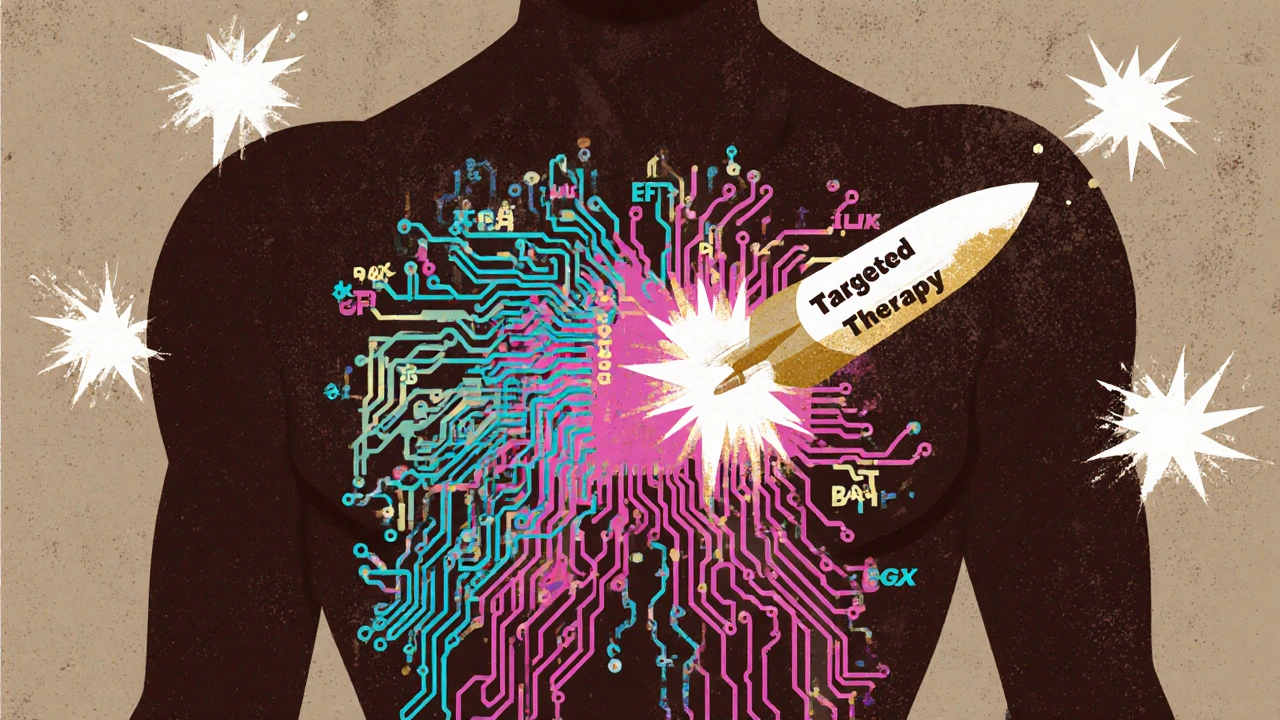
Targeted therapy uses tumor genetics to treat cancer more precisely than chemotherapy. Learn how genomic testing identifies mutations, which drugs work best, and why access remains unequal despite major advances.
Continue Reading