CPAP Mask Leaks: Fix Common Issues and Improve Sleep Therapy
When your CPAP mask leaks, a malfunction in the seal between your face and the mask that allows pressurized air to escape during sleep therapy. Also known as CPAP seal failure, it’s one of the top reasons people stop using their machine—even when it’s working perfectly.
Leaking air doesn’t just make noise and wake you up. It drops the pressure your therapy needs to keep your airway open, which means your sleep apnea isn’t being treated. You might wake up tired, dry-mouthed, or with a headache, thinking the machine isn’t working. But often, the problem isn’t the device—it’s the fit. The right mask type, proper headgear tension, and facial changes like weight gain or shaving habits can all break the seal. Even a small tear or worn-out cushion can turn a quiet night into a frustrating one.
People often rush to buy a new mask, but most leaks come down to three fixable issues: improper sizing, incorrect strap tension, or a mask that doesn’t match your face shape. A nasal pillow might leak if you move a lot, while a full-face mask might leak if your chin drops during sleep. The CPAP therapy works best when the mask is snug but not tight—like a gentle hug, not a clamp. Try cleaning your mask daily; oil from your skin builds up and breaks down silicone seals over time. Check for cracks around the cushion or headgear that’s lost its stretch. And don’t ignore your sleeping position—if you sleep on your side, a mask designed for back sleepers will likely leak.
Some leaks are normal. A small amount of air escaping from the vent holes is expected—it’s how the machine removes carbon dioxide. But if you hear loud hissing, see the mask puffing away from your face, or wake up with red marks and dry eyes, that’s a real problem. Try adjusting the headgear straps evenly—don’t just tighten one side. Use a humidifier to reduce dryness that makes your skin pull away from the mask. And if you’ve gained or lost weight, your mask might no longer fit. Many manufacturers offer sizing guides or fit kits with multiple cushion sizes—you don’t need to guess.
What you’ll find below are real solutions from people who’ve been there. We’ve pulled together posts that cover how to diagnose leaks fast, which mask types work best for side sleepers, why some people leak more after surgery, how to test your seal without a technician, and what to do when your mask fits but still leaks. You’ll also see how CPAP pressure settings interact with leaks, why some people need different masks for different nights, and how to tell if your machine’s software is hiding a bigger issue. No fluff. Just what works.
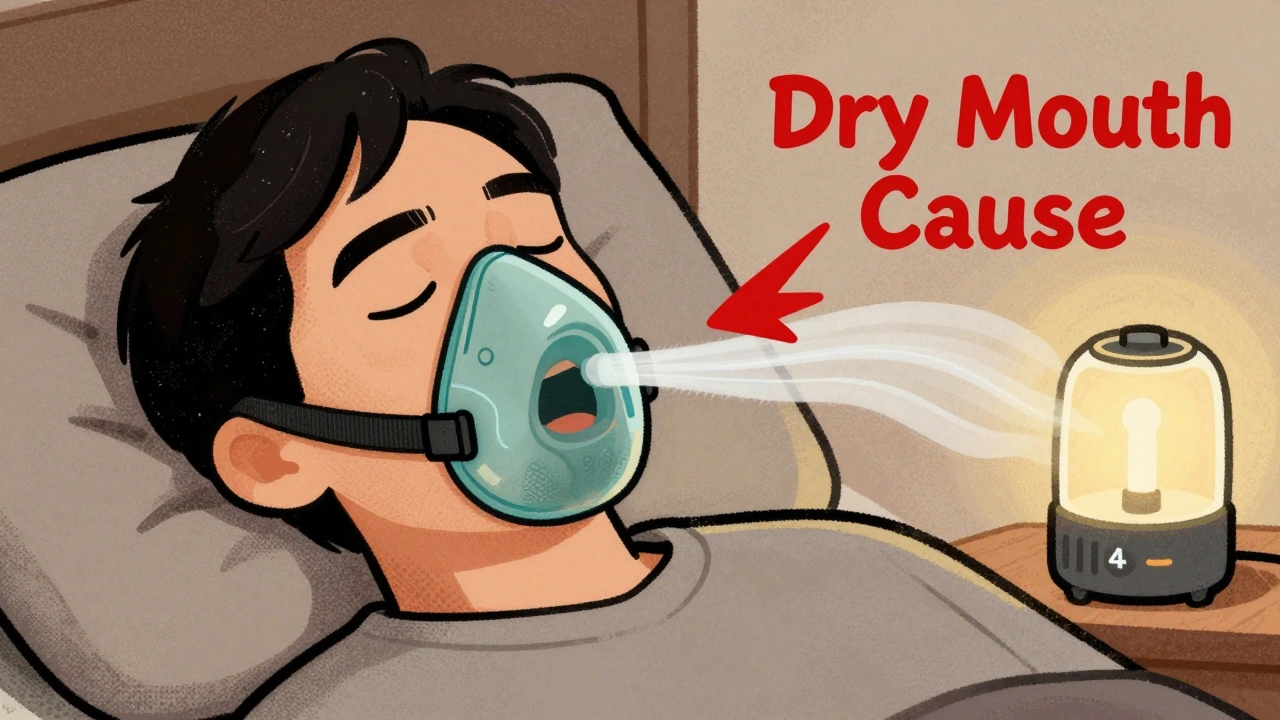
Fix dry mouth, mask leaks, and pressure problems with CPAP therapy. Learn simple, proven solutions backed by sleep specialists and user data to improve comfort and adherence.
Continue Reading