Precision Medicine: Personalized Treatments Based on Your Genetics and Health Data
When you hear precision medicine, a healthcare approach that customizes treatment based on individual differences in genes, environment, and lifestyle. Also known as personalized medicine, it moves away from the one-size-fits-all model and asks: What works for you, not just the average patient? This isn’t science fiction — it’s happening in clinics today, especially when doctors choose drugs based on your DNA.
Pharmacogenomics, the study of how genes affect how your body responds to drugs, is the engine behind precision medicine. For example, some people metabolize blood thinners like warfarin or apixaban dangerously slow because of a gene variant — giving them the standard dose could cause severe bleeding. Others clear the drug too fast, making it useless. That’s why labs now test for these variants before prescribing. Targeted therapy, treatments designed to attack specific molecules in cancer or other diseases works the same way: if your tumor has a certain mutation, a drug is picked that locks onto it like a key. No guesswork. No trial and error.
But precision medicine isn’t just about genes. It also uses your health history, diet, even your gut bacteria to predict how you’ll react to a drug. Take levothyroxine — its absorption drops if you’re on acid reflux meds like PPIs. Or rosuvastatin, which can raise blood sugar in some people with diabetes. These aren’t random side effects — they’re patterns tied to your biology. That’s why doctors now look at more than just symptoms. They look at your full profile. And that’s why posts here cover everything from how kidney disease changes drug dosing to how prednisone messes with your mood — because your body’s unique, and so should be your treatment.
What you’ll find below aren’t just articles about drugs. They’re real-world examples of precision medicine in action: how genetic risks affect NICU babies, why generic drugs can carry hidden legal risks for doctors, how caffeine triggers bladder spasms in some but not others, and why melatonin isn’t just for sleep — it fights free radicals differently depending on your metabolism. This isn’t theory. It’s what’s already changing how people stay healthy — or avoid getting hurt by the very medicines meant to help them.
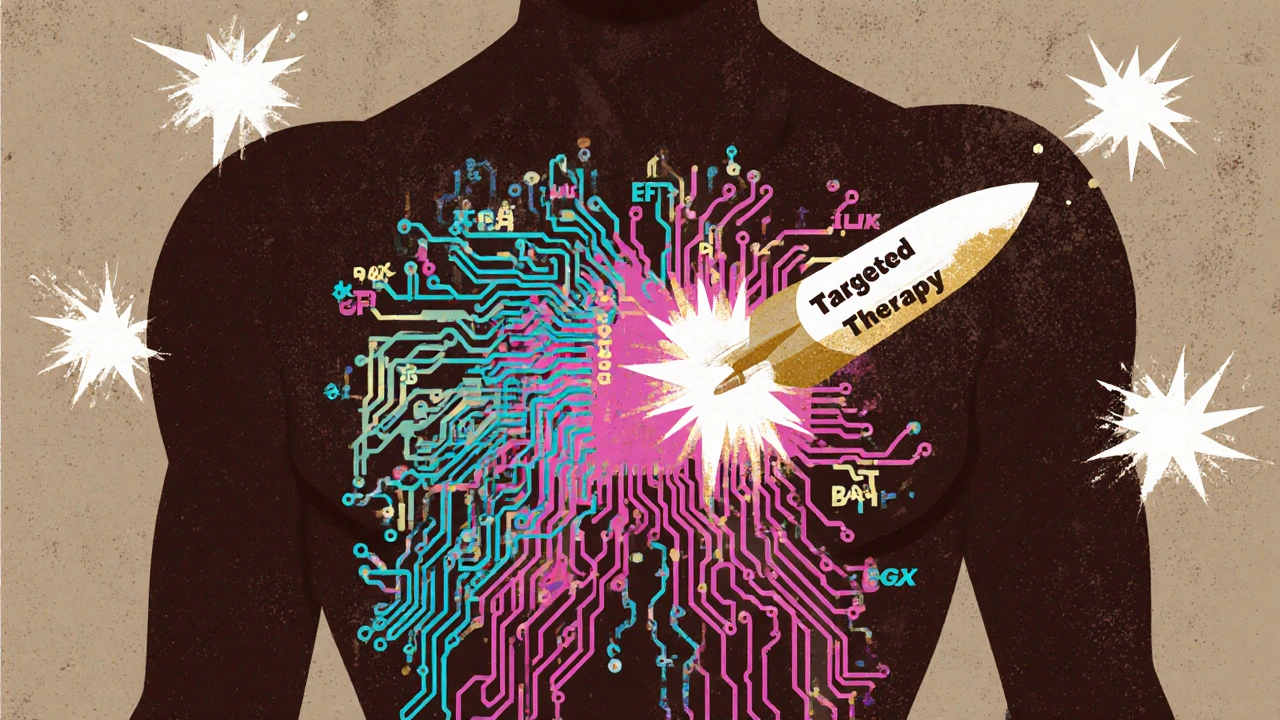
Targeted therapy uses tumor genetics to treat cancer more precisely than chemotherapy. Learn how genomic testing identifies mutations, which drugs work best, and why access remains unequal despite major advances.
Continue Reading