CGMP Violations: What They Are, Why They Matter, and How They Affect Your Medications
When you take a pill, you assume it’s safe, pure, and made the way it’s supposed to be. That trust depends on CGMP violations, Current Good Manufacturing Practices enforced by the FDA to ensure drug quality and safety. Also known as cGMP, these rules aren’t optional—they’re the bare minimum for any drug sold in the U.S. or exported from overseas facilities. If a manufacturer skips a step, skips a test, or hides data, that’s a CGMP violation. And it’s not just paperwork—it’s a direct threat to your health.
These violations show up in real ways: a batch of antibiotics with the wrong strength, a blood pressure pill contaminated with a toxic chemical, or a diabetes medication that breaks down too fast because the storage conditions were ignored. The FDA doesn’t wait for complaints to act. They send inspectors—unannounced—to factories in India, China, and beyond. In 2024, over 1,200 foreign drug facilities failed inspections. Some were shut down. Others got warning letters. And every one of those failures means someone, somewhere, might have gotten a bad batch.
It’s not just about the factory floor. CGMP covers everything: how raw materials are tested, how workers are trained, how equipment is cleaned, even how records are kept. If a lab uses a broken thermometer and doesn’t fix it, that’s a violation. If a supervisor tells staff to ignore out-of-spec results, that’s a violation. And if your medicine ends up with too little active ingredient? That’s not just a mistake—it’s a failure of the system designed to protect you.
Companies that cut corners often do it to save money. But the cost isn’t just financial. Patients have been hospitalized, even died, from drugs made under poor conditions. A single contaminated batch of heparin in 2008 killed over 100 people. That wasn’t a one-off. It was a symptom of deeper problems in global supply chains. Today, more than 80% of the active ingredients in U.S. medicines come from overseas. If those facilities don’t follow CGMP, the risk follows the pills to your medicine cabinet.
You won’t always know if your drug came from a facility with violations. But you can ask. Check the FDA’s website for inspection reports. Look for recalls. Talk to your pharmacist. And if you’ve had an unexpected reaction to a generic drug, report it. These systems only work if people speak up.
The posts below dig into the real-world consequences of these failures. You’ll find how batch release testing catches problems before they reach you, why FDA inspections of foreign plants are increasing, and how compounding pharmacies sometimes skirt the rules that big manufacturers must follow. You’ll also see how patients get caught in the middle—when a drug they rely on disappears because of a compliance issue, or when a cheaper generic turns out to be unsafe. This isn’t theoretical. It’s happening right now. And knowing what to look for could keep you—and your family—safe.
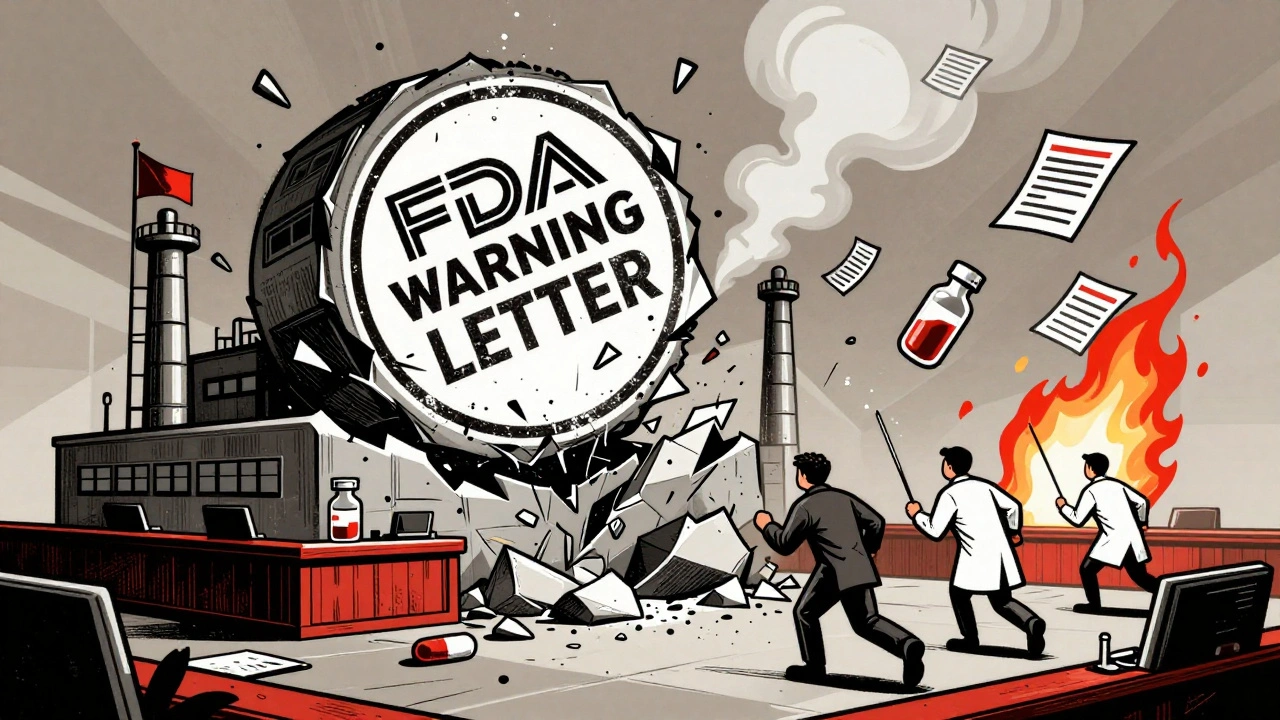
FDA warning letters are formal notices issued to pharmaceutical manufacturers for serious violations of drug production rules. They lead to delays, financial losses, and reputational damage. Learn what triggers them, how to respond, and why enforcement is increasing.
Continue Reading