EHR allergy sync: How electronic health records handle drug allergies
When your doctor updates your EHR allergy sync, the system that automatically shares your drug allergy data across healthcare systems. Also known as allergy alert integration, it’s meant to stop dangerous prescriptions before they happen. But too often, it doesn’t work right. You might have a known penicillin allergy listed in your hospital chart, but your pharmacy’s system shows nothing. Or worse—it shows a wrong reaction, like "rash," when you actually had anaphylaxis. This isn’t just a glitch. It’s a safety gap.
Behind every EHR allergy sync are three key pieces: your allergy data, the system that stores it, and the network that shares it. Electronic health records, digital versions of your medical history used by clinics, hospitals, and pharmacies are supposed to talk to each other. But they don’t always speak the same language. One system might label "amoxicillin allergy" as "penicillin allergy," while another treats them as separate. Drug allergies, adverse reactions triggered by medications that can range from mild rashes to fatal anaphylaxis need precise, standardized entries—yet many are entered as free-text notes like "got sick after penicillin." That’s not enough. Systems can’t flag risks if they can’t understand what they’re reading.
Even when the data is clean, EHR interoperability, the ability of different health systems to exchange and use information remains patchy. A patient might get their allergy synced perfectly within one hospital chain, but when they visit a different clinic across town, the data disappears. Or worse—it gets mixed up with someone else’s record. This isn’t theoretical. Studies show nearly 1 in 5 allergy alerts in EHRs are false, and up to 40% of true allergies aren’t flagged at all during prescribing.
And it’s not just doctors and systems failing. Patients often don’t know how to fix it. If you’ve ever been asked, "Do you have any drug allergies?" at every new appointment, you know the problem. You’re not being paranoid—you’re compensating for broken tech. Your EHR allergy sync should work silently in the background, but too often, it’s left to you to remind every provider. That’s not how it’s supposed to be.
That’s why the posts here matter. You’ll find real examples of how EHR allergy sync fails—and how it can work. From how a single mislabeled allergy led to a hospital admission, to how one pharmacy chain fixed their system using standardized codes. You’ll see what’s being done right in the U.S., Europe, and beyond. And you’ll learn exactly what to ask your doctor, your pharmacist, and your health portal to make sure your allergy data isn’t lost in translation.
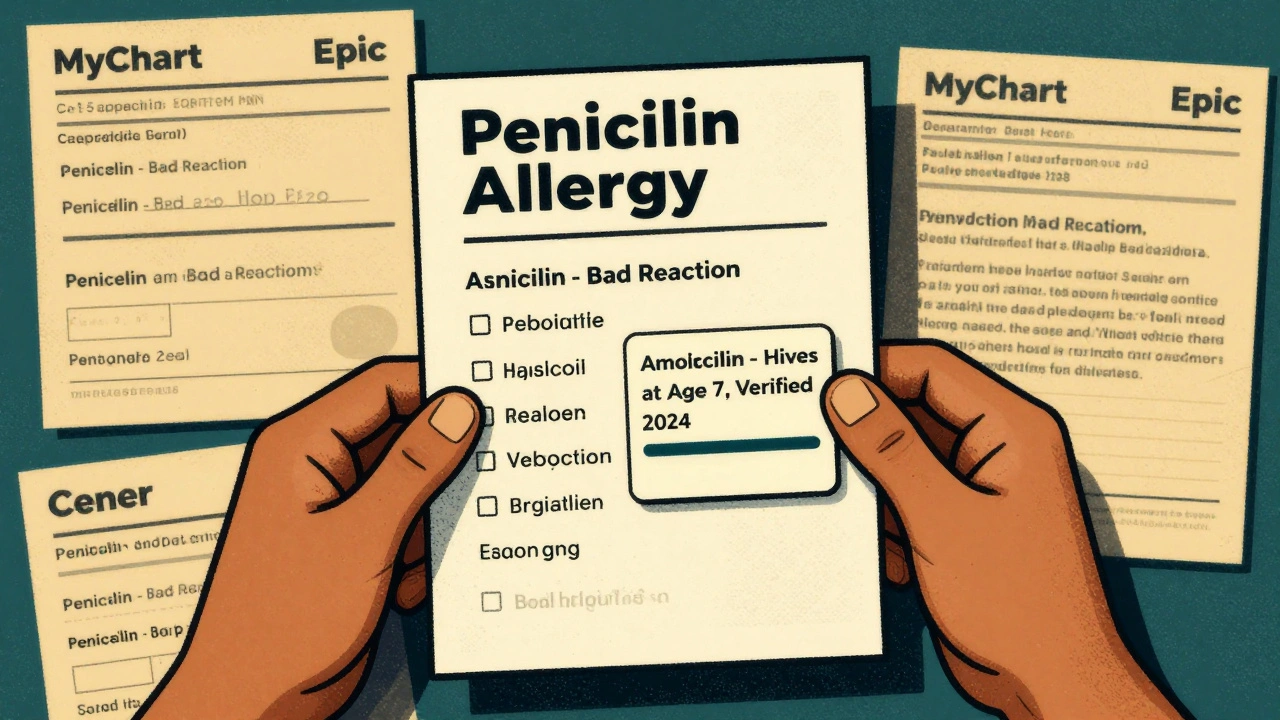
Learn how to update your allergy list across all healthcare providers to prevent dangerous medication errors. Follow a step-by-step guide to verify, correct, and sync your drug allergy records using patient portals and federal standards.
Continue Reading